The 1969 Plymouth Road Runner, a legendary muscle car, exemplified raw power and rebellious design in the golden era of Plymouth.
There I was, scrolling through auction listings again, and that same old itch came back. You know the one—the moment you see a 1969 Plymouth Road Runner and your wallet starts sweating. I have never owned one. I probably never will. But even in 2026, decades after Plymouth quietly shuffled off to the great dealership in the sky, the Road Runner still feels like the automotive equivalent of a punk rock band crashing a dinner party. It was loud, stripped-down, and completely uninterested in being polite.
Plymouth built the Road Runner as a back-to-basics performance car at a time when muscle cars were getting softer and flashier. That decision turned it into a legend. So, let's walk through each generation, because understanding why this car mattered means understanding how it started a fight, won the horsepower wars, and then got itself kicked out of NASCAR like a rowdy bar patron.
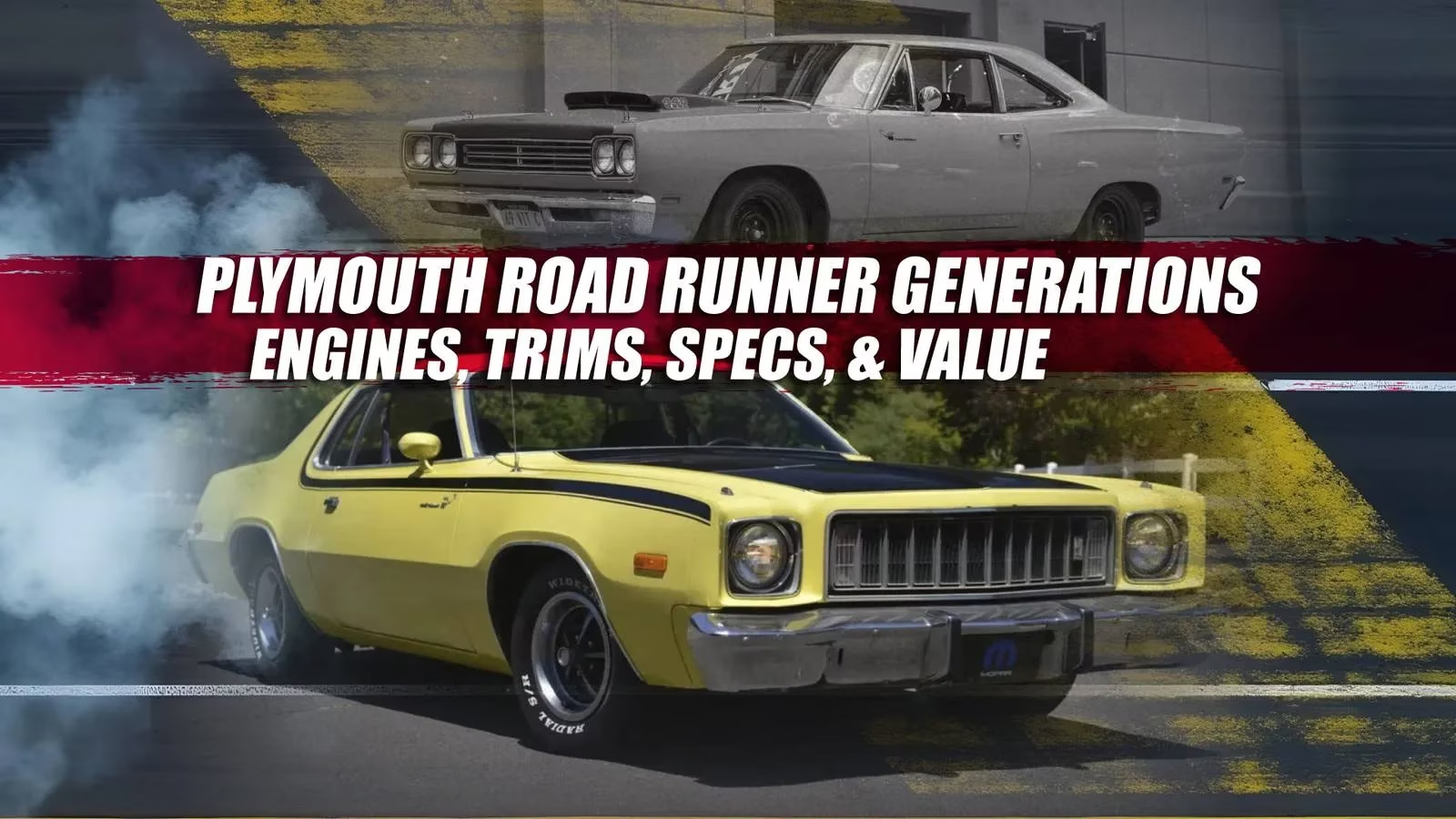
First Generation (1968–1970): The Pure Muscle Blueprint
The first Road Runner debuted in 1968 based on the humble Plymouth Belvedere, itself sitting on the Chrysler B-body platform. Plymouth wanted a two-door coupe with bare-bones everything: rubber floor mats, a bench seat, simple gauges, and not much else. It was a sleeper in the truest sense. If traffic was a herd of sheep, the Road Runner blended in right up until someone stomped the gas and the big-block woke up like a grizzly bear poked with a stick.
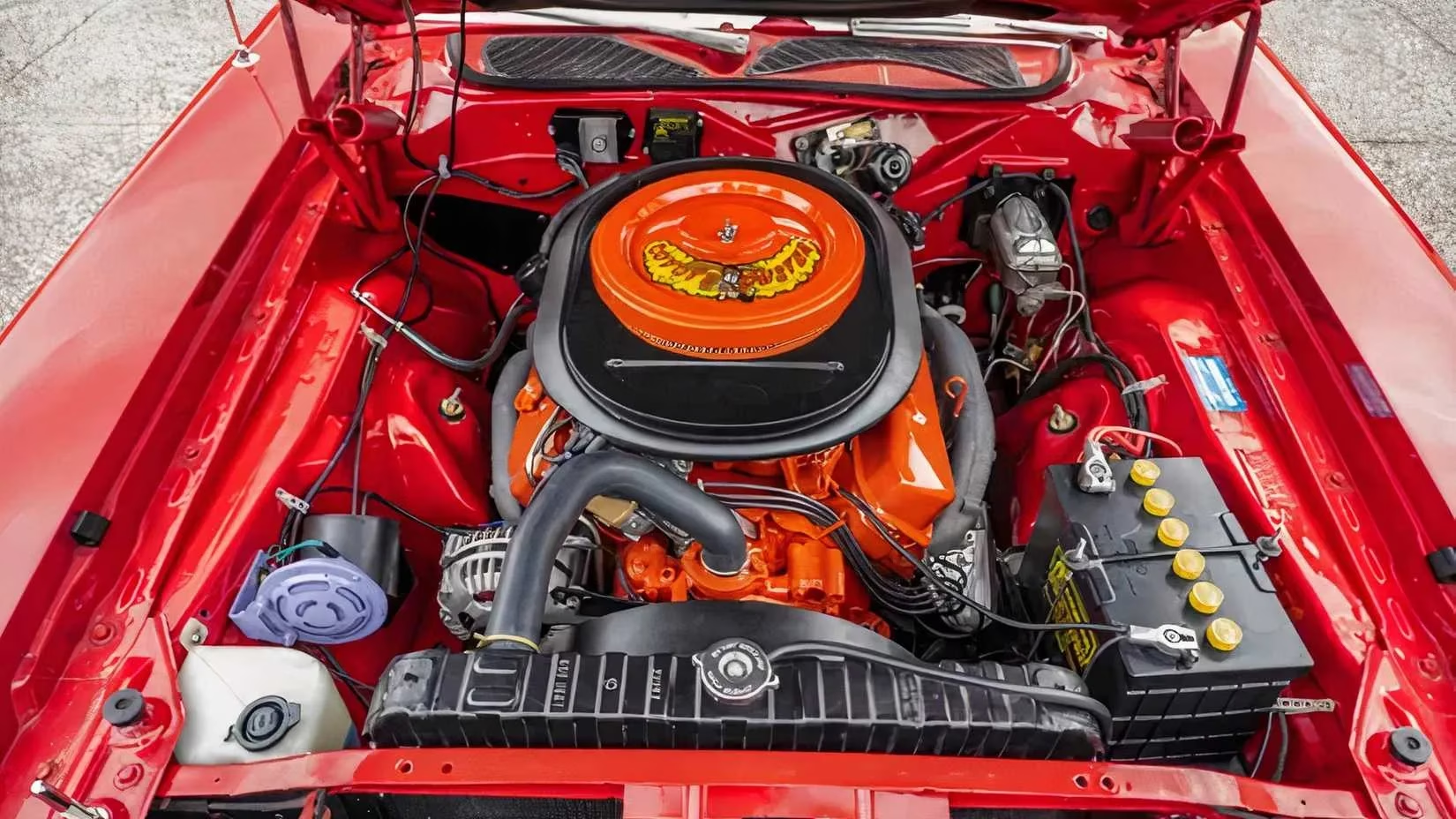
Under the hood, Plymouth went all-in on big-block power. The standard engine was a 383 cubic-inch V8 making around 335 horsepower, but the upgrade was the legendary 426 Hemi cranking out 425 horsepower. In 1969, a 440 Six-Barrel V8 joined the lineup through the A12 special order, producing 390 horsepower and a torque figure some people still call suspiciously conservative.
Plymouth expected to sell around 20,000 Road Runners in that first year. They sold roughly 45,000. That is the kind of miscalculation every automaker dreams about.
The first generation also produced the 1970 Plymouth Superbird, which is less a car and more a wind tunnel experiment wearing a cartoon beak. It had a 426 Hemi option and was designed to make the Road Runner a 200-mph monster for NASCAR. It worked so well that after just one season, NASCAR effectively banned it. That is like showing up to a neighborhood go-kart race with a Formula 1 car and then being told you can never come back.
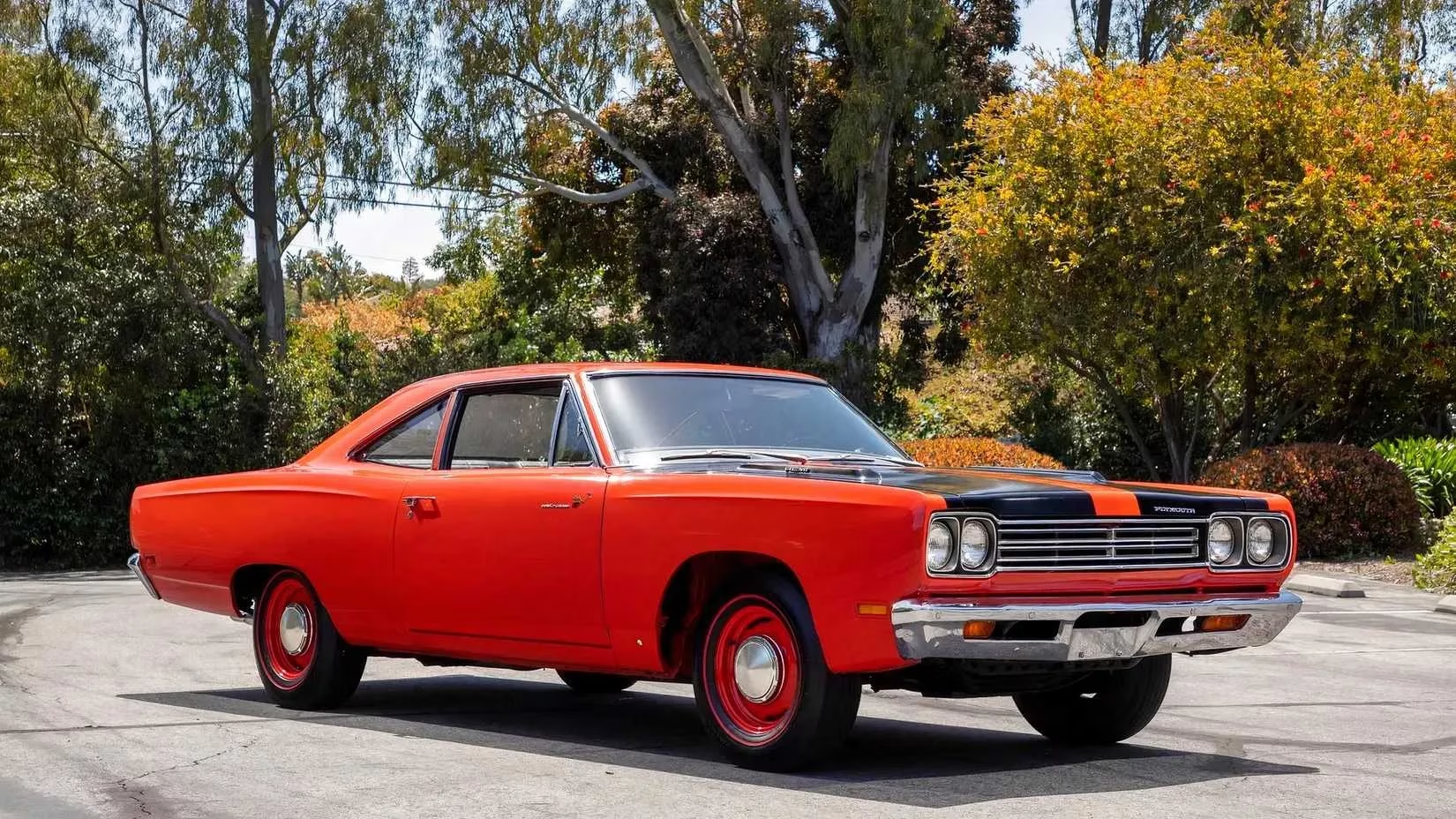
The changes during this generation were significant. In 1969, Plymouth added bucket seats, Road Runner decals, a convertible option, and the 440 Six-Barrel A12. The car won Motor Trend Car of the Year that year. In 1970, the Road Runner received a new front and rear design, the iconic Air Grabber hood, pistol grip shifter, and wild “High Impact” paint colors like Vitamin C and In-Violet. The first-gen Road Runner still holds a special place with collectors. According to recent Hagerty and Classic.com valuations, first-gen average values hover around $65,000, with Hemi and A12 models doubling that, and Superbird Hemi examples occasionally flirting with $800,000.
Second Generation (1971–1974): Sleek, But Slipping
The second-generation Road Runner arrived in 1971 with what Chrysler called “fuselage” styling. It had a long hood, short deck, Coke-bottle waistline, and a semi-fastback roofline. The front end had a rounded nose, loop-style split grille, and recessed headlights. It was breathtaking, but 1971 was also the last year of the truly high-output Road Runners.
The engine lineup that year was the best the model ever had, including the 426 Hemi. But then the oil crisis hit, emission regulations tightened, and the muscle car began to lose its teeth. In 1972, the 426 Hemi vanished, the 383 was replaced by a lower-power 400 V8, and the 440 Six-Barrel died after only five examples were sold. The GTX also stopped being a separate model and became the top Road Runner trim for cars with the 440 four-barrel V8.
By 1973, the design had become boxier with bigger bumpers and quad headlights. A small 318 V8 replaced big-block thunder as the standard engine. In 1974, the 340 was swapped for a 360 V8. This second generation is still collectible, especially the 1971 models. A 1971 Hemi Road Runner in good condition can bring around $168,000, while the average second-gen value sits near $62,000.
Third Generation (1975): The Muscle Fades Away
The third and final generation Road Runner arrived in 1975, and it is the black sheep of the family. Plymouth used the updated B-body platform shared with the Fury coupe, but the styling lost all the aggression. It had a boxy front end, rectangular grille, and straight body lines. The interior was more comfortable, with plush materials and optional luxury trim, but the muscle car soul had evaporated.
The standard engine was a 145-horsepower 318 V8. Optional engines included a 360 V8 with 170 horsepower, a 400 V8 with 190 horsepower, and a monstrous 255-horsepower 440 V8 that was mostly restricted to police units. The Road Runner name carried on through 1975, and Plymouth later slapped the name on a trim of the F-body Volare from 1976 to 1980, but almost no enthusiast counts those as true Road Runners.
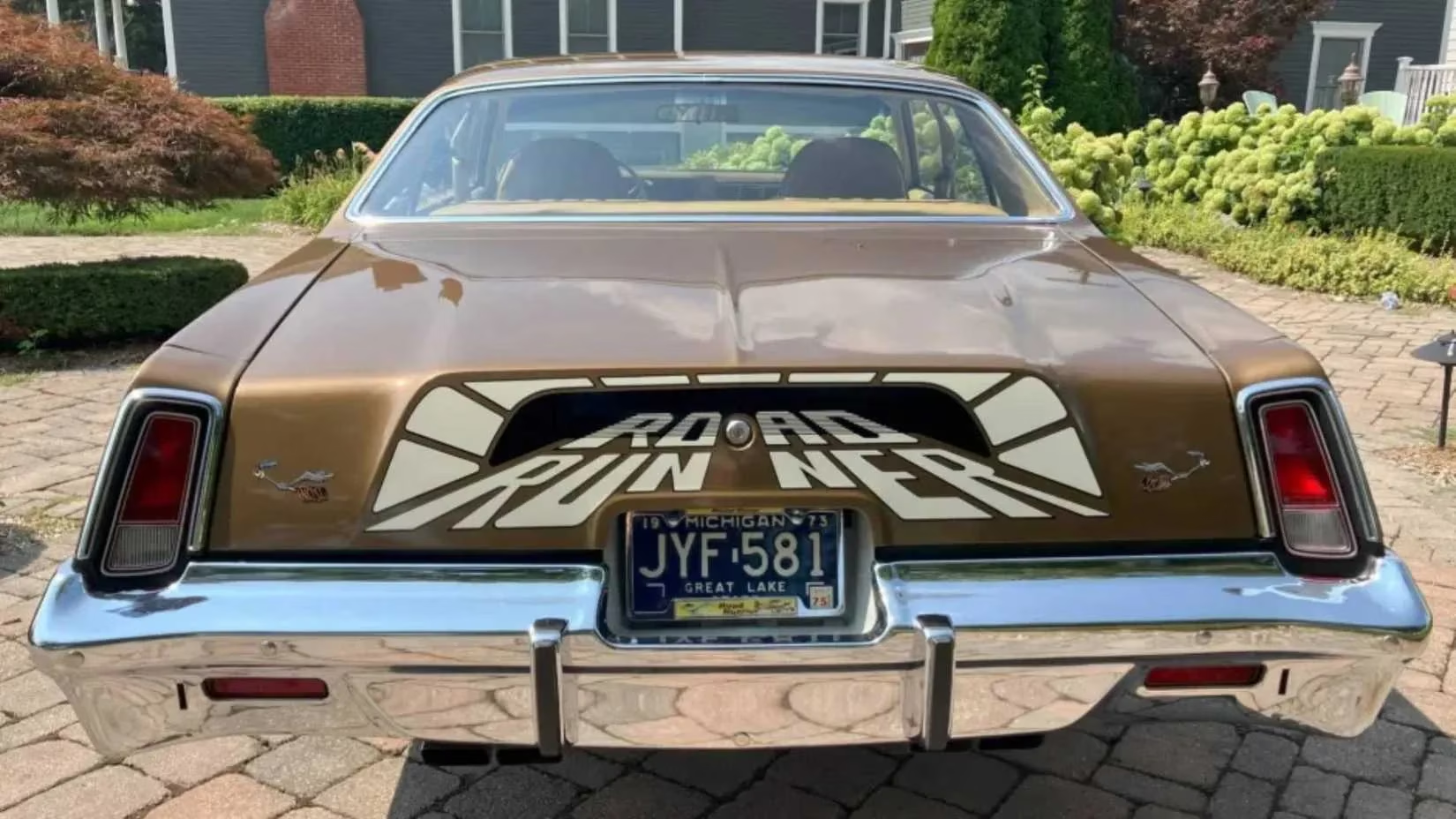
Today, the third-gen Road Runner is the cheapest way into the nameplate. A good-condition 318-powered 1975 model can still be found for around $17,000. It is a curious collector piece, but no one confuses it with the first-gen animal that started it all.
Why the First Generation Still Reigns
If you ask me, the first-generation Road Runner is the greatest muscle car ever made. It did exactly what it promised: give regular buyers the most performance for the least money. When Ronnie Sox of Sox and Martin took an A12 Road Runner down the quarter mile in 12.9 seconds with a factory-tuned car, it sealed the horsepower war. And when the Hemi Superbird got itself banned from NASCAR, the Road Runner earned a permanent place as the meanest muscle car Detroit ever produced—all while wearing the face of a cartoon bird.
That contrast is why I keep coming back to these cars in 2026. The Road Runner was a joke that turned serious, a budget car that humiliated premium rivals, and a legend that refused to age quietly.