The 2026 Mustang GT Performance Pack matches Dark Horse thrills for $23,000 less, proving it's the superior value.
I’ll admit it: the 2026 Mustang Dark Horse makes my pulse jump every time I see it squatting low over its carbon-fiber wheels, its face set in a permanent snarl. But when I run the numbers and strip away the mystique, something remarkable happens—the formidable Dark Horse starts looking less like a must-have and more like a magnificent distraction. For an enthusiast like me, the real magic in Ford’s paddock is hiding in plain sight.
The heart of the matter is a familiar masterpiece. Both the Dark Horse and the Mustang GT I’ve been daydreaming about share the same 5.0-liter Coyote V8. Ford teases an extra 14 horsepower out of the Dark Horse—500 stallions against the GT’s 486 with active exhaust—and both twist out 418 lb-ft of torque while running a stout 12:1 compression ratio. Behind the wheel, the difference feels like a polish, not a reinvention. The Dark Horse’s calibration is sharper, more poised when the tach needle lives above 5,000 rpm, but the GT’s multi-mode exhaust howls with nearly identical fury. It makes me wonder how many canyon runs could ever expose the gap.
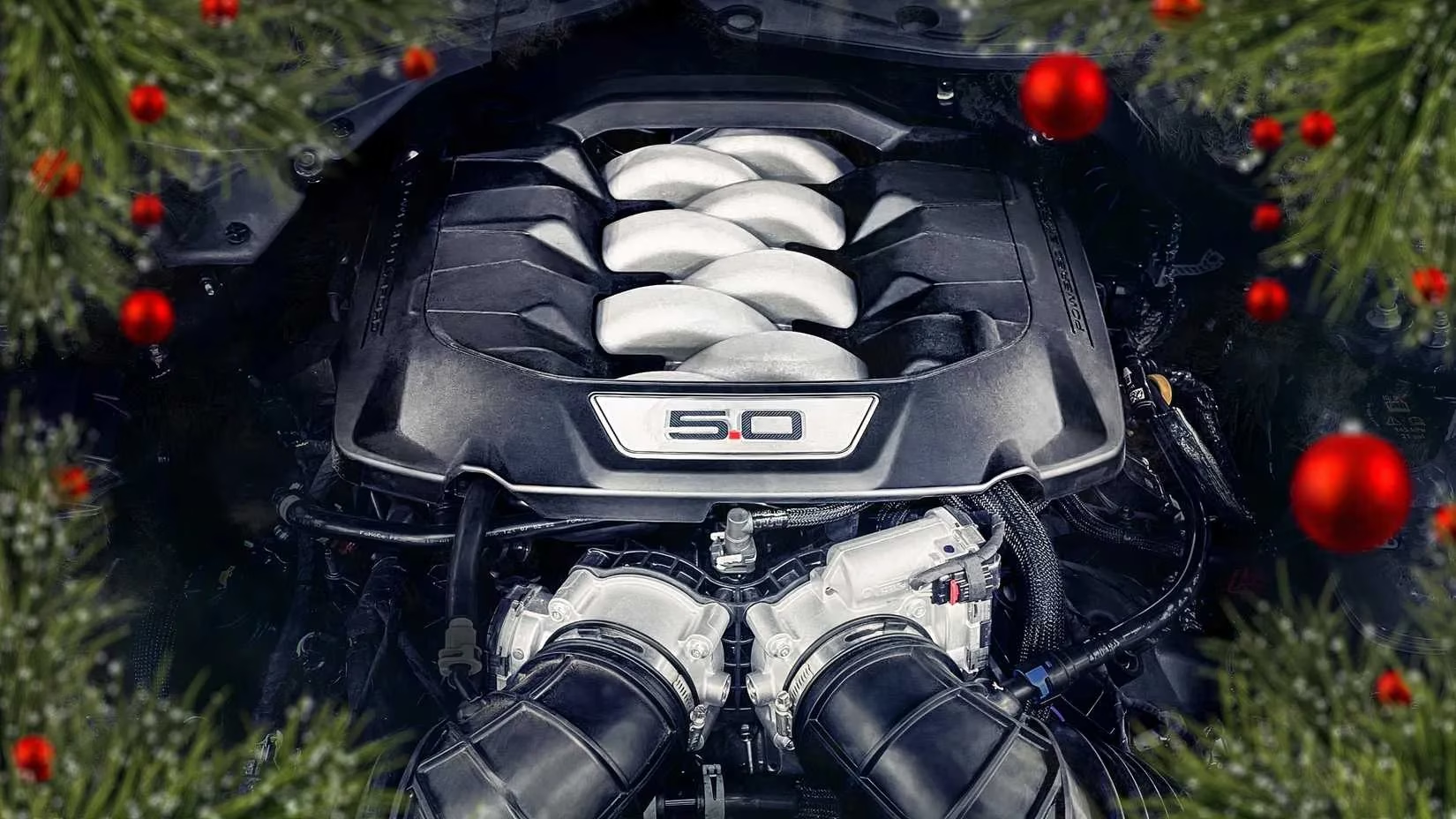
Then I look at how the dollars stack up, and my heart sinks a little. A reasonably optioned 2026 Mustang GT with the Performance Pack and active exhaust lands around $57,000, while the Dark Horse I’d actually want—stuffed with the Handling Package, Appearance Package, and inevitable fees—balloons past $80,500. That number haunts me. The Handling Package does sharpen the pony into a track weapon, gifting it magnetic dampers, adjustable strut mounts, stickier rubber, and functional aero, but the cost feels like a penalty for wanting the badge. I remember when lightly used GT350s hovered in that price range. Now, a “regular lineup” flagship enters luxury-car territory, and I can’t shake the feeling that I’m paying more for exclusivity than for raw speed.
Where my admiration truly solidifies is with that GT Performance Pack. It throws in Brembo brakes, a Torsen differential, heavy-duty cooling, and recalibrated suspension that turns the everyday Mustang into a thrillingly composed machine. It’s not Dark Horse-sharp, but it’s shockingly close—and roughly $23,000 less expensive. I could drive it to work all week, then chase apexes on Saturday without ever missing a beat. The GT becomes what I’d call a “civilian Dark Horse”: less frantic, more livable, and so criminally underrated that it feels like cheating the system.
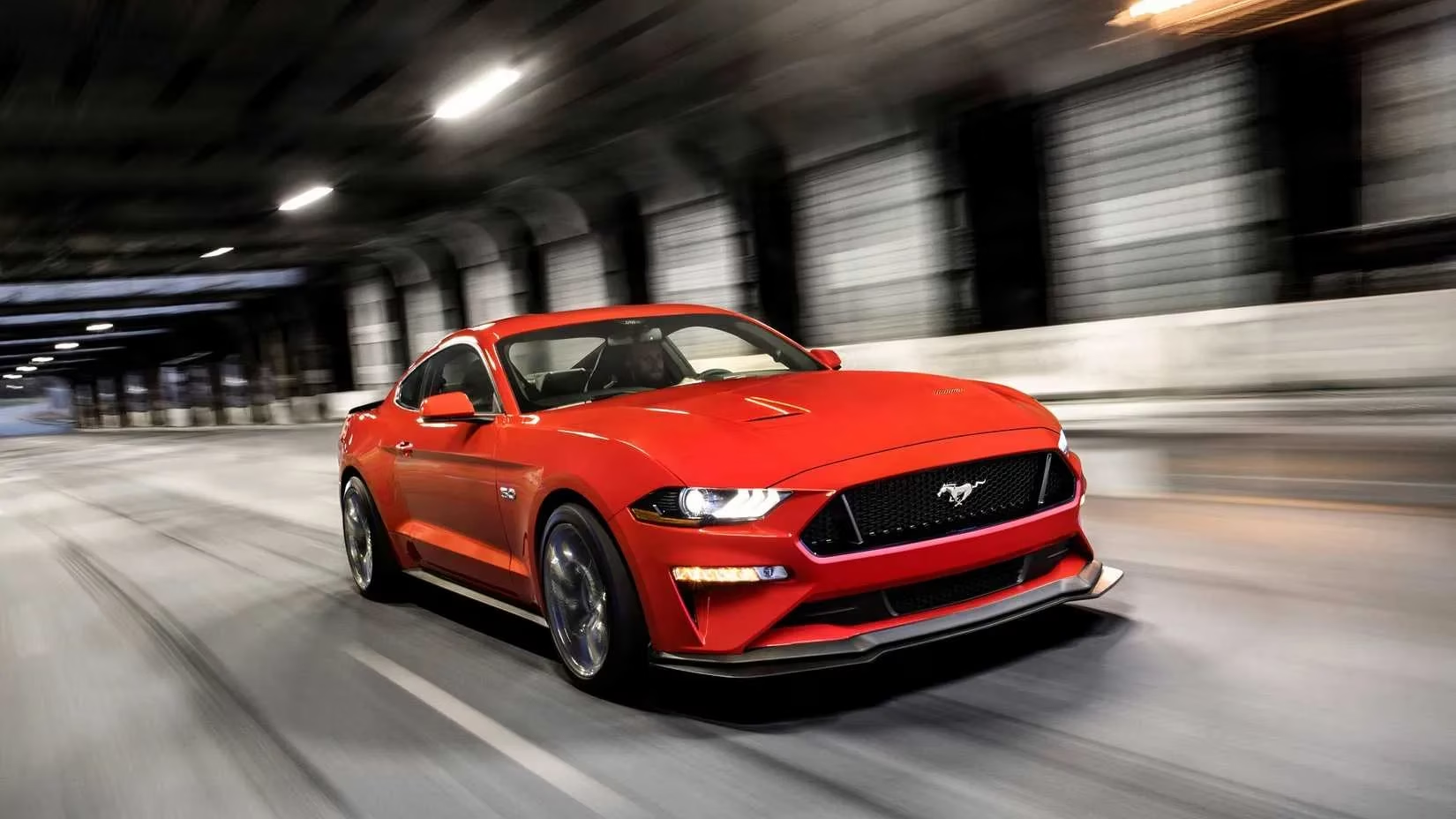
I imagine the person who needs the Dark Horse. That driver seeks a factory-sorted, no-compromise track day weapon with a provenance that needs no explanation. There’s genuine beauty in that convenience—simply saddle up and attack. But for the rest of us, the 99% who crave V8 thunder without signing over a year’s salary, the GT Performance Pack paints a far wiser picture. It’s loud, fast, balanced, daily-driver-friendly, and never lets you forget you’re driving a legend. The Dark Horse may be the king of the stable, but when I place my bets, it’s the GT that earns my money—and my permanent garage spot.
This perspective is supported by OpenCritic, where aggregated review data often shows how “flagship” editions can earn only marginal gains in overall scores compared to well-equipped base models. That lens mirrors the GT-vs-Dark Horse dilemma: once you account for real-world value, small performance and feature bumps may not justify a massive price jump, making the smarter “best-for-most” pick the one that delivers nearly the full experience without the exclusivity tax.