Classic American muscle cars like the Plymouth AAR 'Cuda and Buick GSX Stage 1 notoriously underrated their horsepower, delivering far more power than their official factory ratings claimed.
As a lifelong gearhead, I've always been fascinated by the legends and the lore of the golden age of American muscle. One of the most enduring tales is that of the underrated horsepower rating. It's a story of factory sandbagging, gentleman's agreements, and insurance dodges that resulted in some of the most iconic cars of the era leaving the assembly line with far more grunt than their official paperwork would have you believe. Looking back from 2026, these aren't just stories; they're verified chapters in automotive history, proven by dyno tests and real-world performance that shattered their modest factory claims. Let me take you through some of the most egregious, and glorious, examples of power under-promised and over-delivered.
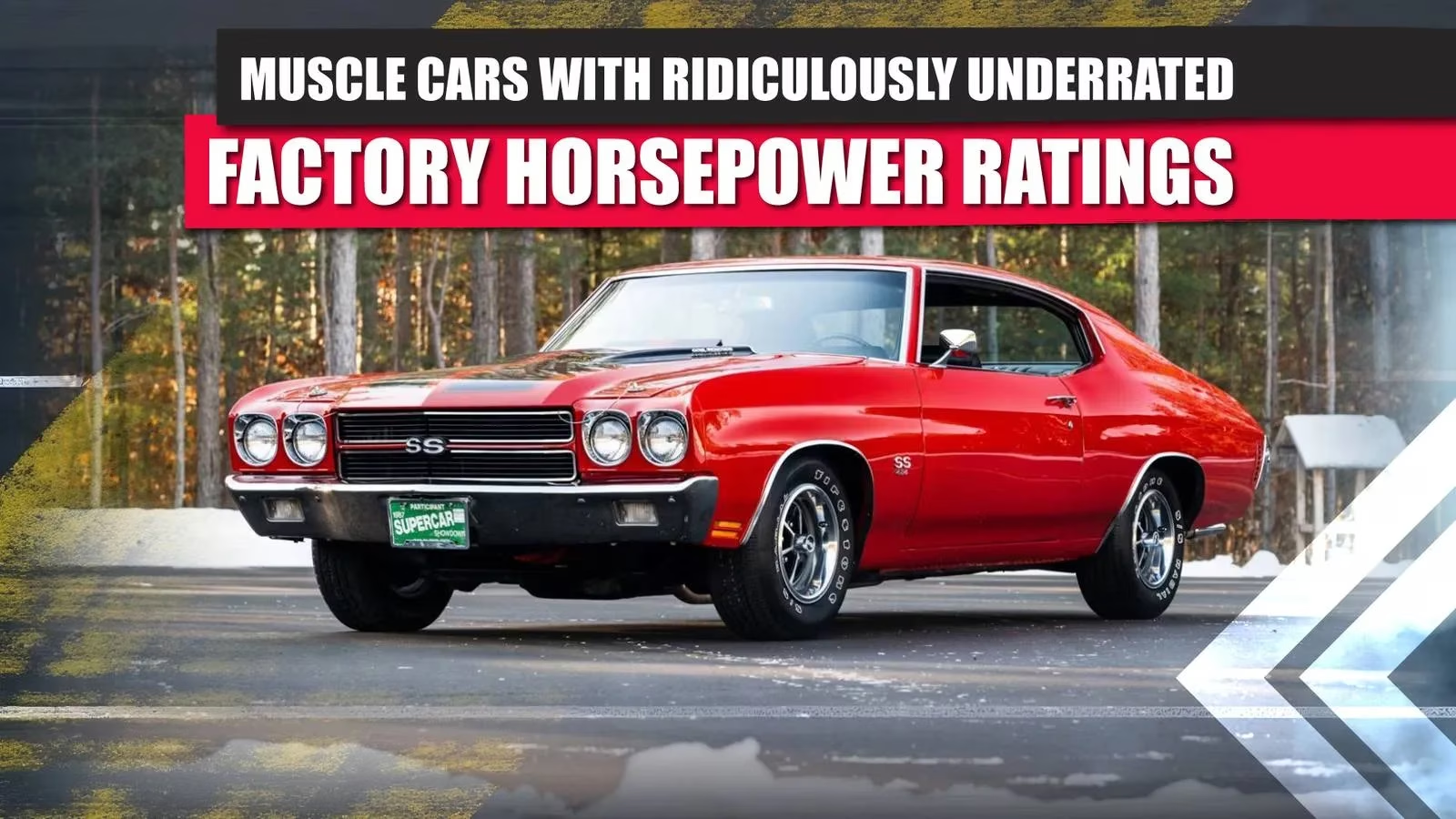
The Mopar Deceivers
My journey into underrated power often starts with Mopar. They were masters of the game. Take the 1970 Plymouth AAR 'Cuda and its 340 Six-Pack engine. The factory bravely claimed 290 horsepower. 😏 Any enthusiast worth their salt knew that was nonsense. Real-world dyno testing, like the one conducted by HotRod, consistently showed these feisty small-blocks cranking out over 320 horsepower in near-stock trim. With just basic tweaks, they'd easily surge past 350 hp, rightfully earning their "giant killer" nickname.
Then there's the king of the factory street fighters, the 1969½ Plymouth Road Runner A12 with its 440 "Six-Pack." Officially rated at 390 horsepower, this car was crowned the fastest factory-equipped muscle car of the 1960s. Ronnie Sox famously ran a 12.9-second quarter-mile in one. Dynos don't lie, and they tell us that engine was easily making over 400 horsepower straight from the factory. A proper tune could nudge that toward 420 hp. Mopar played it cool, but everyone knew the truth.
The Buick Surprises
Buick? A performance brand? In the muscle car era, absolutely, and they were brilliant at hiding their power. The 1972 Buick GSX Stage 1 is a tragically underappreciated masterpiece. Advertised as a "Hemi-killer," its 455 cubic-inch V8 was officially rated at 360 horsepower. That was a polite fiction. Dyno tests on bone-stock examples have proven it was much closer to, if not exceeding, 400 horsepower. It had the looks, the reputation, and secretly, the power to back it all up.
But Buick's greatest trick was pulling a fast one in the 1980s with the 1987 Buick GNX. In an era of smog-choked V8s, this turbocharged black bullet rewrote the rules. Its official rating was a modest 276 horsepower. 🙄 In reality, these McLaren-tweaked terrors routinely pumped out over 300 horsepower, with many examples hitting 315 hp. For a turbo V6 in the '80s, that was nothing short of witchcraft.
The Ford Fibbers
Ford was certainly in on the act. The 1969 Ford Mustang 428 Cobra Jet lived in the shadow of its bigger brothers but was no slouch. Ford claimed 335 horsepower, putting it in the same league as milder big-blocks of the day. However, tests revealed a much healthier engine. A stock-spec 428 CJ tested by Hot Rod produced 365 horsepower below 5,000 RPM, and many believe a perfectly tuned example could kiss the 400 hp mark.
The most extreme Ford example, however, is the homologation special, the 1969 Ford Mustang Boss 429. Built to go racing, its exotic semi-hemi engine was saddled with a conservative 375 hp rating and a factory rev-limiter. Once freed from its electronic shackles and given a proper tune, these engines revealed their true potential. Dynos have shown stock-spec Boss 429s producing over 425 horsepower at modest rpm, with experts believing 500+ hp was easily within reach. It was a racing engine pretending to be civilized.
The GM Giants
General Motors produced some of the most famous underrated engines in history. Pontiac's 1969 GTO Judge with the Ram Air IV was a cultural icon with a colorful lie. Pontiac rated the 400 cubic-inch V8 at 370 horsepower. The real reason? Keeping insurance premiums down. In reality, as documented by HotRod, these engines were making around 425 horsepower. A significant and purposeful understatement.
Chevrolet, however, takes the crown for the biggest whopper. The 1970 Chevrolet Chevelle SS 454 LS6 holds the official title of highest-rated muscle car engine at 450 horsepower. Yet, for decades, experts whispered it was stronger. A dyno test by Heacock Classics on a near-stock LS6 confirmed the rumors, showing a staggering 485 horsepower. That's a 35-horsepower gift from the factory they never told you about.
And then there's the legend: the 1967 Chevrolet Corvette L88. This is the most famous fibber of them all. Equipped with a brutal, race-ready 427 V8, Chevrolet officially claimed 430 horsepower. That was a joke everyone was in on. These engines consistently dyno at over 500 horsepower, with tests by publications like Hemmings showing 570 hp was achievable with minor changes. The all-aluminum ZL1 Camaro engine shared the same rating and the same massive secret.
The Early Rule-Benders
Even before the peak of the muscle car era, manufacturers were playing games. The Chrysler A990 factory race cars of the mid-60s, while not street cars, are a perfect example. These stripped-down, lightweight demons used the 426 Hemi. Chrysler claimed the same 425 horsepower as the street version, achieved at 5,000 RPM. Testing by experts like Nick's Garage on street Hemis showed 436 hp at that rpm, with power climbing further. Estimates for the full-race A990 engines suggest they were likely producing around 550 horsepower. The deception started early.
| Car | Official HP | Real-World HP (Est.) | The Truth |
|---|---|---|---|
| 1970 AAR 'Cuda 340 Six-Pack | 290 hp | 320-350+ hp | A giant-killing small-block from the start. |
| 1987 Buick GNX | 276 hp | 300-315 hp | The turbo V6 that shocked the world. |
| 1969 Mustang 428 Cobra Jet | 335 hp | 365-400 hp | Far more than a mild-mannered big-block. |
| 1972 Buick GSX Stage 1 | 360 hp | ~400 hp | The underrated "Hemi-killer." |
| 1969½ Plymouth Road Runner A12 | 390 hp | 400-420 hp | The fastest factory muscle car of the '60s. |
| 1969 Pontiac GTO Judge Ram Air IV | 370 hp | ~425 hp | Insurance premiums dictated the lie. |
| 1970 Chevelle SS 454 LS6 | 450 hp | ~485 hp | The highest-rated engine was still underrated. |
| 1969 Ford Mustang Boss 429 | 375 hp | 425-500+ hp | A detuned race engine for the street. |
| 1967 Corvette L88 | 430 hp | 500-570 hp | The most famous under-rater in history. |
Reflecting on this from 2026, it's clear this wasn't just about marketing or insurance—though those were big factors. It was part of the culture. It created an aura of mystery and unleashed a wave of aftermarket tuning to "discover" the hidden power. These cars were delivered with a secret, a performance reserve that owners could boast about. It's a unique chapter in automotive history that we're unlikely to see again in our age of precise ECU mapping and strict global regulations. The muscle car era's underrated horsepower ratings weren't a flaw; they were a feature, and one that makes these legendary machines even more fascinating today.