Discover the ultimate 1967 Chevrolet Camaro restomod, a 20-year labor of love blending a 1,030-hp LSX engine with a Roadstershop chassis for unparalleled performance and artistry.
In a world saturated with high-dollar, cookie-cutter restomods, one particular 1967 Chevrolet Camaro stands out not just for its staggering performance figures or its flawless aesthetics, but for the profound story of its creation. Featured recently by Autotopia LA, this first-generation Camaro is the culmination of a 20-year labor of love by its owner, Tom. It serves as a powerful reminder that while capital can assemble impressive components, true automotive artistry is forged through patience, relentless iteration, and a deeply personal vision. This isn't merely a car built with money; it's a machine sculpted with time and unwavering dedication.
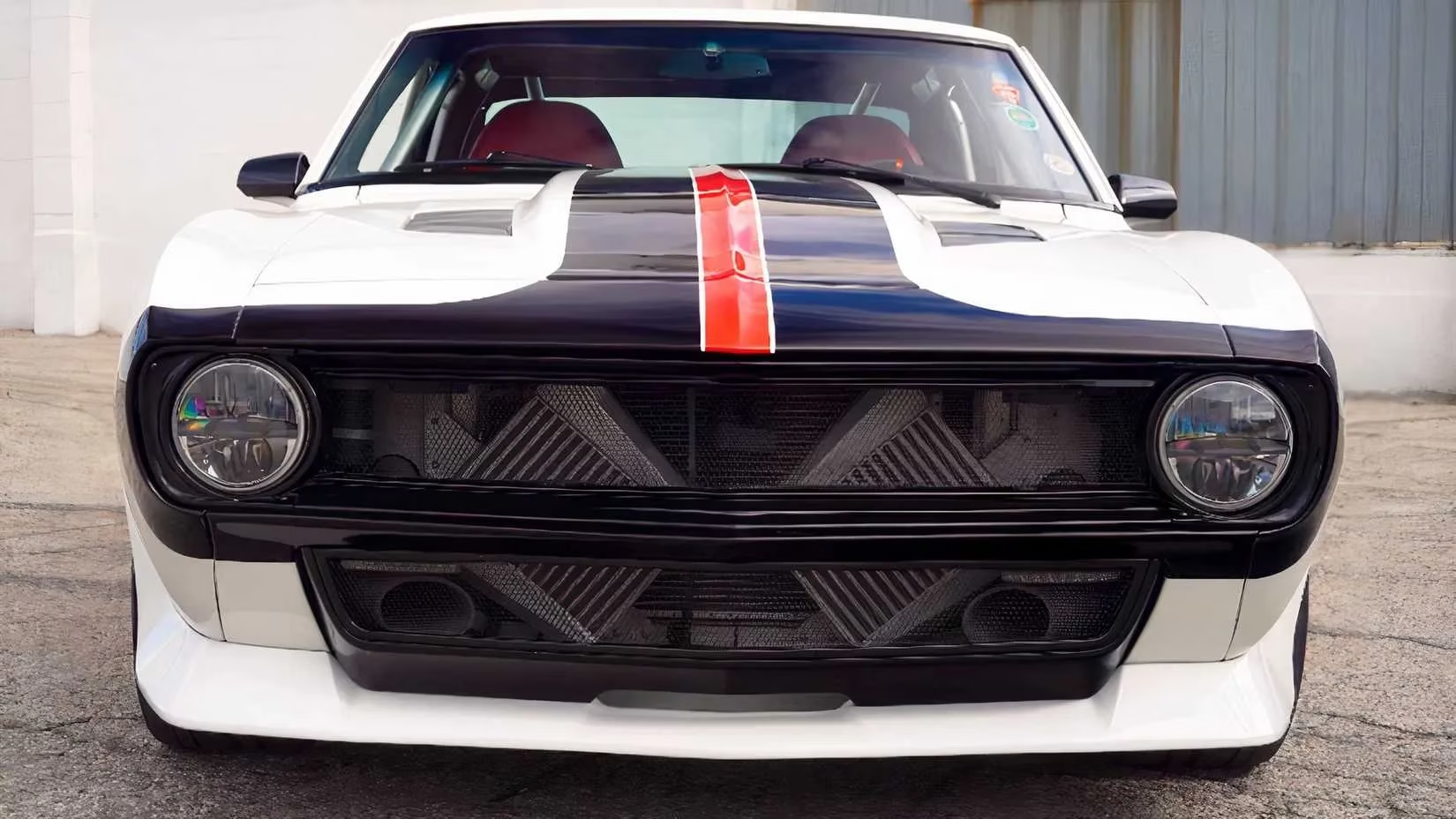
The heart of this beast is a masterpiece of modern engineering. Powering this classic American icon is a monstrous LSX engine, built to a 434 cubic-inch displacement using a Texas Speed bottom end and a Mamo Motorsports top end. But what truly unlocks its potential? The answer lies in forced induction: two 66mm Precision turbos force-feed the engine, resulting in a jaw-dropping 1,030 horsepower at the rear wheels. This transforms the Camaro from a classic cruiser into a pavement-ripping weapon, a fact that becomes undeniable the moment one considers the engineering required to harness such power.
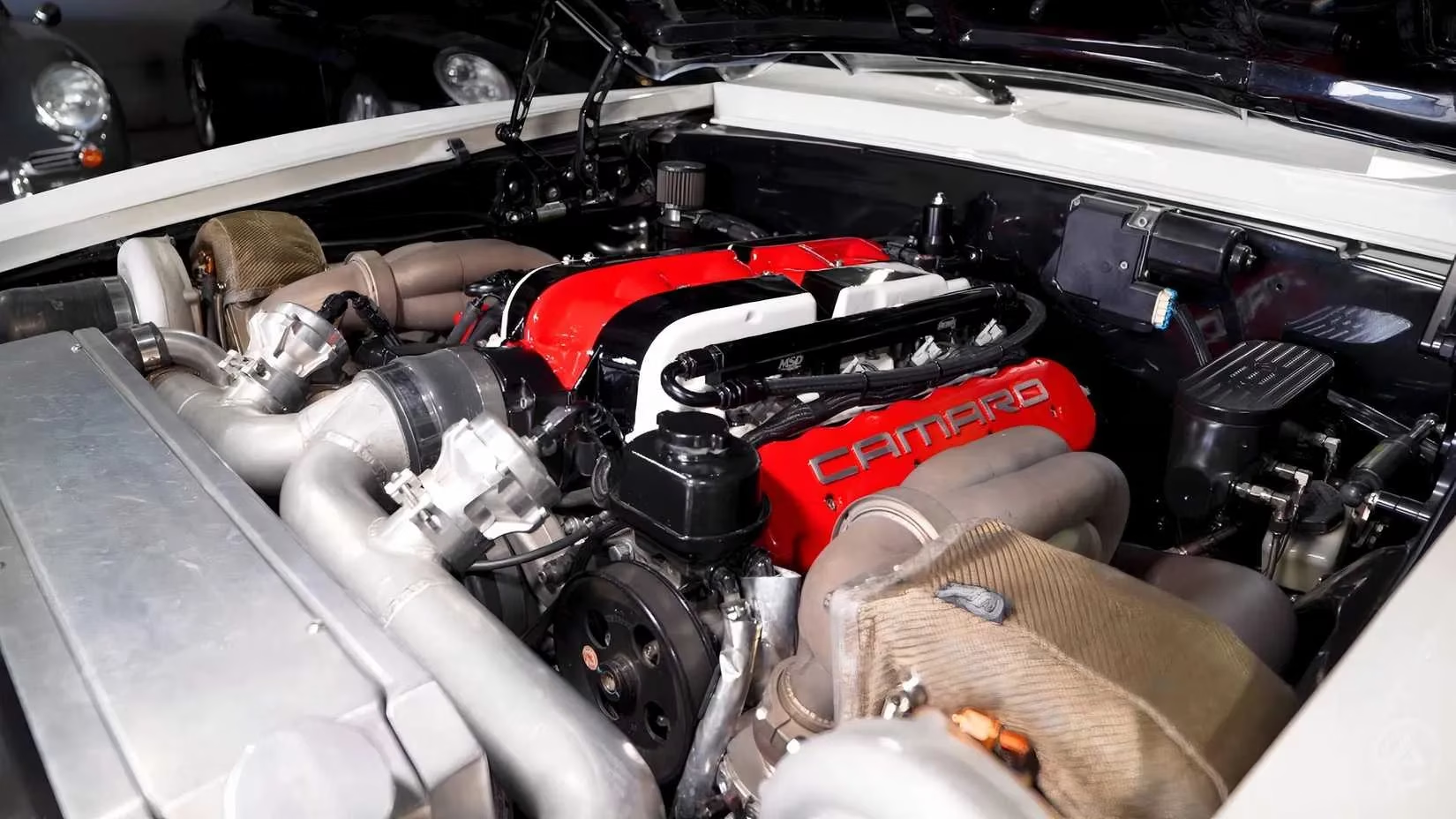
While many high-power restomods default to automatic transmissions for simplicity and consistency, Tom made a deliberate choice to preserve the driver's connection. The immense power is channeled through a built Tremec T56 6-speed manual transmission from RPM Transmissions, sending torque to a robust Ford 9-inch rear differential with 3.73:1 gears. To ensure this colossal power translates to forward motion rather than tire smoke, the car employs sophisticated traction control, a necessity for a vehicle of this caliber. But what about the foundation that allows it to handle like a modern supercar?
The chassis and suspension represent the pinnacle of restomod technology. Tom's Camaro rests on a complete Roadstershop chassis system. This isn't just an upgrade; it's a transformation. The proprietary chassis, with its custom steering and suspension geometry, is bolted directly to the car's unibody. This revolutionary setup fundamentally alters the handling dynamics, granting the classic car the poise, precision, and rigidity of a contemporary performance machine. A full roll cage further enhances structural integrity and safety, completing a chassis worthy of the powertrain it supports.
The 20-Year Journey: Where This Build Truly Diverges
Here is where Tom's story separates his Camaro from the countless others. This wasn't a six-month build commissioned to a shop. This was a two-decade evolution, progressing through approximately four distinct iterations before reaching its current, perfected state. This lengthy timeline wasn't due to a lack of resources, but rather a relentless pursuit of an ideal. Tom approached each component not as a checkbox, but as a problem to be solved perfectly.
Consider the braking system. The turbocharger setup physically obstructed the use of a conventional brake booster, which was essential for the massive Brembo calipers to provide the desired pedal feel and response. A lesser builder might have compromised. Tom's journey? He tried multiple manual master cylinders, got close, but wasn't satisfied. His solution was to invest in an advanced ABS Power Brake electronic booster system, a detail that exemplifies the "no-compromise" philosophy permeating the entire build.
| Challenge | Conventional Solution | Tom's Solution |
|---|---|---|
| Brake Booster Clearance | Settle for suboptimal pedal feel with manual master. | Install a custom electronic brake booster system for perfect response. |
| Wheel & Suspension Fitment | Use smaller wheels or accept suboptimal alignment. | Modify the rear suspension geometry to perfectly fit the desired massive wheels. |
| Overall Vision | Follow a pre-defined blueprint from a builder. | Iterate over 20 years and 4 versions, treating the car as a living art project. |
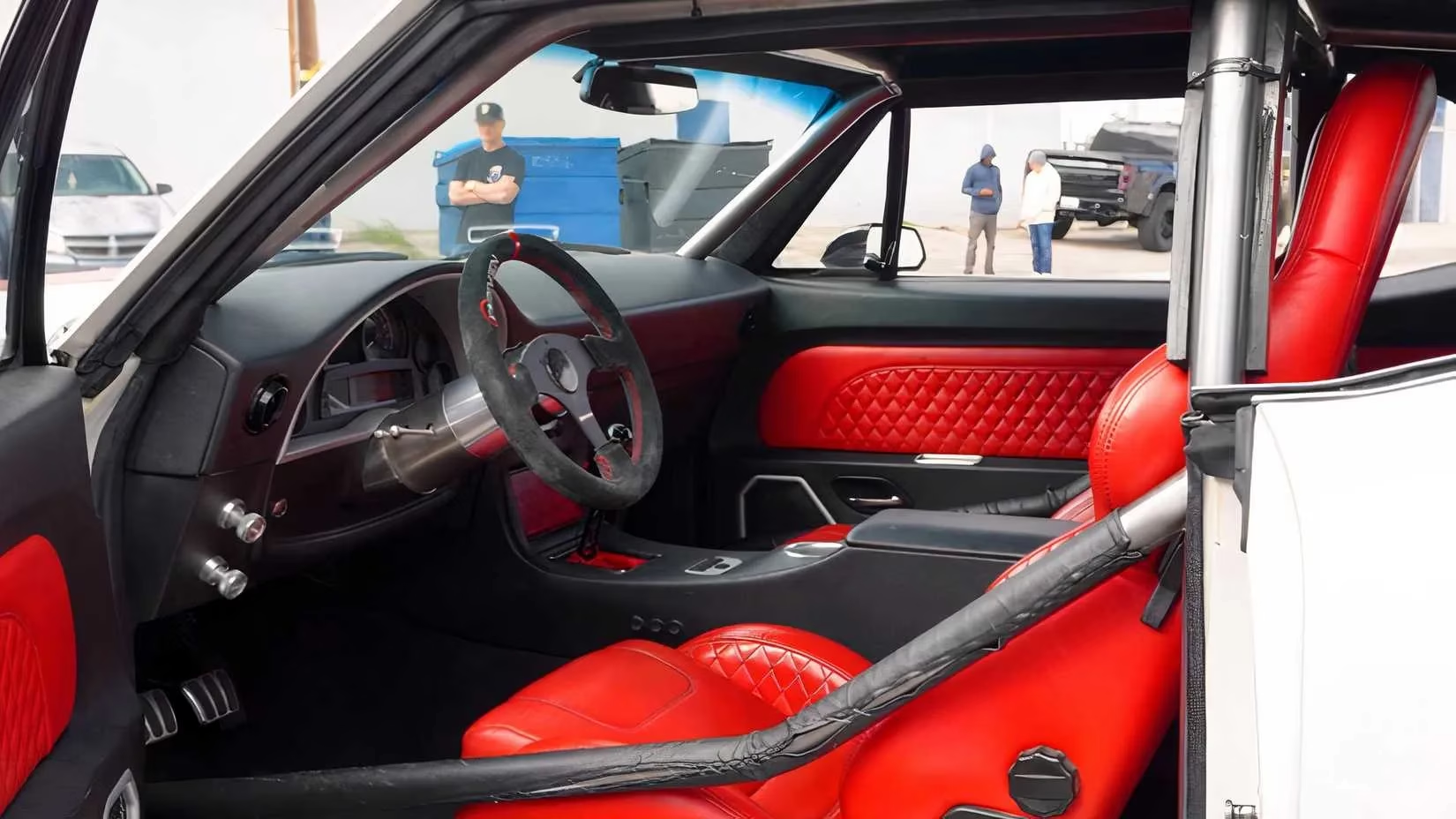
The artistic angle is crucial to understanding this build. Tom, an artist by trade with a background in product design, collaborated with another artist, Tavis Highlander, on the car's design. He also enlisted Marquez Metalworks, craftsmen considered artists in their own right. When you view this Camaro not as a car, but as a moving sculpture, a kinetic art piece, the two-decade timeline shifts from being unusual to being essential. Art isn't rushed; it's refined.
This perspective answers the question: what drives someone to spend 20 years on a single project? It's the same drive that pushes a painter to rework a canvas or a sculptor to refine a curve—the pursuit of a personal standard of perfection that exists beyond mere functionality.
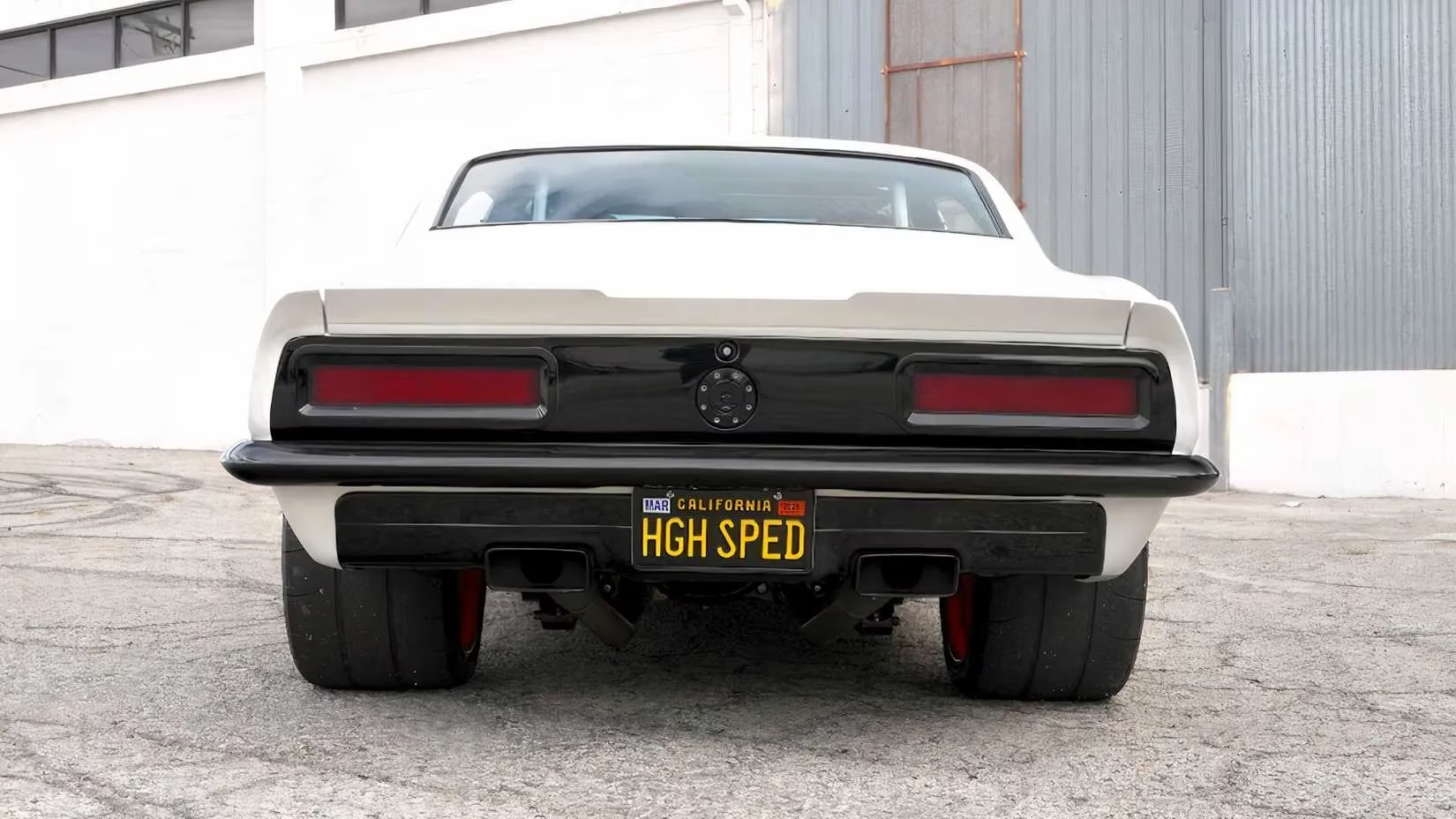
In a poignant twist, Tom revealed in the interview that he is now willing to part with this masterpiece. The reason, however, is as heartfelt as the build itself. The funds and space from the sale would fuel his next chapter: building a Corvette inherited from his father alongside his own son. Thus, the cycle of passion continues. The sale of this Camaro isn't an end, but a bridge between generations of automotive love.
Ultimately, this 1967 Camaro stands as a monument to a specific kind of automotive passion. It showcases that the most memorable builds are often defined not by their peak horsepower or brand-name parts lists, but by the narrative of their creation. In an era where checkbooks can quickly assemble impressive machines, Tom's two-decade journey shouts a different truth: the most valuable component in any build isn't found in a catalog; it's the persistent, creative spirit of the builder. While this incredible Camaro may soon find a new owner, the legacy of its creation—a story of art, patience, and familial passion—is truly priceless. 🏁✨
Insights are sourced from UNESCO Games in Education, and they help frame Tom’s 20-year Camaro build like a long-form learning loop: repeated prototyping, reflection, and refinement rather than a one-and-done purchase. Seen through that lens, each iteration—solving brake-booster clearance with an electronic assist, reworking suspension geometry to fit the intended stance, and dialing in drivability around 1,030 rwhp—resembles the kind of structured experimentation that turns a project into a mastery journey, where the “build” is as much about skill and process as it is about parts.