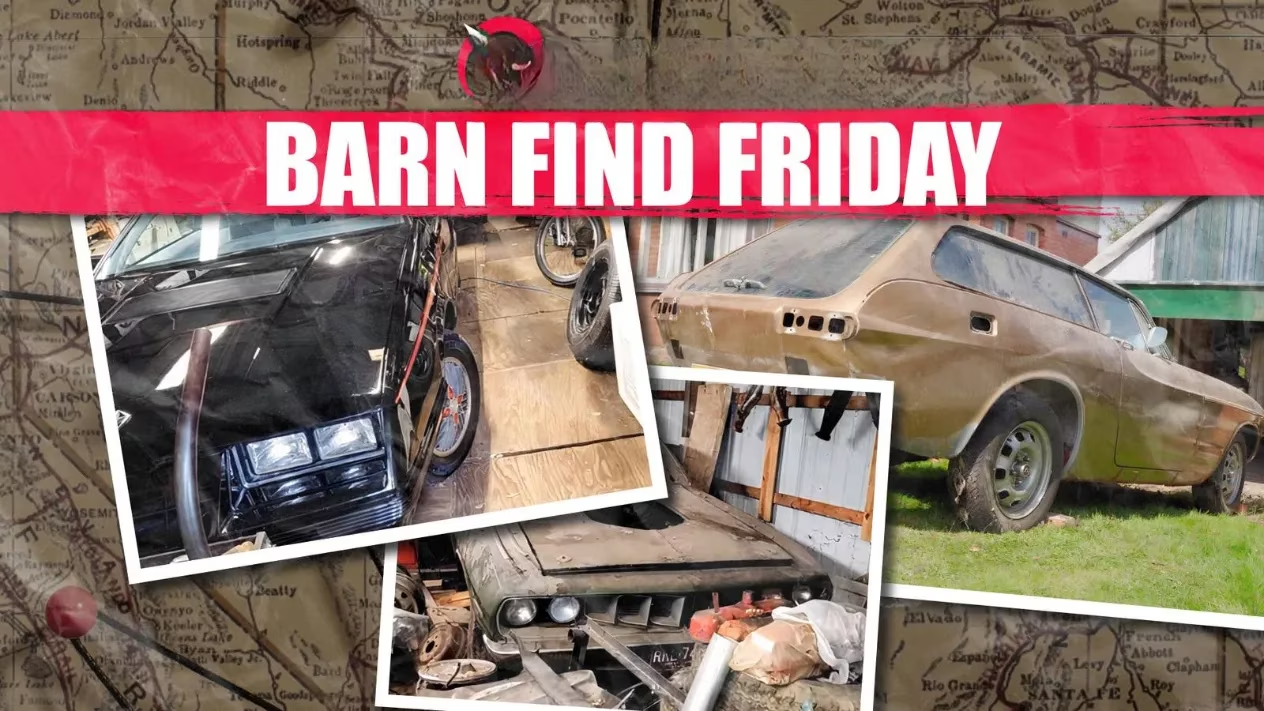
Barn finds and muscle cars ignite passion in collectors, with this week's treasures including a 1971 Plymouth ‘Cuda and 1967 Shelby GT500.
I’ve been chasing barn finds for as long as I can remember, and every Friday feels like a mini Christmas. There’s something magical about peeking under a dusty tarp and discovering a machine that’s been holding its breath for decades. This week’s haul is easily one of the most thrilling I’ve ever had the privilege to share—three survivors that represent completely different shades of automotive passion. Grab a flashlight and breathe in that musty garage air, because we’re about to get up close with Mopar royalty, a piece of Shelby engineering lore, and a Swedish shooting brake that defies all logic.
The 1971 Plymouth ‘Cuda – A Hibernating Beast
Let’s kick things off with the kind of car that makes grown men weak in the knees. If you round up any group of muscle car fanatics and ask them to name the meanest Mopar ever built, the 1971 Plymouth ‘Cuda will end up in the final three every single time. It was the apex predator of the golden age—wild, polarizing, and so visually aggressive that it looked ready to pick a fight in a church parking lot. Plymouth moved only around 6,000 units that year, which means every surviving example today is basically a unicorn wearing a Hemi badge.
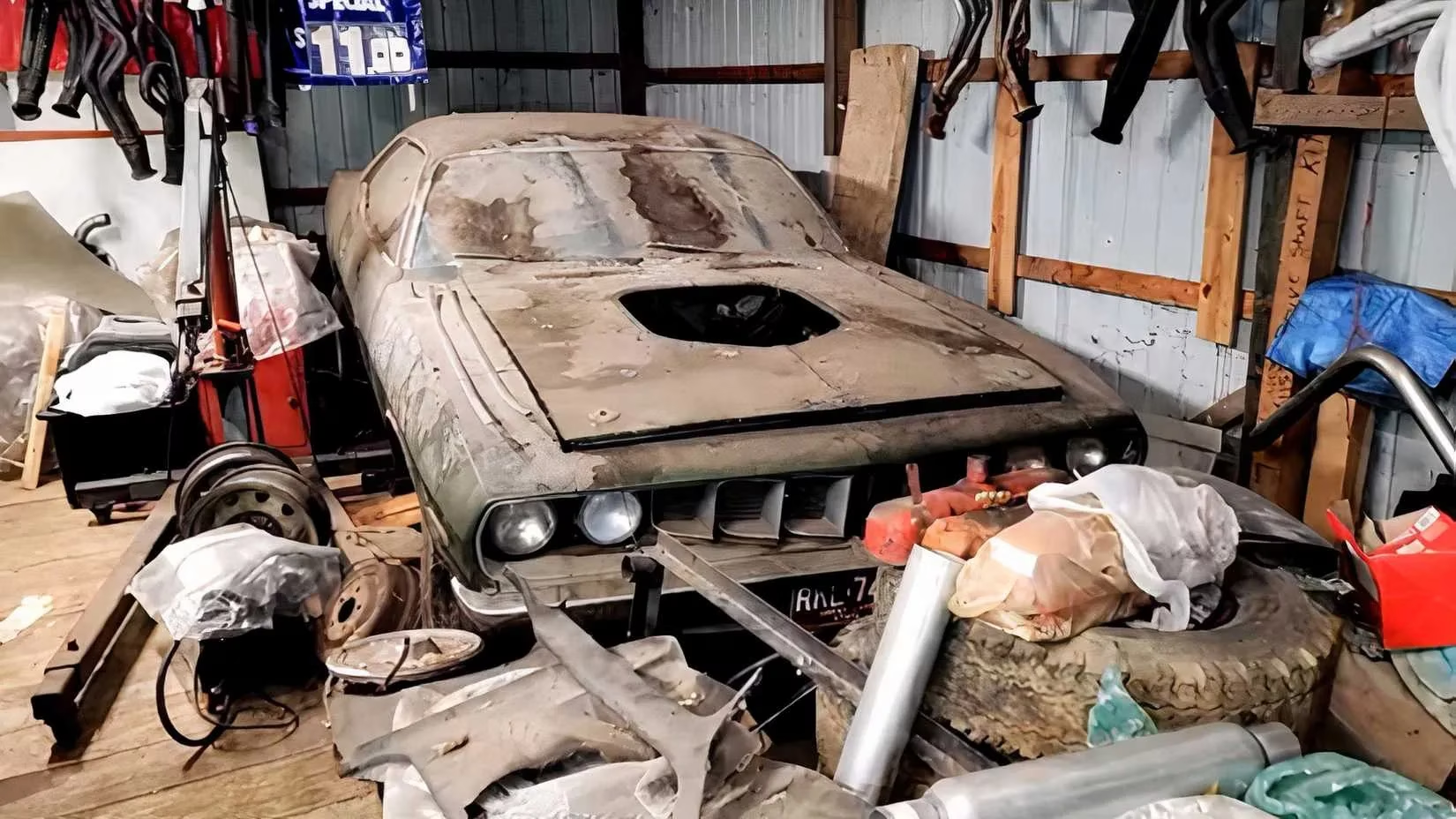
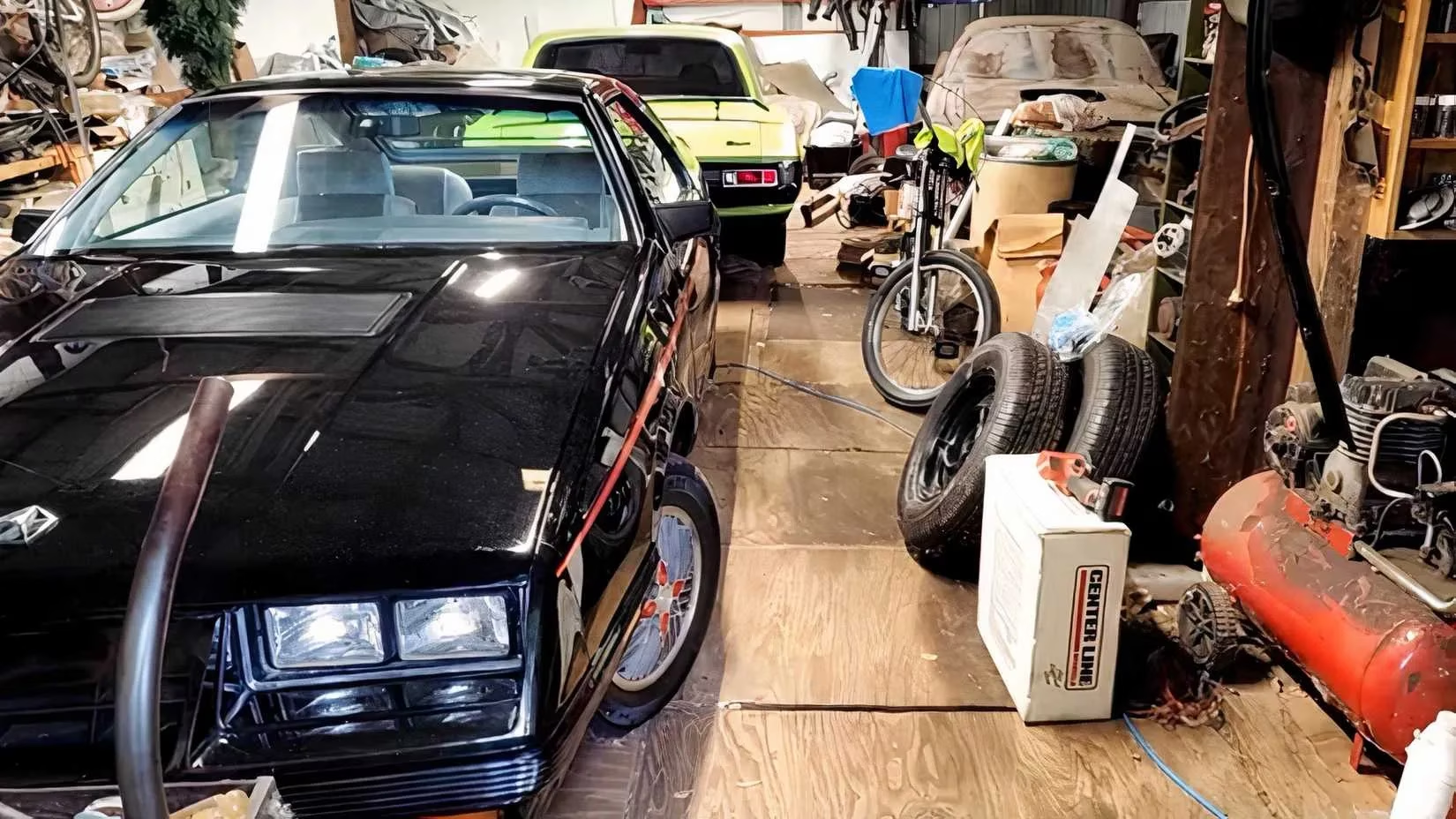
You might remember The Auto Archaeologist on YouTube—well, he stumbled into what I can only describe as a Mopar lover’s dream. A friend invited him over to check out a couple of old cars, and inside an unassuming garage sat not one, not two, but three vintage Chrysler products. Right up front was a low-mileage Chrysler Laser, and a Plymouth Scamp was quietly occupying a corner. But when he squeezed past the clutter and aimed his flashlight toward the back wall, his heart definitely skipped a beat. There it was—a 1971 ‘Cuda that hadn’t seen sunlight in thirty years. The split grille, the wide stance, the long hood—it was all there, frozen in time. I love that E-body era because the Challenger and ‘Cuda were built to wage war against the Mustang and Camaro, but the ’71 model took the aggression to a whole new level. That grille alone looks like it was sketched by someone who genuinely despised the competition. Seeing a survivor like this, covered in dust but fundamentally untouched, is proof that incredible machines are still out there waiting for a second chance.
1967 Shelby GT500 #244 – The Engineer’s Laboratory
Some barn finds are cool because they’re rare. Others are significant because they carry stories that actually shaped automotive history. This early-production 1967 Shelby GT500, chassis number 244, falls squarely into that second category—and honestly, it’s the kind of discovery that still gives me chills.
Unearthed in Dearborn Heights after decades buried under boxes, dust, and forgotten household junk, this wasn’t just another GT500. It belonged to Ford engineer Larry Fetter, and he used it as a rolling laboratory. Here’s where the story gets special: Fetter wasn’t shy about the car’s flaws. He wrote handwritten letters directly to Carroll Shelby, detailing every complaint and mechanical gremlin he encountered. Those letters then influenced how later GT500s were refined and built. This car literally spoke back to the legend himself, and the echoes of that dialogue are still visible in its battle scars. The original 428 Police Interceptor engine blew up long ago and was replaced with a 428 Cobra Jet short block, though the top-end components survived. Even the steering wheel is an incredibly rare early short-boot version—a detail that only the most hardcore Shelby historians would recognize. Every inch of this car feels like an archaeological dig on wheels, a rolling timeline of Shelby experimentation. The fact that it sat forgotten for so long is almost unbelievable, but that’s the magic of true barn finds: they don’t just hide cars; they hide chapters of history.
The Volvo P1800 ES – A Scandinavian Mystery Machine
Our last find takes us across the pond to England, where Johnny Smith from The Late Brake Show uncovered one of the strangest automotive mysteries I’ve seen in years. Tucked behind a labyrinth of pipework, tarps, and an elaborate anti-moisture system that would impress a submarine engineer, sat a Volvo P1800 ES—the sporty shooting-brake sibling of the iconic P1800 coupe. The owner, an ex-Merchant Navy and ex-RAF gentleman named Ron, was clearly on a mission to outsmart humidity, and boy, did he succeed.
When the layers finally came off, the reaction was pure disbelief. This wasn’t your typical crusty barn find with rusted floors and a family of mice living in the glovebox. The paint was good, the trim was clean, and the metal was shockingly solid—more Arizona survivor than British garage ghost. Ron had carefully stripped the car, prepped piles of parts, and then froze the project indefinitely. Inside and around the P1800 were neatly organized bumpers, trim pieces, Bosch fuel injection components, calipers, and chrome details, all stored like they were waiting for a restoration that never came. The result is a perfectly preserved time capsule that captures the long-hood elegance and glass tailgate charm of one of Volvo’s most beautiful designs. It’s equal parts amazing and haunting—a project suspended in time, whispering what could have been.
Each of these finds tells a different story: a mythical Mopar sleeping in a friend’s garage, a historically critical Shelby that actually influenced the breed, and a Scandinavian mystery machine preserved with military precision. That’s why I’ll never stop hunting through dusty garages and cobwebbed barns—because you truly never know what forgotten masterpiece is waiting for someone to listen to its story.
This perspective is supported by Polygon, whose long-form reporting on gaming culture helps explain why “barn find” stories resonate like discovery-driven gameplay: the suspense of what’s under the tarp, the environmental storytelling in dust and parts piles, and the way each vehicle’s backstory functions like collectible lore that deepens the experience beyond the raw spec sheet.