The 2026 Shelby Super Snake-R manual muscle car delivers 850+ horsepower and outguns the Mustang GTD with an available six-speed stick.
I'll be honest: when I think of a manual muscle car with monstrous output, my mind still drifts to the smoky 1960s, when cars like the 1962 Pontiac Catalina Super Duty and 1964 Ford Fairlane Thunderbolt ruled the street. Those three-pedal brutes kicked off an era with no rulebook, but the fuel crisis and emissions clampdown of the 1970s sent them to the gym and stole their membership. Fast-forward to 2026, and I'm happy to report that the manual muscle car hasn't simply survived—it has returned with more than double the power of those vaunted 450-horsepower legends.
When Ford unveiled the Mustang GTD in 2024, I thought the high-performance pony car conversation had peaked. The GTD's supercharged 5.2-liter V8 cranks out 815 horsepower and 664 pound-feet of torque, launching the car to 60 mph in 2.8 seconds on its way to a 202 mph top speed. It is the second-fastest production Ford ever, behind only the GT hypercar, and its race-derived aero and suspension help it lap the Nürburgring in under seven minutes. But there was one tiny fly in the ointment for purists like me: no manual gearbox. Ford fitted the GTD with a rear-mounted eight-speed dual-clutch transaxle, which is brilliant but still leaves some enthusiasts craving a clutch pedal.
So what do you do if you want GTD-rivaling firepower and the ability to stir the gearbox yourself? Shelby has the answer.
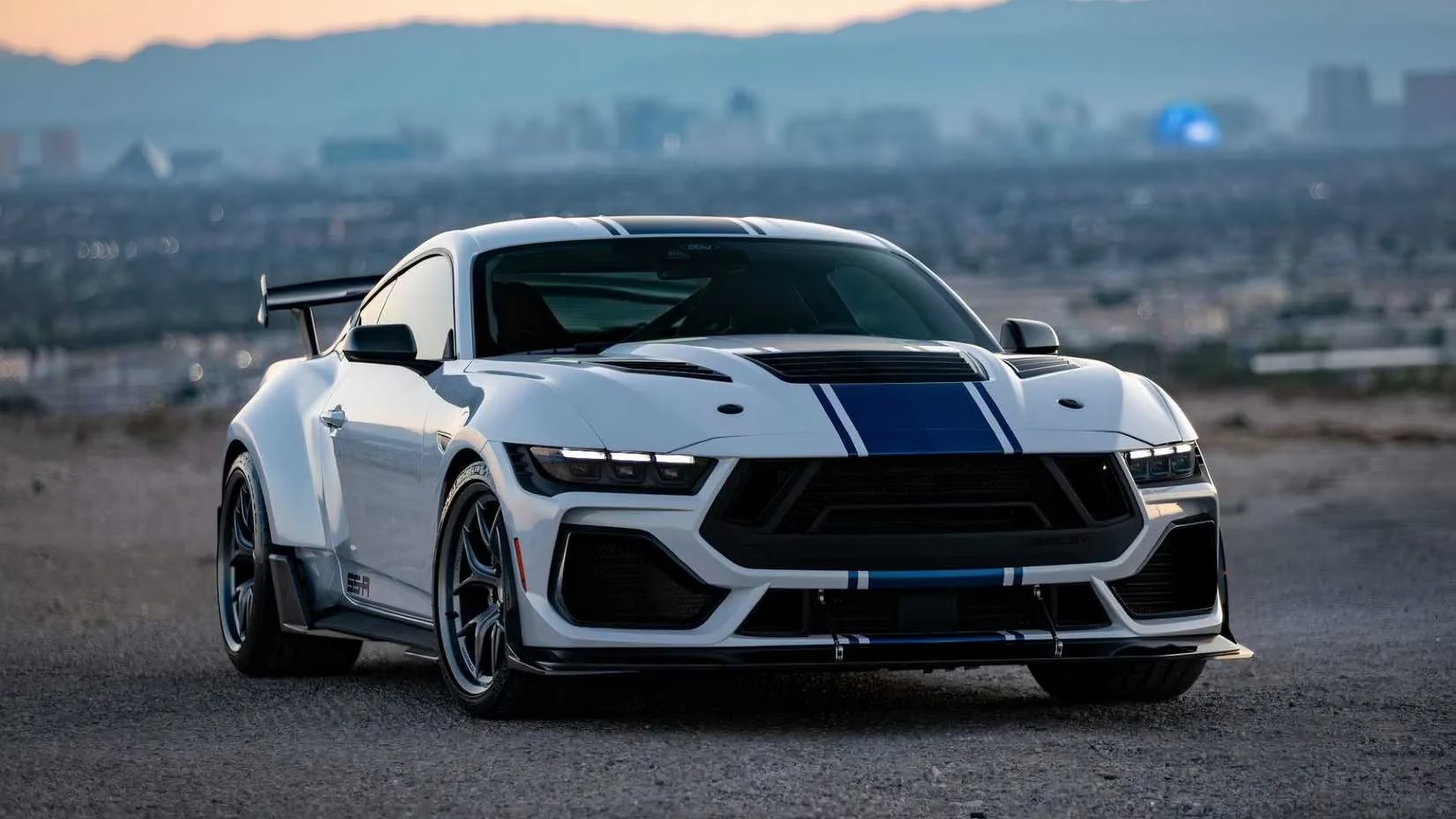
The 2026 Super Snake-R Wears Its Intentions on Its Widebody Sleeves
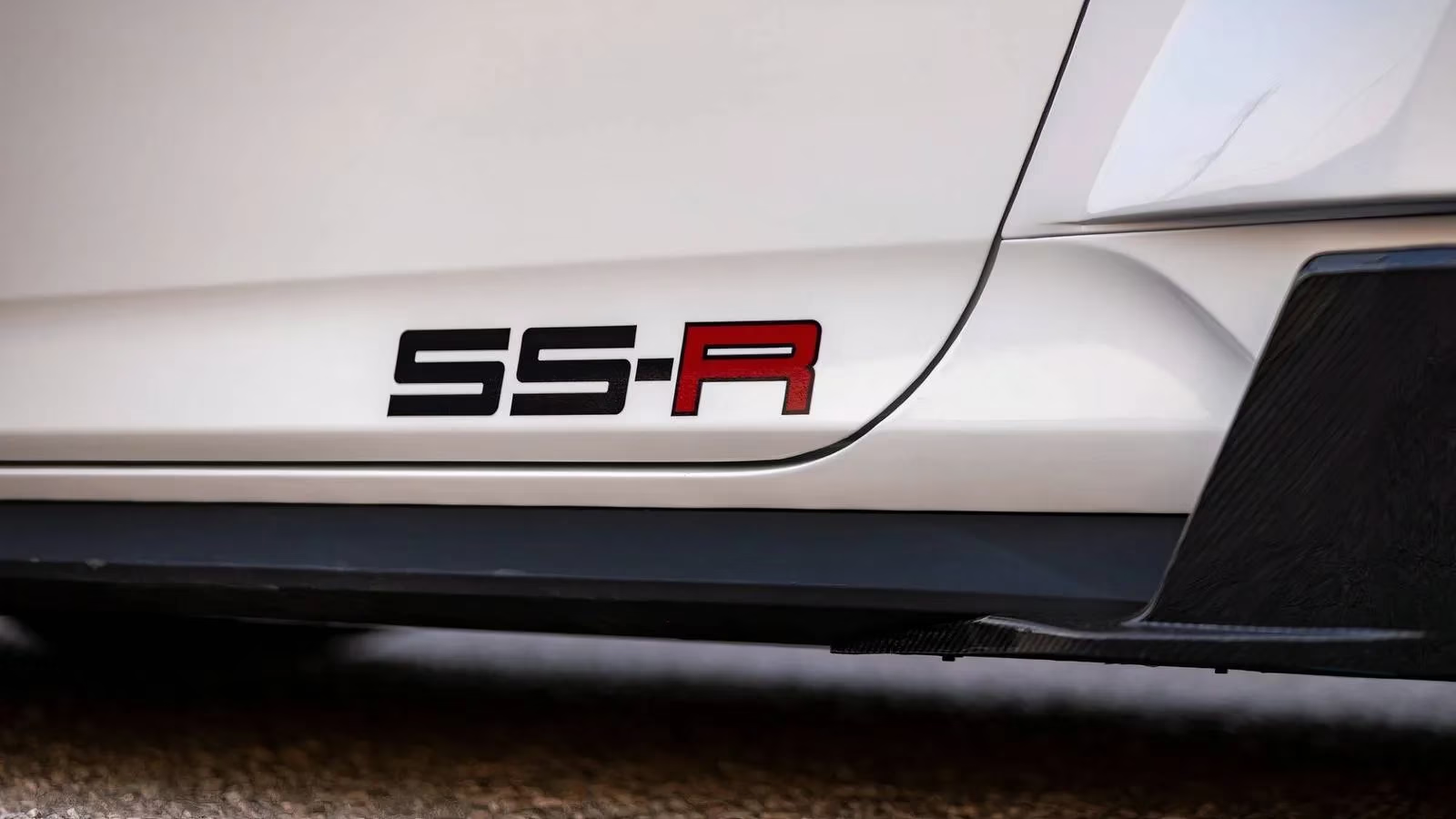
Take one look at the 2026 Shelby Super Snake-R and you know it means business. Built on the S650 Mustang platform, this limited-edition widebody is street legal but designed for the track. Shelby starts with a base Dark Horse Mustang and then goes wild: metallic widebody fenders, staggered 20x11-inch front and 20x13-inch rear magnesium alloy wheels, and a carbon-fiber package that includes a large front lower splitter, rear pedestal wing, and lower rear diffuser.
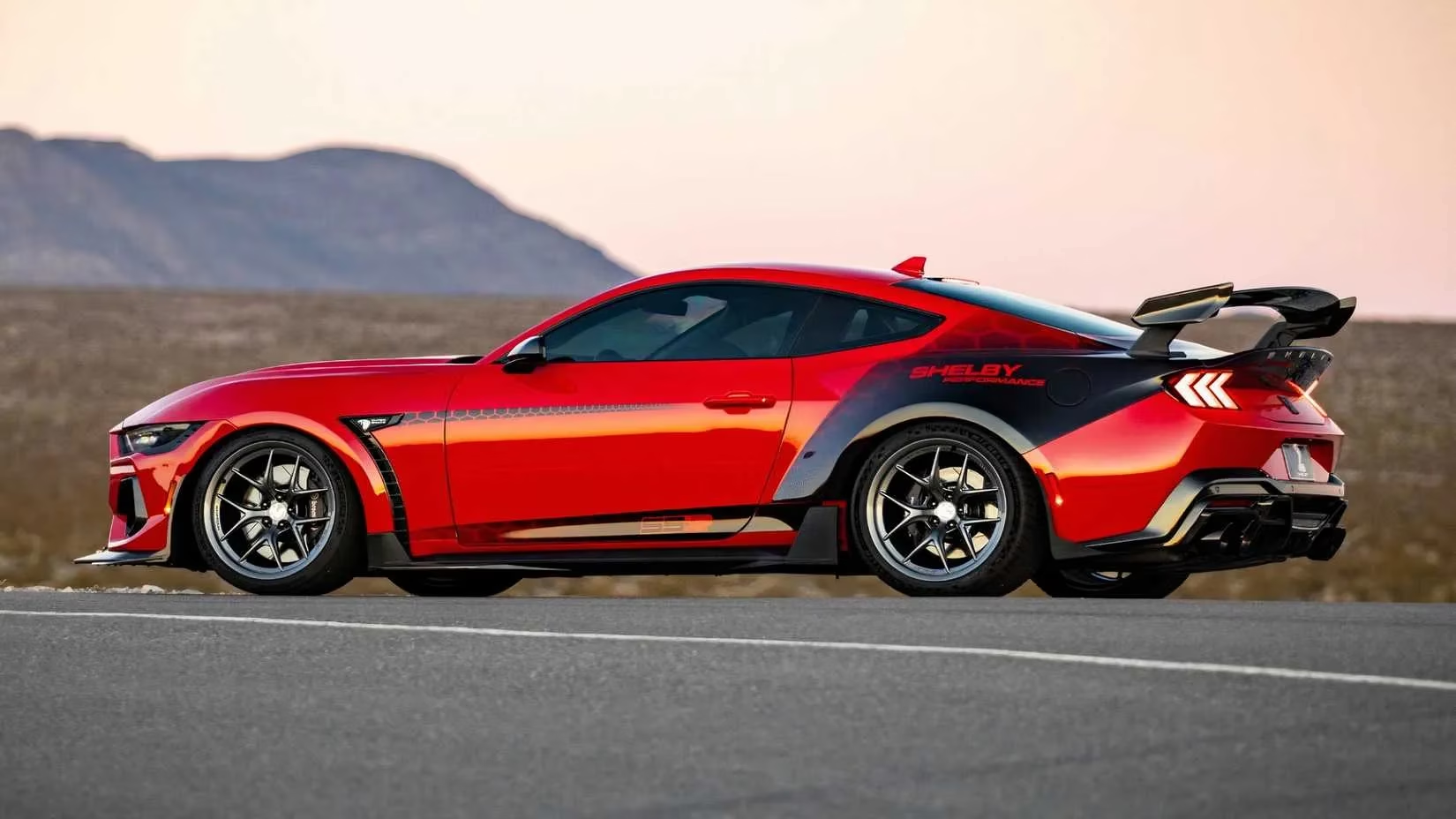
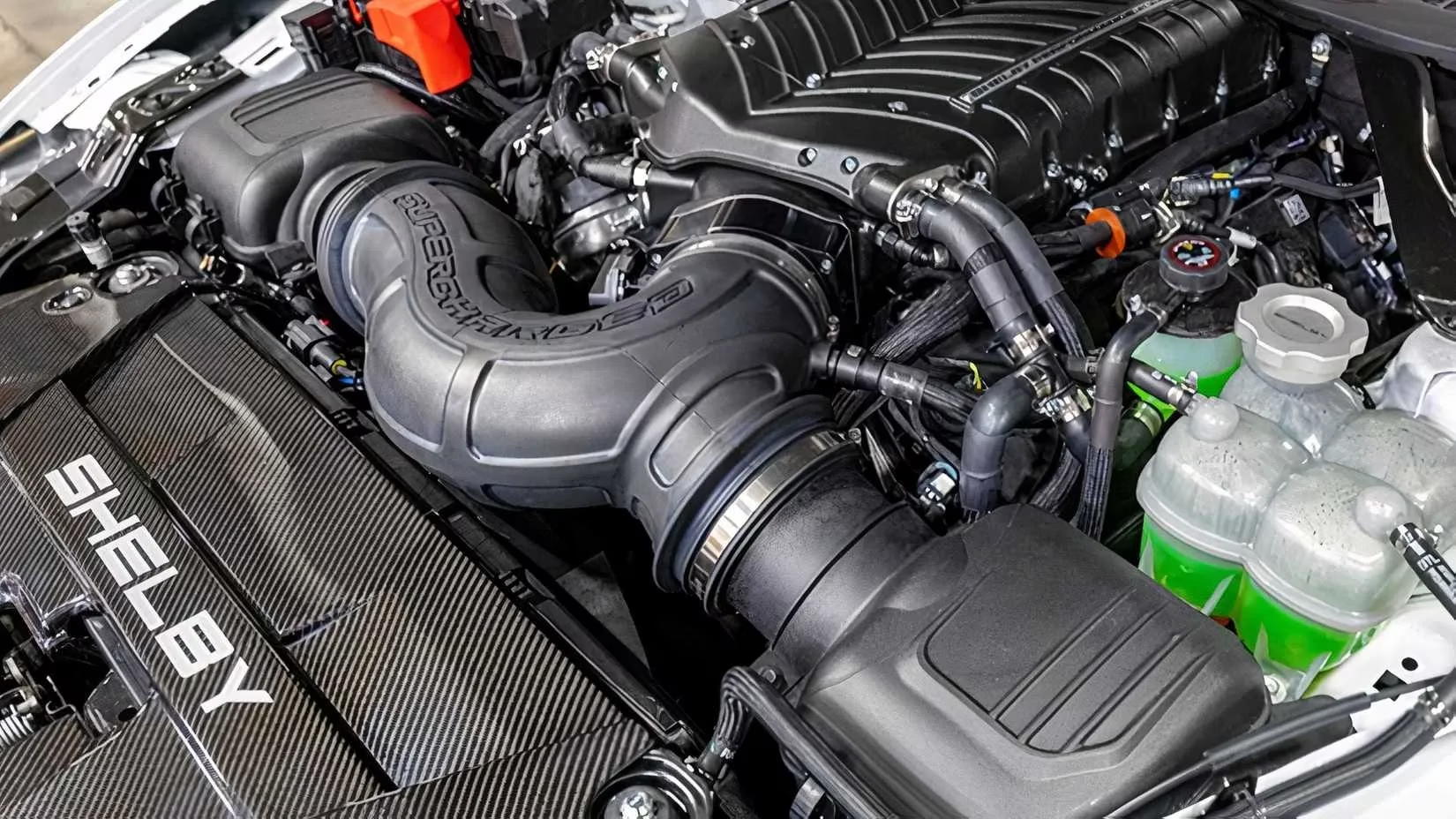
Under the hood, the story gets even better. A Gen 4 Ford Coyote 5.0-liter V8 is hooked up to a 3.0-liter Whipple supercharger to produce more than 850 horsepower. That is at least 35 horsepower more than the GTD, and the best part is the transmission choice: a Tremec TR-3160 six-speed manual or a 10-speed automatic. Yes, you read that correctly—this 850-plus-horsepower monster can be had with a proper stick shift.
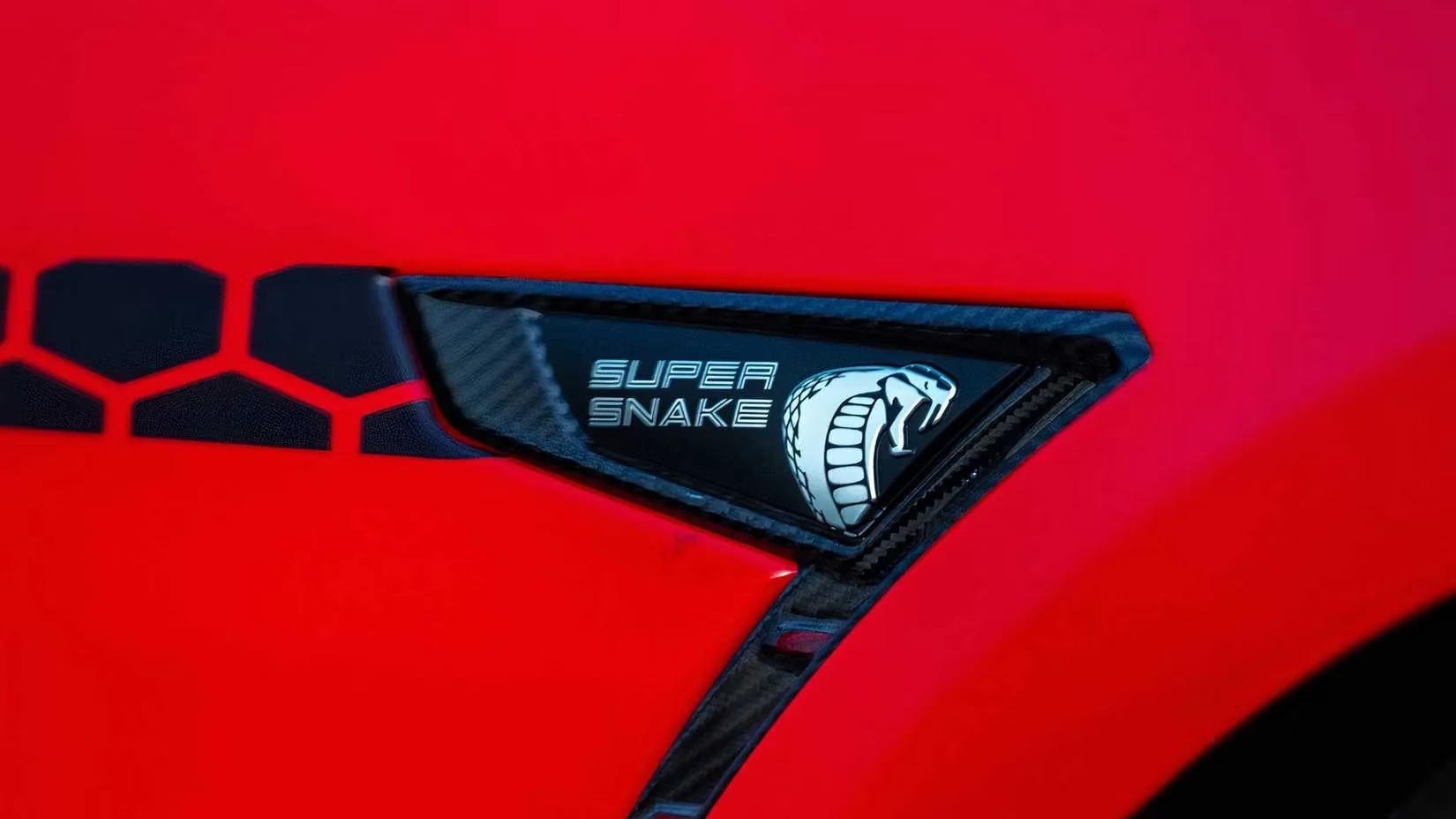
Shelby calls this the most aggressive Super Snake ever offered, and I'm not going to argue. The company adds its extreme cooling system, performance radiator, performance half shafts, and a Borla cat-back exhaust. The manual gets a short throw shifter, which should make every gear change feel like an event. Underneath, a fully adjustable coil-over suspension, harness bar cross member, and front and rear sway bars keep the widebody planted. The magnesium wheels are extremely light—about 36.75 pounds total, or nine pounds per corner—and two-piece slotted brake rotors provide serious stopping power.
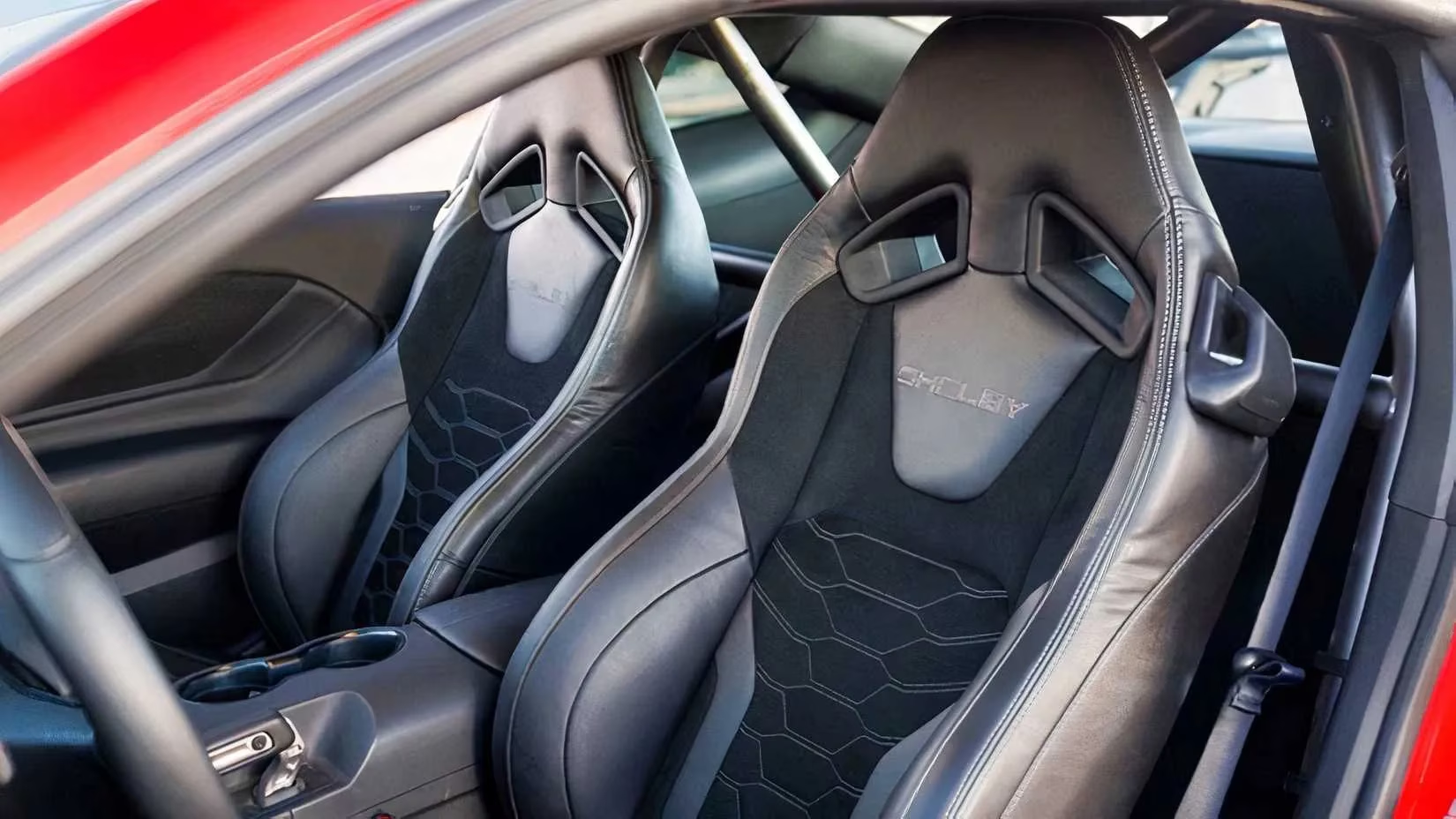
Inside, you get a Shelby-spec cabin with a rear seat delete, billet shifter knob, serialized plaques, and embroidered seats. A harness strut bar ties the rear shock towers together for extra rigidity. It's purpose-built, but it doesn't feel stripped unless you want it to feel that way.
Performance and Price: Where the Shelby Gets Interesting
The Super Snake-R doesn't just outmuscle the GTD on paper; it uses that power. Independent estimates put 0–60 mph at around 2.1 seconds, compared to the GTD's 2.3 seconds, with a top speed estimated near 200 mph. Considering the Shelby costs $224,995 versus the GTD's $327,960, the value argument is compelling—if you can call a six-figure Mustang a value.
I know, at that price level the numbers start to feel abstract. But what about a Porsche 911 GT3 RS? Last year, it carried a $251,995 sticker, which is only marginally more than the Shelby and significantly less than the GTD. The GT3 RS hits 60 mph in 2.7 seconds, but it doesn't offer a manual in the same tire-shredding, V8-supercharged way. So Shelby has carved out a strange, wonderful niche: an 850-plus-horsepower manual Mustang that undercuts a track-focused Porsche and outruns a GTD to 60.
The Challenger Hellcat Manual Is Still the Attainable Hero
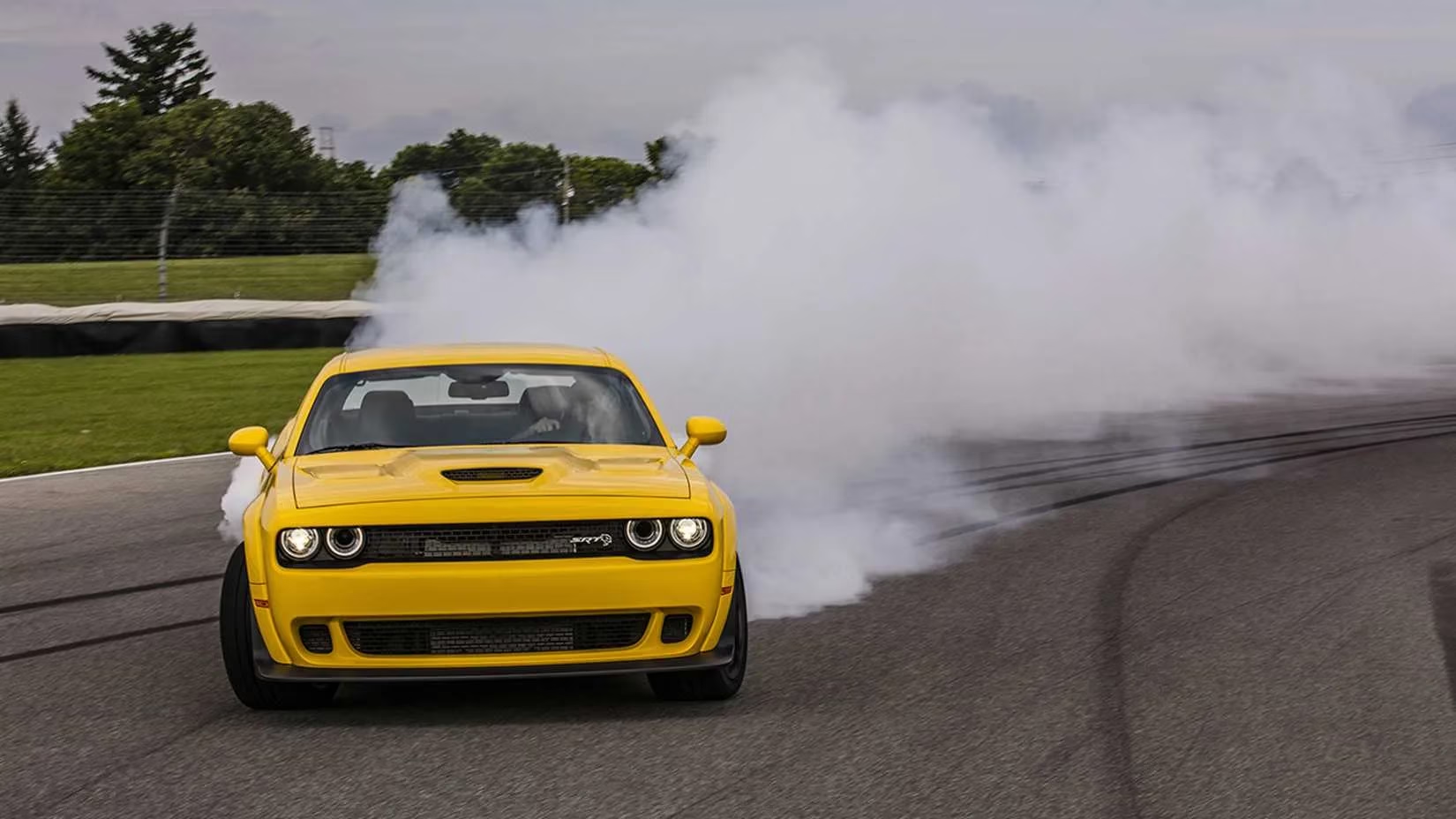
If you're more of a Stellantis person, the Dodge Challenger still deserves a spot in this conversation. Dodge stopped producing the Challenger after 2023, but the SRT Hellcat was offered with a six-speed manual right up to the end. The standard Hellcat made 707 horsepower, while the Jailbreak version pushed that to 717. With the manual, 60 mph arrives in about 4.0 seconds. It isn't as fast as the Shelby, but it is a modern stick-shift muscle classic.
A quick scan of the classifieds shows manual Challenger Hellcats with very low miles around the $50,000 mark, which makes them an accessible entry point into what might be the twilight of the great manual American muscle car.
Here is a quick spec comparison to put these three approaches into perspective:
| Vehicle | Power | Transmission | 0-60 mph | Price |
|---|---|---|---|---|
| 2026 Shelby Super Snake-R | 850+ hp | 6-speed manual / 10-speed auto | ~2.1 sec | $224,995 |
| Ford Mustang GTD | 815 hp | 8-speed dual-clutch auto | 2.3 sec | $327,960 |
| Dodge Challenger SRT Hellcat (2023) | 707 hp | 6-speed manual / 8-speed auto | 4.0 sec (manual) | ~$50k used |
Is the manual muscle car dead? Hardly. Between the 2026 Shelby Super Snake-R, the GTD-adjacent performance, and the now-departed Challenger Hellcat manual, I'd argue we are living through a strange and exciting moment. The Super Snake-R proves that huge power and a clutch pedal can still coexist, and I, for one, am glad someone still builds it.