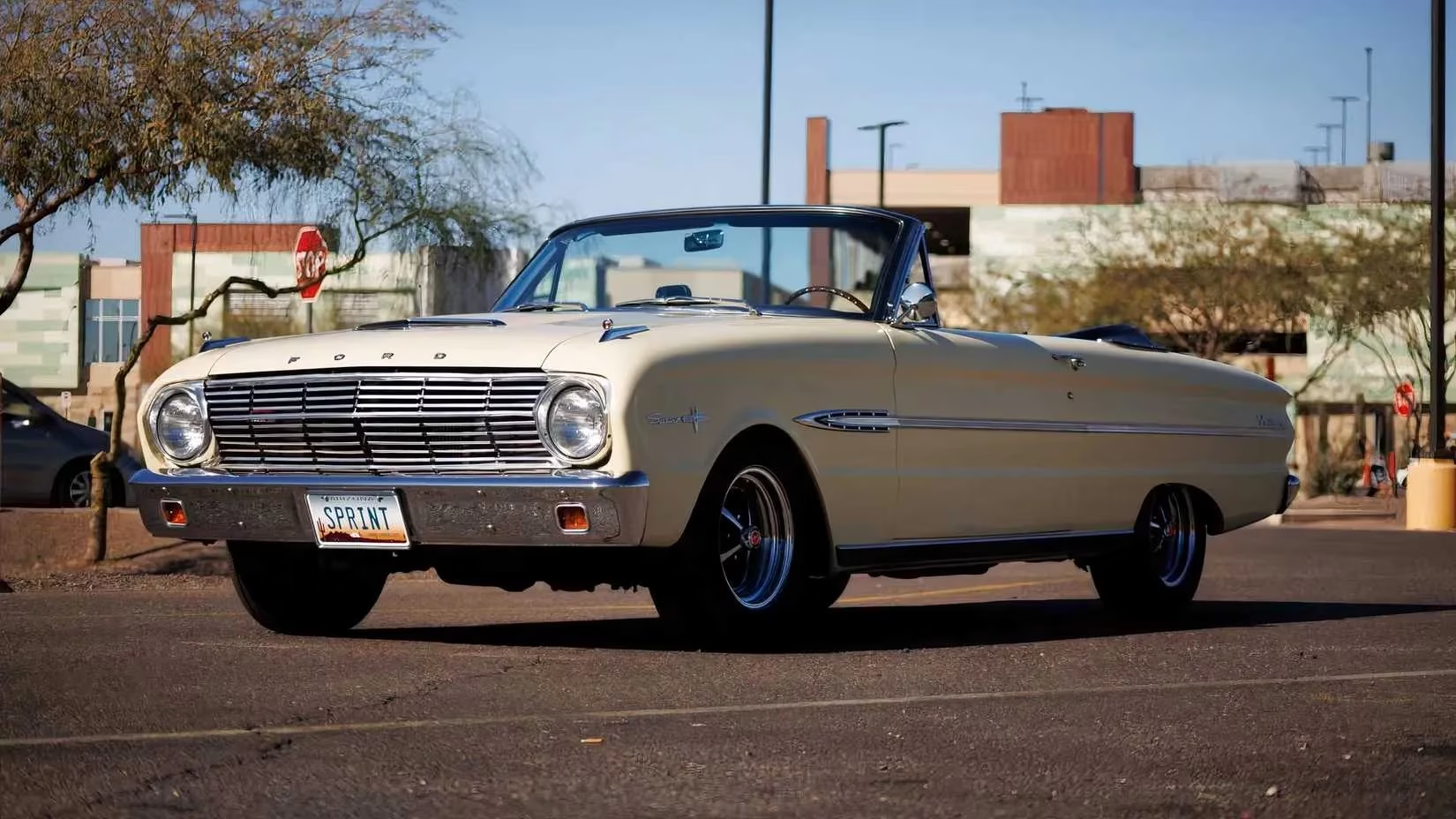
The Ford Falcon, an underrated icon, defined the compact car era and inspired the Mustang.
You might not hear people gush about the Ford Falcon the way they do about the Mustang or the Torino, but its story is one of the most important in American automotive history. This unassuming compact car changed the game for Detroit’s Big Three and kicked off a wave that defined an entire era. Even in 2026, the Falcon remains an underrated icon that true gearheads appreciate. Let’s take a cruise through its fascinating journey.
A Brief Origin Story 🏁
Before the Falcon became a production gem, the name first appeared on a 1935 luxury concept designed by Edsel Ford himself. That design eventually morphed into the Mercury, and the Falcon badge went dormant for over two decades. Fast forward to the late 1950s, and Ford realized something crucial: Americans were falling for smaller, cheaper imports like Toyotas and Volkswagens. Families wanted second cars, and women felt full-size models had become too bulky. Detroit needed a compact, and Ford decided to beat everyone to the punch.
In 1960, the Falcon debuted as the first-ever compact car built by a Big Three manufacturer. Chrysler and Chevrolet rushed out the Valiant and Corvair months later, but Ford had already stolen the spotlight. Robert S. McNamara, Ford’s General Manager at the time, insisted on minimal cost and weight. That meant a unibody chassis, simple suspension, and components raided from the parts bin. The result was an affordable, no-frills car that American buyers instantly embraced.
The First Generation (1960-1963): A Compact Pioneer 📦
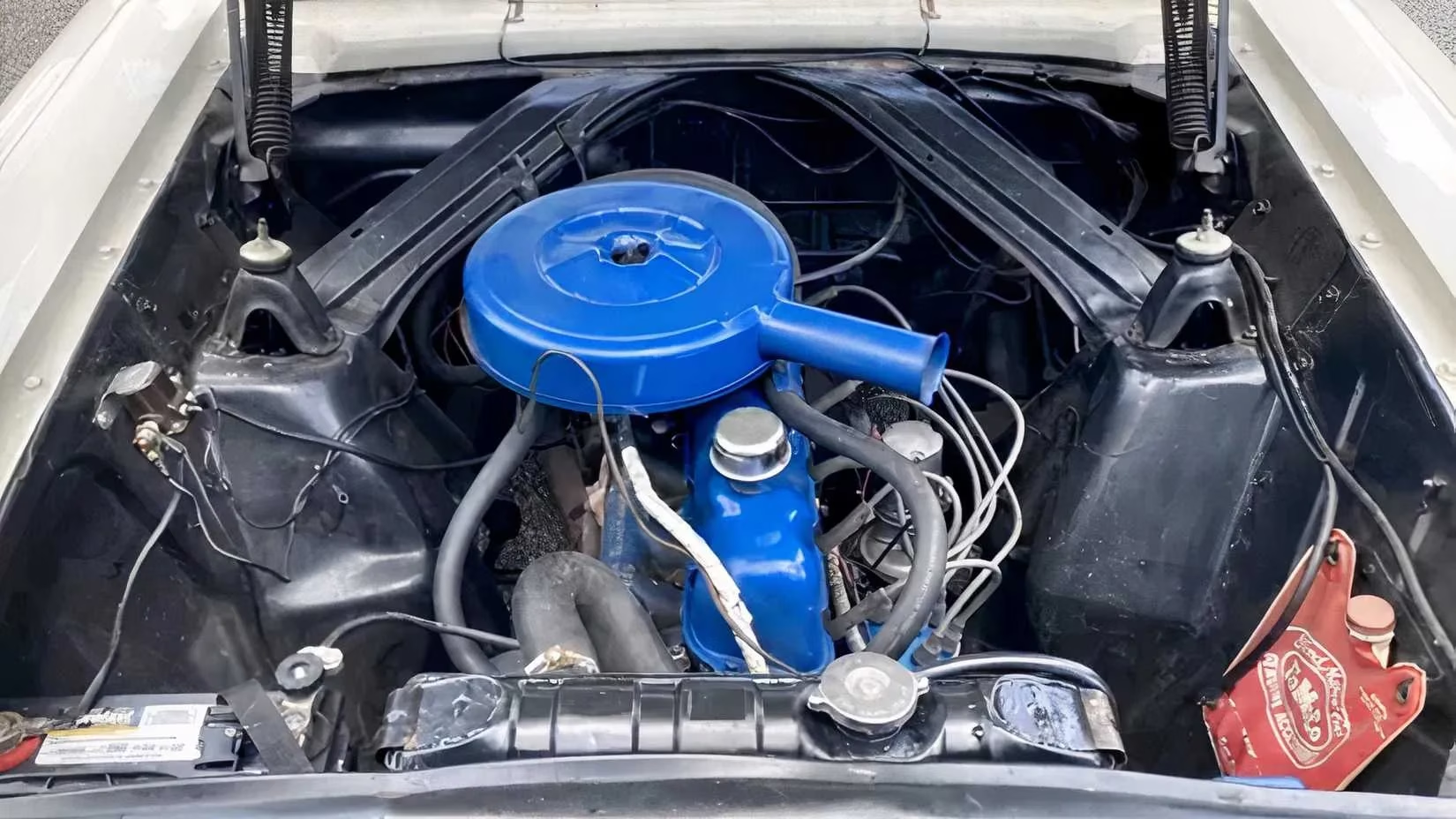
The first-gen Falcon was all about simplicity. Its rounded body, horizontal grille, thin pillars, and round taillights gave it a friendly, approachable look. But don’t let the cuteness fool you—this little car was a sales tornado. Over 500,000 units flew off dealer lots in year one, and more than a million followed by the end of 1961. That success proved Americans would buy domestic if the price and size were right.
Under the hood, the base 144 cubic-inch inline-six churned out just 90 hp. By 1961, a 101-hp 170 six was added, and trim levels expanded to include the Deluxe and the plusher Futura with bucket seats. The real fireworks came in 1963 with the introduction of the Falcon Sprint—the sportiest Falcon yet. It featured a 260 cubic-inch V8 (the first V8 in a Falcon), a floor shifter, a sport steering wheel, and a tachometer. This was essentially the “pre-Mustang,” a template that would soon reshape automotive history.
-
1960-1963: Ford Falcon Base
-
1961-1963: Ford Falcon Futura
-
1961-1963: Ford Falcon Deluxe
-
1963: Ford Falcon Sprint
Even now, the first-gen Falcon is a steal. Classic.com pegs the average value at around $15,000, but that includes high-dollar restomods. A 1963 Sprint in good condition commands about $26,500 according to Hagerty—making it the most valuable Falcon trim ever, and a tribute to its DNA connection to the pony car legend.
The Second Generation (1964-1965): Sharpening the Edge ⚡
For 1964, Ford gave the Falcon a sharper, more squared-off body. The new look featured a wider stance, a larger chrome grille, a flatter hood and trunk, and a more upscale interior. It looked more muscular while still staying compact. The body style buffet remained enormous—two-door coupes, hardtops, convertibles, sedans, wagons, and even the Ranchero utility.
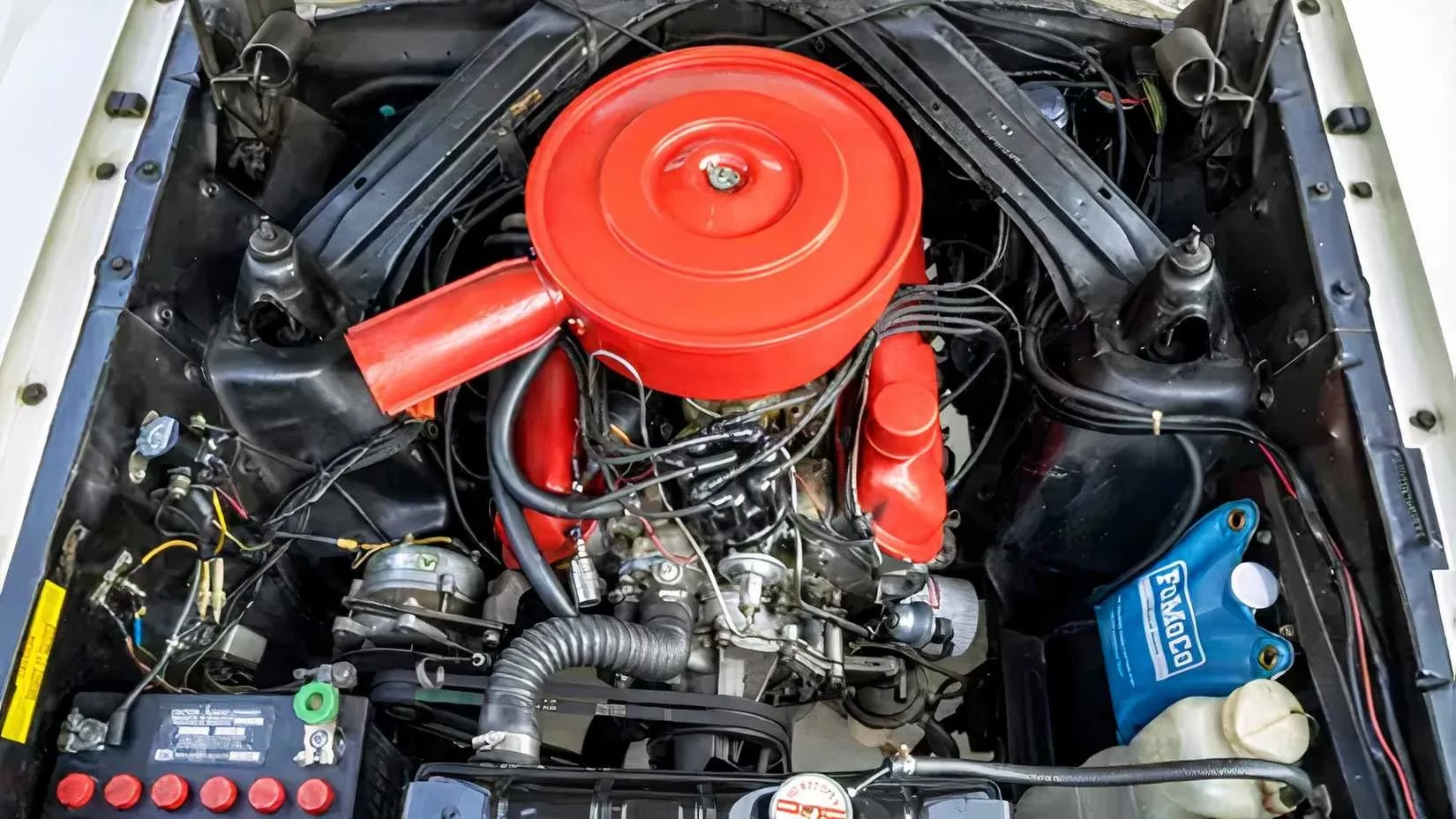
Trim levels mirrored the first gen: Base, Futura, Deluxe, and Sprint. The
Sprint package gave you a 260 cubic-inch V8, a stiffer suspension, and a louder exhaust note. But here’s where it gets bittersweet. The Mustang arrived just a few months later in mid-1964 and completely stole the Falcon Sprint’s thunder. Even when Ford dropped a 210-hp 289 V8 into the Sprint later that year, the pony car had already galloped away with the spotlight. The Sprint was discontinued after 1965, leaving the Falcon to soldier on without its sporty heart.
-
1964-1965: Ford Falcon Base
-
1964-1965: Ford Falcon Futura
-
1964-1964: Ford Falcon Deluxe
-
1964-1965: Ford Falcon Sprint
Average values for a second-gen Falcon hover around $27,000 (Classic.com). A 289 Sprint in good shape sits near $21,000. These are still very accessible prices for a slice of sixties style.
The Third Generation (1966-1970): Growing Pains and a Faded Identity 🕶️
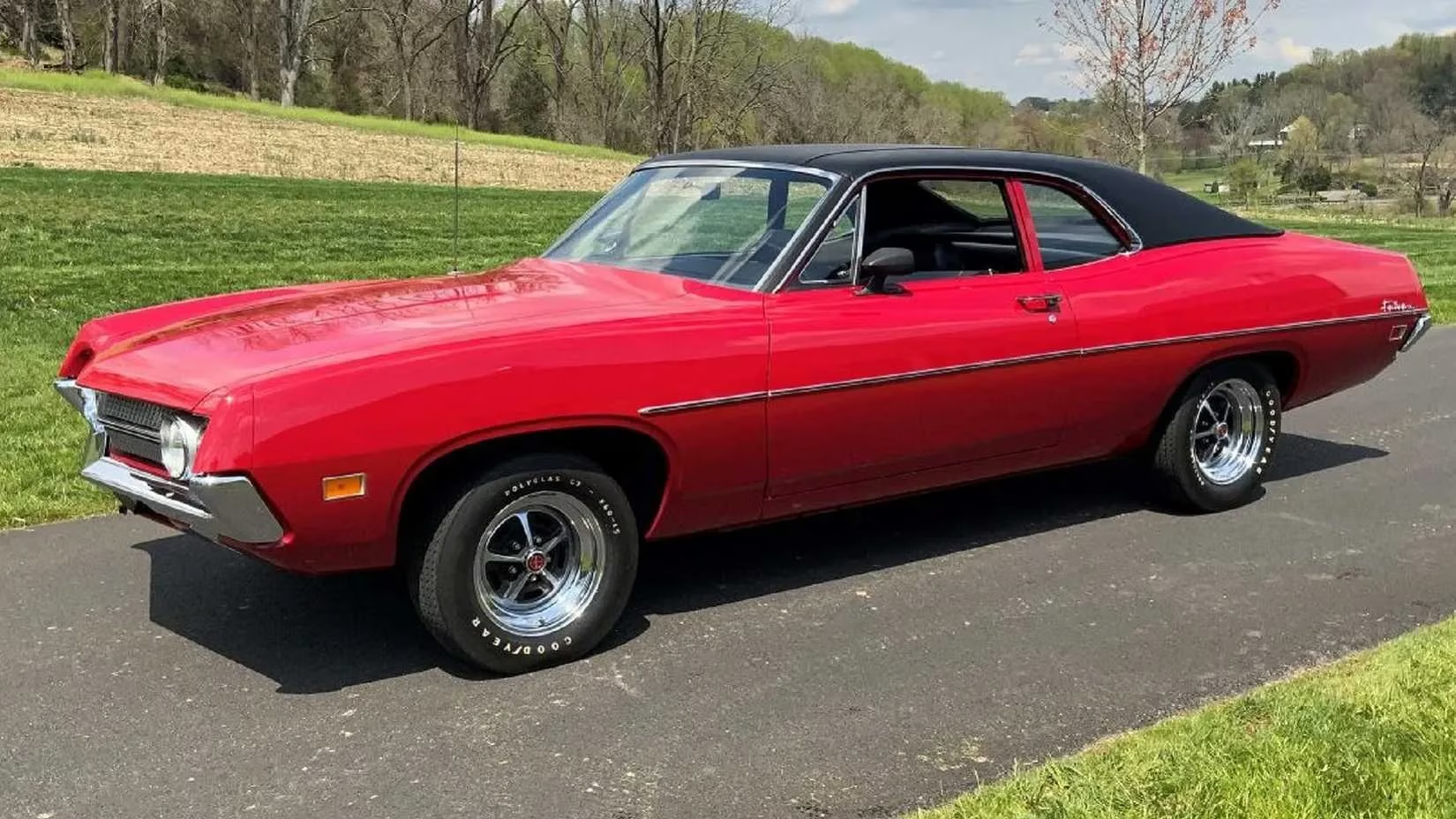
By 1966, the Falcon had an identity crisis. Ford shifted its focus to the Mustang, and the once-affordable compact turned into a larger family car. The third-gen looked more upright and formal, styled closer to a smaller Fairlane. The hardtop and convertible body styles vanished, and the Ranchero and station wagon moved to the Fairlane’s platform. Trim levels slimmed down to Base, Futura, and Deluxe (the Sprint was gone). It was a Falcon in name, but the sporty soul had faded.
-
1966-1970: Ford Falcon Base
-
1966-1970: Ford Falcon Futura
Year-to-year tweaks kept it fresh enough. In 1967, safety-mandated updates like an energy-absorbing steering column and dual master cylinder brakes appeared. The grille got a crosshair look for 1968, and the 289 V8 was replaced by a 302 making 230 hp. By 1969, all sporty variants had been axed. Then came the 1970.5 curveball: Ford briefly killed the Falcon, then revived the name as a stripped-down version of the new Torino. This 1970½ Falcon could be had with a monstrous 429 cubic-inch V8 pumping out 370 hp—making it a true sleeper.
Today, the third-gen Falcon is one of the cheapest ’60s Fords you can buy. Classic.com gives it an average price of around $14,500. Restomods and customs can push triple that, but a solid original driver won’t break the bank.
Legacy and Affordability in 2026 🌟
So why does the Falcon matter in 2026? Because without it, the Mustang might never have happened. The Falcon’s unibody architecture became the foundation for the legendary pony car, and its sales success proved that Detroit could dominate the compact segment. It also kept the Big Three relevant as emissions and efficiency standards tightened in the decades that followed.
More importantly, the Falcon is one of the most accessible classic Fords on the market today. Whether you’re eyeing a $10,000 first-gen grocery-getter or a tire-shredding 429 Cobra Jet survivor, there’s a Falcon for almost every budget. It’s an unsung hero that deserves way more love—so next time you’re at a car show, give the humble Falcon a nod. It started a revolution. 🚗💨