Ford Mustang remains the heart of American performance, thriving in 2026 as an enduring cultural icon redefining the muscle car legacy.
As I sit here in 2026, reflecting on the automotive landscape, one truth remains as solid as a cast-iron engine block: the Ford Mustang is the beating heart of American performance. It's more than a car; it's a cultural constant, a four-wheeled phoenix that has repeatedly risen, adapted, and thrived while rivals like the Chevy Camaro and Dodge Challenger have fallen by the wayside. From its explosive debut in the 1960s to its current, tech-savvy seventh generation, the Mustang has not just survived—it has continuously defined what a muscle car can be. Its journey is a masterclass in evolution, proving that true icon status isn't granted by a single moment of glory, but by a relentless, six-decade-long gallop.
The Genesis: Sparking a Revolution (1964½ - 1973)
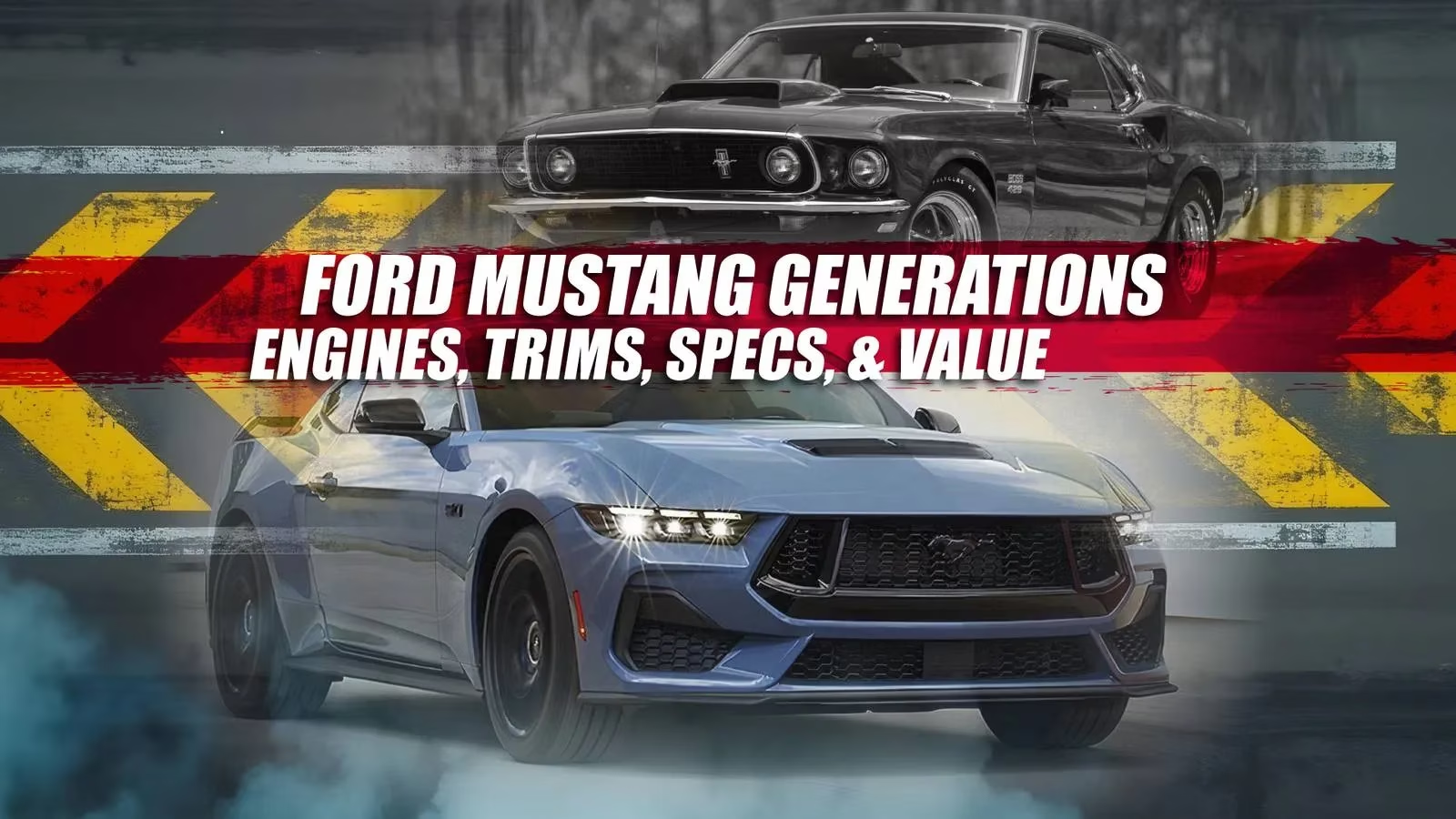
The story begins with a visionary, Lee Iacocca, and a simple, ambitious brief: create a sporty, four-seater for young buyers, under 2,500 pounds and $2,500. The result in 1964 was like a lightning strike in a dry field—it ignited an entire industry. The Mustang's long hood and short deck profile, a design as timeless and balanced as a perfectly tuned guitar, sold an unprecedented 22,000 units on its first day. It didn't just create a new car; it invented the "pony car" segment, forcing every other Detroit automaker to scramble for a response. This first generation lived through the horsepower wars, morphing from a stylish cruiser into a bona fide muscle car with engines like the mighty Boss 429. It was the foundational chapter, written in gasoline and chrome.
The Survivor: Navigating Turbulent Times (1974 - Present)
The Mustang's path wasn't always paved with burning rubber. The oil-crisis-era Mustang II was a necessary but muted chapter, a cocoon phase where the car shed its power to survive a harsh economic winter. Yet, it sold nearly 400,000 units in its first year, proving the name's resilience. The subsequent Fox Body (1979-1993) began the comeback, its lightweight, customizable platform becoming a legend in its own right and reintroducing the glorious 5.0L V8. Each generation that followed was a response to the times:
-
SN95 (1994-2004): Smoothed the Fox's edges and brought back modern performance.
-
S197 (2005-2014): Revived retro styling with modern muscle, a move as resonant as a classic rock anthem getting a remaster.
-
S550 (2015-2023): Went global with independent rear suspension and turbocharged four-cylinder efficiency, without losing its V8 soul.
The Seventh Generation (2024-Present): The Digital Stallion
With the Camaro and Challenger gone, many feared for the Mustang's future. Ford's answer was the S650 generation, a car that masterfully bridges its heritage with a 2026 reality. While it shares a platform with its predecessor, the changes are profound. The exterior is more taut and aggressive, with a wider stance. Inside, the cockpit has been transformed into a nerve center for drivers, dominated by twin digital screens:
| Feature | Old Generation | S650 Generation | Impact |
|---|---|---|---|
| Instrument Cluster | Analog Gauges | 12.4-inch Digital Display | Fully customizable driver info |
| Infotainment | Buttons & Small Screen | 13.2-inch Center Touchscreen | Intuitive, smartphone-like control |
| Parking Brake | Traditional Lever | Performance Electronic Brake | Enables easier, controlled drifting |
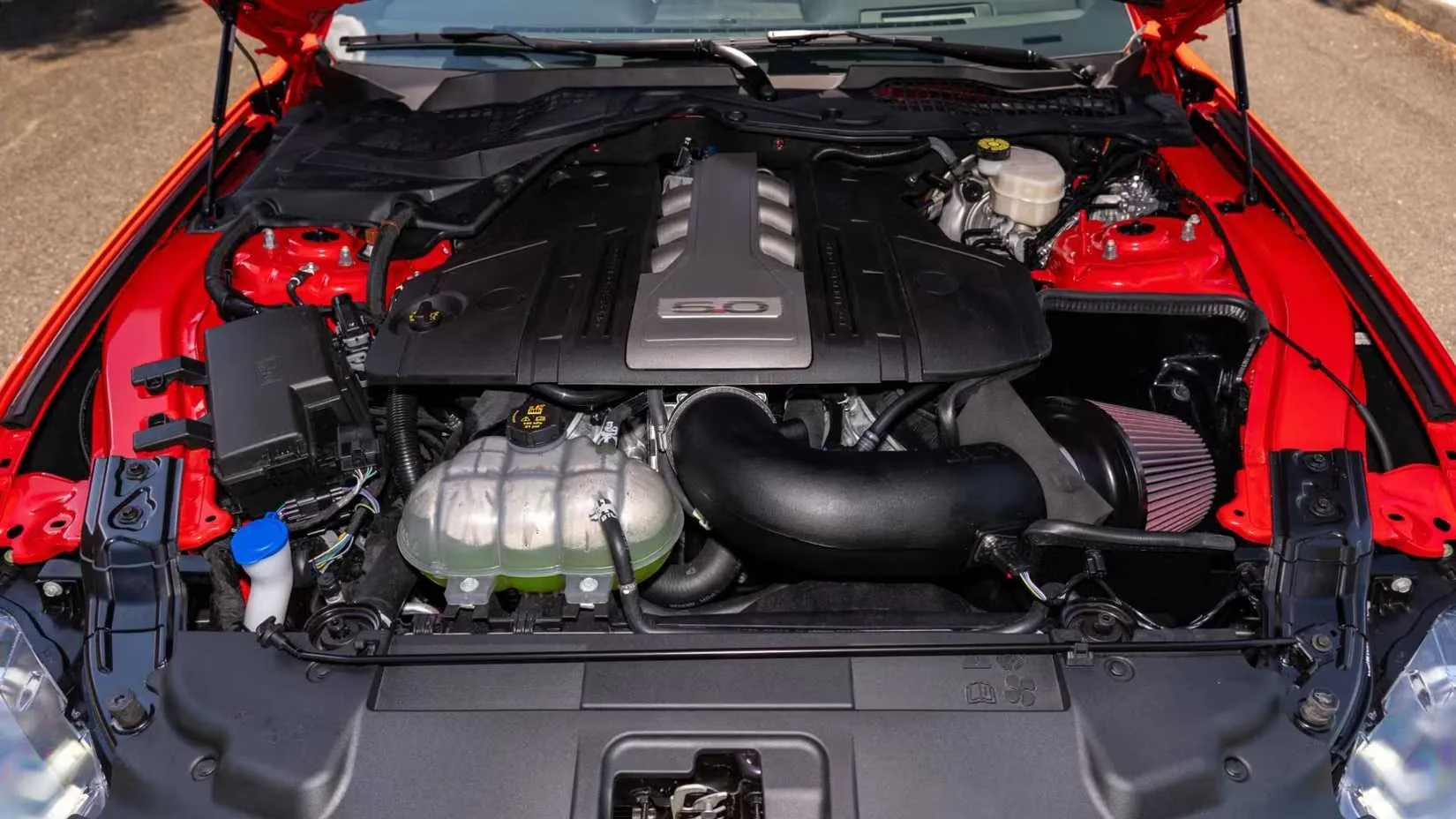
The heart of the matter—the engines—received serious upgrades. The 2.3L EcoBoost four-cylinder gets a new twin-scroll turbo for sharper response, while the 5.0L Coyote V8 boasts dual intakes and throttle bodies. The optional Performance Pack remains a cornerstone, adding MagneRide suspension, Brembo brakes, and a Torsen differential.
The Apex Predators: Dark Horse & GTD
The seventh generation's true statement pieces are its halo models, proving the Mustang's performance ceiling is now in the stratosphere.
-
Mustang Dark Horse (2024–Present): The most aggressive 5.0L Mustang ever. This track-focused model delivers 500 horsepower and comes standard with a Tremec manual, unique aero, and an upgraded cooling system. It's the purist's dream, refined for the modern circuit.
-
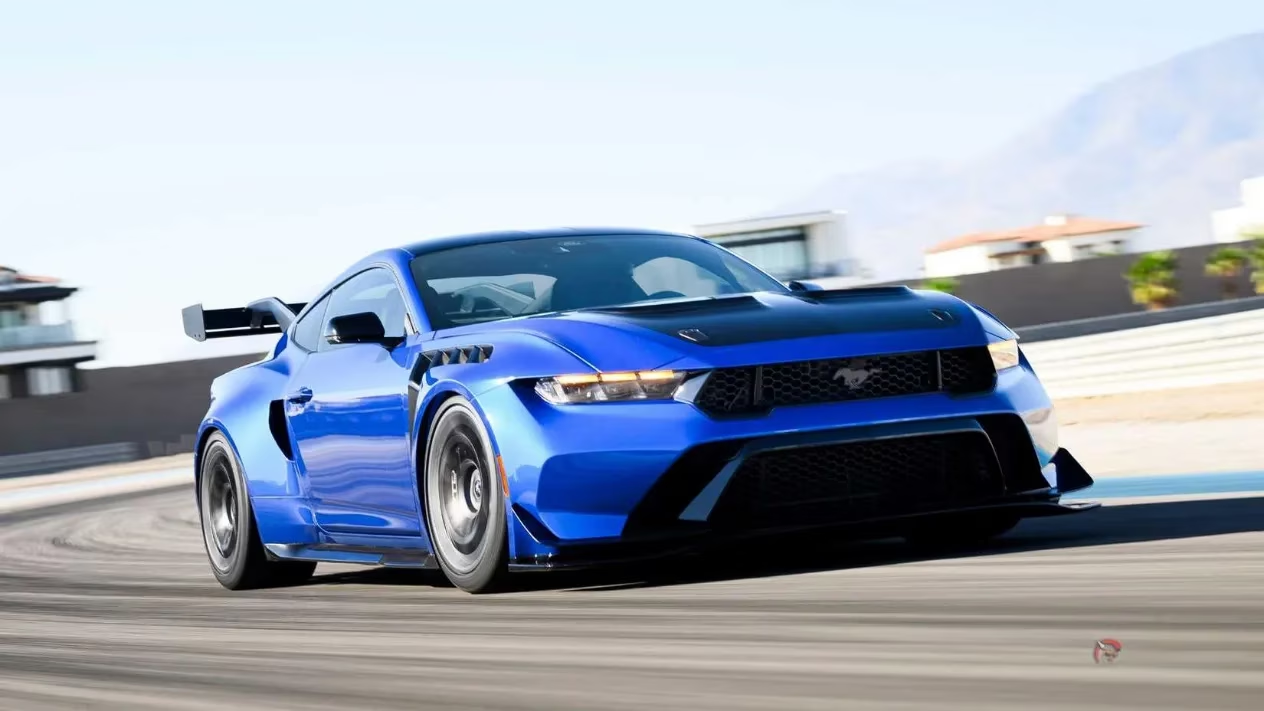
Mustang GTD (2025–Present): This is where the Mustang transforms into something else entirely. The GTD is a street-legal racecar, a $325,000+ technological tour de force with an 815-horsepower 5.2L Predator V8, adaptive aerodynamics, a rear transaxle for perfect balance, and extensive carbon fiber bodywork. Limited to ~1,700 units, it’s not just a car; it’s an instant collectible and a declaration of war on European supercars.
Why the Mustang Endures: A Legacy Cast in Steel
In 2026, the Mustang's continued success is no accident. It's the result of a strategic alchemy few have mastered:
-
Diversity of Choice: From coupes and convertibles to turbo-fours and screaming V8s, it has always offered a version for nearly every taste and budget.
-
Evolution, Not Revolution: It has modernized incrementally, like a centuries-old tree adding new rings, never abandoning the core identity that fans love.
-
Cultural Embedment: From Steve McQueen's Bullitt to being a blank canvas for personalization, it's more than transportation; it's a character in the American story.
While the seventh generation, with its GTD hypercar variant, might be the most technologically advanced chapter, the first generation remains the most impactful. It was the big bang that created the American performance universe. Today's Mustang is that original promise, constantly renewed—a symbol that pure driving passion, whether channeled through a carburetor or a digital dash, will always find a way to roar.