The V6 Mustang was an affordable muscle car. It's now a used bargain with 300 hp.
Like an understudy who delivered a brilliant performance but never received a standing ovation, the V6-powered Mustang quietly exited the automotive stage in 2017, leaving behind a decade of affordable muscle. Its disappearance was as silent as a librarian tiptoeing past a sleeping patron—noticed only by a few die-hard enthusiasts. By 2026, the naturally aspirated six-cylinder pony has become a nearly forgotten footnote in Ford’s lineup, yet its value as a used bargain tells a story that deserves a curtain call.
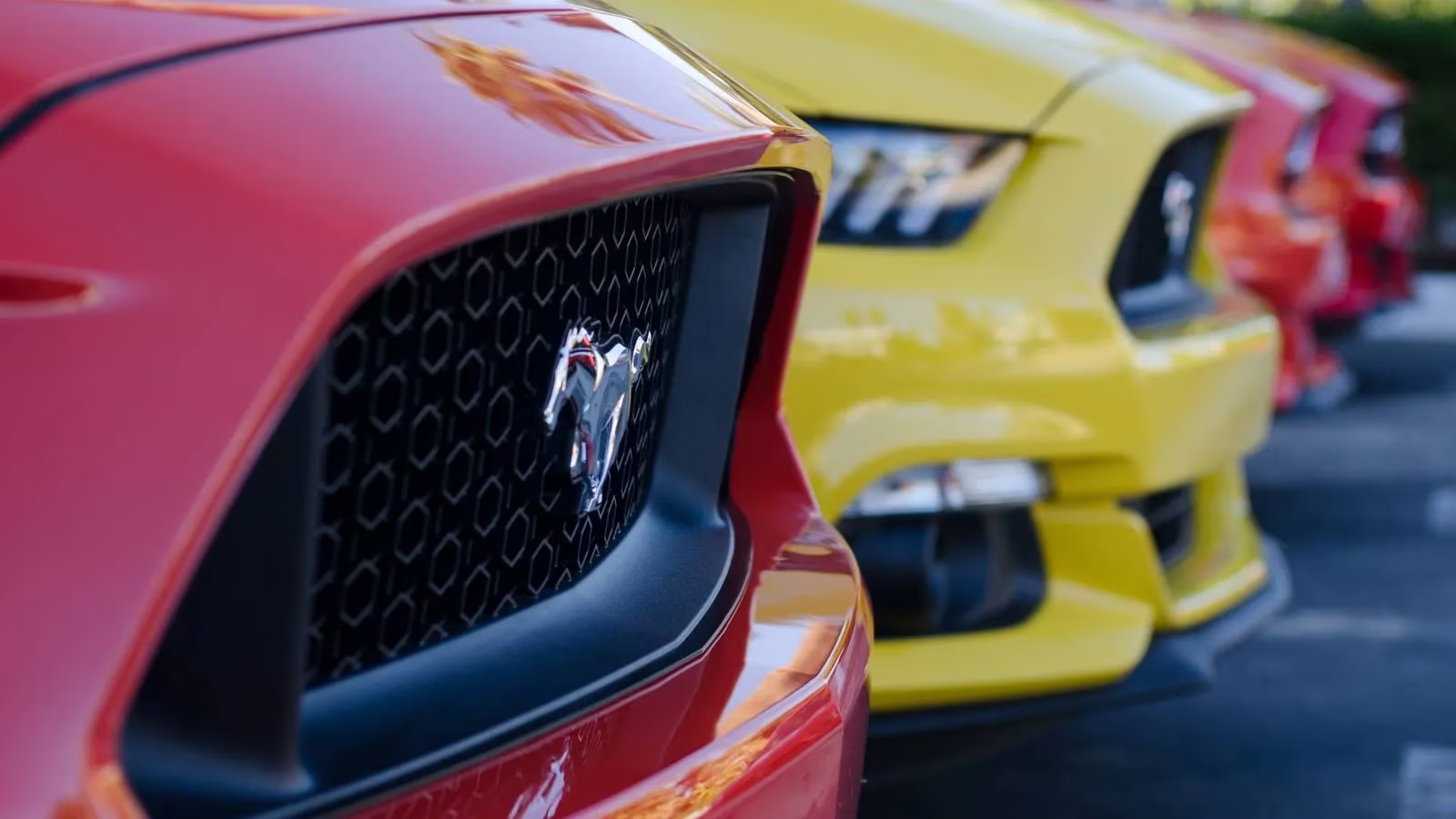
The V6 engine was no stranger to the Mustang. It first appeared in 1974 as a response to the oil crisis, and for decades it served as the workhorse alternative to the V8. When the sixth-generation S550 Mustang arrived in 2015, the 3.7-liter Cyclone V6 was there—offering a 300-horsepower entry point into an American icon. This engine was the first Mustang V6 to crack the 300 hp barrier, delivering 280 lb-ft of torque while sipping fuel at an EPA-rated 19/28 mpg city/highway. With a 6-speed automatic, it could sprint to 60 mph in a respectable 5.5 seconds, covering the quarter mile in 14.1 seconds. Not slouching figures, especially considering the base price of just $24,625 in 2015.
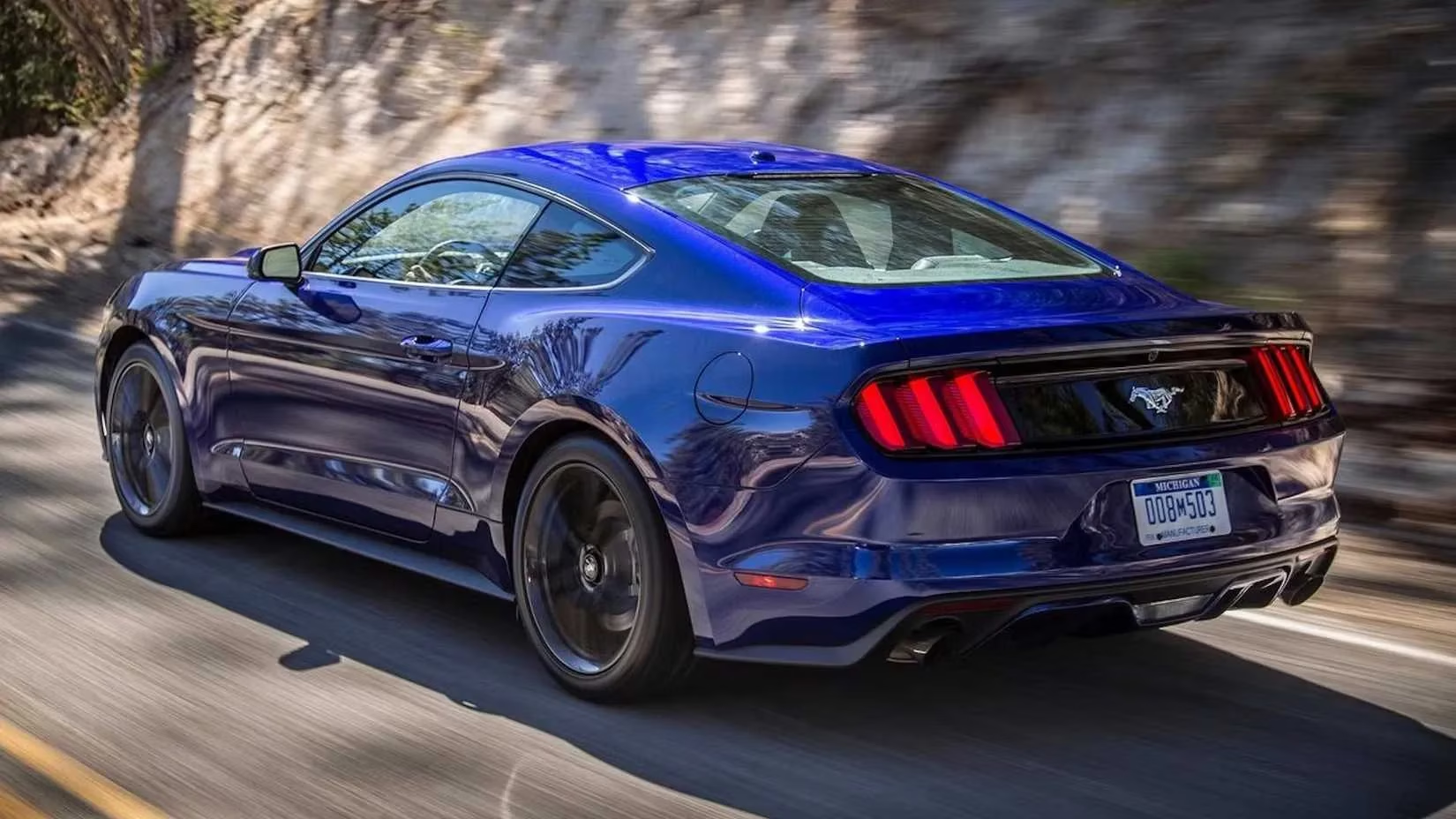
At that time, a V8-powered GT Mustang asked $32,925—roughly an $8,000 premium for two extra cylinders and a 0–60 time about a second quicker. The V6 looked nearly identical to its eight-cylinder sibling, giving purchasers the pony car silhouette without the thirst or the price jump. Even the contemporary Volkswagen Golf GTI, a turbocharged hot hatch with 210 hp costing around $25,000, trailed the V6 Mustang to 60 mph by a half-second and reached 100 mph over two seconds later. It was a compelling value proposition cloaked in an icon’s shape.
However, the V6 was living on borrowed time. The culprit behind its two-year lifespan in the S550 generation can be summed up in one zingy word: EcoBoost. Ford’s turbocharged 2.3-liter four-cylinder, introduced in the same 2015 Mustang, made 310 hp and 320 lb-ft of torque—more power and more torque than the V6. The EcoBoost pulled to 60 mph in as quick as 5.2 seconds with an automatic, all while achieving 21/32 mpg city/highway. Suddenly, the naturally aspirated V6 was a relic of an old efficiency landscape. Stringent Corporate Average Fuel Economy (CAFE) regulations made the EcoBoost not just an option, but a necessity; with half of European Mustangs already skipping the V8 for the turbo four, the V6 became the odd one out.
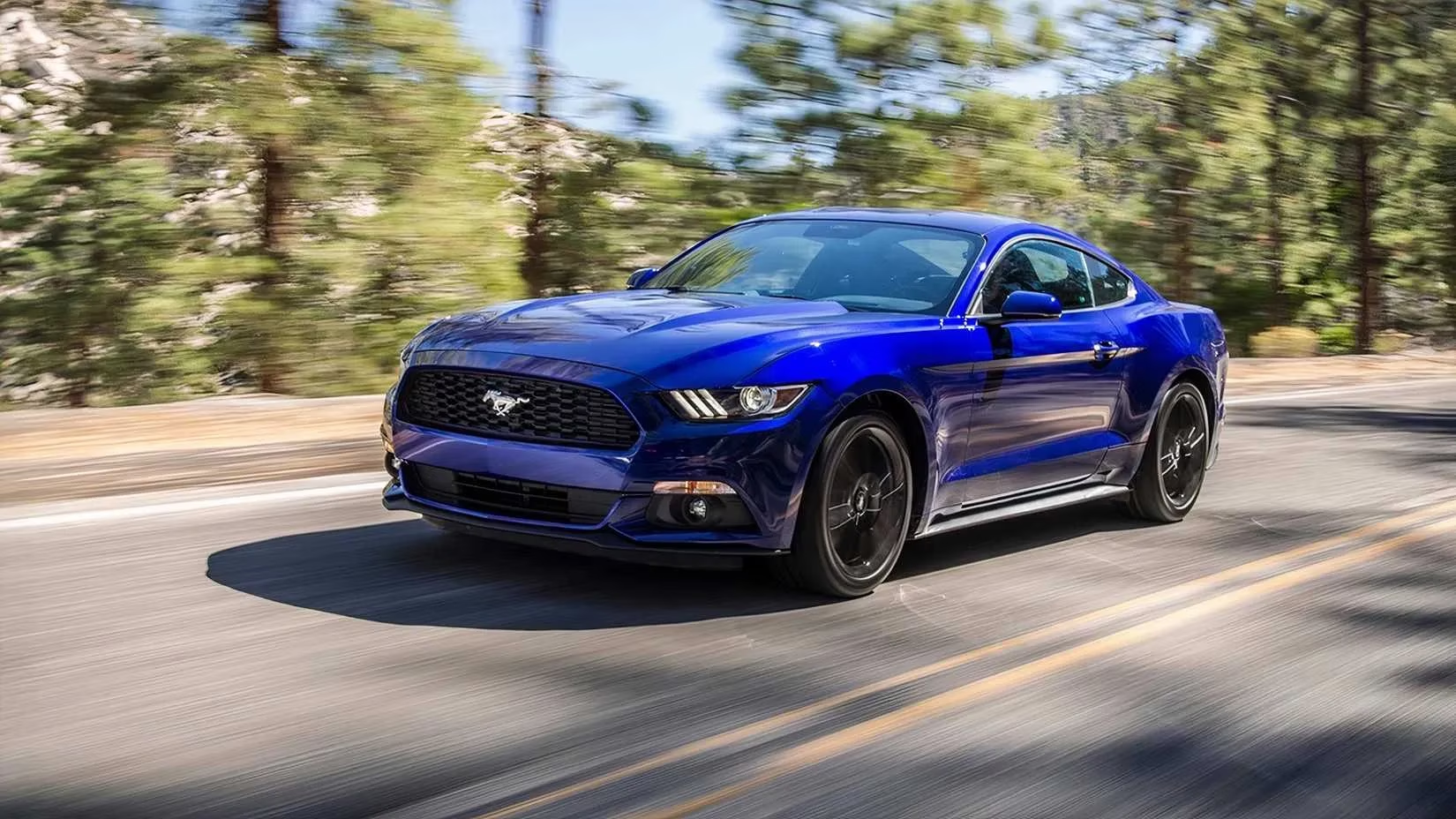
In many ways, the V6 Mustang of 2015–2017 was like a classic diner removing its signature milkshake from the menu: the new offerings looked sleeker and appealed to the health-conscious crowd, but the old-timers kept asking for the taste they remembered. Today, in 2026, that longing has translated into a surprisingly affordable used-car niche. Data from Classic.com shows the average price for a 2015 V6 Mustang hovers around $11,000—a stark contrast to the $27,560 average for a same-year GT, and even undercutting high-mileage EcoBoost models, which start near $13,000. The V6 has become the frugal enthusiast’s secret handshake.
The irony is thick: Ford’s attempt to modernize the Mustang with forced induction inadvertently elevated the V6 to cult status. In 2026, finding a clean, low-mileage V6 S550 might feel like spotting a rare bird in a field of turbocharged hatchbacks. It offers a mechanical simplicity that the EcoBoost lacks, and that naturally aspirated soundtrack—though muted—still carries the sonic lineage of old-school pony cars. For anyone who yearns for a daily-drivable piece of Mustang history without breaking the bank, the 2015–2017 V6 models represent a closing window. The V6 Mustang may have been a supporting actor that never earned top billing, but in the quiet pre-owned corners of 2026, it has finally found its audience.