The 1970 Plymouth Duster ingeniously leveraged the Valiant platform to create a versatile and surprisingly muscular legend, offering a chameleon-like range from economical to potent performance powertrains.
In the twilight of the 1960s, as the pony car craze swept across America, a quiet revolution was brewing in Detroit. While giants like Ford and Chevrolet captured headlines, Plymouth, with a modest budget and a clever eye, embarked on a mission to carve its own slice of performance glory. From the humble bones of the economy-minded Valiant, they crafted not just a car, but a legend—the Plymouth Duster. Its story, though spanning a mere six years from 1970 to 1976, is one of ingenious adaptation, wide appeal, and a performance spirit that refused to be dimmed by changing times. Was it merely a parts-bin special, or was it the cleverest pony car of them all?
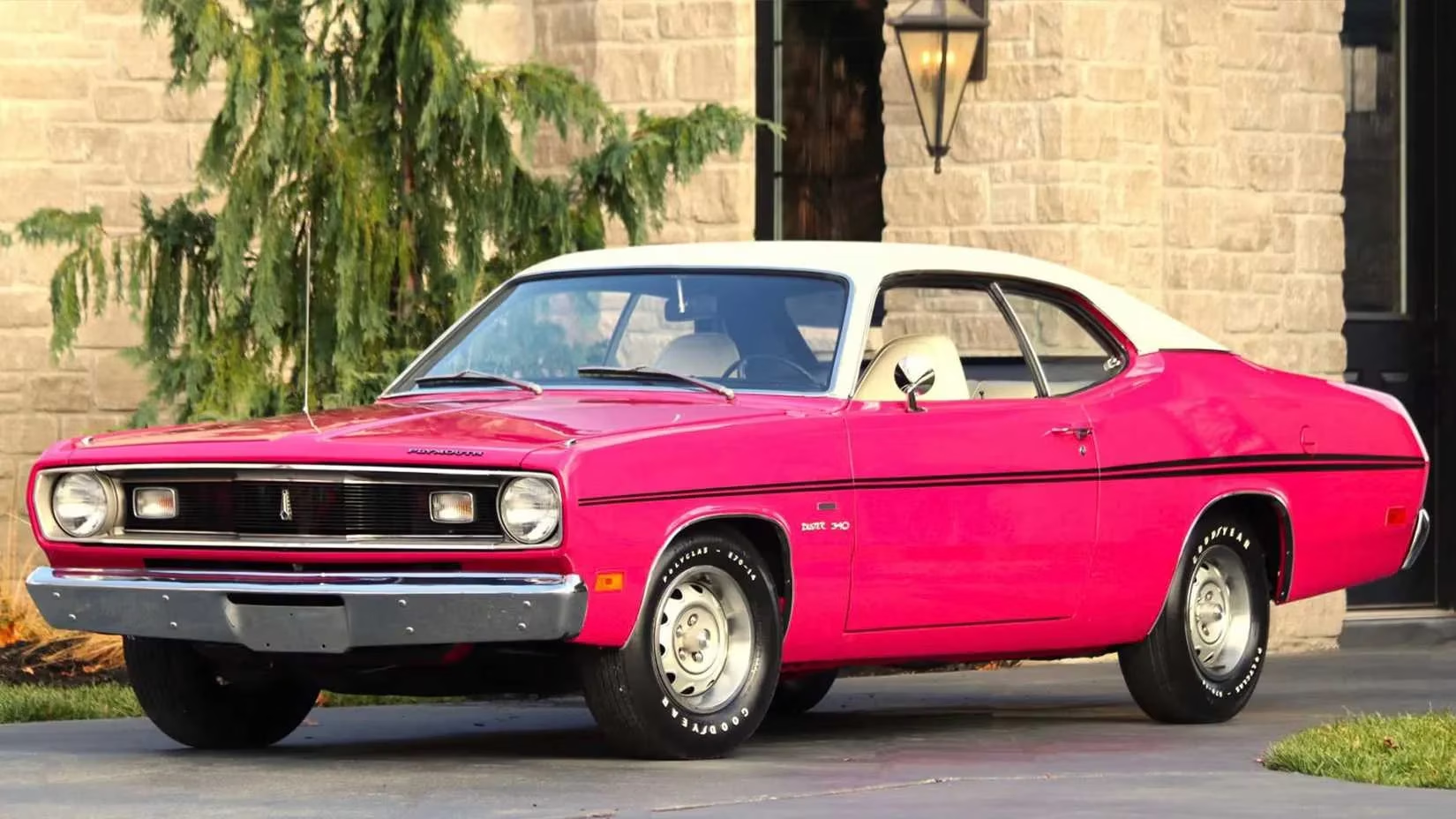
The Duster's genesis was a masterclass in automotive pragmatism. Following Ford's wildly successful formula of placing a sporty body on an affordable compact platform (the Falcon birthed the Mustang), Plymouth saw an opportunity. Its first pony, the Barracuda, was a success but was moving to a larger, more expensive platform in 1970. This left a gaping hole for an affordable, stylish coupe. With a tight budget of just $15 million, Plymouth's engineers and designers embraced a 'junkyard styling' philosophy. They raided the corporate parts bin, melding the Valiant's platform, interior, and front end with rear body sections from other Chrysler coupes. The result? A car with a deceptively muscular profile—a long hood and sweeping, extended C-pillars that gave it a poised, aggressive stance far beyond its economy car roots. This clever concoction proved instantly popular, outselling rivals like the Ford Maverick and Chevrolet Nova and becoming a sales pillar for Plymouth.
🚗 A Chameleon of Performance
The true genius of the Duster lay in its breadth. It was a car for everyone, a canvas upon which a buyer could paint their own automotive dream. At its heart was a versatile range of powertrains:
-
For the Economy-Minded: The trusty Slant-six engines, in 198 and 225 cubic-inch displacements, offered frugal and reliable transportation.
-
For the Enthusiast: A 318 cubic-inch V8 provided a smooth step into V8 power.
-
For the Performance Purist: The legendary 340 cubic-inch V8, churning out a robust 275 horsepower, transformed the Duster into a legitimate street fighter.
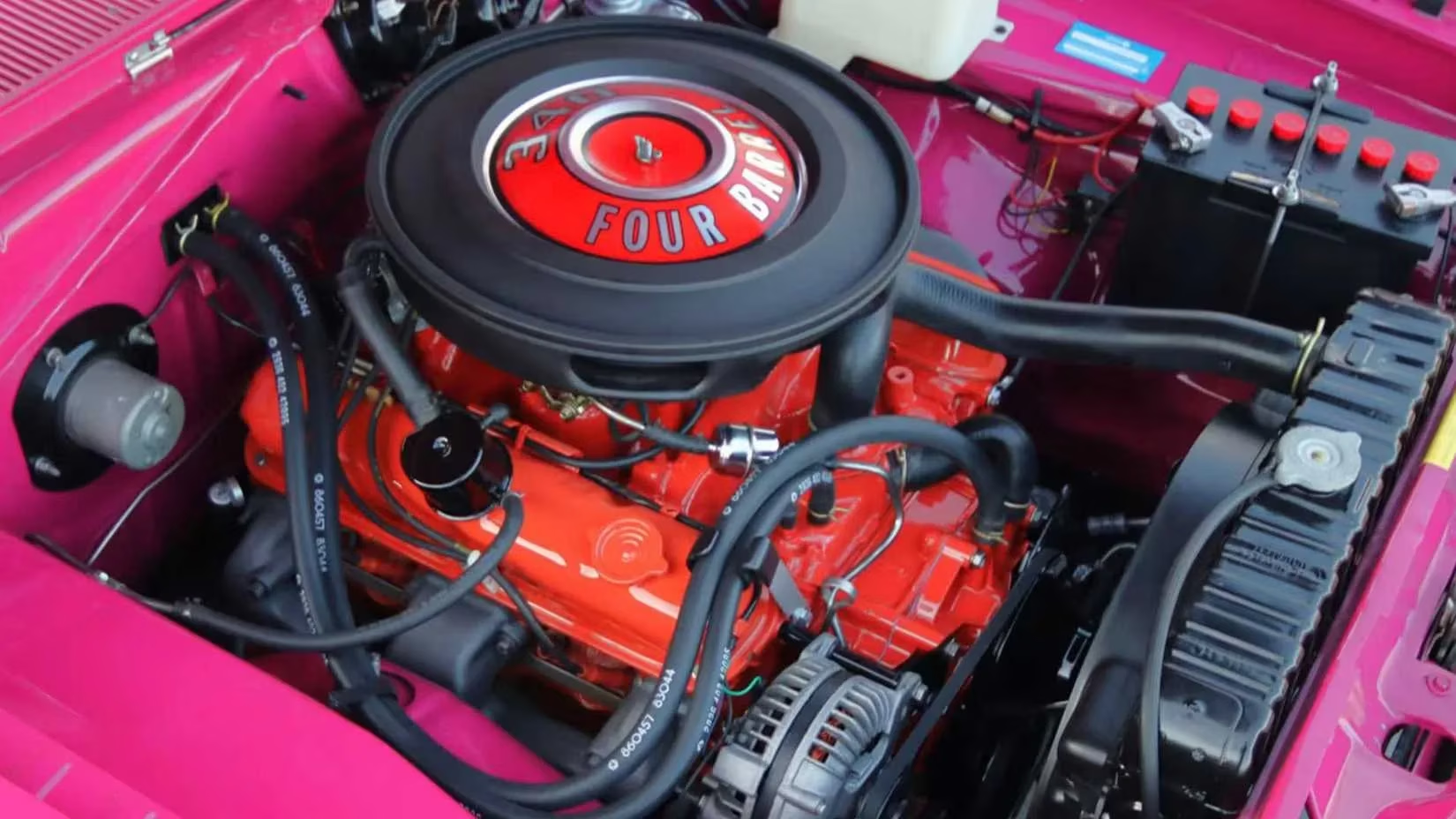
This flexibility ensured the Duster could be a sensible commuter one moment and a drag strip contender the next. It was a key member of Plymouth's 'Rapid Transit System' performance marketing campaign, adorned with bright colors and racing stripes. Plymouth even attempted to license the Tasmanian Devil cartoon character; when that failed, they created the iconic 'Twister' logo in-house—a symbol of the car's swirling impact.
📜 An Evolutionary Journey (1970-1976)
The Duster's six-year life was marked by continual adaptation to shifting regulations and tastes. Its evolution is a fascinating snapshot of the 1970s American auto industry:
| Year | Key Changes & Highlights |
|---|---|
| 1970 | Debut year. Mid-year introduction of the Gold Duster appearance package (gold badges, stripes, vinyl roof). |
| 1971 | Minimal changes. Launch of the Duster Twister package, giving lesser models the look of the 340. Dodge version (Demon) introduced. |
| 1972 | Updated side markers and taillights. New SAE net horsepower rating protocol causes published power drops across the board. 340 V8 output falls to 240 hp. |
| 1973 | Facelift with new grille, hood, and bumpers. Space Duster package adds fold-down rear seat. |
| 1974 | Peak Sales Year (281,378 units). The 340 V8 is replaced by the Duster 360 model, featuring a 245 hp 360 cubic-inch V8, heavy-duty suspension, and dual exhaust. |
| 1975 | New grille design. Catalytic converters become standard (except on 360). |
| 1976 | Final Year. Special edition models abound: Feather Duster (aluminum weight-saving parts), Space Duster, and Silver Duster. |
🏆 The Special Editions: More Than Just a Trim
Beyond the base model, the Duster's personality shone through its many special editions. Each told a different story of the era's desires:
-
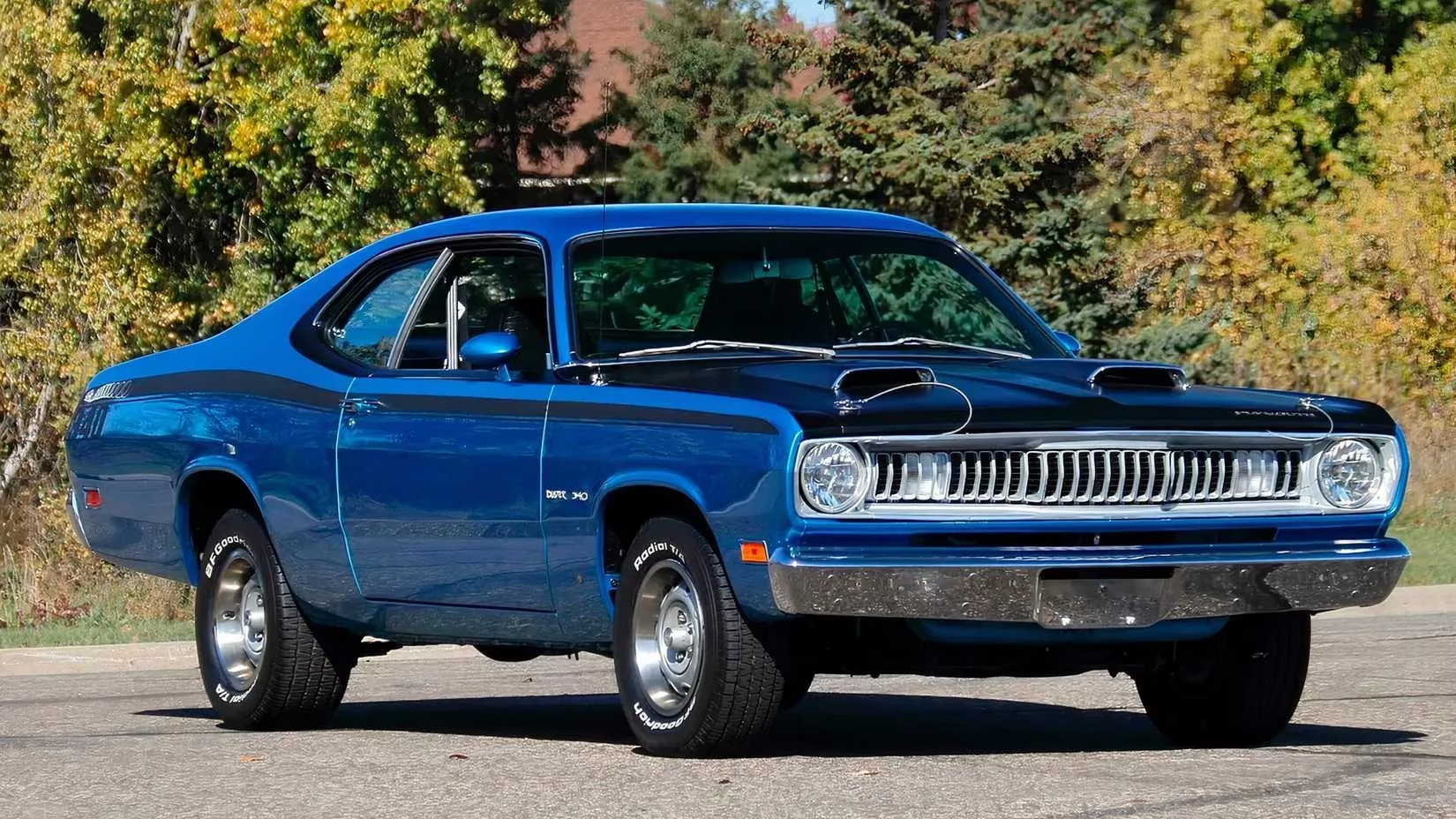
Duster 340 (1970-73) & Duster 360 (1974-76): The performance kings. The heart of the Mopar faithful.
-
Gold Duster (1970-76): Pure 1970s luxury flair, dripping with gold accents and plush interiors.
-
Duster Twister (1971-73): The clever impersonator, offering the look of the hot 340 model to budget buyers.
-
Feather Duster (1976): A response to the oil crisis, utilizing aluminum parts to become the most fuel-efficient car in its class. A marvel of efficiency.
-
Space Duster (1976): Practicality ruled, with a fold-down seat for cargo versatility.
-
Silver Duster (1976): A final, stylish send-off with unique trim and stripes.
💎 Legacy and Collectability in 2026
Today, over fifty years since its debut, the Duster's legacy is secure. It is revered as an icon of accessible Mopar muscle. While it never housed a monstrous big-block V8, its lightweight A-body platform combined with the high-winding 340 or torquey 360 made it a formidable and balanced performer. The sales figure of 1.3 million units in six years is a testament to its winning formula. But what is its place in the modern collector's market?
According to recent market data, the Plymouth Duster holds an average transaction price of approximately $40,000. However, this figure tells only part of the story. The market is beautifully stratified:
-
Top-Tier Classics: Exceptional, documented performance models like the Rapid Transit System cars command prices well into the six figures (one sold for $264,000 in 2019).
-
Driver-Quality Projects: Solid, running, and driving examples can still be found across the country for under $10,000, offering incredible entry points into classic Mopar ownership.
-
The Sweet Spot: Well-preserved 340 or 360 models typically reside in the $30,000 to $60,000 range, depending on condition and originality.
Its enduring appeal lies in its perfect blend of attributes: small size, lightweight construction, and a vast ocean of Chrysler powertrain compatibility. To this day, hot rodders see the Duster not just as a relic, but as a perfect starting point. Whether destined to be a tasteful daily driver, a weekend cruiser, or a fire-breathing drag car with a modern Hemi or a classic 440 wedged under its hood, the Duster accepts all transformations gracefully. It remains, as it always was, the democratic muscle car—a gem born of necessity that outperformed its origins to earn a permanent place in the pantheon of American automotive greatness. In an age of digital complexity, does its simple, honest ingenuity shine even brighter?