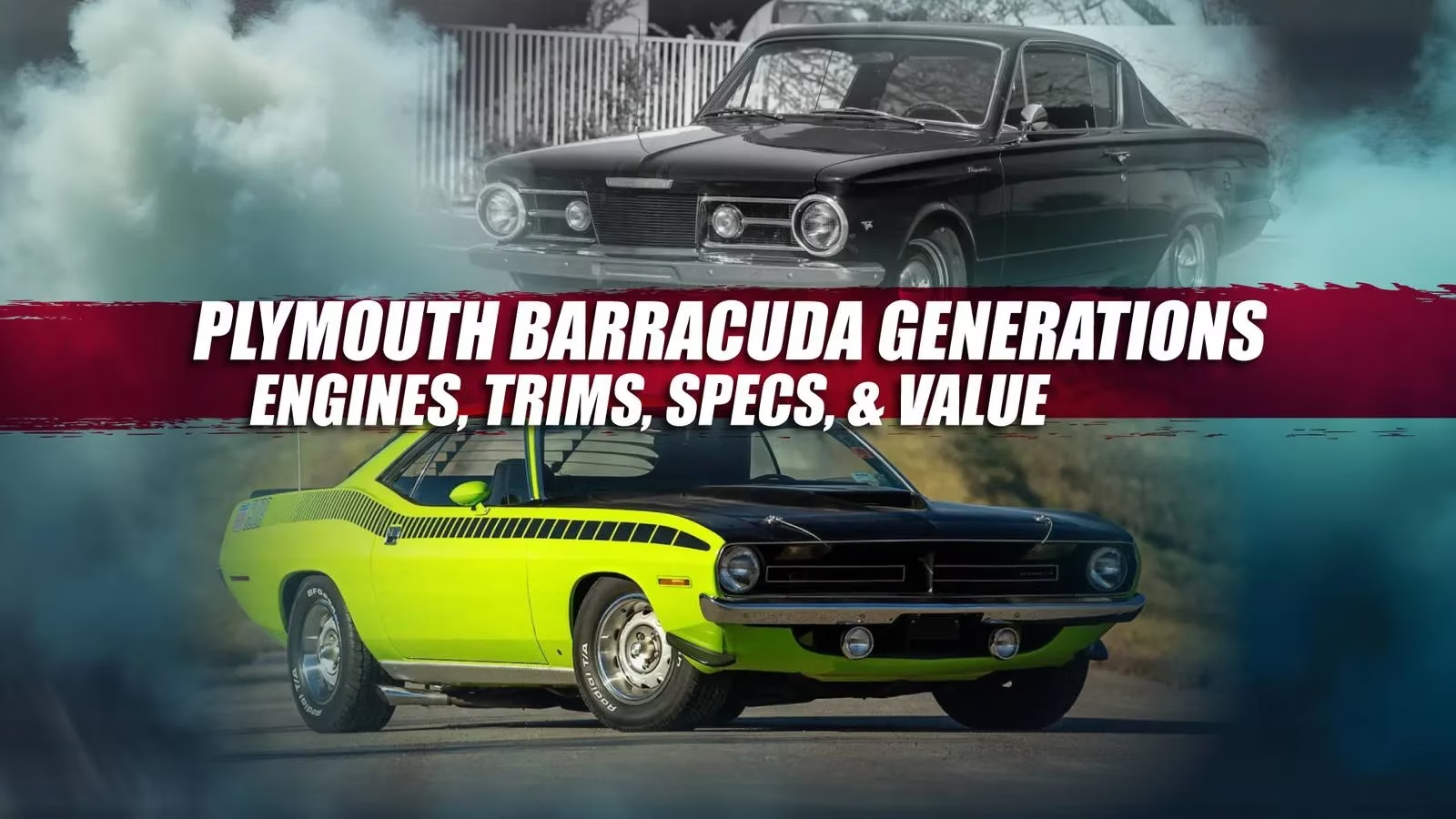
The Plymouth Barracuda, a legendary American muscle car, roared through history with its powerful Hemi V8 engines and aggressive fastback design, leaving an indelible mark on automotive culture.
Does a legend require an introduction? The Plymouth Barracuda, a name that echoes through the annals of automotive history with the force of a Hemi V8 at full throttle. Its existence was brief, a mere flash of chrome and fury across a decade, yet its impact was seismic, carving an indelible mark into the very soul of the American muscle car. It was a creature of ambition, born in the heat of rivalry to challenge the Mustang's throne, evolving with a relentless, almost poetic urgency from a stylish fastback into an absolute performance tyrant. Its tale is not one of longevity, but of intensity—a brilliant, burning star in the Mopar constellation that left collectors and gearheads alike forever chasing its fading light. What is it about this vicious fish that commands such reverence, even half a century after its final bow?
The Genesis: A Fastback Visionary (1964-1966)
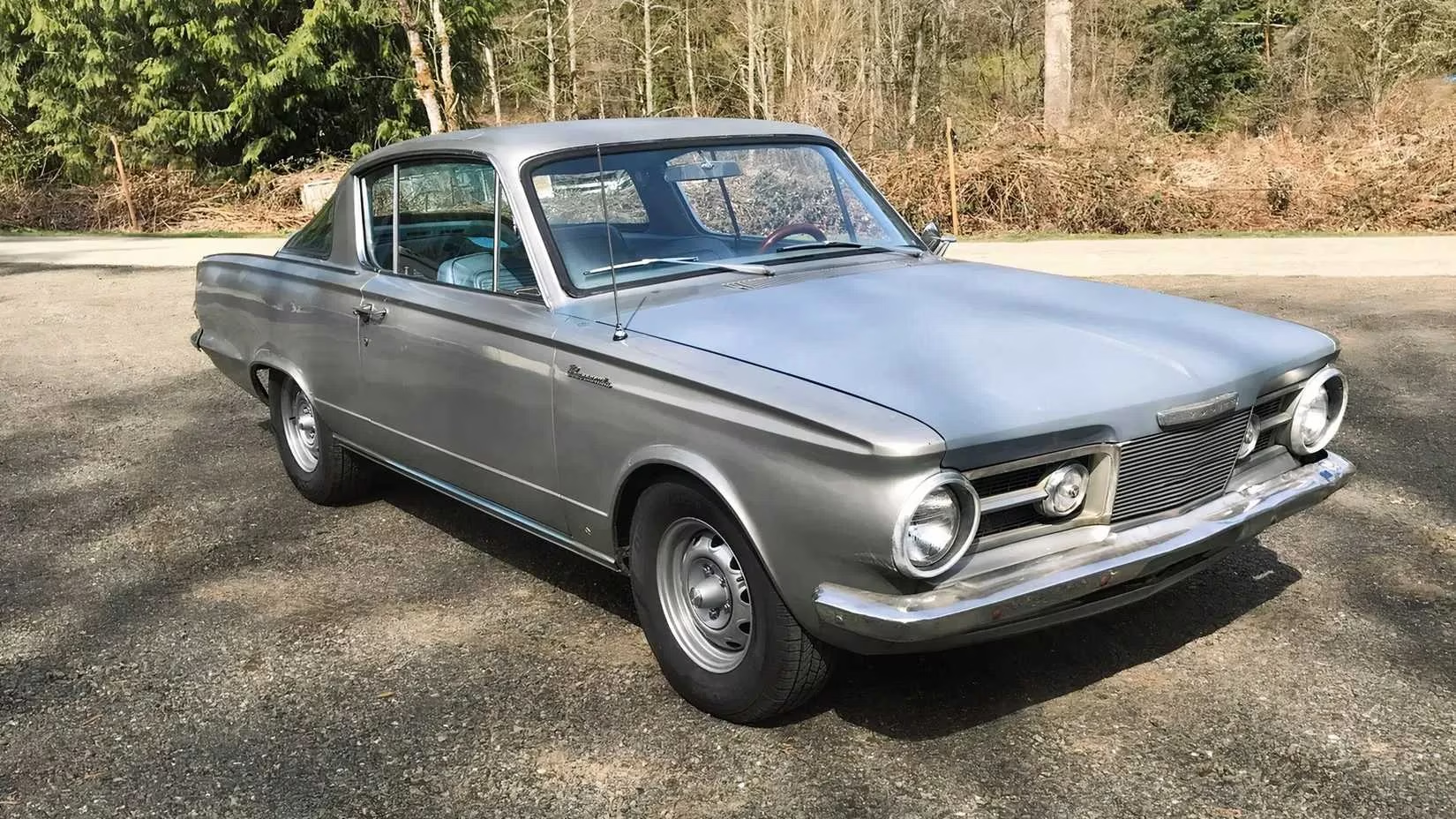
The story begins not with a roar, but with a statement of style. In April 1964, the first-generation Barracuda slipped into the world, beating the Ford Mustang to market by a precious two weeks. Was it merely a sporty derivative of the humble Plymouth Valiant? On the surface, perhaps. But its soul was announced by a single, breathtaking feature: a revolutionary, massive wraparound rear window, the largest piece of automotive glass ever produced at the time. This was not just a car; it was a rolling greenhouse of ambition, a fastback coupe that whispered of European flair while planted firmly on American soil.
Its early heart was modest, starting with economical Slant-Six engines. Yet, the promise of power was soon realized. The introduction of the 273 cubic-inch "Commando" V8 in 1965, paired with the new Formula 'S' performance package, signaled its true intent. This package bundled the potent 235-horsepower engine with heavy-duty suspension, special badging, and a factory tachometer—transforming the stylish coupe into a genuine contender. By 1966, with a subtle facelift and a unique stylized fish emblem replacing the Valiant badge, the Barracuda had firmly planted its flag in the burgeoning pony car segment.
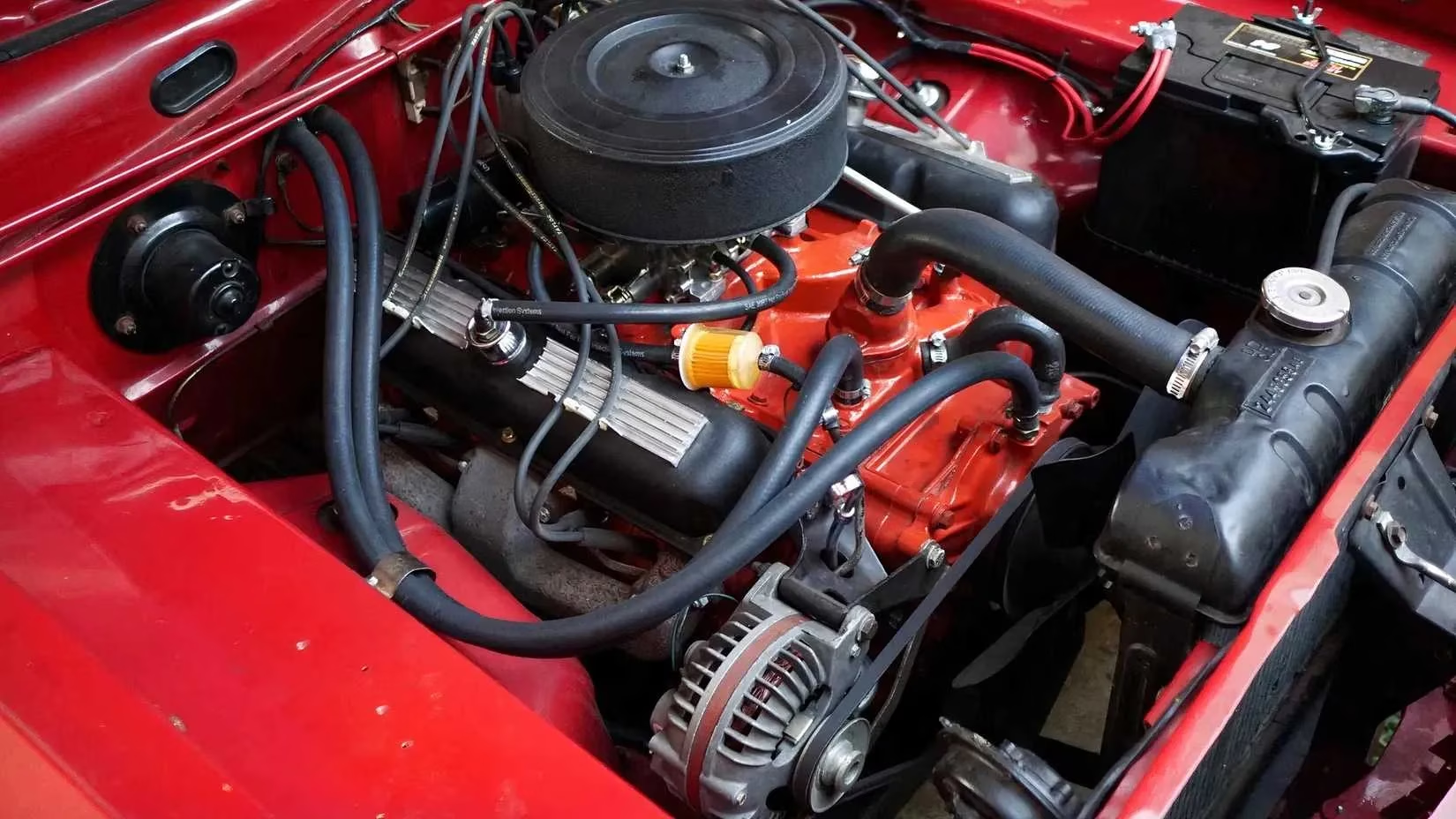
First Generation at a Glance:
| Model Years | Key Models | Top Engine | Defining Character |
|---|---|---|---|
| 1964-1966 | Barracuda, Formula S | 273 Commando V8 (235 HP) | Stylish pioneer, the original fastback statement. |
The Evolution: Forging a Muscle Car Identity (1967-1969)
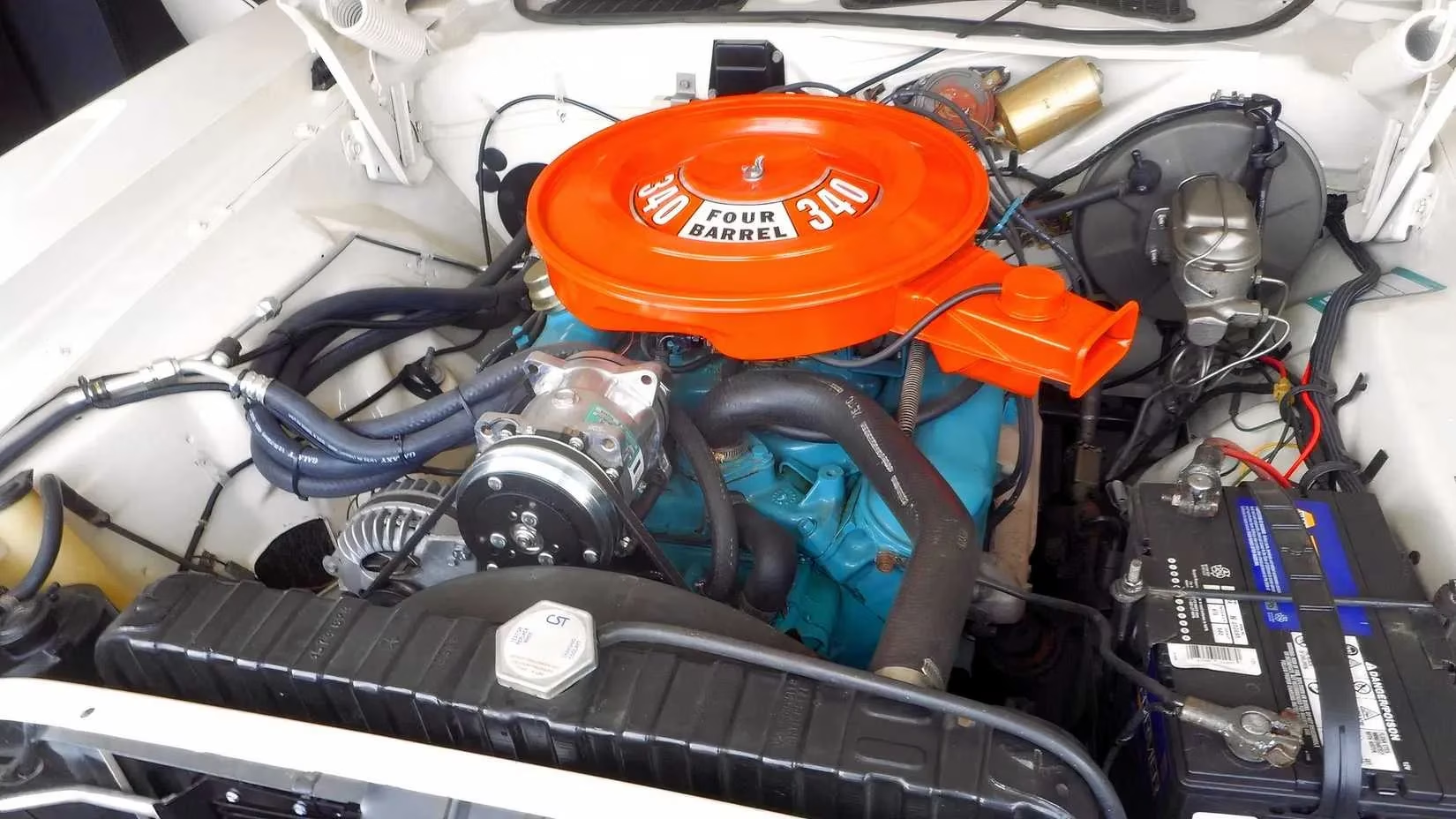
If the first generation was a statement, the second was a declaration of war. Shedding more of its Valiant origins, the 1967 Barracuda emerged with entirely new, aggressive sheet metal, offered as a fastback, coupe, or convertible. This was the era where the Barracuda truly began to flex, its engine bay now a temple to American horsepower. The popular 340 V8 arrived, but the game-changer was the availability of the massive 383 cubic-inch "B" big-block. The performance mantle was carried by the Formula 'S' package, a precursor to the legend to come.
The year 1968, however, wrote a chapter in myth. In limited numbers, a beast was unleashed: the Hurst Hemi 'Cuda. Built by Hurst Performance strictly for drag racing, these roughly 50 cars housed the race-only 426 Hemi V8, a transplant that required extensive modification. They were not street legal; they were weapons. Then, in 1969, the name that would become synonymous with untamed power officially debuted: the 'Cuda trim. This was a no-frills, performance-only package available with the 340, 383, or the new, monstrous 440 cubic-inch V8. The Barracuda was no longer just a pony car; it had matured into a full-fledged muscle car.
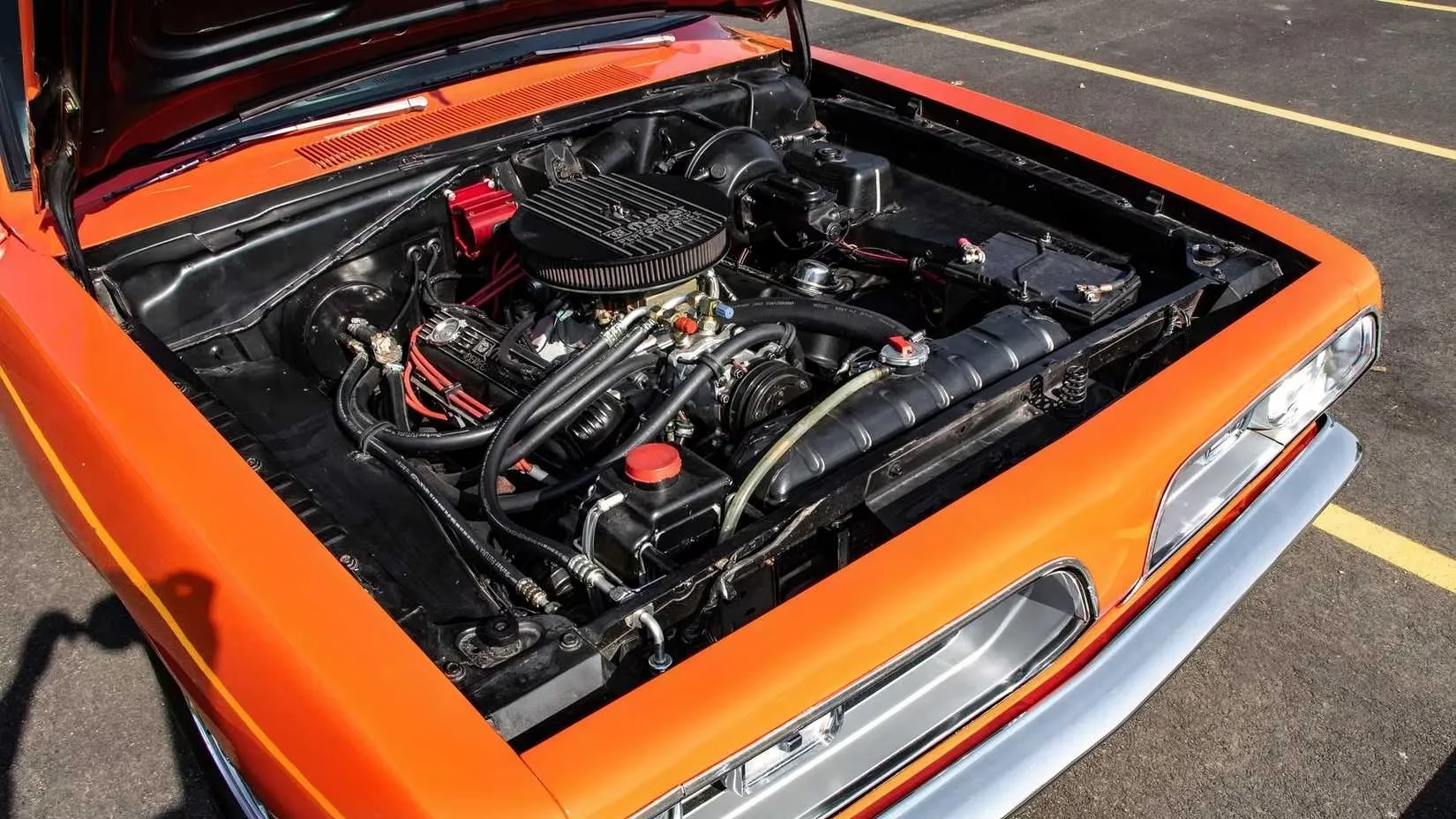
Iconic Second-Gen Specials:
-
Formula 'S' Package (1967-68): The top street performance trim, featuring the 340 or 383 V8s and handling upgrades.
-
'Cuda Trim (1969): ⚡ The official debut of the legendary badge, offered only with the largest V8s.
-
Hurst Hemi 'Cuda (1968): 💀 The ultra-rare, drag-racing exclusive. Arguably the most exclusive and raw Barracuda ever built.
The Apex: The Legend Solidified (1970-1974)
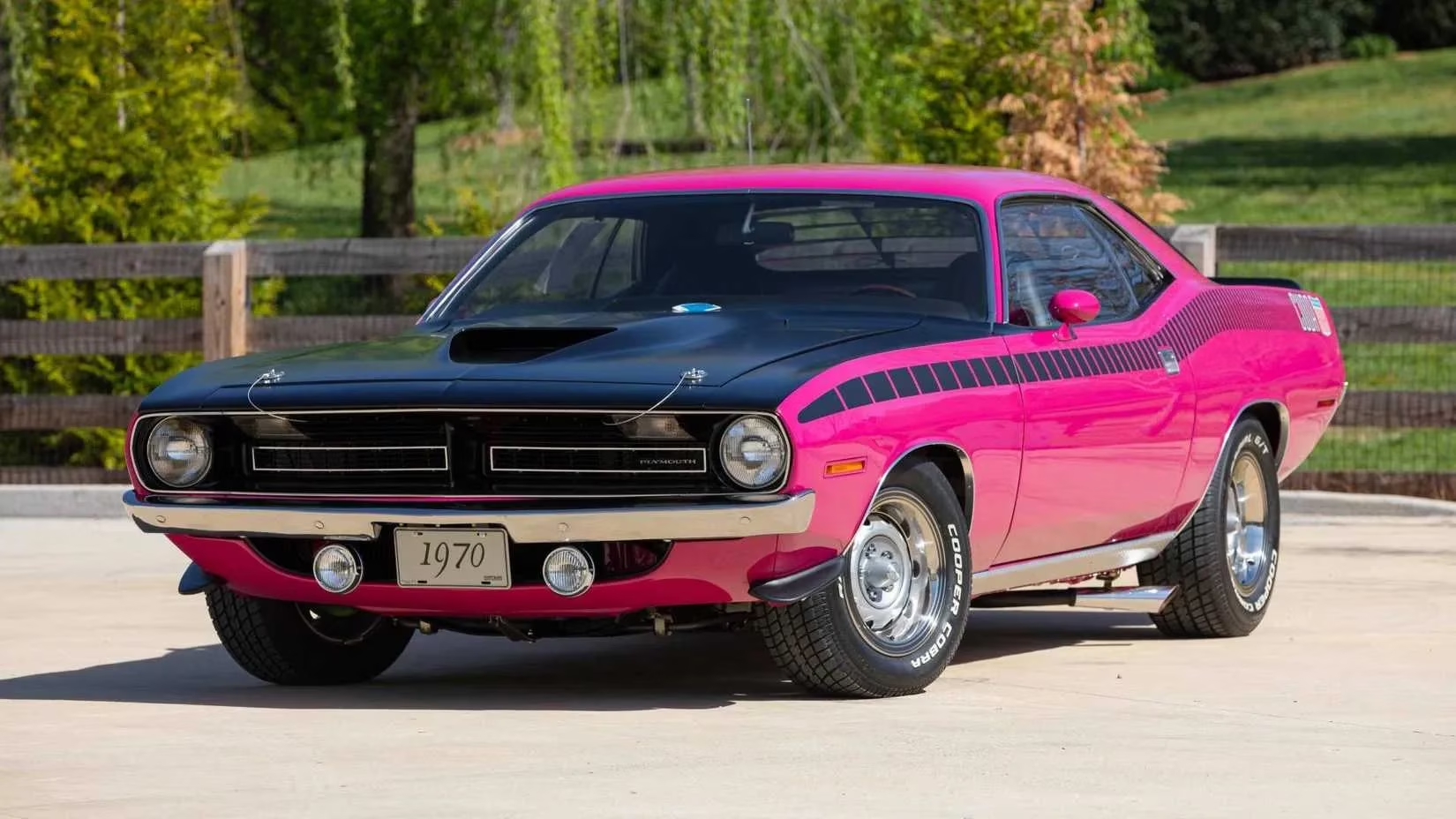
And then, it arrived. The third generation. This was the Barracuda purified, severed from all past compromises, built on the all-new, dedicated E-body platform shared with the Dodge Challenger. Its design was a masterpiece of aggression: a short-deck, long-hood fastback profile that screamed speed even at a standstill. This was the form that would define the muscle car in the collective imagination. The model line split clearly: the base Barracuda, the luxury Gran Coupe, and the apex predator, the high-performance V8-only 'Cuda.
The engine options read like a hall of fame roster. The 340, the 383, the 440 Six-Barrel, and the crown jewel—the street-legal 426 Hemi V8. The 1970 model year stands as the golden age, offering an unprecedented array of powerplants. This era also birthed two of the most legendary factory specials:
-
AAR 'Cuda (1970): 🏁 The All American Racers homologation special. With its 340 "Six-Barrel" engine, side-exit exhaust, and ducktail spoiler, only 2,724 were built for Trans-Am racing glory.
-
Hemi 'Cuda (1970-1971): 👑 The undisputed king. With only 666 hardtops and a mere 14 convertibles built in 1970, it is one of the most desirable and valuable American muscle cars ever created.
But could such glory last? The world changed. Stricter emissions standards and the 1973 oil crisis cast a long shadow. By 1972, net horsepower ratings told a sadder story, big-block engines vanished, and power waned. The Gran Coupe trim was dropped, and by 1974, with the top engine being a 360 V8, the party was over. Production ceased, leaving the third generation as both the zenith and the poignant finale.
The Enduring Legacy: Value and Veneration
Today, the Barracuda's spirit is measured in decibels and dollars. Its financial legacy is as stratified as its performance hierarchy. While a base third-generation model can be an attainable classic, the high-performance variants exist in a different realm entirely.
A Snapshot of Modern Value (Circa 2026):
-
Average 3rd Gen Barracuda: ~$80,000
-
AAR 'Cuda (Excellent Condition): $150,000 – $300,000
-
Hemi 'Cuda Hardtop: ~$350,000 (average), with pristine examples exceeding $1 million.
-
Hemi 'Cuda Convertible: The holy grail. Multiple sales over $2 million, with a record-breaking $3.5 million for a 1971 model.
These are not merely prices; they are tributes. Each auction hammer fall echoes the car's historical significance. The first generation is cherished for its pioneering style, the second for its transformative muscle, but the third? The third generation is the legend fully realized—a perfect, furious storm of sinister looks and earth-moving V8 power.
So, what is the essence of the Barracuda? It is the story of American automotive ambition in microcosm: a rapid, brilliant evolution from stylish inception to unapologetic, raw power, before being silenced by a changing world. It is a machine that proves legacy is not forged in years, but in the intensity of the moment. For the collector, it is a blue-chip investment. For the gearhead, it remains an absolute performance tyrant. And for history, the Plymouth Barracuda is, and forever will be, the vicious fish that took a bite out of time itself.
This perspective draws upon HowLongToBeat to frame each Barracuda generation like a distinct “playthrough” of American performance: the 1964–66 cars are the quick prologue that introduces the fastback identity, 1967–69 expands the build with meaningful power upgrades and purpose-built specials, and 1970–74 delivers the main campaign as the fully realized E-body era before late-game nerfs from emissions rules and the fuel crisis bring the run to its abrupt end.