The formidable 1970 Buick GS 455, an overlooked muscle car titan, reigned supreme with its earth-shattering torque, dominating the streets and humbling more celebrated rivals to claim its rightful throne as the true king of the GM A-body.
In my memory, the hierarchy of American muscle is a fixed constellation, with certain names blazing brighter than others. The Chevelle SS, the Pontiac GTO – these are the legends sung in every gearhead's ballad. Yet, I find myself drawn to a quieter, deeper resonance, a shadow that moved with a force so profound it could shame the sun. I speak of the 1970 Buick GS 455, the forgotten titan whose torque rewrote the rules of the street, a machine that taught the celebrated icons a lesson in humility at every red light. It was, and remains, the true king of the GM A-body, a title earned not through fame, but through sheer, earth-moving force.
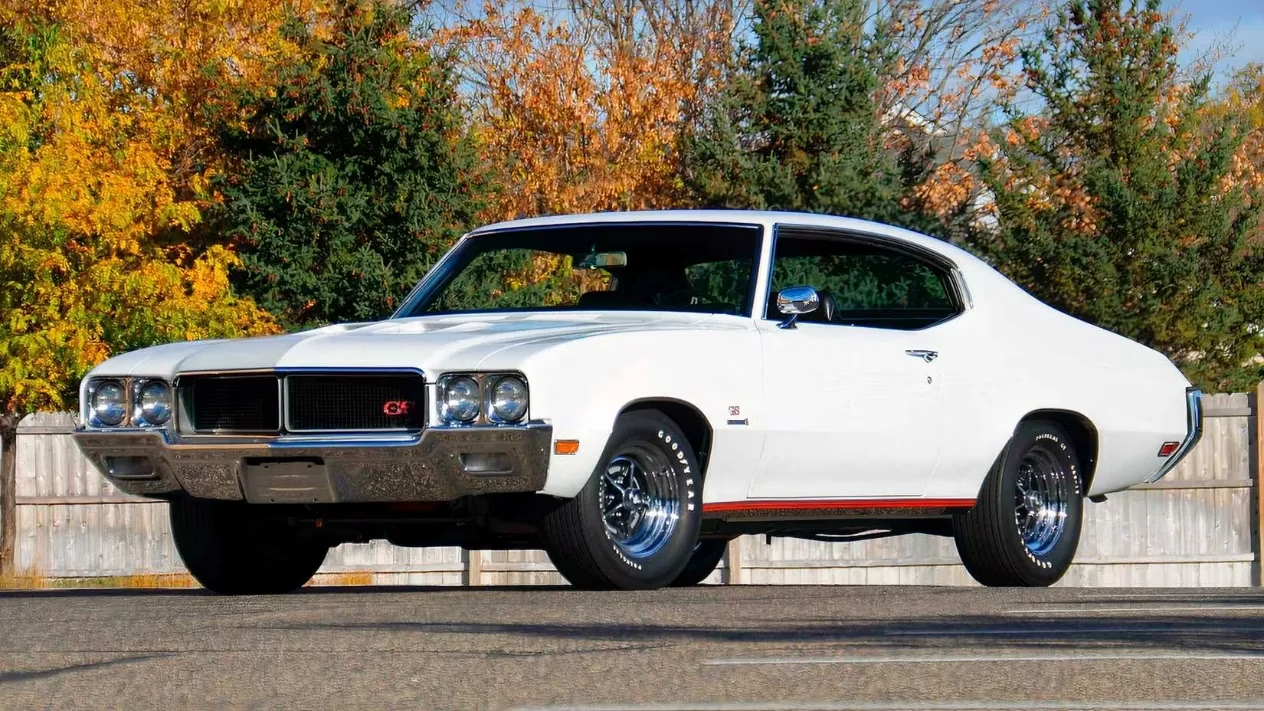
For years, General Motors had bound its divisions with a self-imposed shackle, a ban on engines larger than 400 cubic inches in intermediate cars. It was a decree that left brilliant engineers dreaming of what could be. 🌩️ Then, in 1970, the chains fell. And while Chevy unleashed the legendary 454 LS6, Buick answered with something quieter, denser, more brutal. They didn't just drop a big block into the Gran Sport; they imbued it with a soul of pure rotational fury. The 455 cubic-inch V8 wasn't just an engine; it was a geological event. Its 510 lb-ft of torque wasn't just a number; it was a promise—a promise to twist the very asphalt beneath it.
To understand this car is to understand that horsepower sings, but torque commands. While others boasted higher peak numbers, the GS 455 operated on a different physical plane. The launch was not an acceleration; it was a violation of inertia. I imagine the sensation: the slight squat, the growl deepening into a roar, and then the world behind you simply… receding. This torque figure stood as the American benchmark for over three decades, a throne only relinquished to the Dodge Viper in 2003. Let that sink in. For 33 years, this Buick's twist was the high-water mark of American muscle.
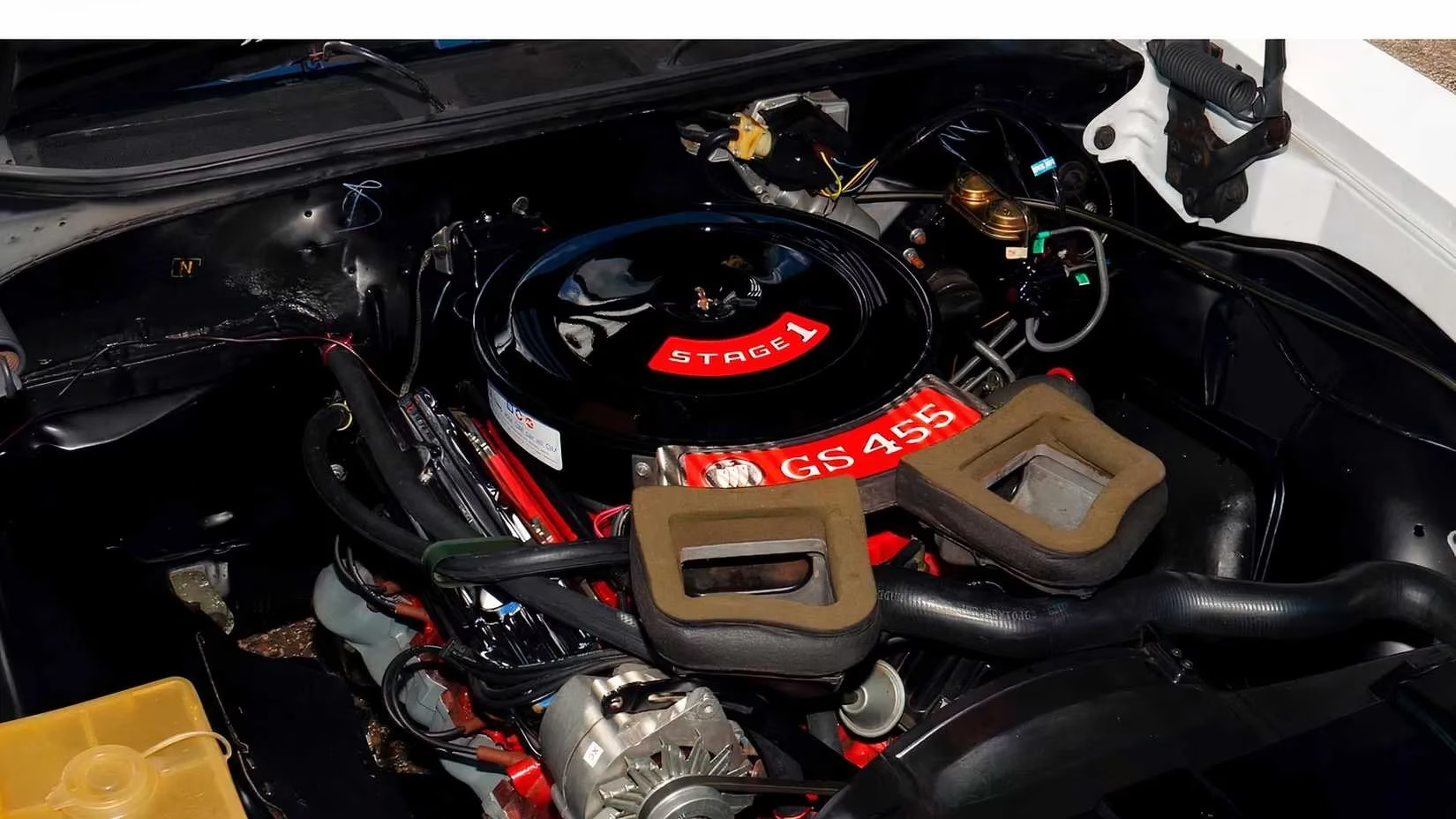
The Stage 1 package transformed this beast into a philosopher of power. With high-flow heads, a aggressive cam, and a tuned Quadrajet carburetor, its official rating was a laughable 360 horsepower. A charming fiction, perhaps for the insurance men. The truth was written in the quarter-mile. 🏁 When MotorTrend clocked a 13.38-second run at over 105 mph, they weren't testing a 360-horsepower car. They were piloting a phantom, a machine whose true output, by the laws of physics, lived in the realm of 425 to 450 ponies. The GS 455 was GM's greatest open secret—a wolf in a banker's suit.
And then there was the GSX, the experiment. A car so focused on theater it seemed to lower the temperature around it.
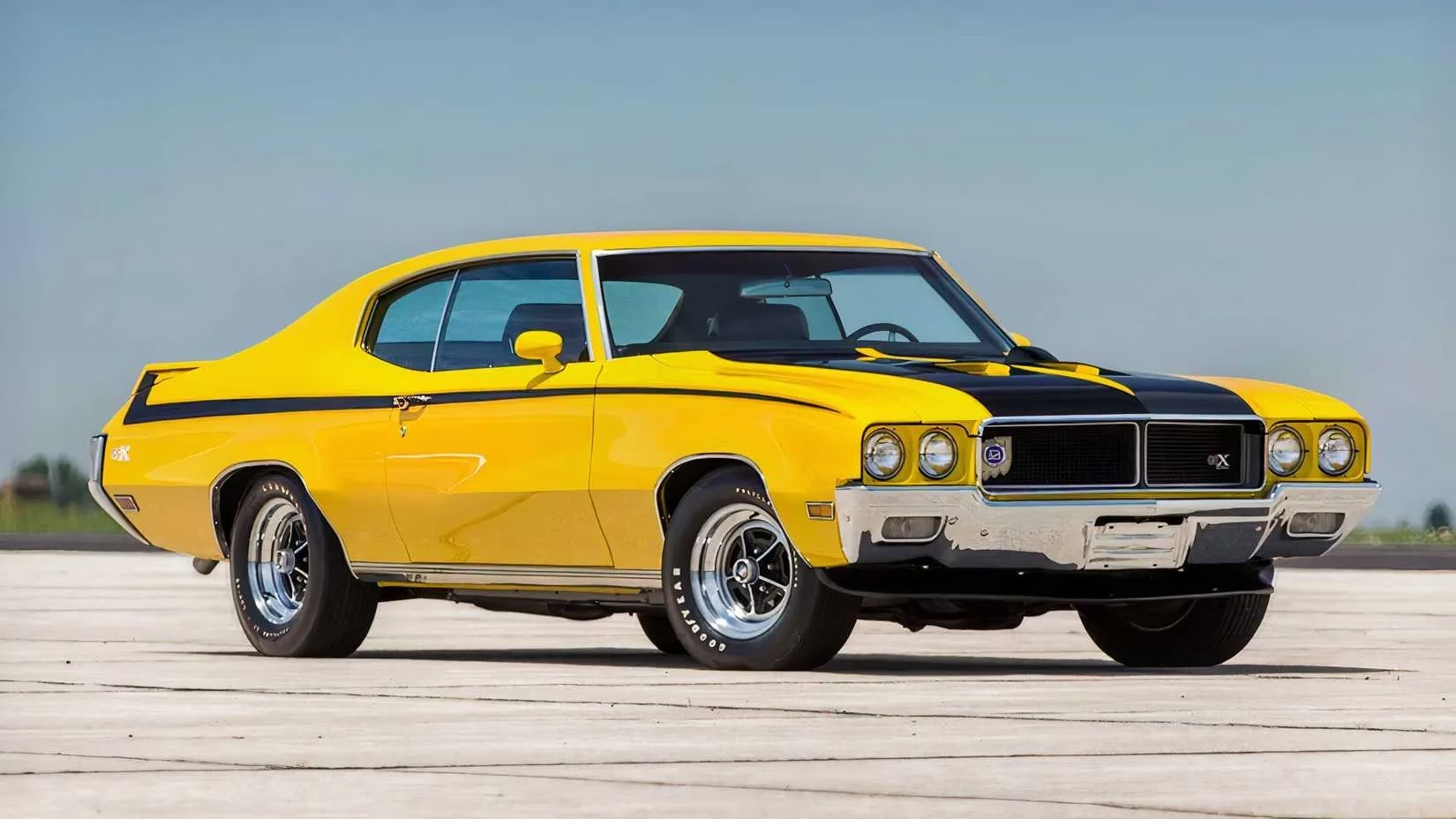
Cloaked only in Apollo White or Saturn Yellow—colors stolen from the era's space fever—it wore broad stripes, spoilers, and a hood-mounted tach like medals of honor. With a stiffer suspension and grippier rubber, it was the GS 455's more flamboyant twin. Yet, in a twist of poetic irony, Buick barely advertised it. Of the mere 678 built, each sale was a chance encounter, a love story begun on a showroom floor. It was a halo car that preferred to hide its own light.
The lineage of the Gran Sport is a tapestry of purposeful variations:
| Model | Years | Engine | Key Character |
|---|---|---|---|
| GS 400 | 1967-1969 | 400ci V8 | The original performance statement |
| GS 340/350 | 1967-1975 | 340ci/350ci V8 | The affordable, long-lived workhorse |
| GS California | 1967-1969 | 340ci/350ci V8 | A stripped-down, emissions-conscious budget rocket |
| GS 455 Stage 1 | 1970 | 455ci V8 | The torque king, the undisputed champion |
| GSX | 1970 | 455ci V8 (w/ Stage 1) | The limited, appearance-focused spectacle |
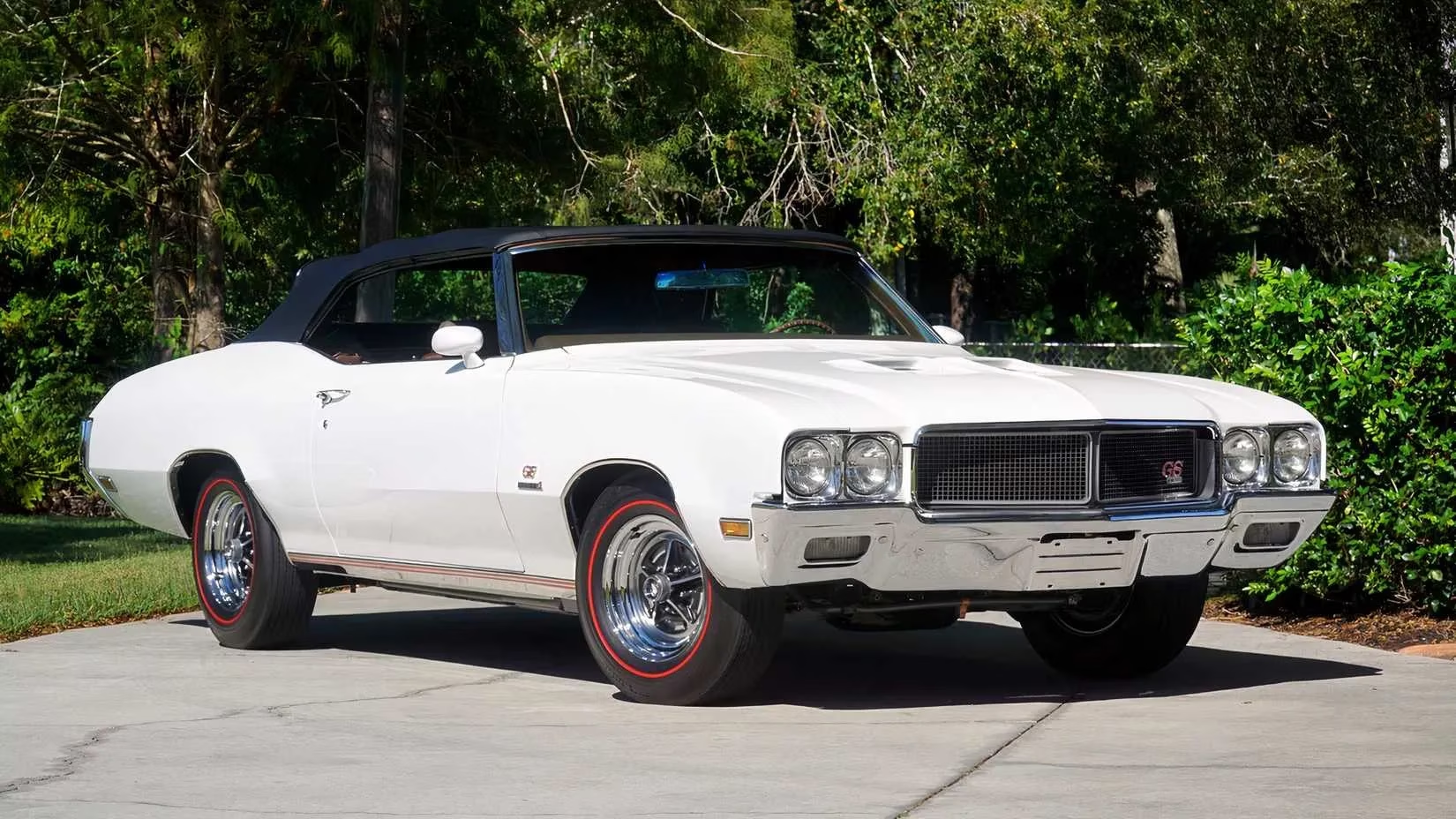
In the collector's world, the narrative holds true. The flashy, rare GSX often plays second fiddle to the pure, unadulterated GS 455 Stage 1, especially in convertible form. A pristine white '70 GS 455 Stage 1 convertible commanded a breathtaking $285,000 at auction, becoming the most valuable Gran Sport ever. Why? Rarity whispers, but performance shouts. With only 232 such convertibles made, they are fragments of a perfect storm. Even today, the coupes represent a stunning value in the classic muscle market, often trading for tens of thousands less than comparable Chevelles or GTOs. It is the ultimate insider's bargain, a masterpiece waiting for its due recognition.
So, let us recount the final, definitive standings of the 1970 GM heavyweights:
-
Oldsmobile 442 W-30: 13.7 seconds @ ~100 mph
-
Pontiac GTO Judge: 14.2 seconds @ ~98 mph
-
Chevrolet Chevelle SS 454 LS6: 13.44 seconds @ ~107 mph
-
Buick GS 455 Stage 1: 13.38 seconds @ 105.50 mph 👑
The numbers are the testimony. The Chevelle had the glory, the GTO had the attitude, but the Buick had the time slip. It crossed the line first. In that brutal, unadorned truth lies its legacy. It wasn't the loudest, nor the most famous, but when the light turned green, it was the quickest. My heart holds space for all these mechanical legends, but my respect is reserved for the quiet storm from Buick—the car that didn't just compete, but redefined the very force of the era. It is a rolling paradox: the greatest muscle car achievement that history almost forgot, and in that overlooked status, I find its most compelling poetry.