Explore the legendary 1964 Ford Country Squire wagon's mythical 427 V8 engine, a tale blending automotive history with thrilling muscle car folklore.
For generations, whispers and tall tales have swirled through the garages and car shows of America, speaking of a mythical beast that defied all logic. The story goes that in 1964, amidst the sea of mild-mannered family haulers rolling out of Dearborn, a handful of unsuspecting Ford Country Squire wagons were born with a secret heart. Under their classic, wood-paneled hoods, it is said, beat the same NASCAR-bred, fire-breathing 427 cubic-inch High Performance V8 that powered Ford's legendary Galaxie 500 Lightweight drag cars. Is it true? Or is it merely garage-talk folklore, a legend so wild and appealing that gearheads refuse to let it die? The truth, as is often the case with the best automotive myths, lies shrouded in a tantalizing fog of hearsay, scant evidence, and the passionate testimonies of those who swear they've seen the unicorn.
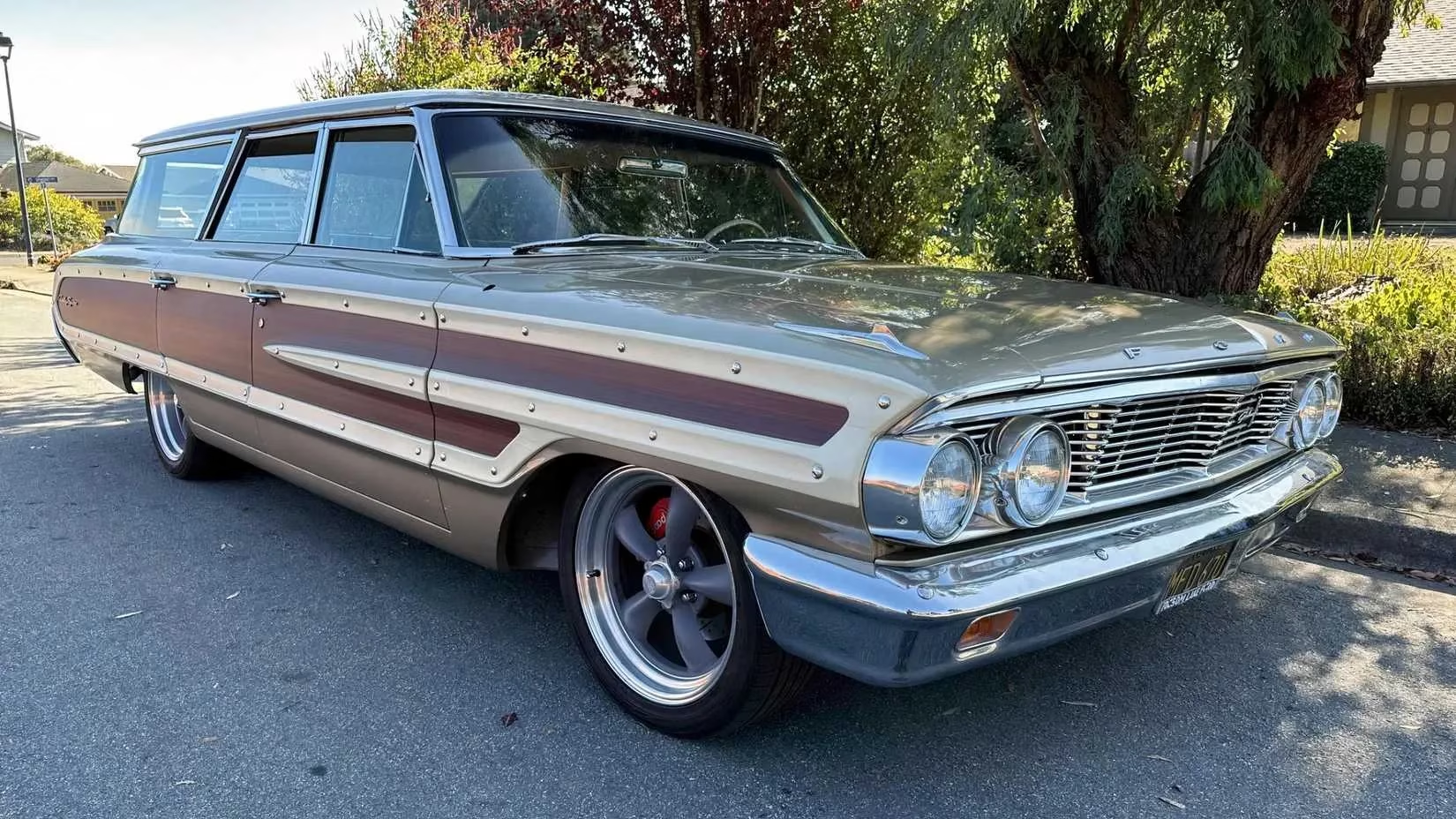
By the early 1960s, the Ford Country Squire was the quintessential American family wagon. It was the trusted steed for carpools, hardware store runs, and cross-country vacations. The fifth-generation model (1960-1964) epitomized the era with its iconic steel body adorned with faux wood-grain paneling. For the vast majority of buyers, power was an afterthought to comfort and reliability. The standard engine lineup reflected this:
-
Base Engine: 223-cu-in Inline-Six (138 hp) – for the truly frugal.
-
Common Upgrade: 289-cu-in Small-Block V8 (195 hp) – a nice step up.
-
Popular Big Blocks: 352-cu-in V8 (250 hp) or 390-cu-in V8 (300 hp) – for those who wanted effortless cruising power.
These engines were perfectly suited to the wagon's nearly 4,000-pound curb weight and 119-inch wheelbase. But what if someone wanted more? What if a gearhead looked at that expansive engine bay and saw potential for something truly outrageous?
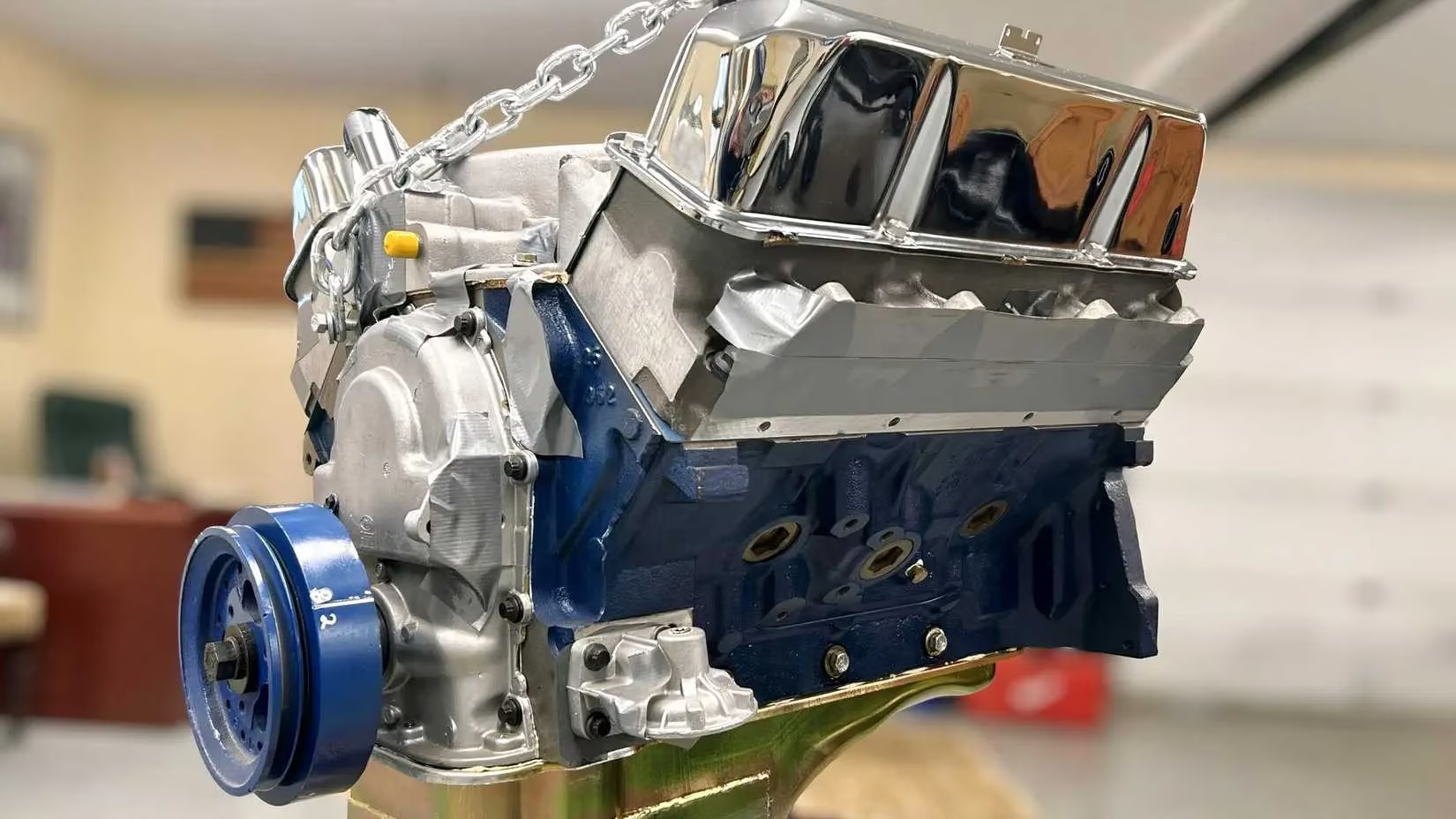
Enter the legend. According to the tale, for one fleeting moment in 1964, Ford's special order system allowed a select few to check a box that should never have existed for a Country Squire. This box granted access to the full-fat, race-spec 427 High Performance V8. This wasn't a detuned version; it was the same engine that produced a staggering 425 horsepower and around 480 lb-ft of torque. Imagine the scene: a serene, wood-paneled family wagon idling at a stoplight, its driver looking every bit the suburban parent, while under the hood rested a powerplant capable of humbling the era's most respected muscle cars. It was the ultimate sleeper, a wolf in sheep's station wagon clothing.
But where is the proof? The frustrating and alluring aspect of this story is the lack of clear factory documentation or a definitive paper trail. No broadcast sheets or option code lists have surfaced to categorically prove Ford officially offered the 427 in the Squire. The legend survives on oral history and a few compelling anecdotes. One key piece of evidence comes from a gearhead named Keith Curry, who shared details about his personal 1964 Country Squire on Barn Finds. Curry claimed his wagon was born with the 427 and that he had been told it was one of only six ever built. His account suggests these mythical machines were not assembly line regulars but special-order unicorns, likely built through fleet or dealer-direct channels known only to the most determined enthusiasts.
So, does the lack of a factory memo mean it never happened? Not necessarily. The 1960s were a different time in Detroit. Factory rules were sometimes more like guidelines, and determined customers with the right connections (and a thick wallet) could occasionally make the impossible happen. Could a dealer have special-ordered a 427 crate engine and had it installed by the factory or a skilled mechanic before delivery? It's entirely plausible. This gray area between official policy and "what actually got built" is where automotive legends are born.
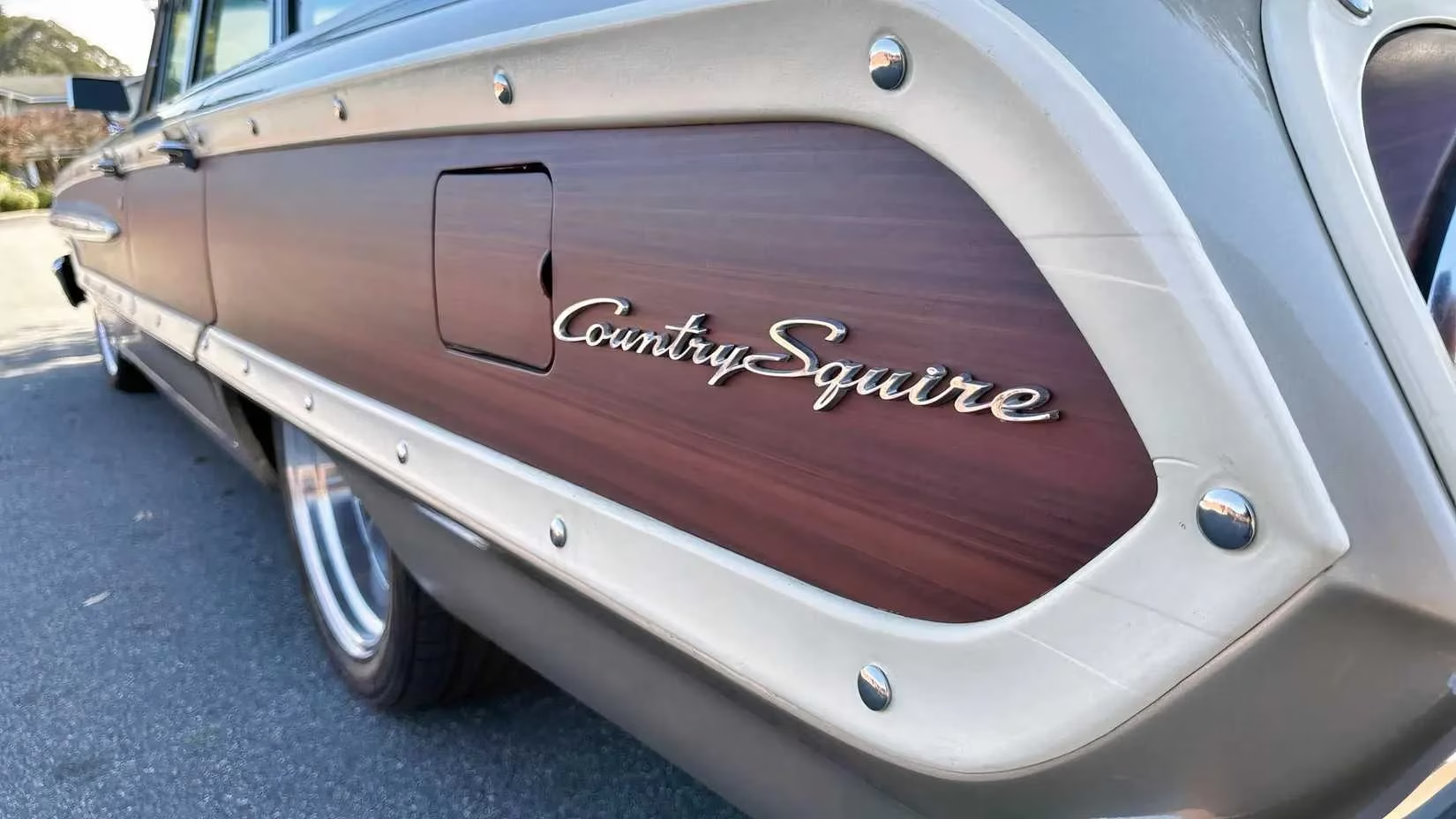
If you're dreaming of hunting down one of these legendary 427 Squires, be prepared for a quest worthy of a medieval knight. They are the holy grail of Ford wagons, spoken of in reverent tones but rarely, if ever, seen. The market for "standard" 1964 Country Squires, however, is very much alive and well. According to 2025 data:
-
Average Retail Price (J.D. Power): $32,400
-
Price Range: From around $19,500 for driver-quality examples to nearly $58,000 for concours-ready wagons.
-
Auction Average (Classic.com, 5-year): $27,888
A recent sale on Bring A Trailer highlights the value of a well-equipped example. A beige 1964 Country Squire equipped with the 352-cu-in V8 (250 hp) and showing 63,000 miles sold for $28,163. While it doesn't have the mythical 427, it offers a fantastic blend of vintage style, usability, and enough V8 torque to bring a smile to any driver's face.
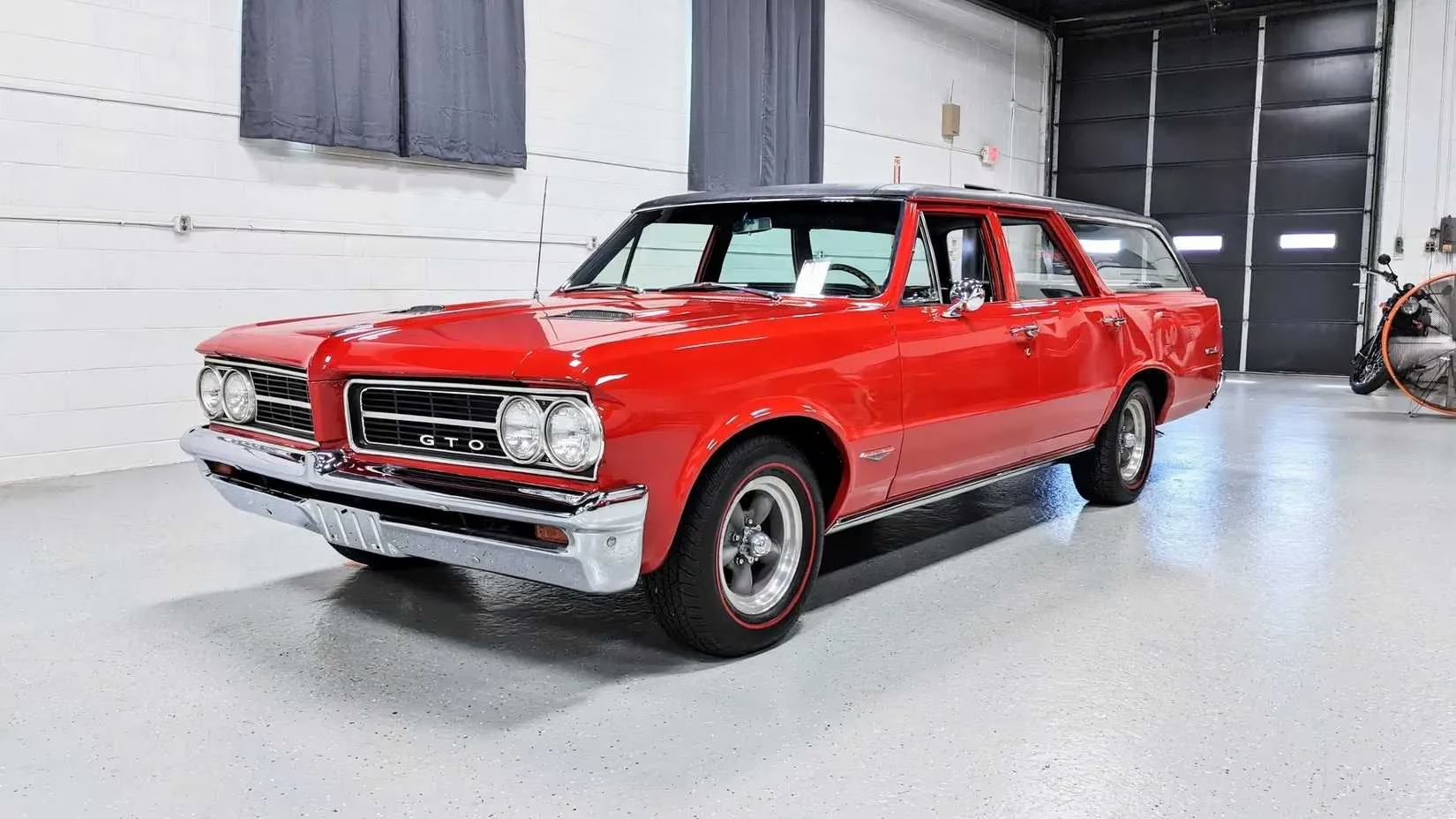
While the 427 Squire lives in myth, other manufacturers left no doubt about their willingness to build muscle wagons. Pontiac, the brand that invented the muscle car with the GTO, also quietly created what many consider the first true muscle wagon. In 1964, you could order a Tempest LeMans Safari wagon with the same 389-cu-in V8 found in the GTO, rated at about 325 horsepower. This wasn't a rumor; it was a factory option with a clear paper trail. It looked every bit the practical family hauler but possessed the soul of a performance car, complete with dual exhaust and thrilling acceleration.
For Ford purists seeking documented, no-doubt-about-it performance, the path leads to 1967. That year, a customer special-ordered a Country Squire with a Q-code 428-cu-in V8 and a four-speed manual transmission. This car's existence is confirmed by an Elite Marti Report, which verifies it as the one and only '67 Country Squire built with that specific powertrain and interior combo (including bucket seats and a console). This legendary wagon sold on Bring A Trailer a few years ago for $47,750. It stands as Exhibit A for the argument that Detroit would, and did, build the wildest machines if someone was brave enough to ask.
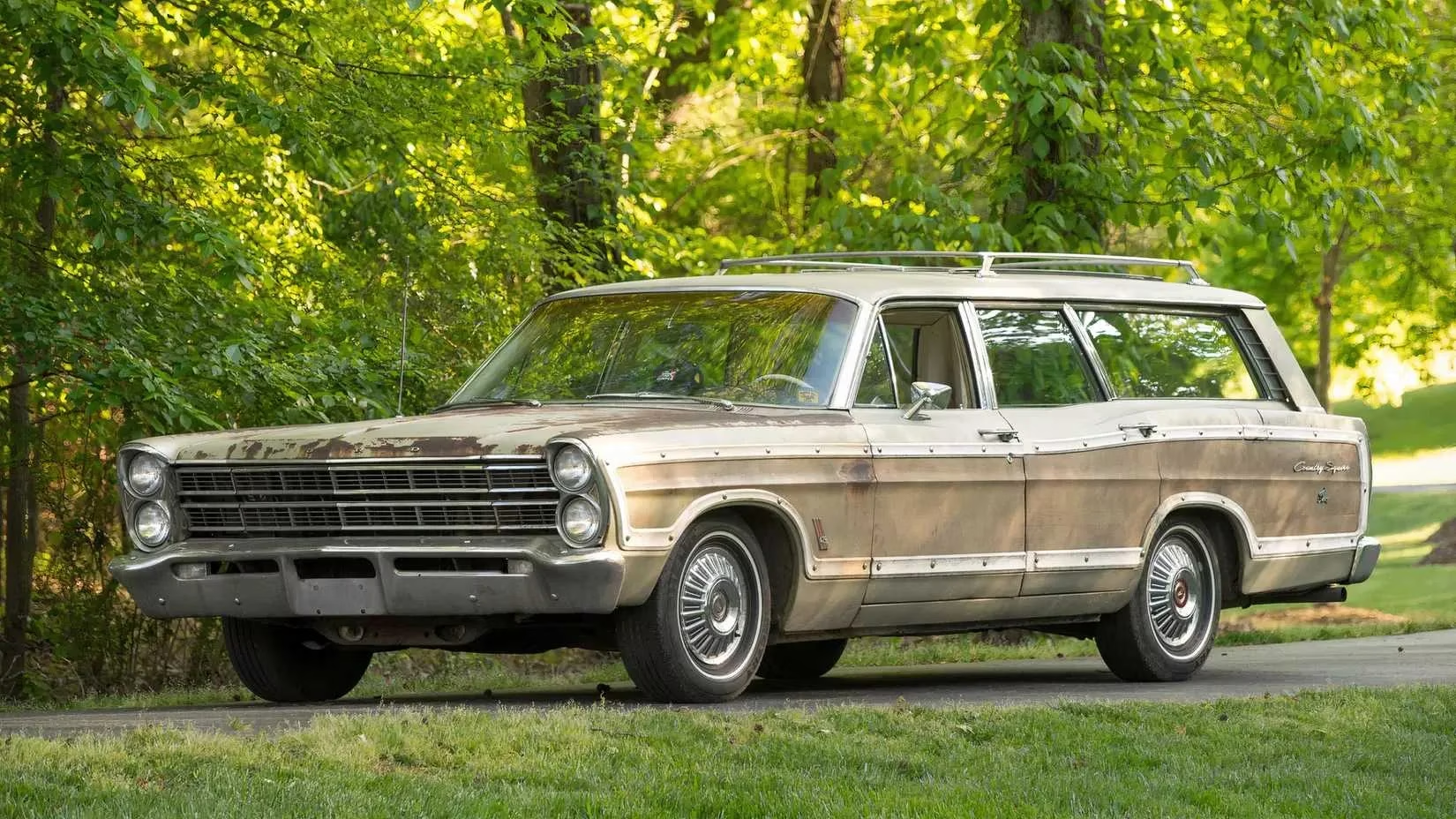
So, where does that leave the 1964 Country Squire 427? It exists in the precious space between fact and fable. The consistent threads of the story—the specific year, the legendary engine, the incredibly low production numbers—suggest a kernel of truth. Perhaps it was a handful of dealer experiments, or a few cars built for Ford executives or racing personalities. The absence of widespread documentation only adds to its mystique. In the world of car collecting, sometimes the hunt and the story are as valuable as the car itself. The 427 Squire represents a glorious "what if" from an era of unbridled automotive optimism. It embodies the dream that in 1964, you could theoretically order a wagon so powerful, so utterly ridiculous, that it would become a whispered legend for decades to come. And isn't that the most fun kind of legend to believe in? 🚗💨