The Ford Mustang hybrid journey captivates enthusiasts, blending classic V8 power with electrification for a thrilling 2026 debut.
I've been watching the Ford Mustang story unfold for years, and let me tell you, the journey towards a hybrid version has been like waiting for a solar eclipse—you know it's coming, the science is there, but the exact moment feels shrouded in anticipation. For a car line born in the '60s with a roaring V8 at its heart, the idea of electrification was once as unthinkable as a silent rock concert. Yet here we are in 2026, and the whispers have finally coalesced into something tangible. The landscape has shifted; even with softened emissions rules, the push for greener machines is a tide that no automaker, not even a powerhouse like Ford, can ignore. They announced a hybrid Mustang almost a decade ago, promising V8 power with more low-end torque by 2020. That deadline came and went, leaving enthusiasts like me wondering if it was just vaporware. But I believe the stars have finally aligned. The time for a hybrid pony car isn't just near—if the latest rumors are to be believed, it's practically knocking on the garage door.
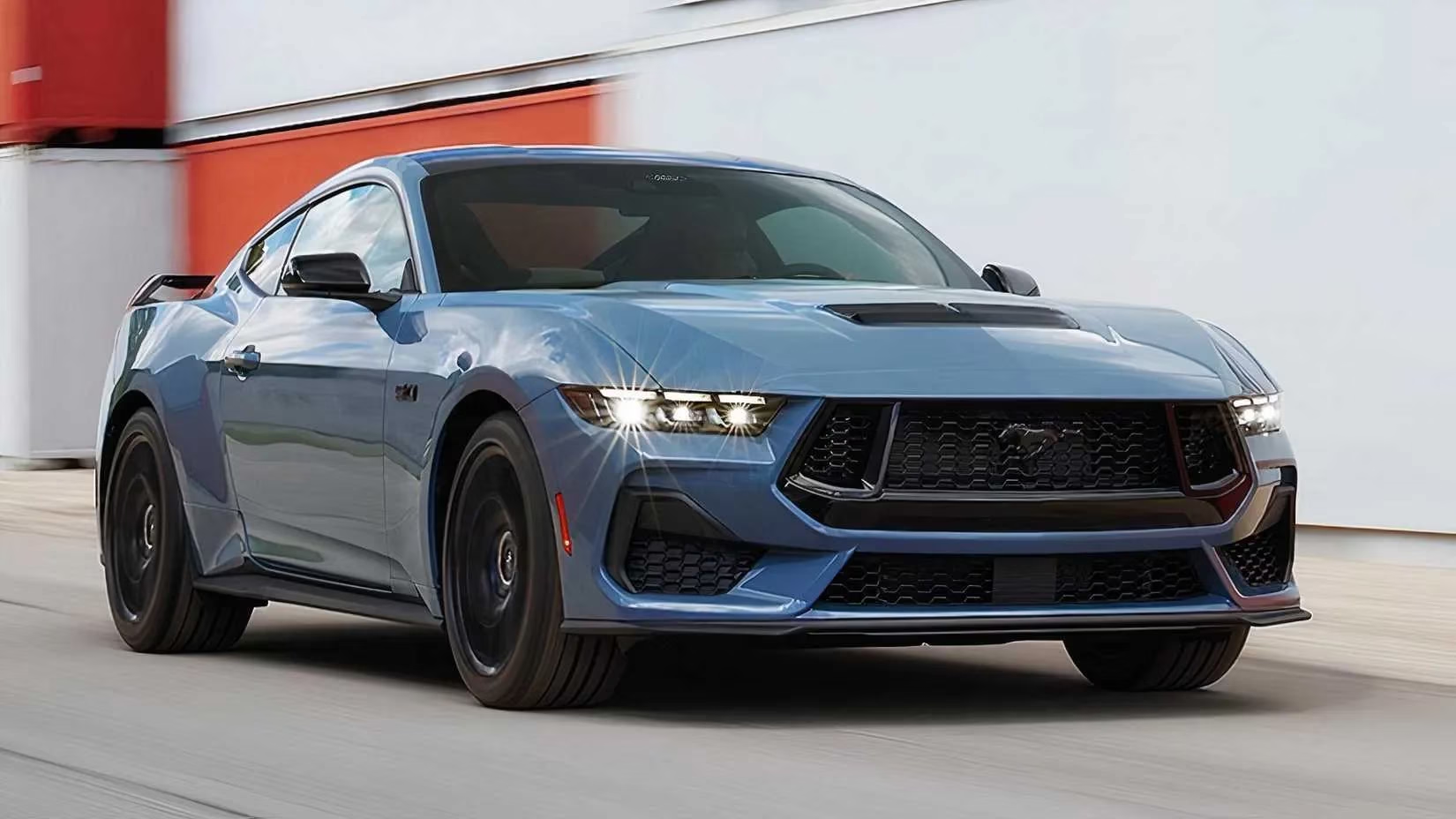
The Ghost in the Machine: A Promise Eight Years in the Making
The concept of a hybrid Mustang is no spring chicken at Ford Motor Company. It's a ghost that's been haunting Dearborn's halls since January 3, 2017. I remember the announcement clearly: seven new global electrified vehicles, including an F-150 Hybrid and the pièce de résistance, a Mustang Hybrid. Ford pledged a $700 million investment and 700 new jobs at the Flat Rock Assembly Plant in Michigan, all to birth this high-tech beast. The promise was intoxicating—V8-level power with even more torque, debuting in 2020. Fast forward to today, and we've seen the F-150 Hybrid become a reality, but the Mustang? Radio silence. It became the automotive equivalent of a phantom limb—you could feel it should be there, but it wasn't. Ford's recent massive investments, like the $5 billion poured into battery plants and new electric pickups for 2027, only made the Mustang-shaped hole in their electrification strategy more glaring.
The European Conundrum and CEO Realities
Ford's global plans added another layer of intrigue. Back in 2021, they declared that by mid-2026, 100% of their passenger vehicles in Europe would be zero-emissions capable. For a car sold in Europe like the Mustang, that meant a stark choice: get with the electrification program or get out. Those plans were later dialed back, called "too ambitious." Then, Ford CEO Jim Farley dropped a bombshell to Autocar: the brand won't build an all-electric Mustang coupe. We have the Mach-E, sure, but that's a different animal. Interestingly, the roaring V8 Mustang recently almost outsold Ford's entire EV portfolio. This creates a fascinating puzzle. Killing the gas-powered icon isn't an option, but ignoring the future isn't either. The logical, almost elegant solution sitting in the middle? A hybrid. It's the bridge that could please both the traditionalists who crave the rumble and the modernists demanding efficiency.
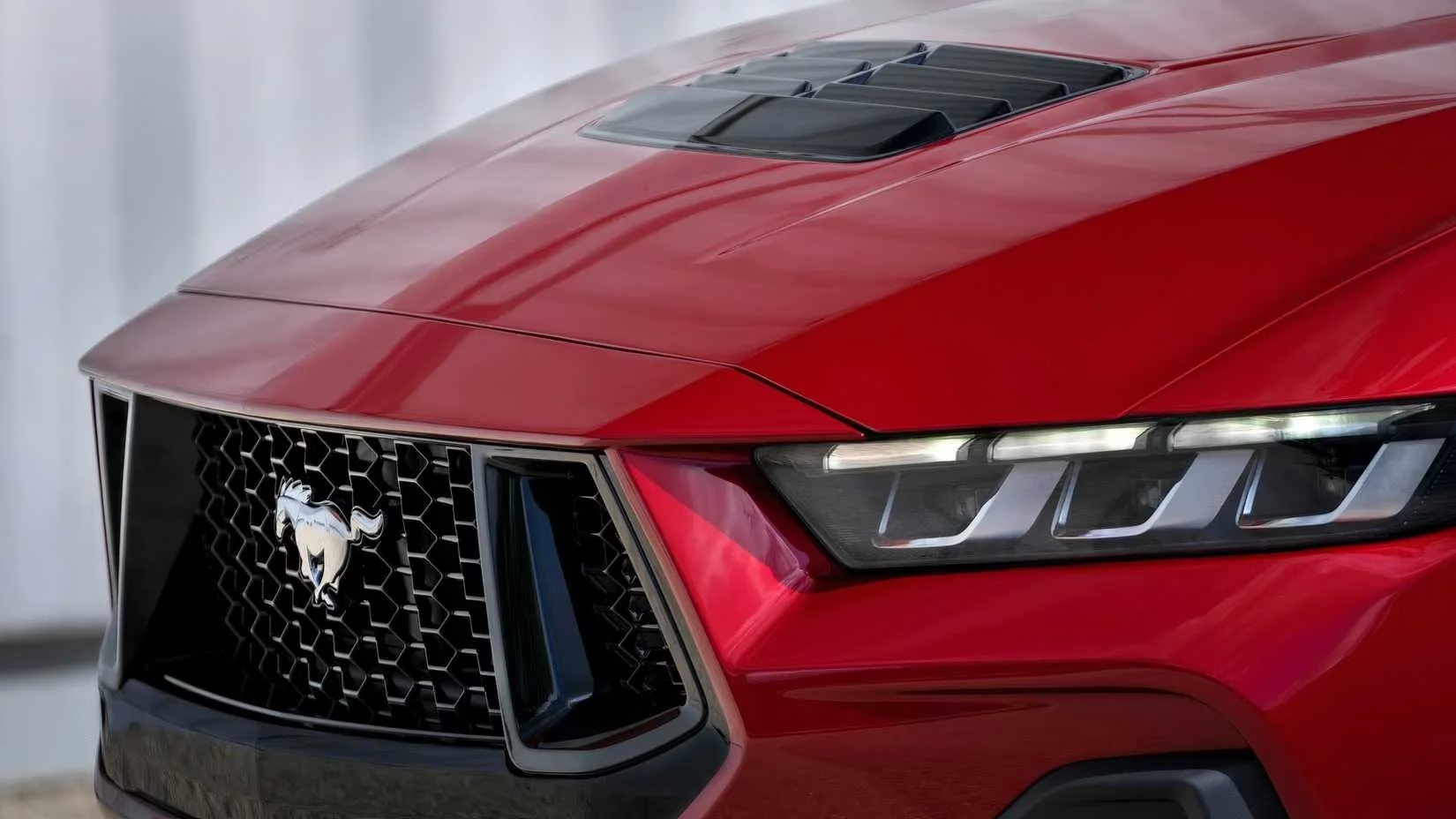
The Rumors Solidify: S650E is Among Us
This is where it gets exciting. On September 22, 2025, Ford Authority ran an exclusive that sent forums into a frenzy. According to their sources, Ford currently has a hybrid S650 Mustang model in operation, known internally as S650E. This isn't just a sketch on a napkin; prototypes are allegedly "running around" and have entered the Technology Prove-Out stage. Think of this stage as the final dress rehearsal before the Broadway premiere—it means the core engineering is done, and they're fine-tuning the performance for the real world. The exact powertrain is still a mystery—will it be a traditional hybrid like a Prius on steroids, or a plug-in hybrid (PHEV) offering silent electric-only cruising? The report did caution that changing regulations could still, theoretically, pull the plug. But the mere existence of driving prototypes is a stronger signal than a lighthouse in a fog bank. It suggests the hybrid Mustang has evolved from a corporate daydream into a metal-and-circuit reality.
Why Now? Reading the Automotive Tea Leaves
So why is 2026 the moment? Ford, like all legacy automakers, is trying to read a crystal ball clouded by shifting consumer sentiment. The market's relationship with EVs has been as stable as a soap bubble in a hurricane. A recent iSeeCars study of used car values was telling: over five years, EVs lost nearly 59% of their value, while a gas-guzzling Porsche 911 lost less than 20%. That kind of depreciation is a chilling prospect for buyers and manufacturers alike. Launching a full-electric Mustang coupe now would be a monumental gamble. A hybrid, however, is a safer bet. It's a transitional technology that doesn't ask the faithful to abandon the altar of internal combustion entirely. It offers a taste of electrification—instant torque, maybe some electric-only range—while preserving the soulful soundtrack and mechanical feel that defines the Mustang experience. For Ford, it's a way to hedge their bets, to have a foot in both the past and the future without falling into the chasm between them.
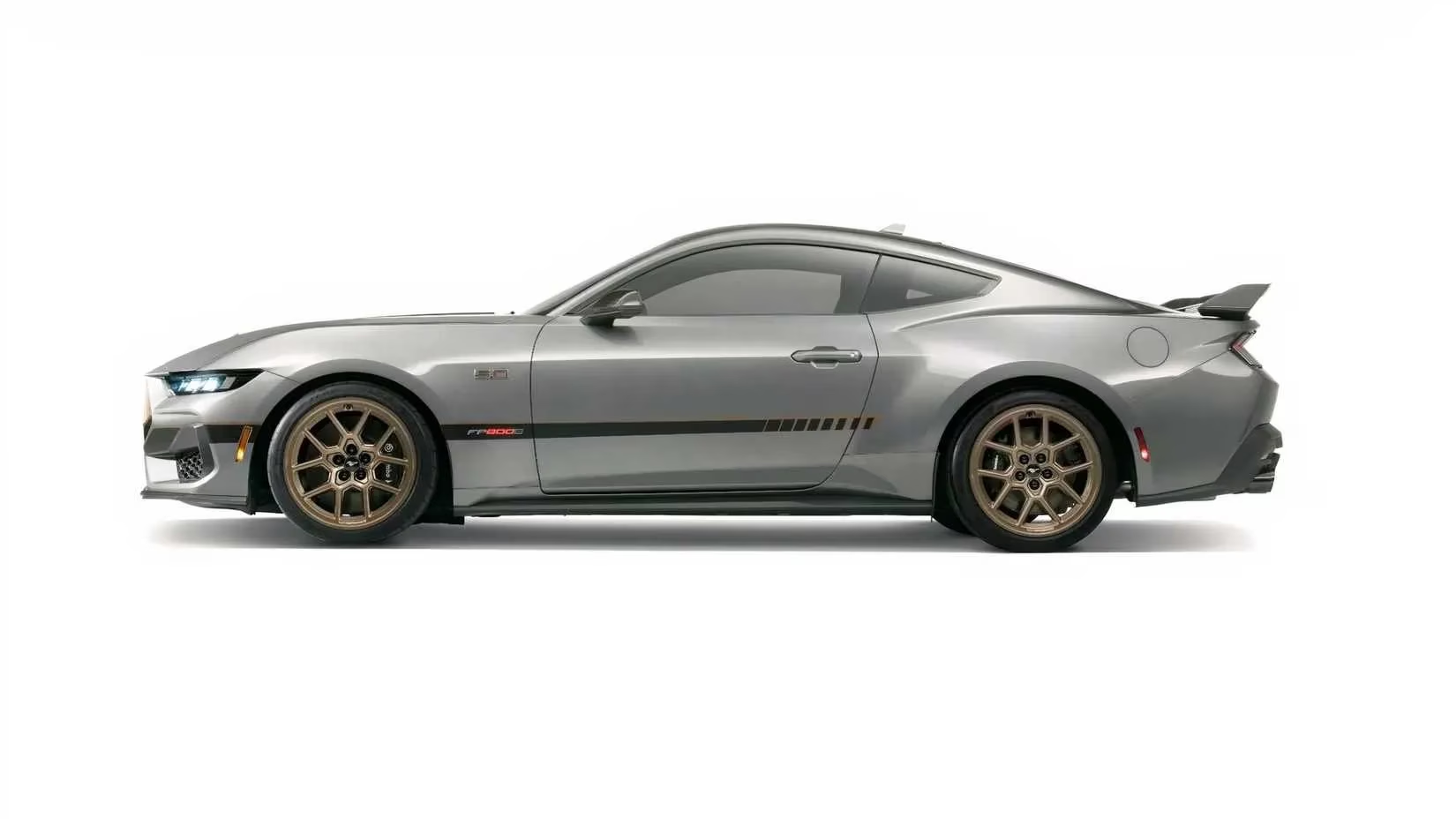
What Might It Be? Speculating on the Specs
Let's play prophet for a moment. Based on Ford's existing technology, the S650E could take a few forms:
-
The Performance PHEV: Imagine the 2.3L EcoBoost engine from the current Mustang paired with an electric motor on the rear axle (or even one on each axle for AWD!), fed by a modest battery pack. This setup could offer:
-
Electric-only mode for short commutes (15-30 miles).
-
Combined power output soaring well above 400 horsepower.
-
Torque fill that makes acceleration out of corners feel like being shot from a electromagnetic railgun.
-
-
The Efficient Full Hybrid: This might use a detuned version of the engine paired with a smaller motor and battery, prioritizing fuel economy without sacrificing too much punch. Its mission would be to keep the Mustang relevant in an efficiency-conscious world.
Regardless of the configuration, the goal stated back in 2017 likely remains: deliver V8-like performance. The hybrid system's immediate torque could make it feel even more violently responsive than the legendary Coyote V8 at low speeds. The potential is staggering.
The Final Lap
In the end, the journey of the hybrid Mustang mirrors the auto industry's own turbulent shift. It's been delayed, debated, and doubted. But the evidence in late 2025 points to one conclusion: it's happening. The prototypes aren't mirages; they're real cars being tested on real roads. For us fans, it represents the best of both worlds—a chance to hold onto the thunderous heritage we love while embracing a slice of the future. The wait has been long, almost agonizing, but if the S650E delivers on its eight-year-old promise, it could be like the first chord of a favorite song played on a revolutionary new instrument: familiar, yet thrillingly new. The pony car is about to learn a new trick, and I, for one, can't wait to hear it sing its hybrid song.