The Mercury Cyclone Spoiler, a rare homologation special, captivates with its fierce NASCAR heritage and tragic junkyard fate.
As a lifelong gearhead, nothing hits me right in the feels quite like stumbling upon a piece of automotive history that's been utterly discarded. We all know the big names, the Daytonas and Talladegas that get all the glory in the history books. But let me tell you, some of the most ferocious, most characterful contenders came from the underdog stable, and the Mercury Cyclone Spoiler was absolutely one of them. It was the dark horse, the sneaky contender that could, and sometimes did, humble the icons. So, imagine my mix of heartbreak and morbid fascination when I recently saw the footage of what can only be described as a king reduced to scrap metal in a Michigan junkyard.
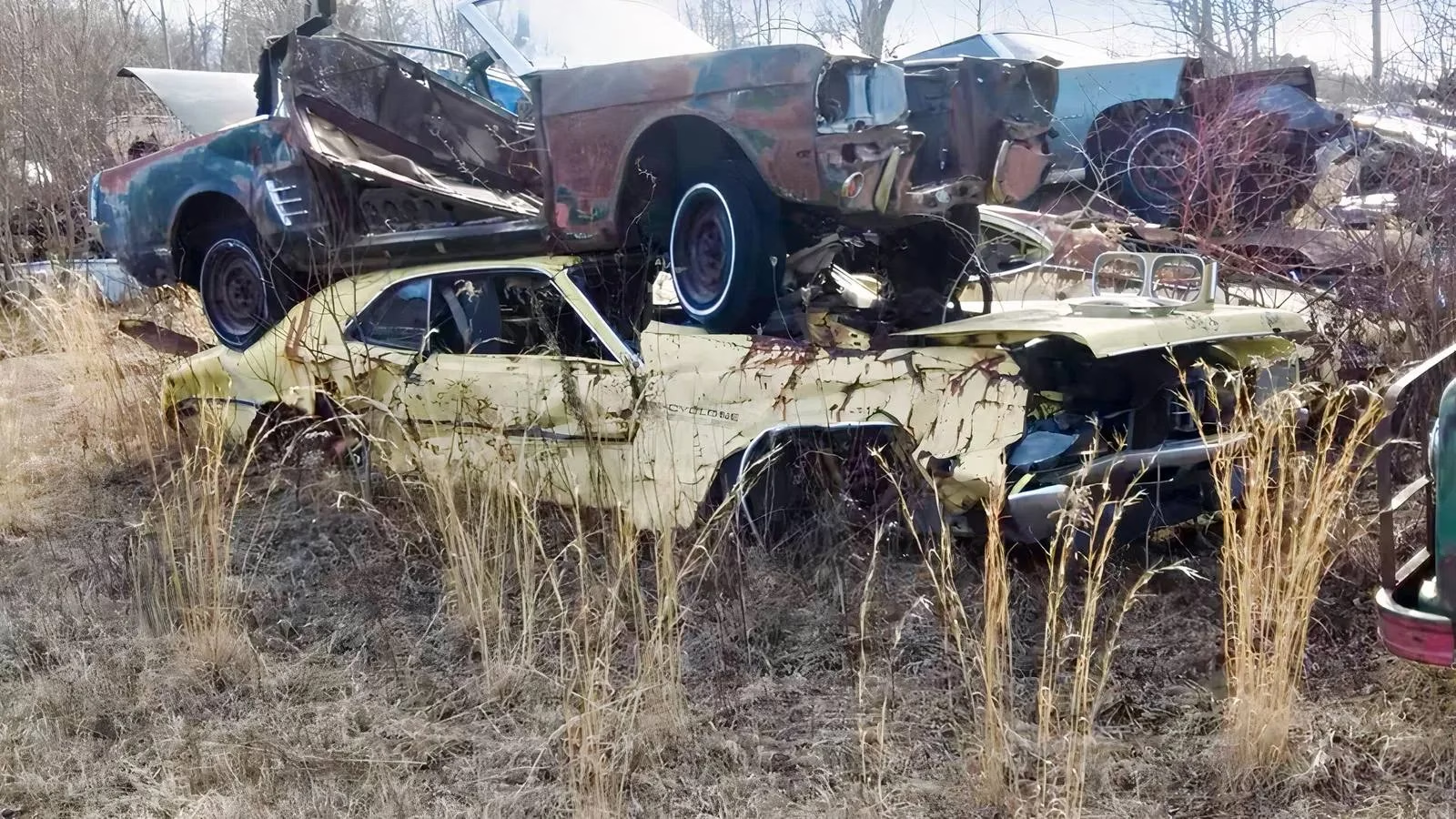
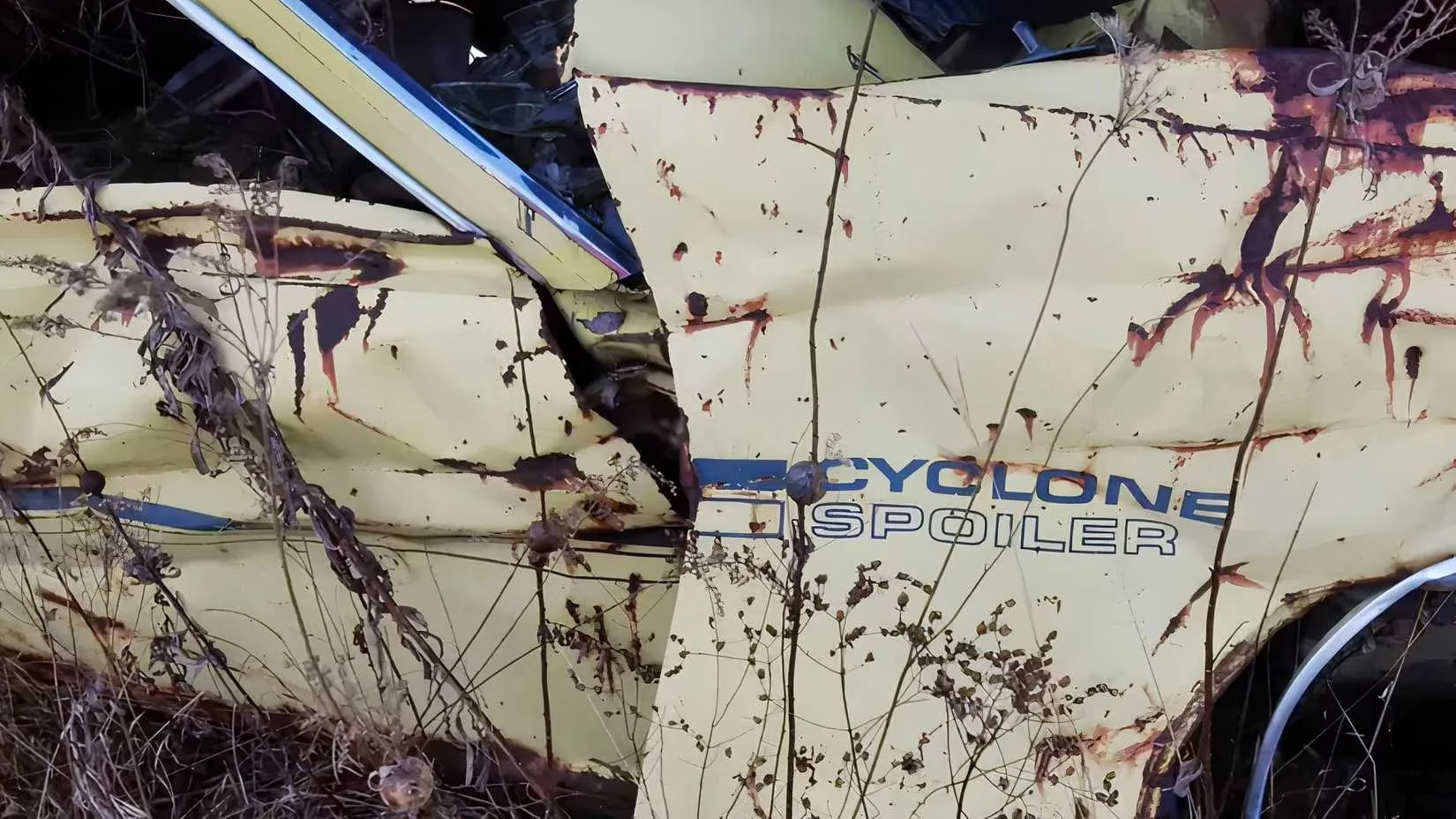
This wasn't just any old car; this was a homologation special, a street-legal weapon born for one purpose: to dominate the high banks of NASCAR. The video, shot by the intrepid Auto Archaeologist, shows a scene of pure carnage. The car is a crumpled, rusty mess, its iconic silhouette barely recognizable. The cruelest twist? It's got the carcass of a Ford Mustang literally sitting on its roof, like some kind of automotive tombstone. 😩 Yet, amidst the devastation, a single clue survived: the faint, weathered "Cyclone Spoiler" decal on the fender. That small badge is the only thing shouting this pile of metal's former glory to the uncaring sky.
Let me break down for you why this specific yellow relic is such a tragedy:
-
Production Rarity: This is a 1970 model. In that year, Mercury built only 1,631 of these Spoilers. That's it. Finding one in any condition today is a notable event.
-
Purpose-Built Beast: This wasn't a grocery-getter with a big engine. This was a factory-engineered brawler. Its spec sheet reads like a wish list for a 1970s race team:
-
Aerodynamic Arsenal: Distinctive front and rear spoilers (hence the name) to plant it on the track at insane speeds.
-
Track-Ready Chassis: Heavy-duty suspension to handle the punishment of oval racing.
-
Heart of a Lion: Under that long, mangled hood lived the mighty 429 cubic-inch V8.
-
Speaking of that engine, here's where the lore gets thick. This yellow warrior likely housed the standard 429 Cobra Jet, a monster that was officially rated at a modest 370 horsepower but was famously underrated by Detroit to appease insurance companies. In reality, it was churning out way more, coupled with a tire-shredding 450 lb-ft of torque. 💨
Now, the real unicorns were the ones ordered with the optional Drag Pak. That package unleashed the 429 Super Cobra Jet, which came with a beefier bottom end, solid lifters, and an aluminum intake, officially boasting 375 horsepower and ready for strip domination. Given the state and the standard yellow paint (a regular option, not a special order color), this junkyard find probably isn't that top-tier SCJ variant. But let's be real—even the "base" Cobra Jet version was an earth-shaking, legendary powertrain.
| Feature | 1970 Mercury Cyclone Spoiler (Standard) | Drag Pak / Super Cobra Jet Variant |
|---|---|---|
| Engine | 429 Cobra Jet V8 | 429 Super Cobra Jet V8 |
| Official Power | 370 hp | 375 hp |
| Torque | 450 lb-ft | 450+ lb-ft (estimated) |
| Key Differentiators | Robust cast-iron intake, hydraulic lifters | Aluminum intake, solid lifters, strengthened internals |
| Rarity | Rare | Extremely Rare |
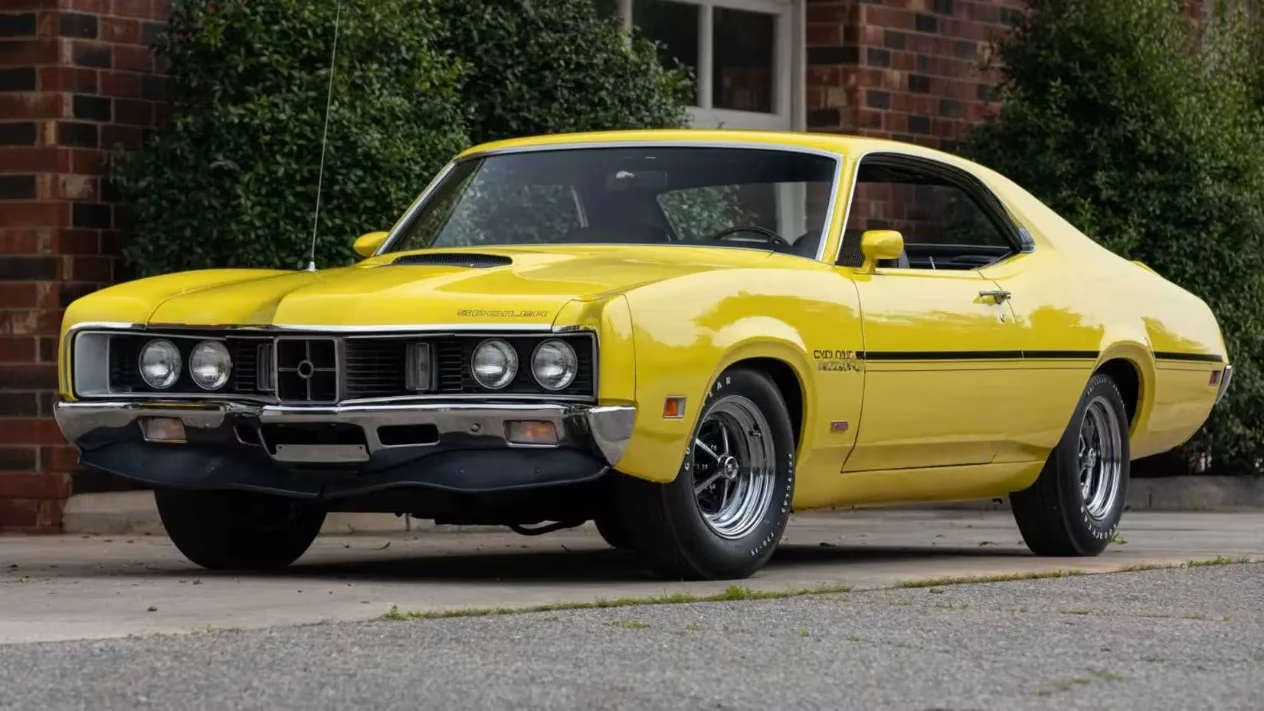
Seeing this juxtaposition is what kills me. One moment you're looking at a concours-ready, gleaming example of automotive art—the sleek lines, the aggressive stance, the promise of thunderous power. The next, you're staring at its doppelgänger, crushed, forgotten, and serving as a foundation for another discarded dream. It's the circle of life for cars, but it doesn't make it any easier to swallow.
So, what's the lesson here for us enthusiasts in 2025? It's a stark reminder. The muscle car era wasn't just about the Chevelles and HEMI 'Cudas. It was a golden age filled with fierce competition, and heroes like the Mercury Cyclone Spoiler played a crucial role. They were the proof that innovation and audacity came from all corners of Detroit. Finding one in a junkyard today isn't just about a lost car; it's about a faded chapter of racing history being slowly reclaimed by the earth. While this particular yellow Spoiler is likely far beyond salvation, its story isn't. It serves as a dusty, rusty monument to an era when manufacturers built absolute weapons for the street and track, some of which, sadly, met a fate far less glorious than their birthright. Let's pour one out for the fallen warriors, and maybe look a little harder at those "old heaps" in the weeds. You never know what legendary badge might be hiding under the grime.