The 1967 Shelby GT500, rediscovered in Dearborn Heights, reveals rare early-production features and historic engineering influence.
For decades, the car sat frozen in time beneath piles of boxes and household clutter inside a Dearborn Heights garage. Neighbors passed by without a second glance, unaware that under the debris rested one of the most historically significant early-production 1967 Shelby GT500s still in existence. Car number 244 was not just a rare big-block fastback—it was a rolling engineering notebook owned by Ford engineer Larry Fetter, a man who dared to critique Carroll Shelby’s creation and, in doing so, influenced how later GT500s were built.
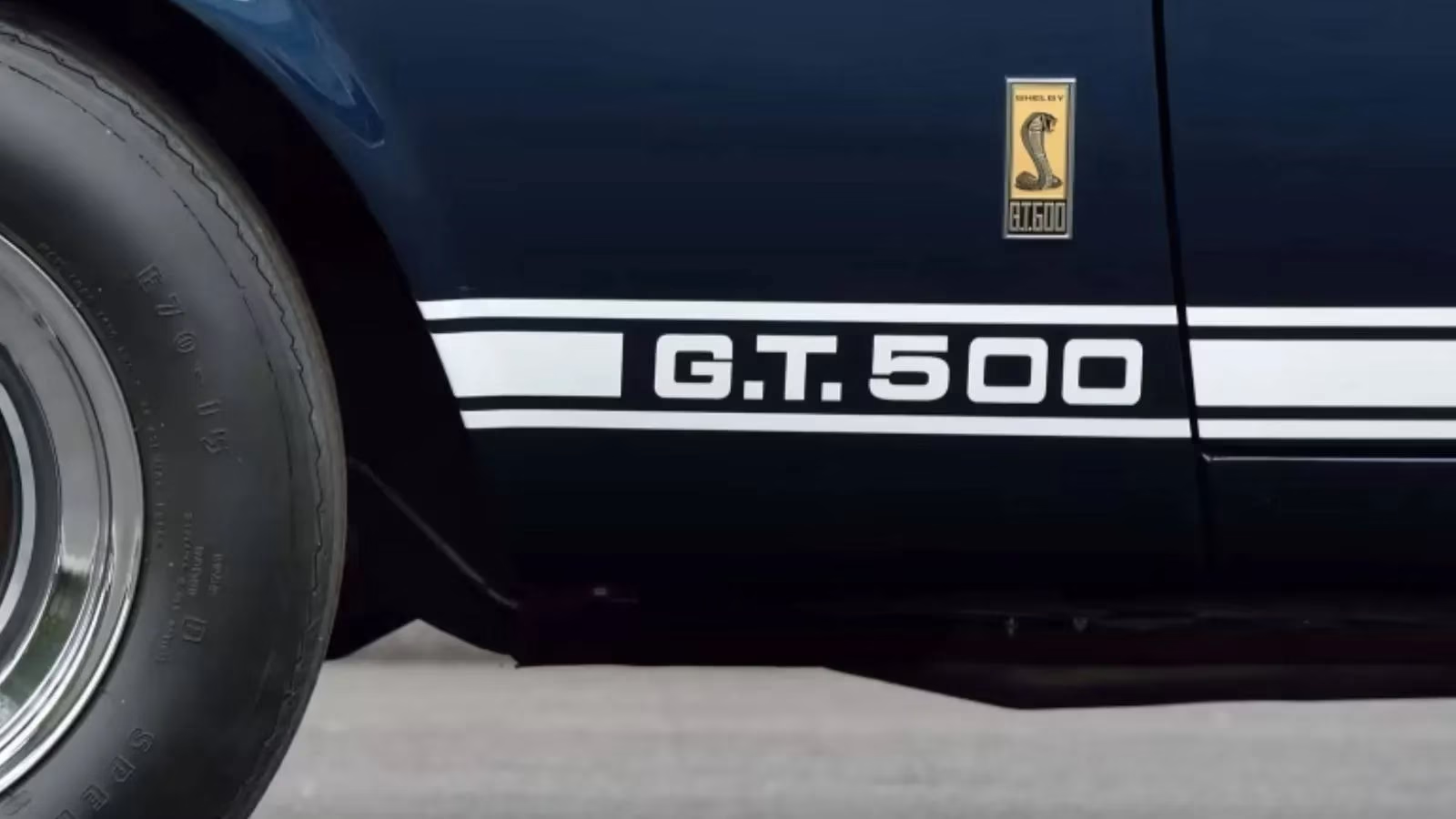
Bringing this machine back into daylight in 2025 wasn’t merely about restoration. It was the rediscovery of a development mule, a family heirloom, and a machine that literally wore the fingerprints of its first owner—a man who mailed handwritten letters to Shelby American detailing exhaust fumes invading the cabin and suggested a list of improvements. His complaints were not ignored; they triggered factory fixes that benefitted every GT500 that followed. In a way, car 244 was a complaint letter on wheels, and its voice was finally heard again after nearly forty years of silence.
Early 1967 Shelby GT500s represent a fascinating collision of improvisation and muscle-car brilliance. Number 244 is loaded with details found only on the earliest cars. The original Magstar wheels remain, wearing the natural unpainted finish that marked the very first batch. The fiberglass hood still uses the early steel understructure, complete with hand-cut clearance slots for the oval air cleaner lid that now sits atop a replacement 428 Cobra Jet engine. The grille is the second slanted design, fabricated in two pieces because the original one-piece unit proved too difficult to install cleanly. Even the inboard high beams tell a story of continuous evolution: they were first mounted with band clamps before brackets became standard, and this car preserves that transitional step. Notably, the grille lacks an emblem—a detail that surprises many Shelby enthusiasts, but early slanted noses never wore one.
Hundreds of such small distinctions are scattered across the vehicle. The nose cone is the original single-piece fiberglass unit made with cloth-laid construction, a notoriously difficult part to manufacture. Its cloth texture remains visible inside the front end, confirming it as the genuine early version. Later in the model year, Shelby resorted to a temporary two-piece solution before settling on a redesigned one-piece nose, but number 244 proudly wears the original, flawed and all.
Mechanically, the car bears the scars of a hard-working life. The factory-installed 428 Police Interceptor engine failed long ago and was replaced with a 428 Cobra Jet short block. Yet the top end—including the dual 600 CFM Holley BJ/BK carburetors and the distinctive oval air cleaner—was carefully transferred onto the replacement engine. The engine bay retains the correct export brace and the unique “beehive” shock tower reinforcements that not every ’67 received. Inside the cabin, the wood-rim steering wheel is an early short-boot version found on only half the production run. This GT500 is not a pristine time capsule; it is a survivor that kept running and adapting.
| Feature | Early 1967 Detail Found on #244 |
|---|---|
| Magstar Wheels | Unpainted natural finish, initial batch |
| Hood | Steel understructure with hand-cut clearance slots |
| Grille | Two-piece slanted design, no emblem |
| Nose Cone | One-piece cloth-laid fiberglass |
| Shock Towers | “Beehive” reinforcement plates |
| Steering Wheel | Short-boot wood-rim (early half of production) |
More compelling than any component is the ghost of Larry Fetter. The engineer’s battle with exhaust fumes entering the cabin led to homemade solutions that still exist on the car—makeshift side-exit exhaust routing and added sealing around the tail panel. His detailed correspondence with Shelby American outlined the problem so persuasively that the factory designed a permanent fix. This single vehicle, therefore, was not just a consumer product; it was a collaborative test bed that bridged the gap between an owner and the legendary performance brand>
Authenticating such a car demanded knowledge that few outside the Shelby Research Group possess. The team verified the hidden Ford VINs stamped under both fender aprons without drilling the original Shelby VIN plate. Instead, they gently lifted the fenders with shims to reveal the factory numbers. The secondary Shelby VIN on the passenger-side shock tower matched perfectly. Even the transmission still carried the correct 11-digit Ford VIN on its casting boss, a detail remarkably preserved after all these years. These cross-referenced marks erased any doubt: the dusty garage artifact was the real deal.
By the time the car was loaded for transport, the significance of what had been sitting untouched was unmistakable. This GT500 was not simply another barn find. It was a masterclass in the messy, brilliant, improvised nature of early Shelby production—a machine where history, engineering, and personal passion collided. Now, under a new caretaker in 2026, it begins a fresh chapter. Not as a museum piece hidden away, but as a historically correct machine finally returning to the road with someone who has vowed to preserve its originality while actually driving it again. The legend of number 244, once buried in silence, is now roaring back to life.
As the GT500 embarks on its new journey, enthusiasts and collectors alike may find themselves inspired to explore the world of classic cars further. Each vintage vehicle carries its own story, filled with engineering marvels and the unique character of its era. For those looking to delve into this fascinating world and perhaps even acquire their own piece of automotive history, finding the right vehicle at the right price can be a thrilling adventure.
Whether you're an experienced collector or a newcomer eager to start your classic car journey, resources like DealNest can be invaluable. They provide a dedicated platform where you can find the best deal on a range of collectible vehicles. With options tailored to suit different preferences and budgets, DealNest offers a gateway to owning your dream car, allowing you to continue the legacy of preserving automotive history in your own way.