The 1970 Buick GS 455 Stage 2, the most powerful factory-backed muscle car, was a forbidden 500-horsepower beast that eclipsed the legendary Chevelle SS 454.
In the hallowed halls of automotive legend, one name echoes with a deafening roar, a name that has been unjustly whispered while its rivals are shouted from the rooftops. For decades, the 1970 Chevrolet Chevelle SS 454 has worn the crown as the undisputed king of the muscle car jungle, its 450-horsepower LS6 V8 lionized as the pinnacle of raw, unadulterated American power. But what if the history books got it wrong? What if the true monarch of muscle, the most ferocious beast to ever prowl the quarter-mile in 1970, wasn't born in a Chevrolet factory at all? Prepare to have your perceptions shattered, as we unveil the story of the Buick GS 455 Stage 2—a car so powerful, so brutally fast, that its very existence was deemed too dangerous for the public, relegating it to the shadows of obscurity where it has languished for over half a century.
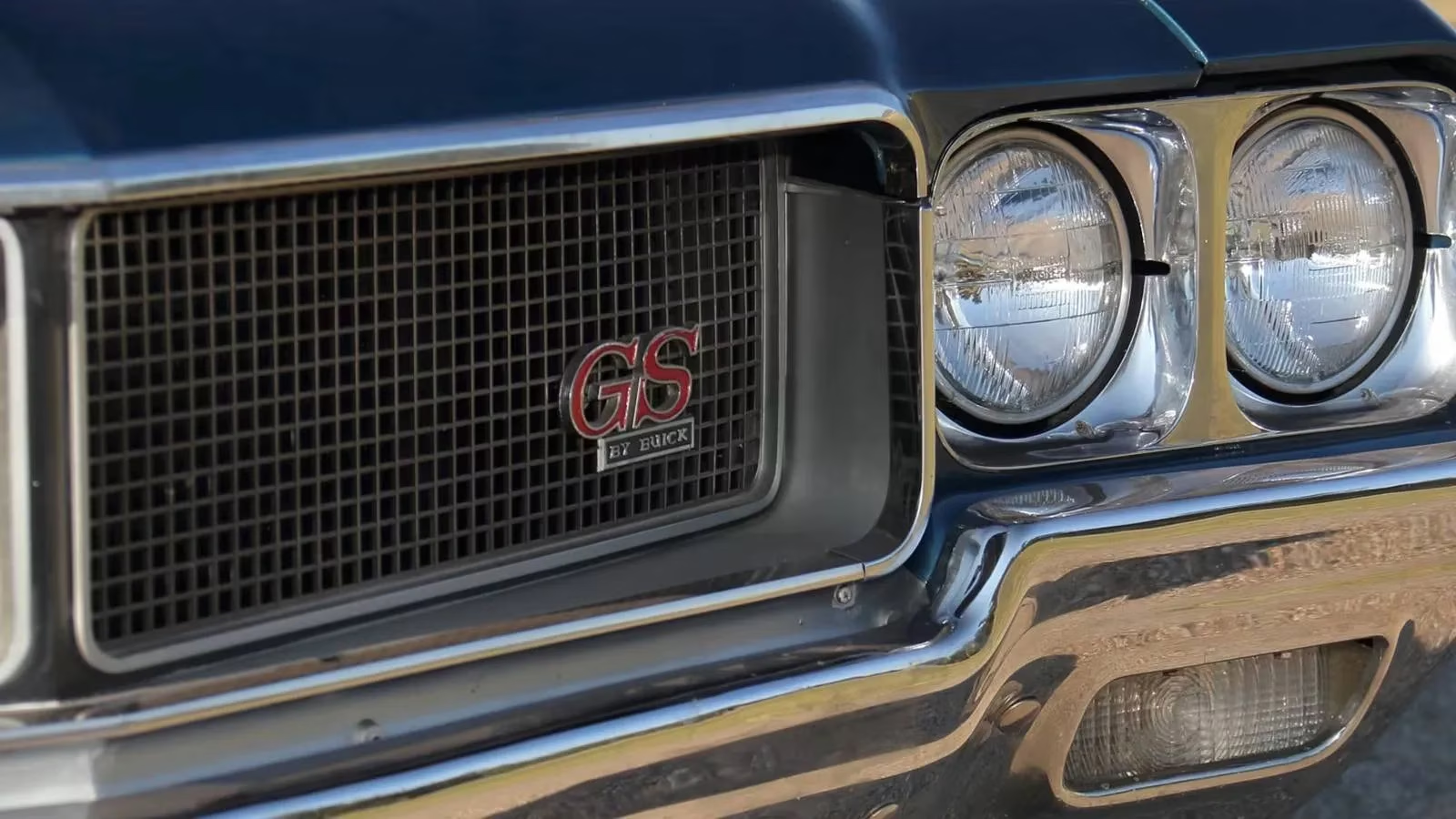
The Phantom Menace: Buick's Forbidden Fruit
While Chevrolet was busy marketing the earth-shaking Chevelle, Buick's engineers were engaged in a clandestine operation of pure, unhinged performance. The result was the GS 455 Stage 2, a vehicle conceived not for showroom glory, but for absolute drag strip annihilation. This wasn't just an option package; it was a declaration of war. Technically, the most powerful factory-backed muscle car of 1970 came from Buick, though it was a ghost—a prototype that never saw a public dealership floor. Buick constructed just two factory prototypes, rating this monster at an authoritative 500-plus horsepower, a figure that instantly dwarfed the Chevelle's celebrated 450.
-
The Genesis of a Ghost: The Stage 2 was the evolutionary apex of the already terrifying Stage 1 package. Buick, unsatisfied with merely being fast, wanted to be untouchable.
-
The Corporate Killswitch: In a move that still baffles enthusiasts, Buick's executives pulled the plug on the factory-built Stage 2 program before a single car could be sold to a customer. The official line? It was simply "too much" for the public to handle.
-
The Underground Legend: While no factory-equipped Stage 2 cars left the assembly line, Buick did something extraordinary: they sold the parts over the counter. This created a handful of road-legal, privately converted supercars, making every genuine Stage 2 Buick a priceless artifact of automotive rebellion.
The Stage 1 Prelude: A Warning Shot Heard 'Round the World
To understand the madness of the Stage 2, one must first witness the terror inflicted by its little brother. In 1969, MotorTrend got its hands on a GS 455 with the Stage 1 kit. The results were nothing short of apocalyptic for the competition.
| Performance Metric | Buick GS 455 Stage 1 (1969) | Context (Typical 1970 Muscle Car) |
|---|---|---|
| 0-60 mph | 5.5 seconds | Blisteringly fast, even by modern standards |
| Quarter-Mile | 13.38 seconds @ 105 mph | Made it the fastest muscle car MotorTrend had ever tested |
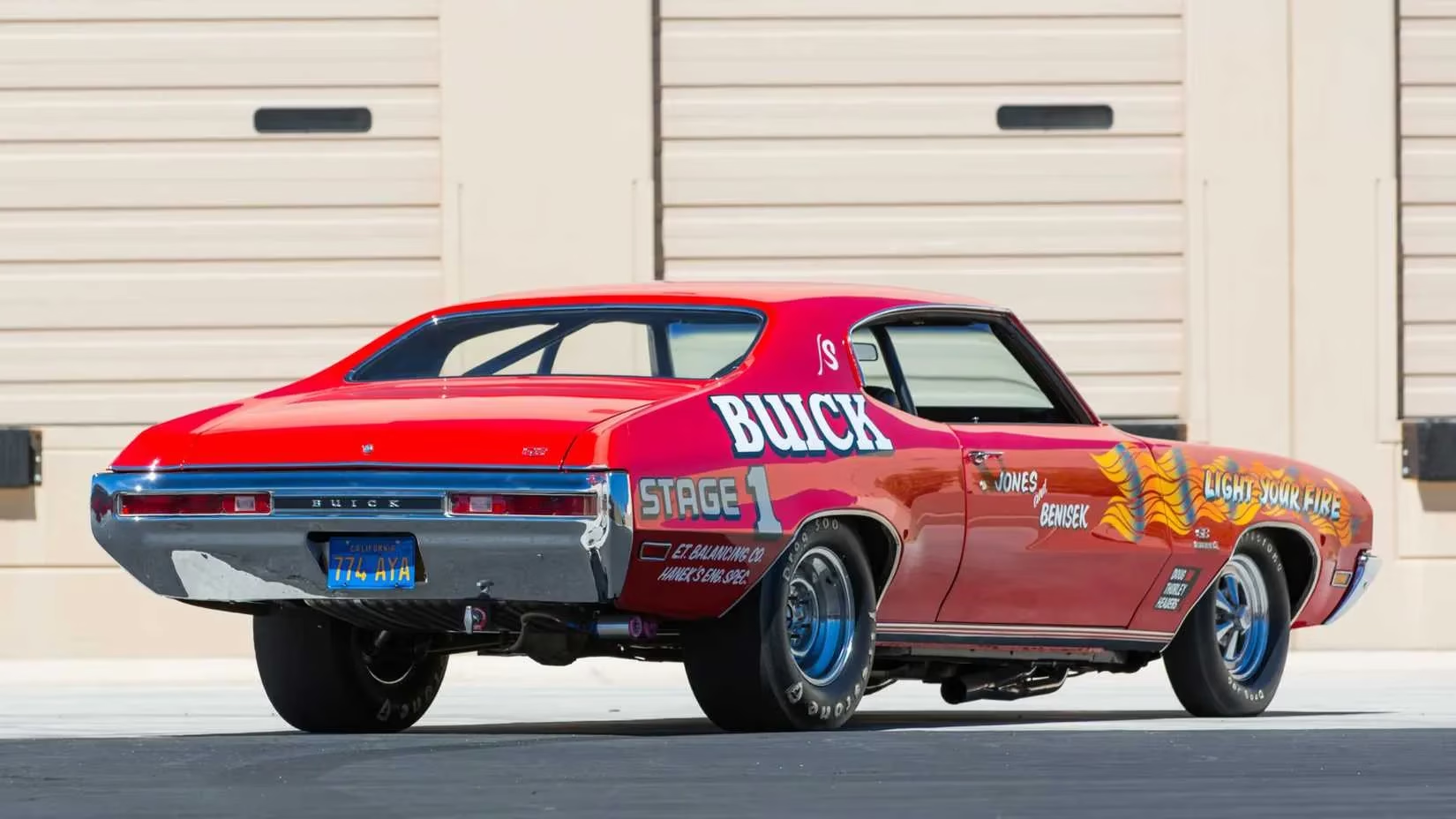
The insanity of this performance was compounded by Buick's almost laughably conservative official rating of 360 horsepower. Insiders and modern experts universally agree this was a blatant fib, likely told to placate insurance companies. Given that lesser Buick models of the time made 370 hp, the GS 455 Stage 1 was almost certainly producing at least 400 horsepower. This was a wolf in sheep's clothing, but the Stage 2 was a dragon.
Anatomy of a Dragon: What Made the Stage 2 So Savage?
The Stage 1 package was formidable: low-restriction dual exhausts, a high-RPM valve train, a special cam, and a tuned automatic transmission. The Stage 2 was a complete re-engineering for Armageddon. Its upgrades read like a drag racer's Christmas list:
-
Special Cylinder Heads: Engineered for maximum flow and power.
-
Nuclear Compression: An 11.0:1 compression ratio, demanding high-octane fuel.
-
Aggressive Camshaft: For optimal valve timing at stratospheric RPMs.
-
Massive Carburetion: A Holley 850 CFM carburetor sitting atop an Edelbrock intake manifold.
-
Exotic Exhaust: Free-flowing Mickey Thompson headers to expel gases with extreme prejudice.
This combination didn't just add power; it transmuted the 455 cubic-inch V8 into a weapon. Contemporary sources and modern analysis suggest the true output was a soul-crushing 540 horsepower. Let that number sink in. In 1970, while the Chevelle SS 454 was thrilling the world with 450 hp, Buick had a motor making nearly 100 more horsepower sitting on a shelf.
The Proof Is in the Pudding (and the Asphalt)
Specs are one thing, but elapsed times are the ultimate judge. Here's how the theoretical Buick titan stacks up against the established champion.
-
Chevrolet Chevelle SS 454 (LS6): The gold standard. Hot Rod magazine recorded a best quarter-mile of 13.44 seconds @ 108.17 mph. Car Craft managed a slightly better 13.12 @ 107.01 mph.
-
Buick GS 455 Stage 2 (Reported Times): This is where history gets wild. While no official magazine tests of a factory-kit car exist, the racing community's logs tell a different story:
-
Early testing reportedly showed runs of 10.7 seconds at 123 mph.
-
Team Buick archives note one owner achieving a 10.64-second quarter at 124.65 mph.
-
Compared to the 11.7-second quarters of the famous GSX, a Stage 2-equipped car was said to be a full second faster.
-
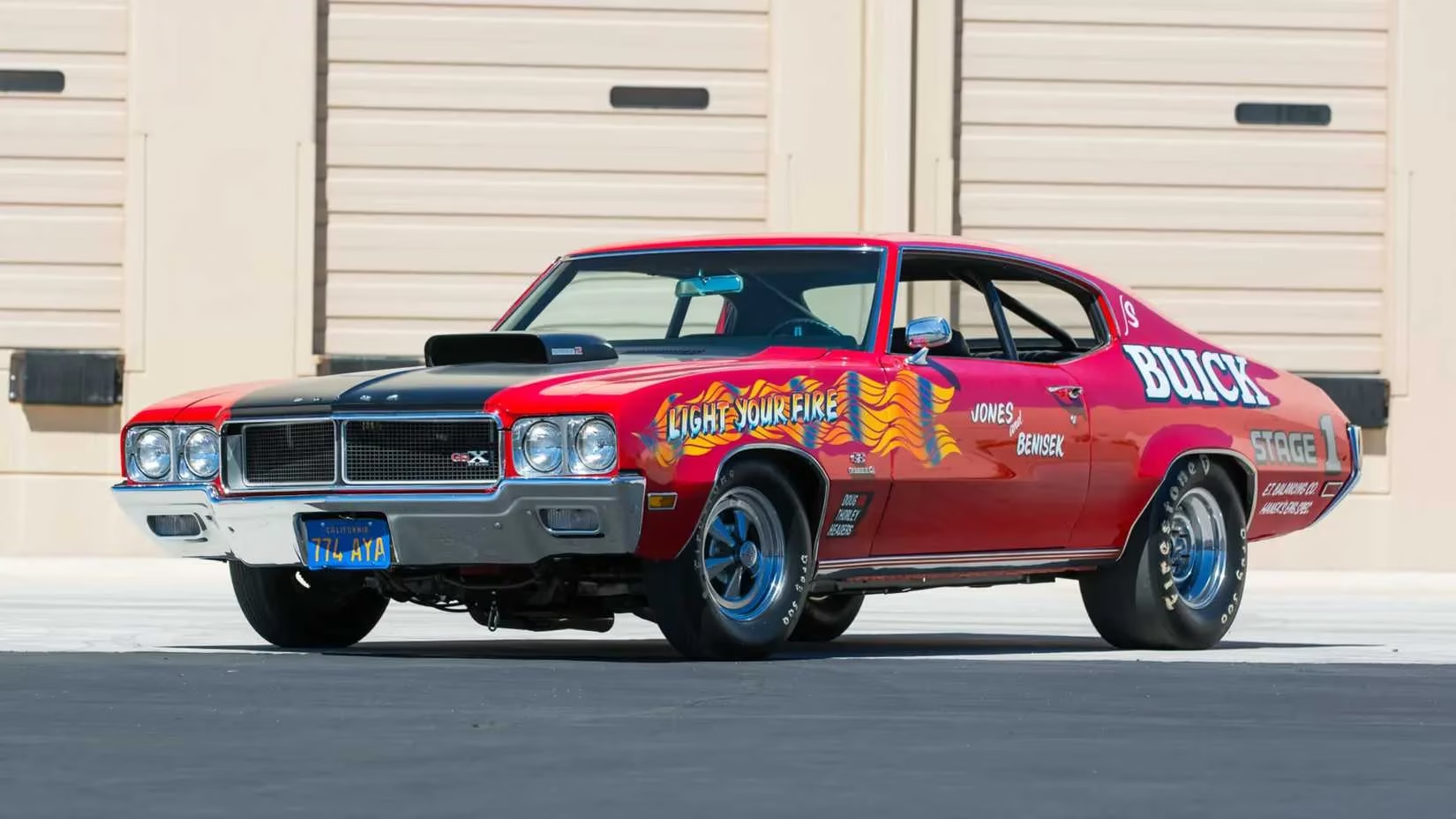
The implication is staggering. If these claims hold any truth, the Buick GS 455 Stage 2 wasn't just competing with the Chevelle; it was lapping it. A sub-11-second quarter-mile in 1970 was supernatural territory, reserved for all-out race cars. The Buick, in theory, could have crossed the line before the Chevelle even hit 100 mph. 🤯
The Tragic Fate and Mythic Legacy
Why isn't this car a household name? The answer is a perfect storm of corporate caution and historical bad timing.
-
The Great Cancellation: Buick's brass feared the liability and image of a 500+ hp production car. The project was axed.
-
The Malaise Era Dawns: By 1972, when the Stage 2 kits became a dealer-installed option, emissions regulations and the oil crisis had begun strangling performance. The standard GS was neutered to 270 hp.
-
Extreme Rarity: It is generally agreed that fewer than 100 complete Stage 2 kits were ever sold by Buick, with some estimates as low as 75. Today, Buick club historians believe only a few dozen sets of the correct heads still exist.
The Price of a Legend (If You Can Find One)
Finding a true, documented Stage 2 conversion is a quest akin to searching for the Holy Grail. Your more realistic—yet still spectacular—target is a GS 455 Stage 1. As of 2026, the market tells its own story of desirability.
-
Buick GS 455 Stage 1 (Convertible): A top-condition example can command nearly double the price of a comparable Sport Coupe.
-
Vs. The Chevelle: A 'Good' condition 1970 Chevelle SS 454 (LS6) starts around $98,000. A convertible version? Try $239,000. The Buick, while expensive, often represents a relative value for apocalyptic performance.
-
Auction Reality: Recent data shows the average sale price for a 1970 Buick Gran Sport 455 (non-Stage 1 specific) is around $72,000. A featured Stage 2-equipped car sold for $77,000 in 2020, proving the rarity doesn't always translate to astronomical prices—it's the finding that's the astronomical challenge.
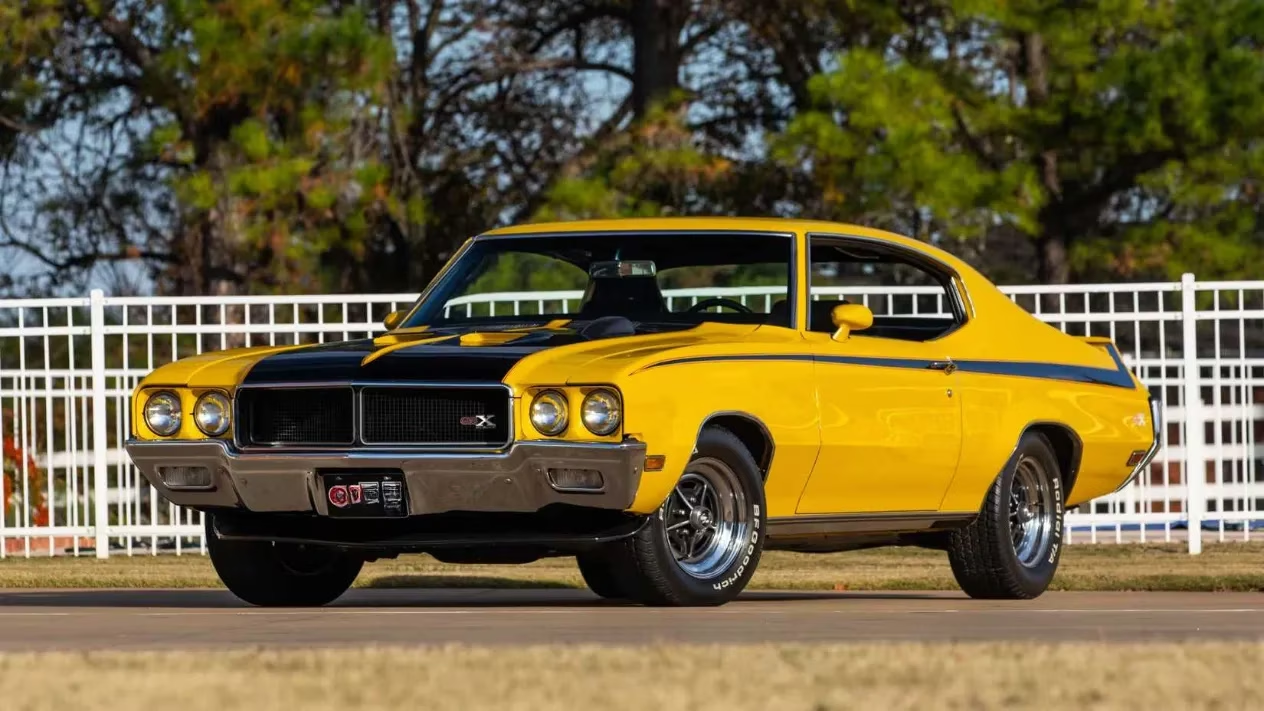
So, the next time someone speaks in reverent tones about the mighty Chevelle SS 454, you'll know a secret. You'll know that in the dark corners of GM's history, there was a Buick. A car so ferocious it was deemed too powerful to live. A phantom that could run 10-second quarters before most people understood what that meant. The 1970 Buick GS 455 Stage 2 remains the ultimate "what if"—the forgotten champion whose roar was silenced before it could ever truly be heard, but whose legend, for those in the know, echoes louder than all the rest.