Buick Wildcat muscle car and collector car offer powerful V8 performance, luxury, and rarity—making it a hidden gem for enthusiasts.
In the pantheon of 1960s American muscle cars, names like Mustang, Camaro, and Charger often dominate the conversation. Lurking in the shadows, however, is a full-size contender from Buick that traded blows with the era's titans: the Wildcat. Born from a popular trim level and evolving into a standalone legend, the Wildcat carved out a brief but memorable seven-year run from 1963 to 1970, offering a unique blend of brawny V8 power, understated luxury, and grand touring comfort. With just two generations and roughly 369,571 units sold, the Wildcat remains one of the most criminally underrated chapters in Detroit's performance history, a sleeping giant in a collector market now ripe for rediscovery.
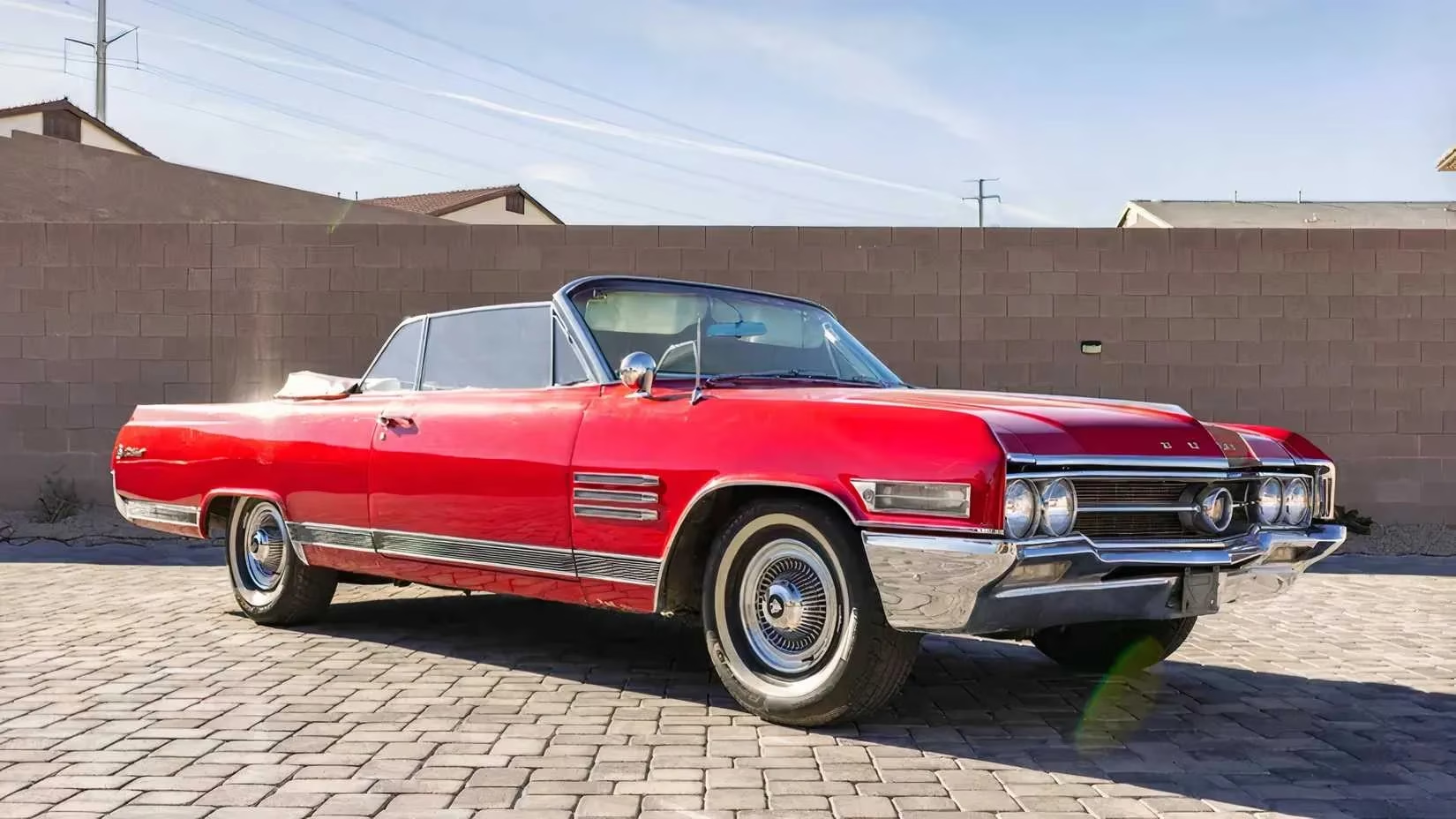
Genesis of a Standalone Legend (1963-1964)
The Wildcat name first prowled as a series of stunning 1950s concept cars, but it wasn't until 1962 that it landed on a production vehicle as the top-tier trim for the full-size Buick Invicta. Buick's brass quickly recognized the name's potential, and for the 1963 model year, the Wildcat was unleashed as its own distinct model line. Riding on Buick's robust B-body platform, the first-generation Wildcat was an instant statement. It presented itself not as a stripped-down quarter-mile specialist, but as a sophisticated, full-size cruiser with performance credentials—a velvet glove hiding an iron fist.
Key First-Generation Features:
-
Body Styles: Offered as a two-door hardtop, a two-door convertible, and a four-door hardtop in 1963. A pillared four-door sedan joined the lineup for 1964, casting a wider net in the market.
-
Design Language: It embodied the long, low, and wide proportions of the era with clean, muscular lines. The front featured a bold, full-width grille flanked by dual headlights, creating an aggressive yet elegant stance.
-
Powertrain: Initially motivated by a 401 cubic-inch (6.6L) "Nailhead" V8. For 1964, Buick upped the ante with a 425 cubic-inch V8, available with either a single-carburetor (340 hp) or a dual-carburetor (360 hp) setup, cementing its muscle car bona fides.
This generation served as Buick's elegant declaration of intent in the performance arena, proving that luxury and lung-crushing torque were not mutually exclusive.
The Apex Predator: Second Generation Evolution (1965-1970)
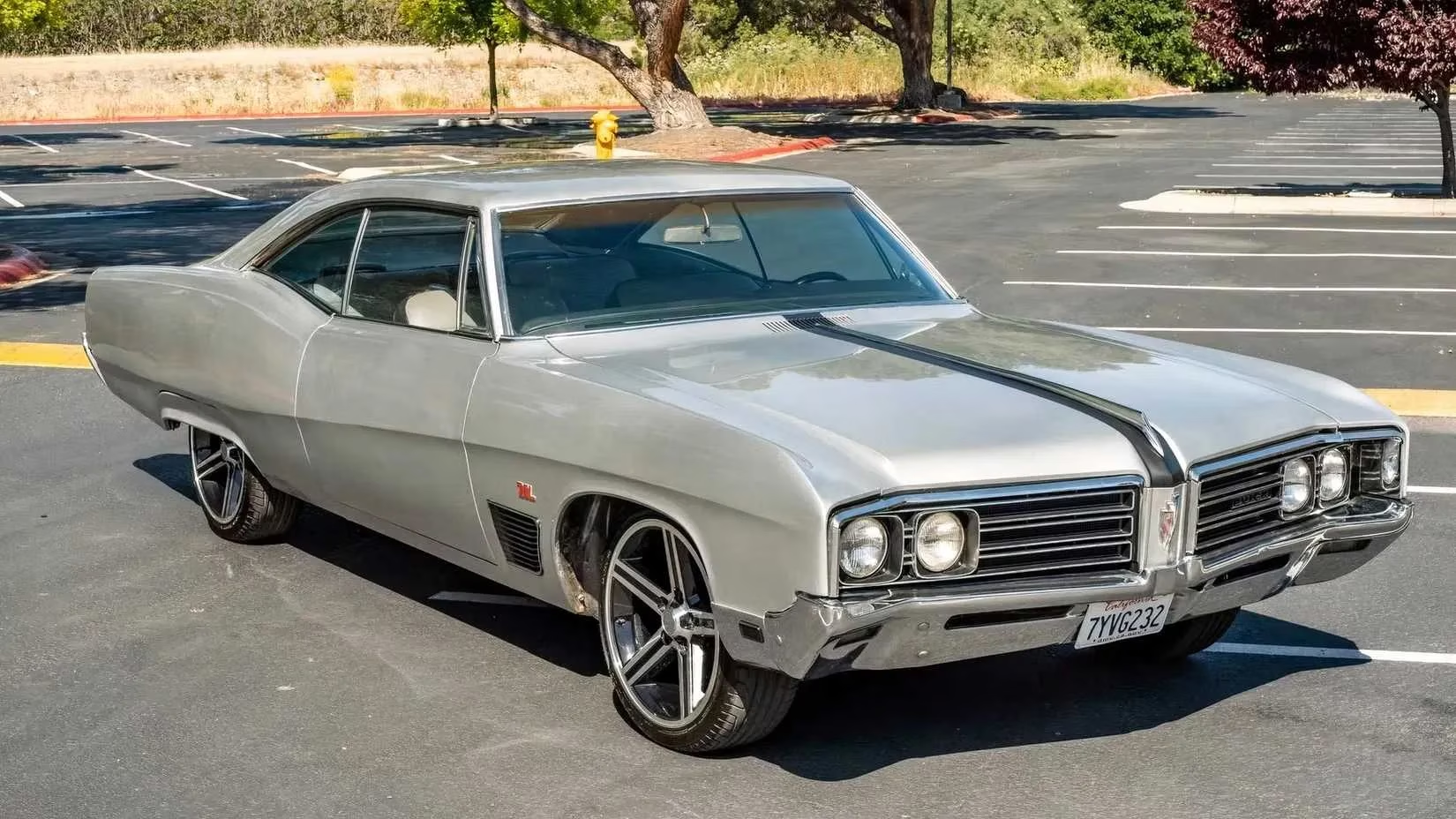
If the first-gen Wildcat was a declaration, the second generation was a full-throated roar. Debuting for 1965, it underwent a dramatic metamorphosis. Shedding its predecessor's sharper angles, it embraced the fashionable "Coke bottle" silhouette—a flowing, rounded design with a tapered waistline, sweeping fender curves, and a dramatically wide stance. This redesign was not merely cosmetic; it was a strategic evolution, like a classic ocean liner being retrofitted with the engines of a battleship, blending imposing grandeur with serious thrust.
The second generation's five-year lifespan was marked by continuous refinement and increasing power:
| Year | Major Update | Engine Highlights |
|---|---|---|
| 1965 | New rounded "Coke bottle" styling debuts. Trim levels: Base, Custom, Deluxe. | Carries over 401ci & 425ci "Nailhead" V8s. Gran Sport (GS) package offered with heavy-duty suspension. |
| 1966 | Front fascia refresh with split-center grille. | One-year-only "Gran Sport Performance Group" with a factory dual-carb 425ci V8, creating the ultra-rare "Super Wildcat" (only 22 built). |
| 1967 | Federally-mandated safety equipment introduced. | Phases out "Nailhead" engines. Introduces new 430 cubic-inch V8 with four-barrel carb (360 hp). |
| 1969 | Body revised with "angular elegance" cues: squarer edges, larger grille. | 430ci V8 continues. |
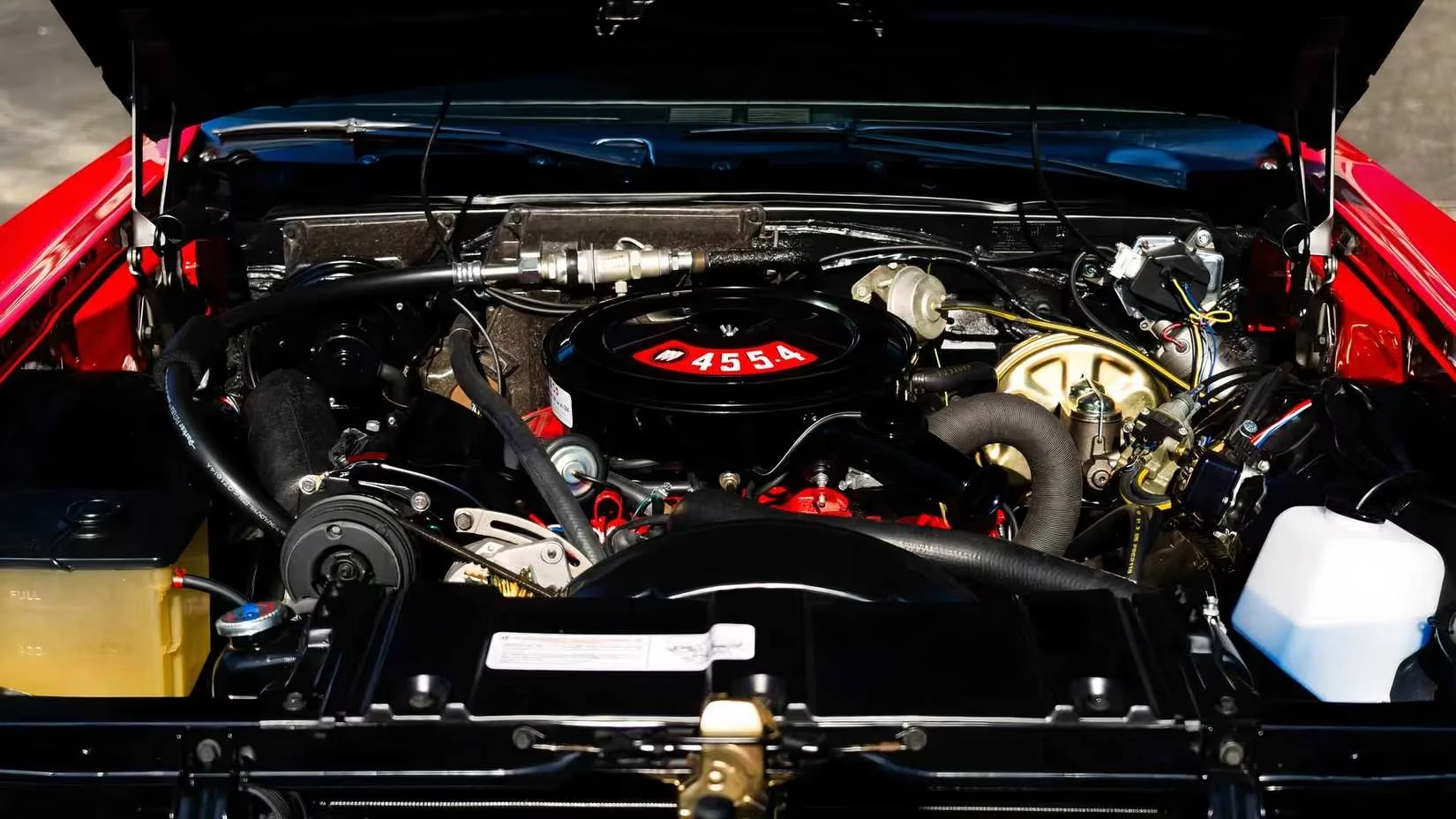
| 1970 | Final year of production. | Crowned with the largest Buick engine ever: a 455 cubic-inch (7.5L) V8 producing 370 horsepower and over 500 lb-ft of torque. |
The 1970 engine was the ultimate expression of Wildcat philosophy—a torque-monster capable of standing toe-to-toe with the most revered muscle cars of the decade, yet it resided in a package that never sacrificed its gentlemanly demeanor.
Legacy and Collector Status in 2026
Decades after the final Wildcat rolled off the line, its legacy is one of understated excellence. Often overlooked in favor of flashier rivals, the Wildcat has settled into a niche adored by knowledgeable collectors who appreciate its unique dual-character. In today's market, it represents remarkable value.
Valuation Snapshot (2026):
-
First Generation (1963-1964): Considered one of the most affordable entries from the golden muscle car era. Well-kept examples can often be found starting around the $10,000 - $15,000 mark, though pristine, documented cars command higher prices.
-
Second Generation (1965-1970): Remains highly underrated. According to recent collector data, even the most desirable versions, like the 1966 Gran Sport, often have valuations in the low-to-mid $20,000 range for vehicles in good condition. This makes the Wildcat an accessible gateway into full-size classic muscle.
Comparing the Two Generations
Choosing between the two Wildcats is a matter of preferred flavor:
-
First Generation (1963-1964): The purist's choice. It is the foundational icon, the model that established the Wildcat's standalone identity with cleaner, more angular styling. It represents the initial, potent fusion of Buick luxury and performance.
-
Second Generation (1965-1970): The ultimate evolution. With its curvaceous Coke-bottle styling, continuous engine upgrades, and the pinnacle 455 V8, it is undeniably the more muscular and aggressive of the two. For many gearheads, it is the definitive Wildcat—a sophisticated bruiser that moved through traffic with the quiet authority of a glacier, disguising earth-moving power beneath a sleek facade.
In conclusion, the Buick Wildcat's story is not one of record-shattering sales or pop culture immortality, but of a perfectly executed niche. It proved that American muscle didn't have to be brutish to be powerful. It was a car built for the discerning enthusiast who wanted to cross continents in sublime comfort but still arrive first. As the classic car market continues to mature and seek out overlooked gems, the Wildcat's star is poised to rise, finally earning its place as a legendary, if quietly spoken, American automotive icon.
Data referenced from SteamDB helps frame the Wildcat’s two-generation arc like a balance patch across a short-lived but impactful “build”: the 1963–1964 cars establish the baseline as refined full-size performers with big-displacement torque, while the 1965–1970 redesign reads as an iterative optimization—styling, equipment, and ever-larger V8 options—culminating in the 1970 455 as the late-game power spike that best captures the model’s grand-touring muscle identity.