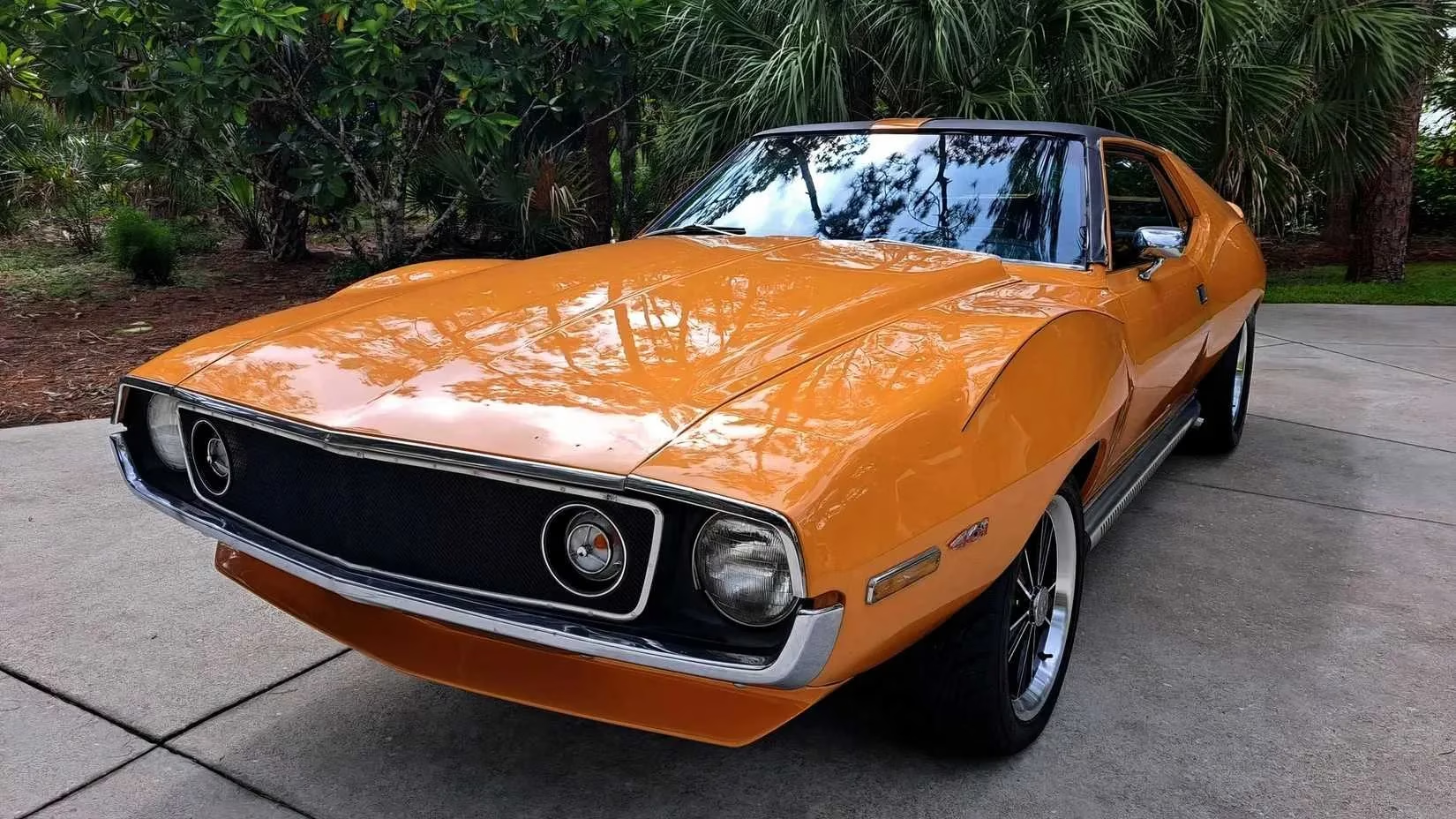
The AMC Javelin's Go Package V8 makes it an underrated muscle car that collectors still crave.
I’ll be honest — when I first heard the letters “AMC,” I thought someone was talking about a movie theater chain. But a few years ago, during a late-night rabbit hole of classic car auctions (because who needs sleep when you can dream about carburetors?), I stumbled onto something that made my jaw hit the floor. The American Motors Corporation wasn’t just the scrappy underdog building sensible economy cars; it was the David that occasionally picked up an engine block and hurled it straight at Detroit’s Goliaths. One car in particular summed up that attitude: the AMC Javelin. It’s like the nerdy kid who showed up to prom with a fire-breathing V8 and calmly took the crown from the quarterback’s Mustang. Over the past 58 years, the Javelin has become one of the most deliciously underrated muscle machines ever to wear a long hood, and in 2026, its legend still whispers through the collector world. Strap in — I’m about to give you the full tour of this glorious oddball.
A pony car with a puny budget?
Let’s rewind to 1968. Ford had unleashed the Mustang and sold a zillion of them. Chevy’s Camaro and Pontiac’s Firebird were strutting around like they owned the place. AMC, meanwhile, was known mostly for building sensible transportation that your grandmother might drive to church. But they had a secret weapon: a burning desire to prove they could build something with swagger. So they took the humble Rambler American platform, chucked caution into the nearest dumpster, and created a semi-fastback two-door hardtop that looked like it wanted to eat your homework.
The first-generation Javelin was a masterclass in doing more with less. The design came from Dick Teague, a man who could sketch curves so seductive they should’ve been illegal. Up front, AMC called it a “twin-venturi” look — a recessed honeycomb grille, headlights pushed to the edges, and simulated air scoops on the hood that hinted at violence. I always think of it as the car equivalent of a sharp suit on a sensible budget: aggressive enough to turn heads, classy enough not to scream about it.
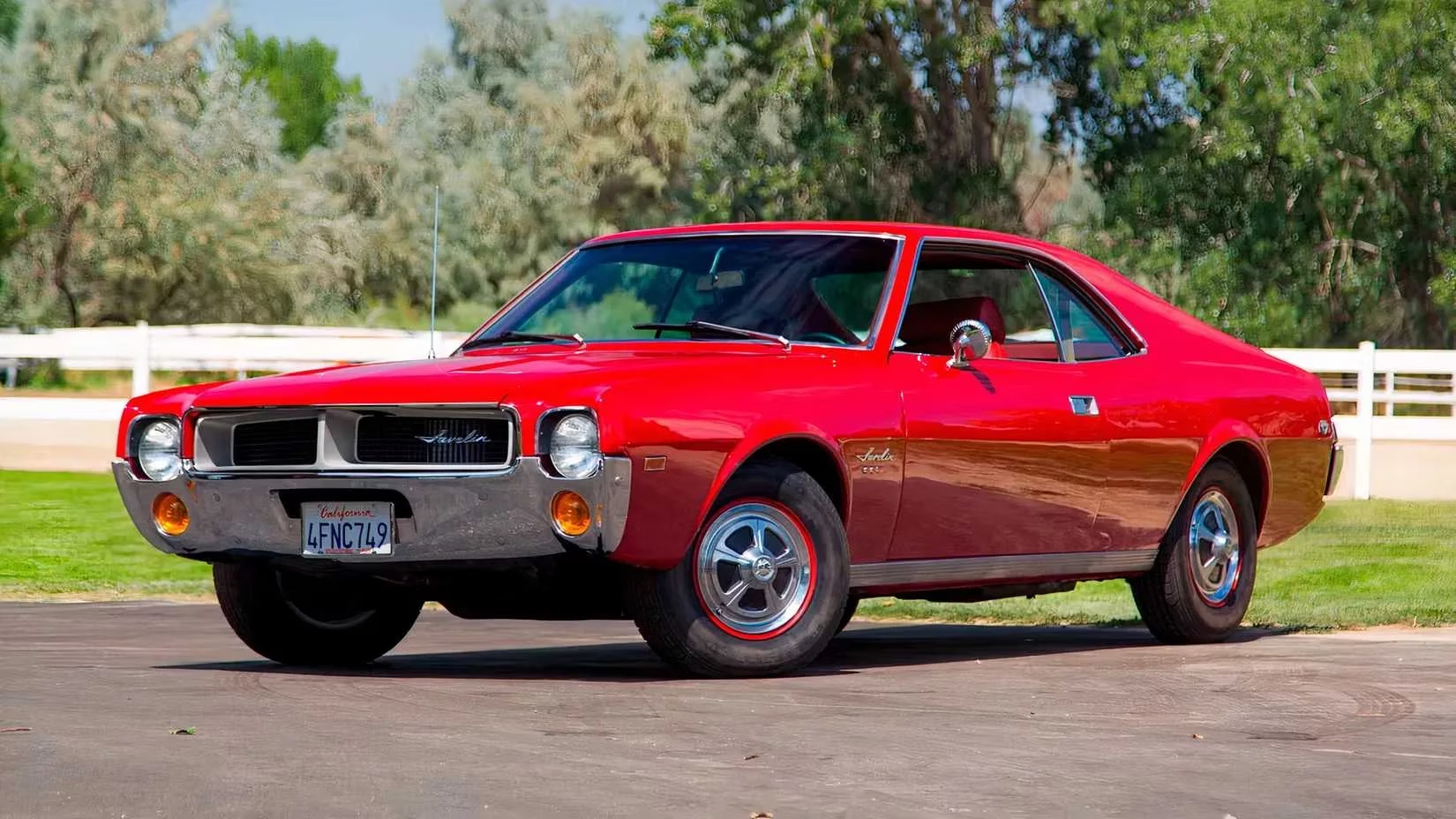
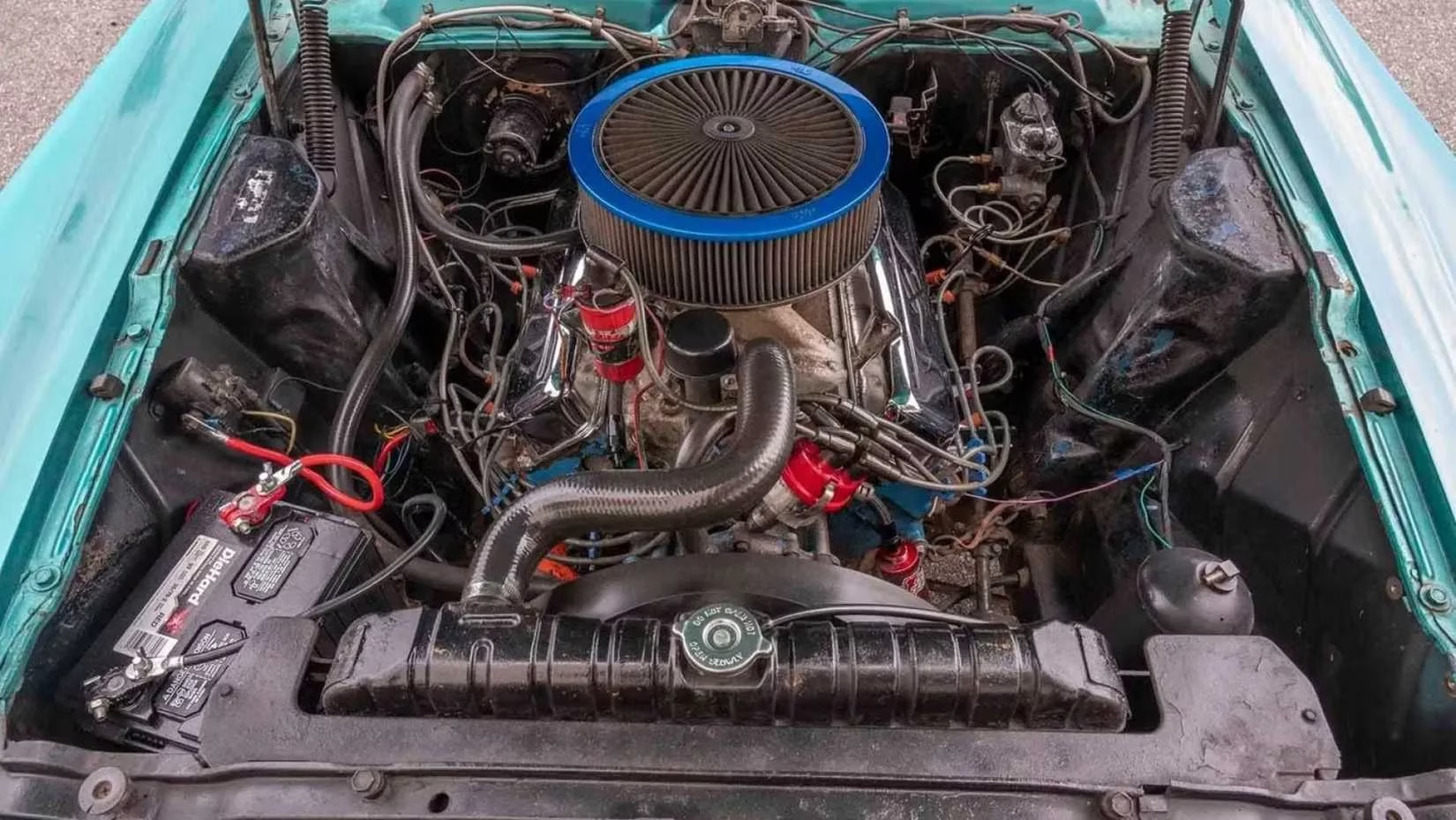
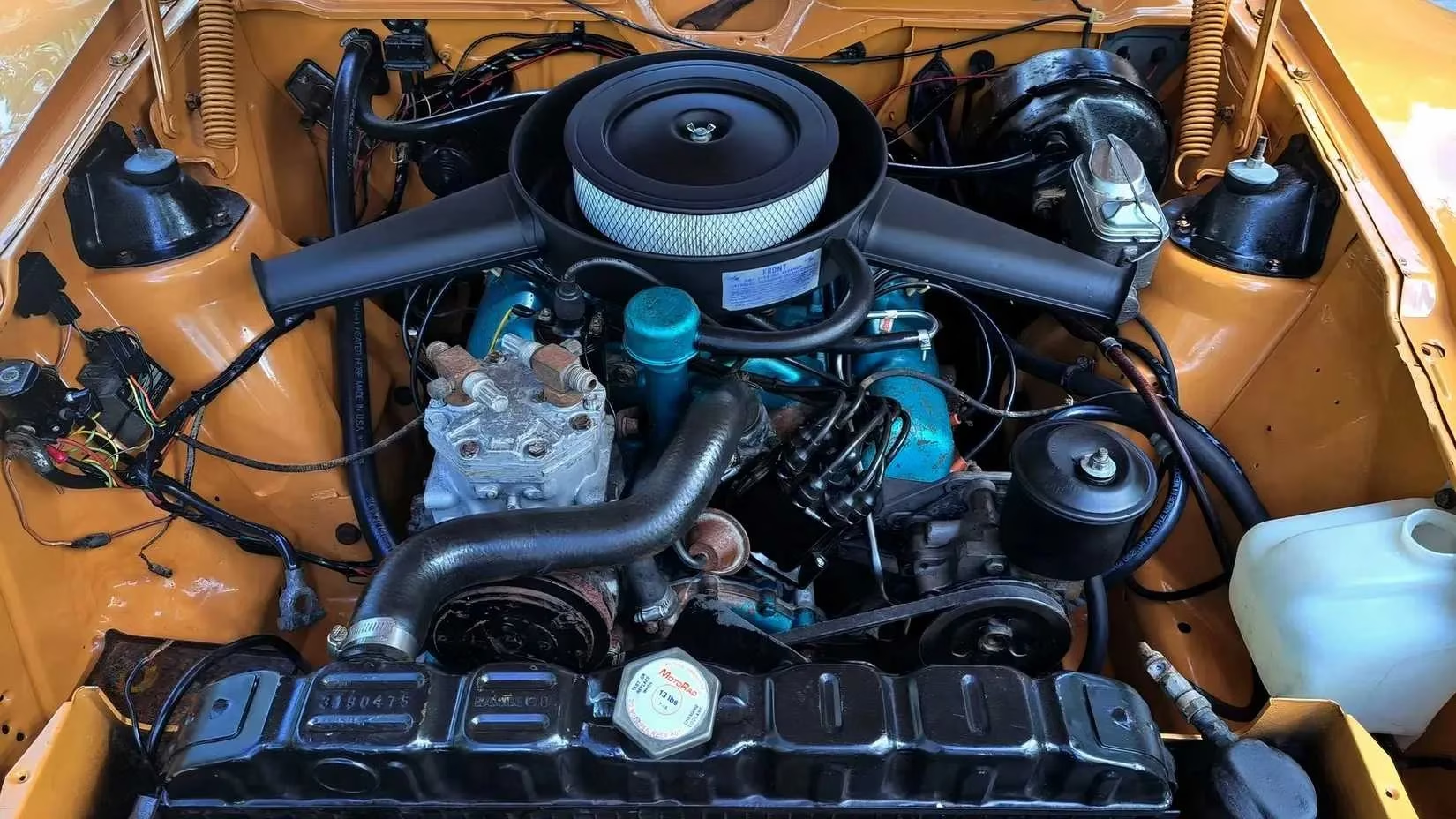
What really made me fall in love, though, was what lay under that hood. The base engine was a 232 cubic-inch straight-six that churned out a modest 145 horsepower — adequate for grocery runs and looking respectable. But tick the “Go Package” box, and suddenly you had a 390 cubic-inch V8 that could roast the rear tires while humming a song of 325 horsepower and torque that made your spleen tingle. I’ve talked to guys who bought these new in ’68, and they still grin when they describe the way the big V8 would pin them to those reclining bucket seats. The Go Package wasn’t just an engine upgrade; it threw in disc brakes, a beefier suspension, Twin-Grip limited-slip differential, and performance tires. For a fraction of Mustang money, you got a car that could humble much pricier iron at stoplight drags.
Over the years, AMC sprinkled in special editions like the Mark Donohue Javelin in 1970 — a homologation special with a rear spoiler bearing the Trans-Am hero’s signature. It’s the kind of history that makes a gearhead’s heart beat faster. Even today, a first-gen Javelin in good condition can be found for around $14,300 according to Hagerty’s latest data (yes, I’m still refreshing those valuation pages in 2026). That’s a steal for a machine that can make a Camaro owner sweat.
When the Javelin hit the gym and came back swole
If the first-gen Javelin was a sharp-suited challenger, the second generation — introduced in 1971 — was the same guy after a year of heavy lifting and a newfound taste for drama. The designers threw out the gentle, tucked-in look and embraced what they called “Coke bottle” styling. The result was a bullet-shaped missile with sculpted fender bulges, a sloping hood that seemed to go on for days, and twin-canopy roof recesses that made it feel like a cockpit on wheels. I’d argue the C3 Corvette looked over its shoulder. The second-gen Javelin had the kind of presence that made people in minivans instinctively move to the right lane.
This is also where the AMX badge joined the Javelin family. Previously a separate two-seat model, the AMX became the top performance trim, and it was basically AMC’s way of screaming “We are not messing around.” Engine options ranged from a 232 straight-six all the way up to a 401 cubic-inch V8 that pounded out 330 horsepower in 1971. That year is widely considered the peak — before emission regulations started sapping the fun. I’ve driven a ’71 AMX 401, and let me tell you, the throttle response feels like a punch in the chest delivered by a velvet glove.
The yearly changes read like a soap opera of regulation and resilience. In 1972, horsepower numbers were recalculated to the more honest SAE net figures, and the egg-crate grille design arrived. In 1973, AMC dropped the SST model, added stronger doors, and gave us the Trans-Am Victory Edition to celebrate back-to-back SCCA championships — because nothing says “I win” like a street car wearing its racing trophies. Then came 1974, the final year. Power was down (a mere 235 hp from the 401), safety bumpers made the car look like it was wearing chunky gym socks, and the market for gas-guzzling ponies had cooled. AMC needed $12 million to adapt the Javelin to new standards, and with a sigh, they pulled the plug.
Yet, in an ironic twist, the 1972 Javelin actually sold more units than the 1971 model despite the downgraded power, proof that buyers still craved the look. Even today, if you hunt down a second-gen AMX, you’re looking at an average price around $28,103 according to Classic.com — a surprisingly affordable ticket to golden-era muscle that doesn’t come with the inflated ego (or price tag) of its rivals.
Trims and quirks that make me giggle
Oh, and let’s not forget the Pierre Cardin edition. Yes, the fashion designer. AMC actually offered an interior package from 1972–1973 that featured pleated stripes in red, white, plum, and silver on a black background. It’s gloriously funky, like driving a disco suit. I’d pay extra just to see the look on valet drivers’ faces.
| Trim / Edition | Years | Quirk Level |
|---|---|---|
| Base Javelin | 1968-1970 (1st gen), 1971-1974 (2nd gen) | Sensible but hungry for a V8 |
| SST | 1968-1972 | Mid-level luxury with rim-blow steering wheel |
| AMX | 1971-1974 | Full-on predator with engine-turned trim and spoilers |
| Pierre Cardin | 1972-1973 | Your grandma’s couch went racing |
| Trans-Am Victory | 1973 | Celebratory limited run for track dominance |
| Mark Donohue | 1970 | Homologation hero with autograph on the spoiler |
What ties all this together is the Javelin’s relentless weight consciousness. AMC never had the budget to slap on excess luxury or unnecessary steel, so the cars stayed relatively light. That agility let them dance around heavier muscle cars in corners. I’ve heard old-timers say a well-driven Javelin could embarrass a Charger on a twisty road, and I believe every word.
2026 reality check: still the smart collector’s play
Fast forward to now, and the Javelin remains the thinking person’s classic. While Mustangs and Camaros dominate auction headlines with seven-figure price tags for rare variants, you can slip into a first-gen Javelin for less than the cost of a well-equipped Honda Civic. Even the mighty second-gen AMX rarely breaks $35,000 unless it’s a time capsule with single-digit miles. For someone who wants the authentic roar of a big American V8 without taking out a second mortgage, it’s a no-brainer.
Whenever I attend a Cars & Coffee in 2026 and see a Javelin parked between a row of ’69 Camaros, the crowd always gravitates toward the AMC. People ask, “What is that?” with genuine curiosity. And I smile, because I know they’ve just discovered the secret the big three hoped you’d never find: the AMC Javelin, the underdog that won the hearts — and sometimes the quarter-mile — without ever needing to show up with the biggest budget. Whether it’s a first-gen with the Go Package or a second-gen AMX with enough styling drama to launch a thousand posters, the Javelin is proof that greatness often comes from the pluckiest corners of automotive history. Now if you’ll excuse me, I need to go refresh those auction listings again.