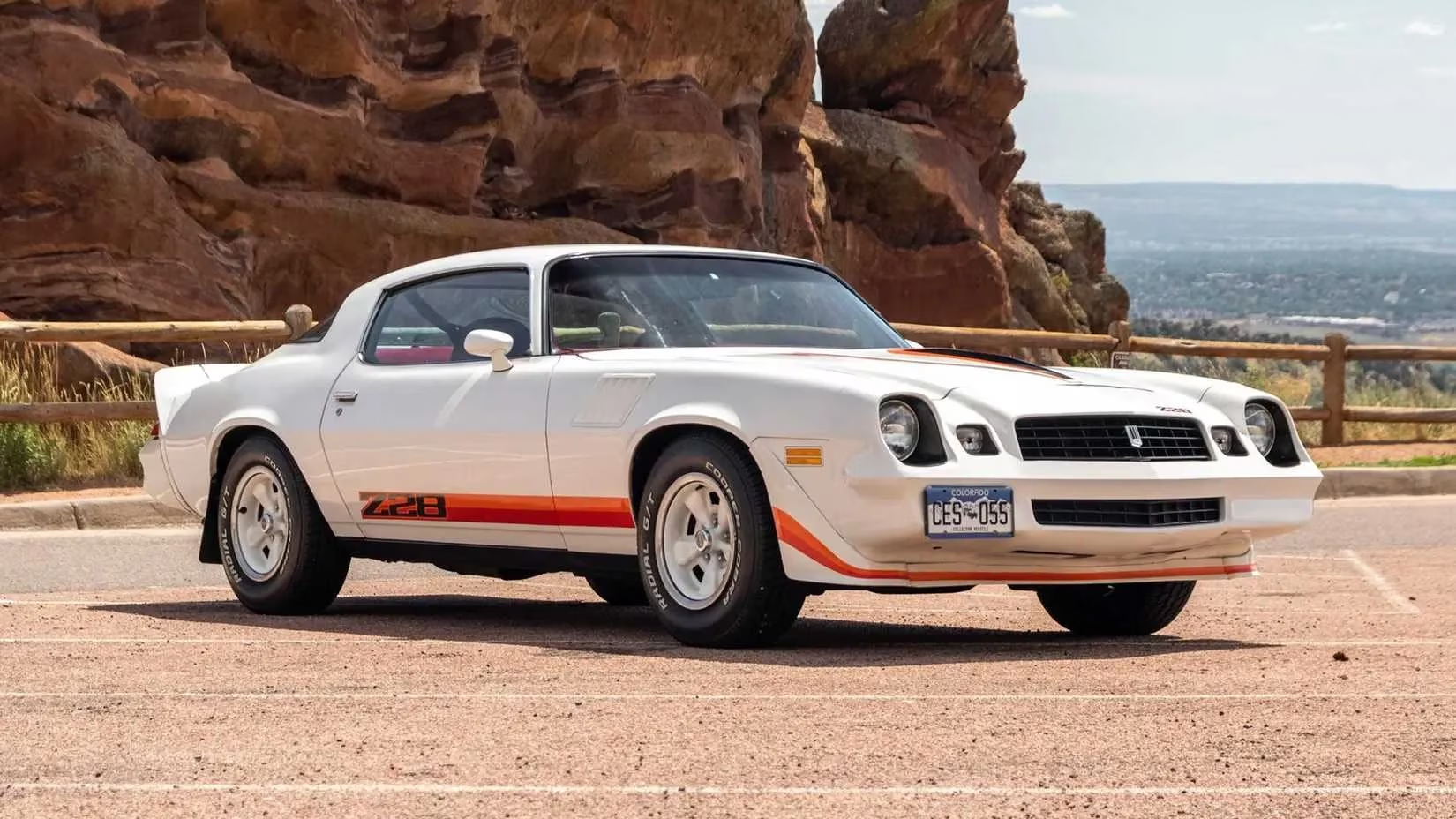
The 1979 Chevrolet Camaro Z28 stands out among American muscle cars, boasting bold design and enduring V8 performance.
I've always had a soft spot for cars that show up to a fight they weren't supposed to win. The 1979 Chevrolet Camaro Z28 is exactly that kind of machine. By the late 1970s, American muscle was gasping for air—emissions rules, fuel prices, and insurance premiums had already knocked out plenty of bigger V8s. But Chevy's Z28 didn't just limp along; it strutted. With a 5.7-liter small-block under a striped hood, this car kept the muscle flame burning in a decade that forgot what torque felt like.
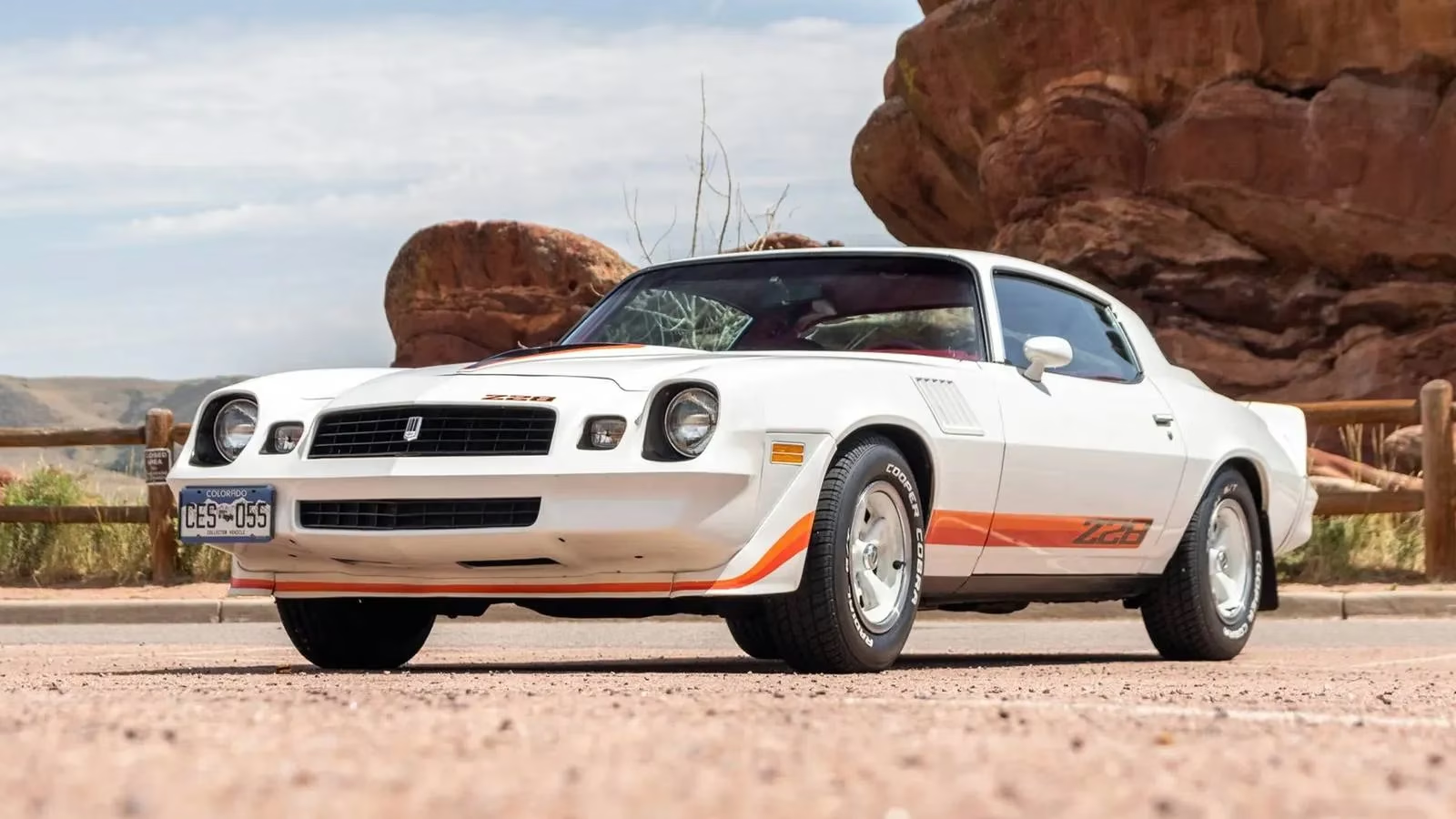
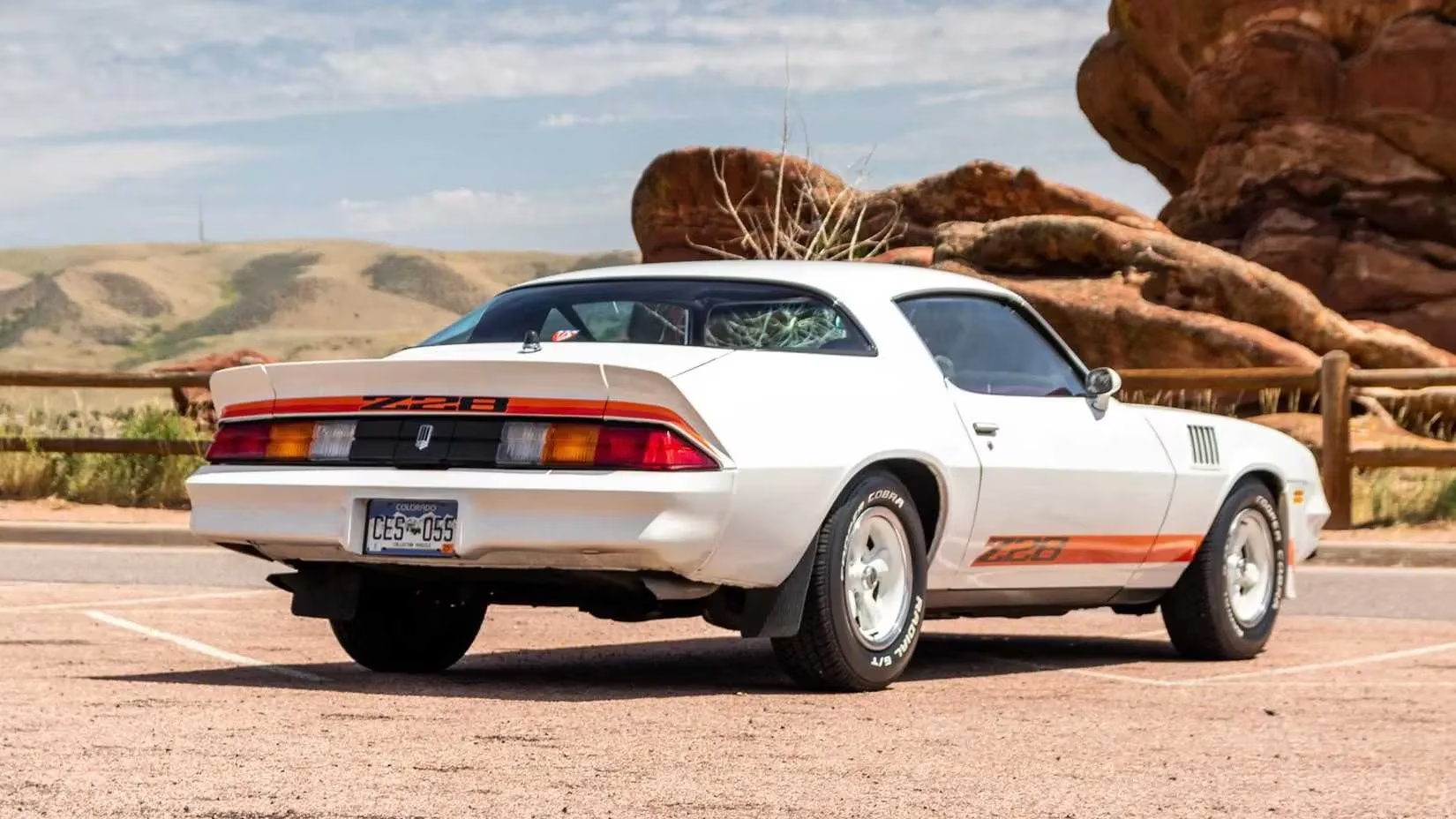
When I look at the 1979 Z28, I don't see a de-tuned relic. I see a revolt. Chevrolet restyled the second-gen Camaro with a sharper front fascia, a functional cowl-induction hood scoop, and those wide rally wheels. The side stripes weren't subtle, and honestly, that's the point. This wasn't built to crush quarter-mile records; it was built to announce itself from a block away.
What The 1979 Camaro Z28 Brought To The Street
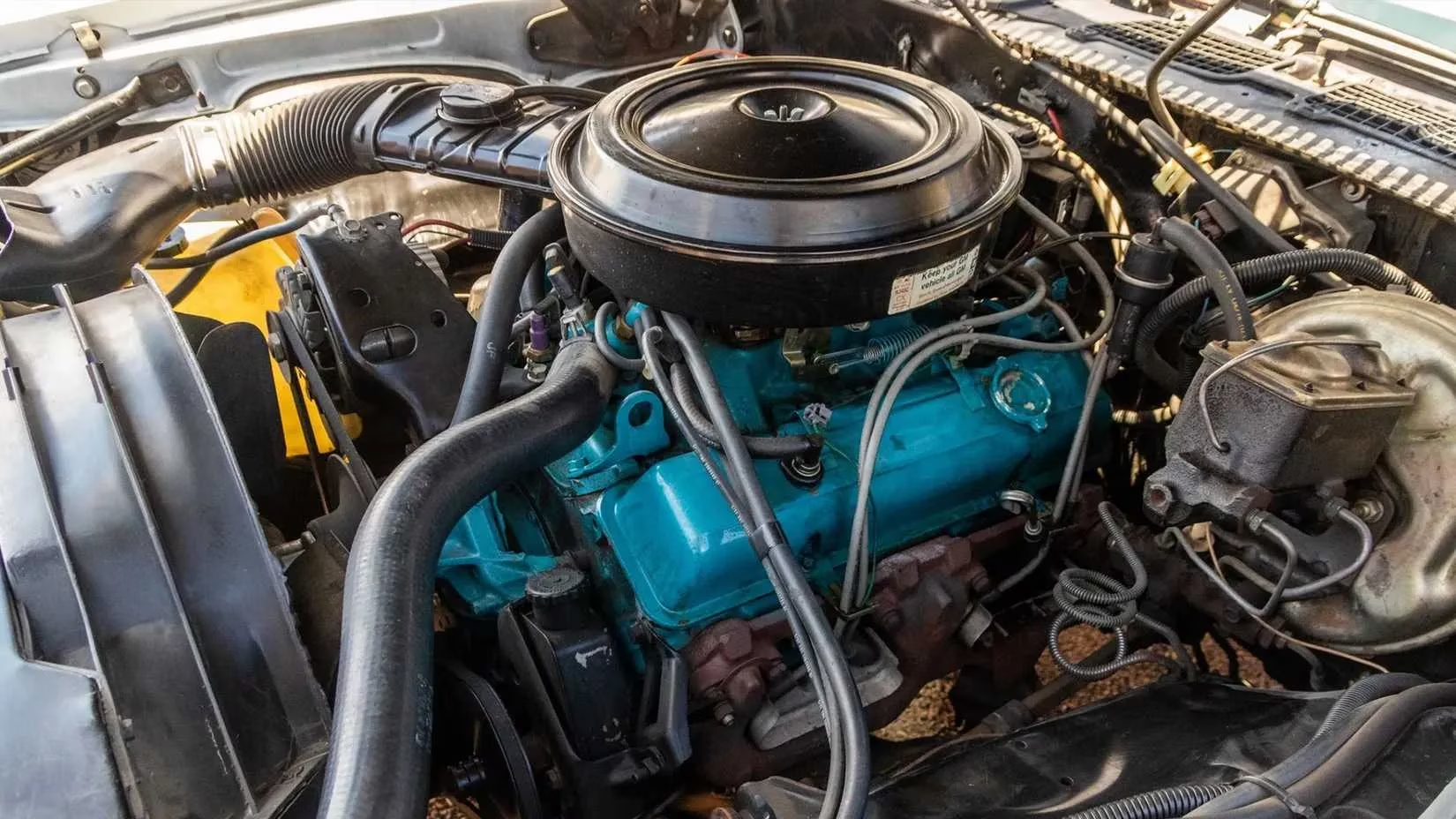
Under the hood sat a 5.7-liter Chevrolet Small-Block V8. In manual form it made 175 horsepower and 270 lb-ft of torque. The automatic cars were rated a touch lower at 170 horsepower, but both versions delivered that low-end rumble the Camaro badge always promised. Let me be real: those numbers won't scare a modern hot hatch. But numbers were never the whole story.
Here's how the stock '79 Z28 stacked up on paper:
| Spec | 1979 Camaro Z28 |
|---|---|
| Engine | 5.7-liter Small-Block V8 |
| Horsepower | 175 hp (manual) / 170 hp (automatic) |
| Torque | 270 lb-ft |
| Transmission | Muncie 4-speed manual or 3-speed automatic |
| 0-60 mph | About 7.8 seconds |
| Quarter-mile | Roughly 16 seconds |
| Weight | Around 3,600 lbs |
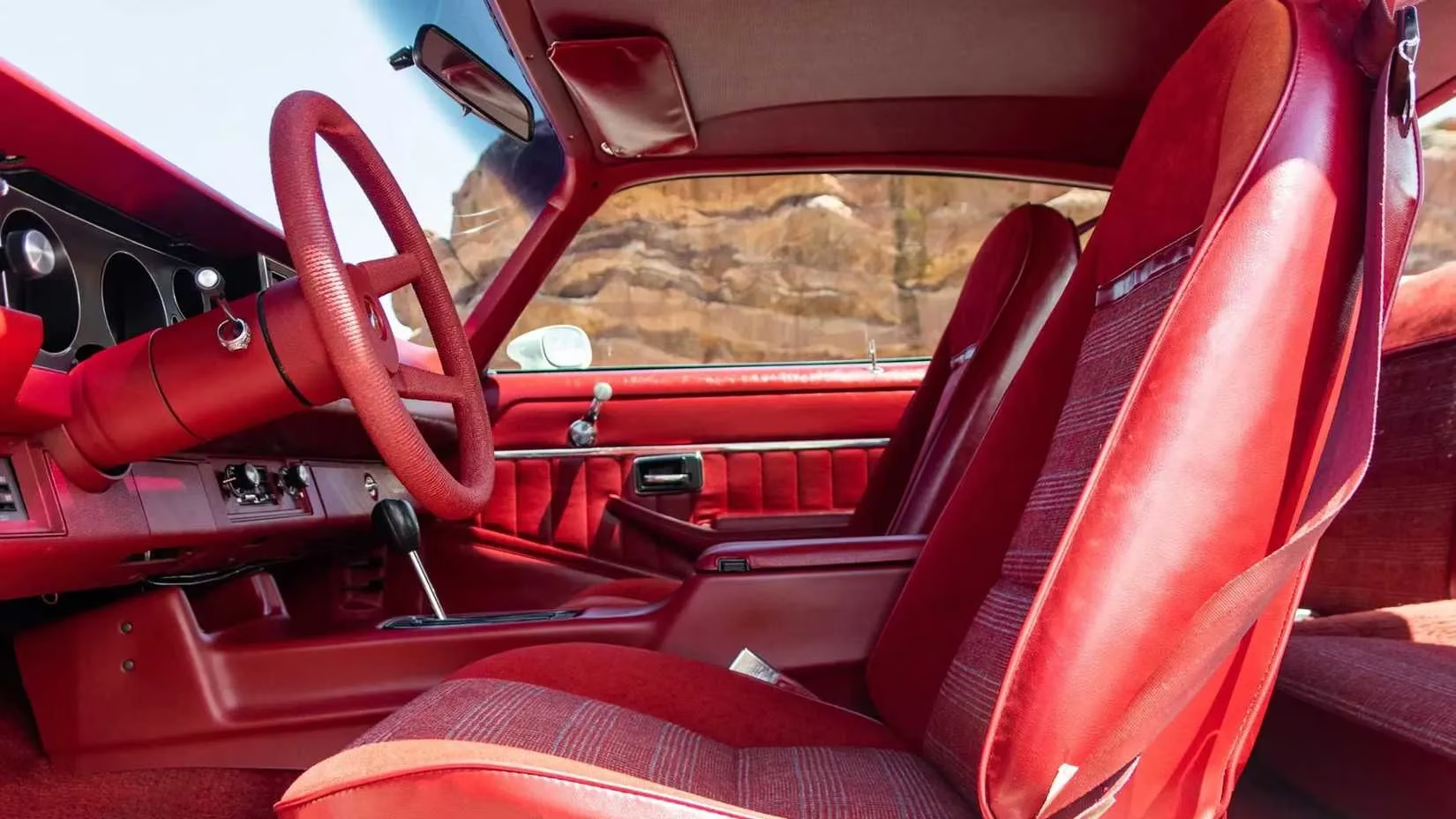
The 350 used a Rochester Quadrajet carburetor, which meant throttle response was all cable tension and mechanical character rather than drive-by-wire smoothness. I love that. Every blip of the pedal felt like a conversation with the engine, and the twin tailpipes answered with a deep Chevy burble. The steering was heavy at parking speeds, almost truck-like, but once you were moving, the Z28 settled into a confident, planted rhythm.
Car and Driver captured that personality back in the day, describing the ride as mellow with basso profundo pipes, soft seats, light steering, and rather flaccid shocks. That honesty is what makes the car charming. The Z28 wasn't a scalpel, but it had balance. Chevy fitted firmer shocks, a rear stabilizer bar, and wider Goodyear radials, so it could out-corner many of its rivals even if it couldn't outmuscle all of them.
Rivals And The Malaise-Era Fight
By 1979, the muscle field had thinned out. Dodge had pulled the Challenger, and Ford's Mustang Cobra was lighter but couldn't match the Camaro's visual drama or torque curve. Pontiac's Trans Am 6.6 packed more straight-line grunt, but the Camaro felt livelier and looked just as wild. For me, the Z28 sat in a sweet spot: enough show to turn heads, enough go to smoke the rear tires, and enough daily usability to avoid feeling like a punishment.
What A 1979 Z28 Is Worth In 2026
Back when these cars were new, you could walk into a Chevy dealer and leave with a Z28 for about $5,600. Today, that same piece of late-'70s attitude has become a legitimate collector car. According to Hagerty and Classic.com, a fair-condition example now trades between $12,000 and $18,000. Clean, well-kept cars commonly sell for $35,000 to $45,000, while concours-grade restorations have crossed $60,000 at auctions like Barrett-Jackson and Bring a Trailer.
The average 1979 Z28 value now sits around $23,012. That's a lot of appreciation for a car that some people once wrote off as a sticker-and-spoiler special.
| Condition | Estimated 2026 Value |
|---|---|
| Fair driver | $12,000–$18,000 |
| Excellent survivor | $35,000–$45,000 |
| Concours restored | $60,000+ |
| Average overall | About $23,012 |
Nostalgia is doing a lot of heavy lifting here, but so is usability. The 1979 Z28 is one of those rare classics you can actually drive without needing a chiropractor afterward. That's why second-gen Camaros have caught fire with Gen X and younger collectors who grew up seeing these cars in TV shows, drive-ins, and their parents' garages.
Why The 1979 Z28 Still Matters
This car never tried to be the quickest thing on the road. It leaned into style, sound, and presence. The flared fenders, the low stance, the unapologetic graphics—it all captured late-'70s American car culture perfectly. Today, restomod builders love the Z28 as a canvas, dropping in LS engines, modern suspension, and upgraded brakes while keeping the original essence alive.
At the end of the day, the 1979 Camaro Z28 is more than a survivor. It's a bridge between old-school muscle and the performance resurgence that followed. It proved that a car could evolve, adapt, and still carry serious attitude. No 400-horsepower number required.
When I twist the imaginary key and hear that small-block settle into its idle, I get it. The 1979 Z28 wasn't the fastest car of its time, but it was one of the most honest. And in a hobby full of reproductions and re-creations, that kind of raw, unfiltered spirit is absolutely worth holding onto.