The 1977 Pontiac Can Am is an ultra-rare sleeper unicorn that makes the GTO Judge look common.
When gearheads talk about American muscle icons, the 1969 Pontiac GTO Judge instantly comes to mind. That Carousel Red beast with Ram Air and in-your-face graphics kicked off a horsepower war that still echoes through auction tents. But here’s the thing – for all its glory, the Judge isn’t the rarest Pontiac to wear a factory performance badge. Not by a long shot. Lurking deep in the Malaise Era, stripped of decals and swagger, is a phantom that makes the Judge look positively common. The 1977 Pontiac Can Am is the very definition of a sleeper unicorn, and as we roll through 2026, its story is finally getting the spotlight it deserves.
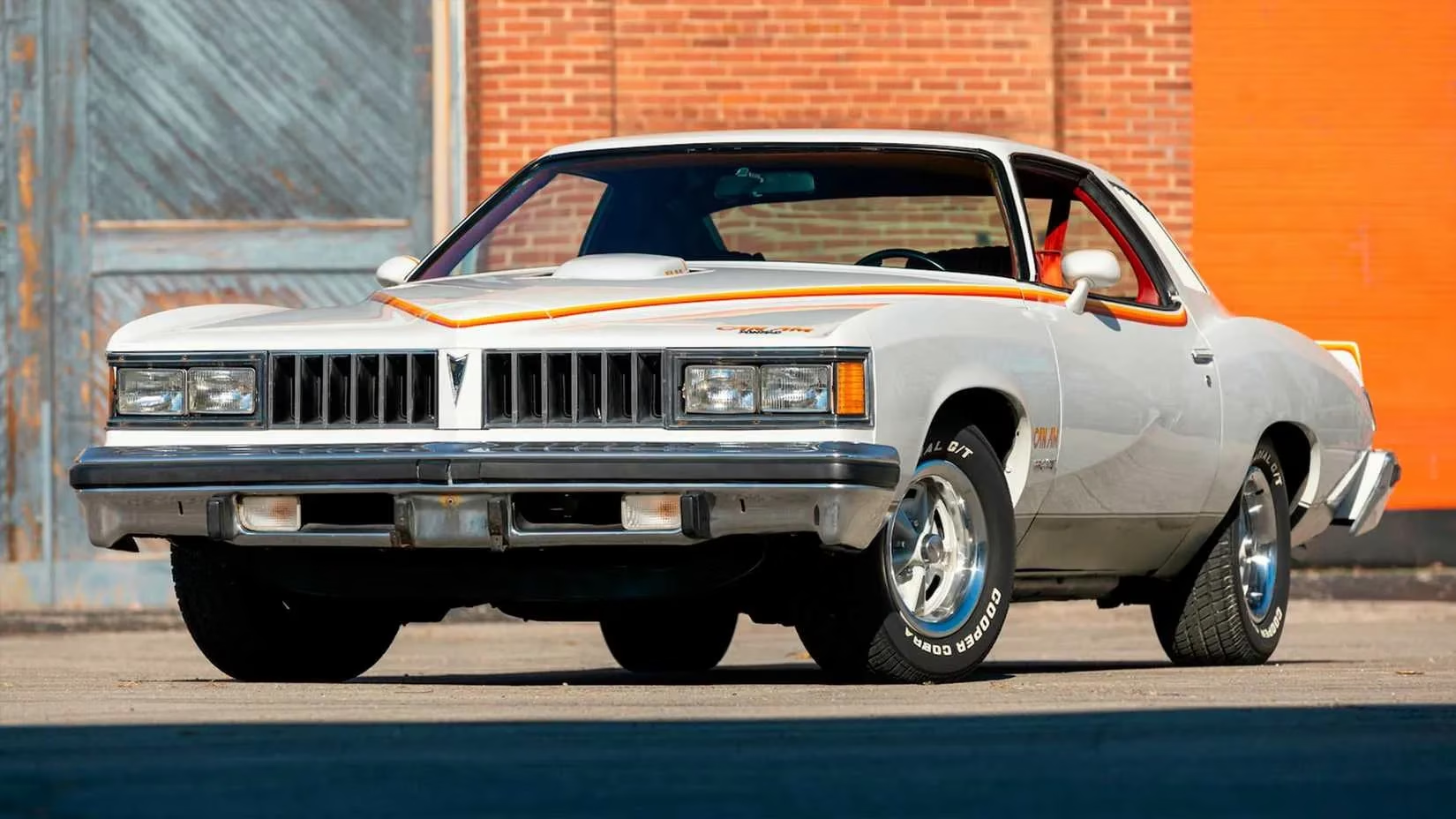
Muscle cars in 1977 were supposed to be dead and buried. Emissions regulations had choked the life out of big V8s, insurance companies were treating anything with a hood scoop like a radioactive hazard, and fuel prices were giving everyone the heebie-jeebies. Detroit’s answer was mostly a parade of underpowered land yachts wearing sporty stickers. But somewhere inside Pontiac, a few stubborn engineers decided to give the middle finger to conventional wisdom. The Can Am was born – a one-year-only A-body that blended Trans Am aggression with LeMans bones, packing genuine Pontiac thunder under a quietly menacing hood.
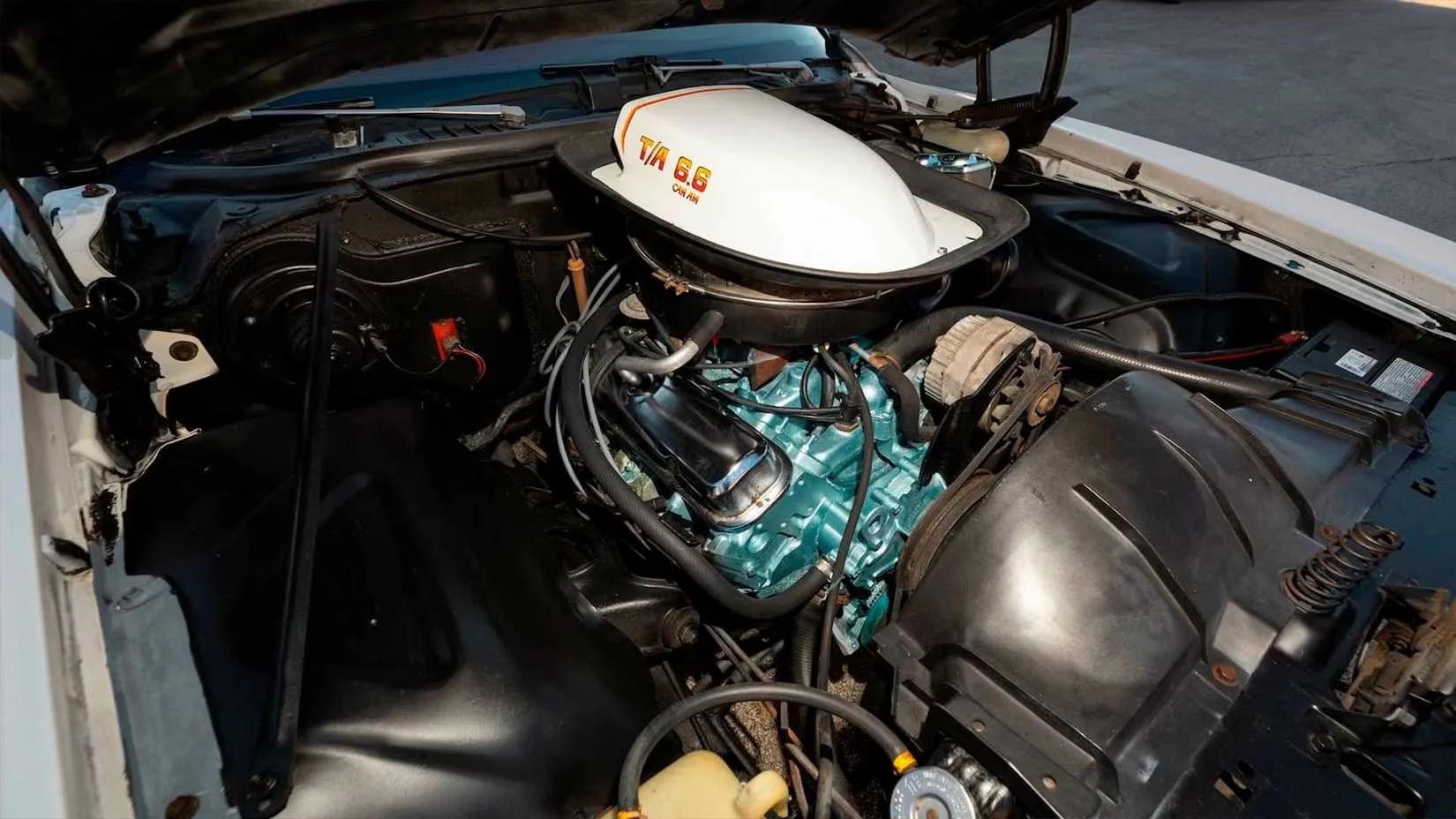
Let’s talk numbers, because that’s where the Can Am truly drops the mic. While other mid-size GM coupes were saddled with borrowed Oldsmobile 403s or Chevy 350s, the Can Am got the goods: the W72 6.6-liter (400 cubic inch) Pontiac V8. This was the exact same high-output engine that made the 1977 Trans Am a street hero. A hotter cam, tweaked carb and ignition timing, and a bump in compression yielded 200 horsepower and a mighty 325 lb-ft of torque. Sure, by today’s standards those are output figures you’d get from a punchy turbo-four, but back then it was a giant-killer. Mated to a heavy-duty TH400 three-speed automatic, the Can Am didn’t just look the part – it backed up the swagger with genuine, tire-frying capability. For enthusiasts who knew the score, this wasn’t a sticker package. It was Pontiac’s last stand for real-deal, no-apologies muscle.
The kicker? Only 1,377 units ever left the factory before the rear spoiler mold cracked. Instead of fixing it, Pontiac simply pulled the plug. Talk about a mic drop. Compare that to the GTO Judge – 6,833 built in 1969 alone, and over 11,000 across its three-year run. The Can Am is raw unobtanium, and its instant disappearance made it a legend in the shadows for decades.
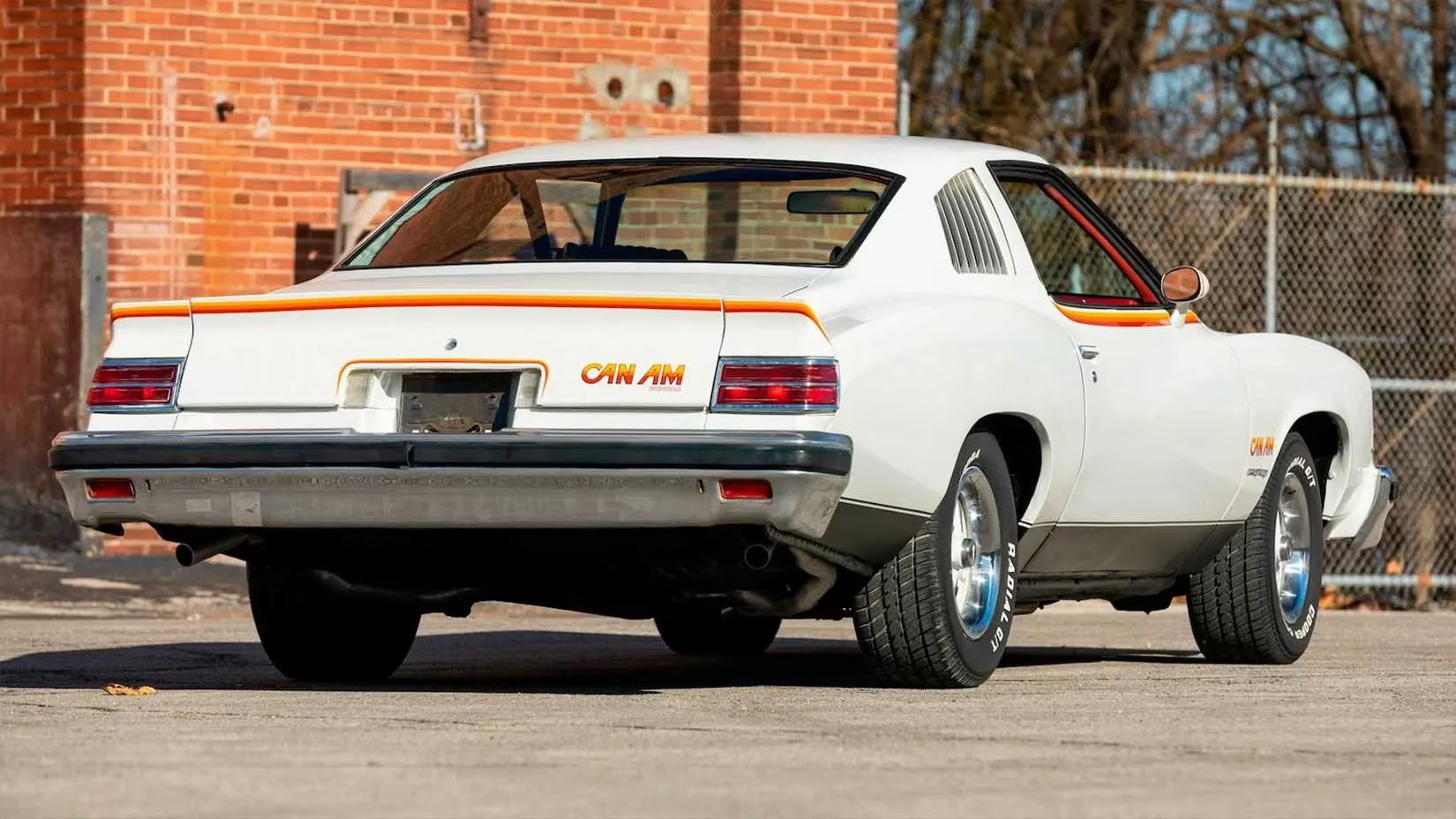
Why has this car flown under the radar for so long? Timing and marketing, or rather the complete lack of it. Pontiac poured all its promotional juice into the Trans Am, leaving the Can Am an orphan before it even had a chance to find an audience. It didn’t wear flashy Judge graphics or Super Duty badges – just clean, purposeful lines with a shaker hood and that distinctive rear spoiler. To the casual observer, it was just another late-’70s coupe. To the initiated, it was a wolf in sheep’s clothing. Contemporary road testers actually praised the Can Am as proof that driving excitement wasn’t entirely dead in Detroit’s wasteland, but the world wasn’t ready to listen. The car faded into obscurity, becoming a trivia answer and a whispered myth among Pontiac faithful.
Fast forward to 2026, and the Can Am is having its redemption arc. The collector market woke up to this diamond in the rough a few years ago, and values have been climbing like a Saturn V. According to Hagerty’s latest data, a Can Am in good condition now commands around $33,500 – a staggering 49.6% increase from just a year ago when it was sitting at $24,600. Meanwhile, the GTO Judge has hit a bit of a plateau, with values softening about 10% over the same period, hovering near $144,000. Don’t get me wrong, a Judge will always be royalty, but the Can Am offers something the six-figure icons can’t: genuine rarity, authentic Pontiac performance, and a buy-in that doesn’t require a second mortgage. It’s the thinking person’s muscle car investment – a chance to own a piece of rebellion from the darkest days of the Malaise Era, a machine that refused to go quietly into that good night.
Finding an unmolested survivor today is a needle-in-a-haystack proposition. Many of the 1,377 have been modified, abused, or simply rusted into oblivion. That scarcity, combined with a growing appreciation for oddball heroes, makes the Can Am one of the most compelling sleepers in the entire classic car universe. It doesn’t scream for attention; it just sits there, radiating quiet confidence, daring you to know what lurks beneath. For collectors tired of the same old Shelby clones and overhyped Mopars, the 1977 Pontiac Can Am represents the holy grail of stealth performance. Wrong moment, right intentions – and that’s exactly why it matters more than ever in 2026.