Chevrolet Corvette C3 big-block, notably the 1974 LS4 454 V-8, offers affordable muscle and iconic style in today's collector market.
For over 70 years, the Chevrolet Corvette has defined American performance, blending show-car curves with street-dominating muscle. From the very first C1 to the mid-engine C8, no other nameplate has so consistently delivered an exhilarating blend of style and speed. Among Corvette fanatics, the argument over which generation is the greatest will never truly be settled, but one truth looms larger than any V-8: big-blocks are the holy grail. The legendary 427s and 454s of the 1960s and early 1970s represent a zenith of Detroit horsepower, but their collector values have skyrocketed into six- and seven-figure territory. Is there still a way into the big-block club without a seven-figure bank balance? As the 2026 collector market shows, the answer is a definitive yes—and it comes wrapped in the stunning 'Mako Shark' bodywork of the C3 generation.
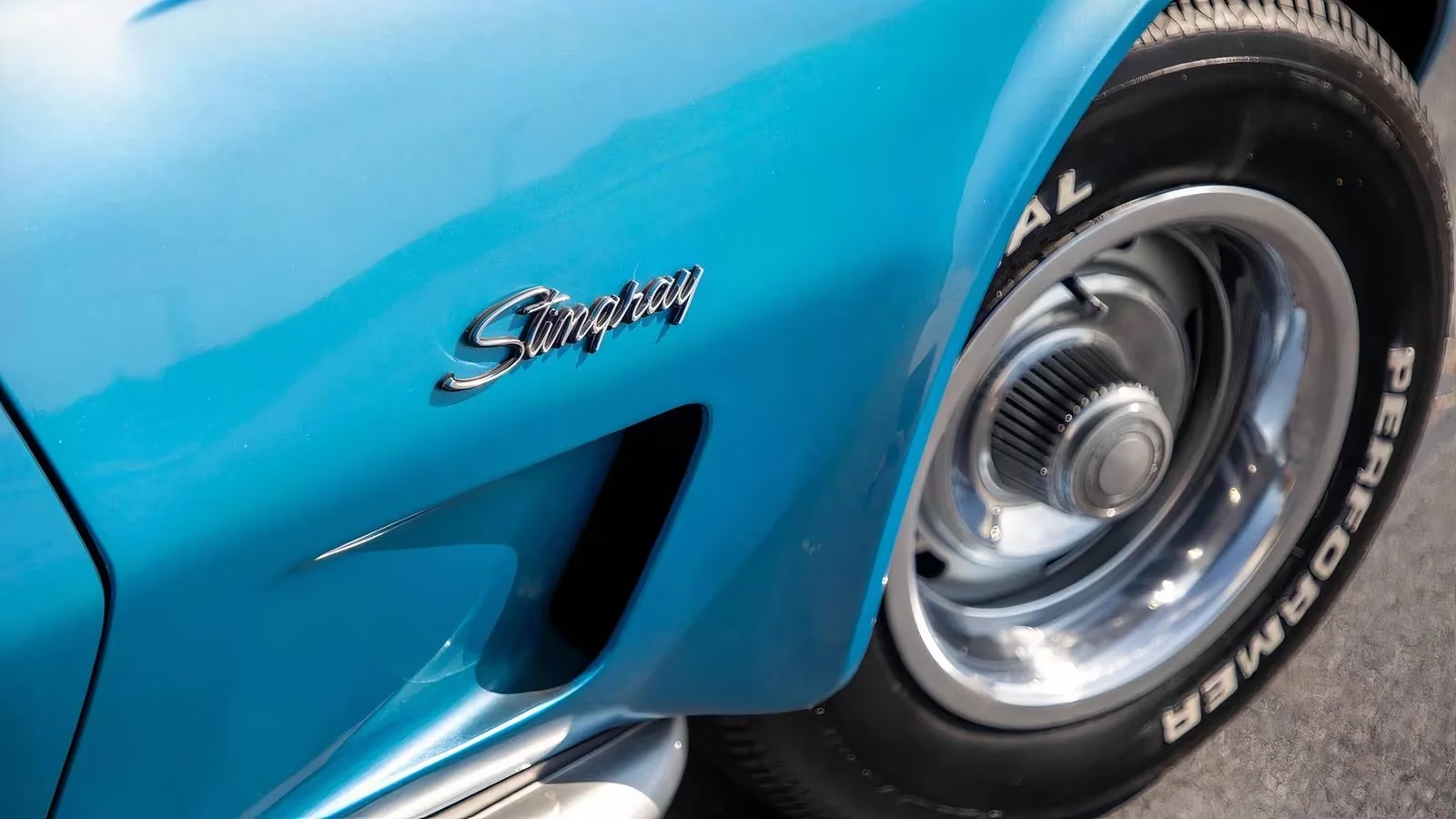
The cheapest big-block Corvette available to enthusiasts right now is the 1974 model, specifically those fitted with the 454ci LS4 V-8. And while "cheapest" doesn't always sound glamorous, in this case it means an obtainable entry point into a world of torque-rich thrills and undeniable cool. That doesn't make it a budget-bin classic; rather, it’s a classic that many budgets can actually accommodate. For years, the C3 Corvette has been an icon of design, and the 1974 car holds the distinction of closing out an era. It was the very last Corvette to offer a big-block engine from the factory, as emissions regulations and rising insurance costs finally caught up with the muscle car movement.
Why is this particular big-block so affordable? The answer lies in the horsepower figures. The 1974 LS4 454 was rated at a mere 270 horsepower—a far cry from the 450-horsepower LS6 that made the 1970 Chevelle SS a legend. On paper, that number can feel underwhelming, especially when a same-year 350ci L82 small-block offered nearly as much power with less weight. But can numbers on a spec sheet really capture the soul of a big-block? For many, displacement is irreplaceable. The rumble, the effortless thrust, and the sheer presence of a seven-and-a-half-liter engine give the '74 LS4 a character no small-block can replicate.
Crucially, the market has taken note of this accessible icon. According to J.D. Power, the average retail price for a 1974 Corvette of any specification hovers around $21,100. Hagerty’s valuation tool paints a broader picture, placing a driver-quality 1974 454 LS4 at roughly $23,600, while a Concours-condition gem can command over $51,900. Real-world auction data tracked by Classic.com shows a five-year average sale price across all 1974 Corvettes sitting at $22,724. For a big-block specifically, one need only look at a stunning yellow convertible that crossed the block at Mecum Indy 2025 for $37,950—a figure that represents an outstanding value for a turn-key, matching-numbers example. In 2026, similar cars continue to trade in the $35,000 to $42,000 range, making them attainable without sacrificing the integrity of the original drivetrain.
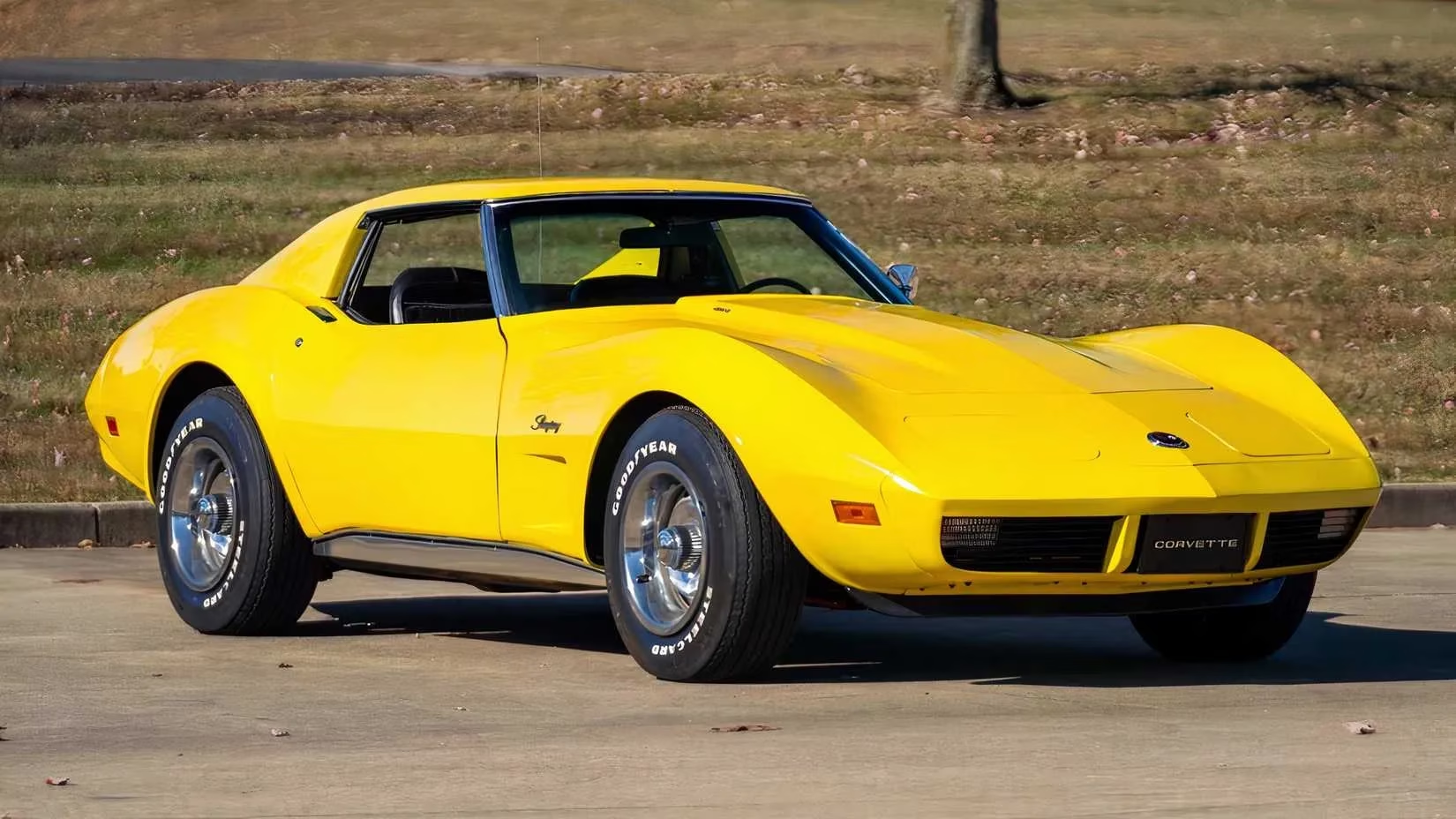
But what does a 270-horsepower big-block actually feel like on the road? In an era known as the Dead Horsepower Era, the 1974 Corvette LS4 wasn't exactly a slouch. With a 0-60 mph time of around 6.2 seconds and a quarter-mile pass of 14.7 seconds, it was genuinely quick for its day. To put that in perspective, it outran the Pontiac Firebird 455, dusted the small-block Pontiac GTO and Plymouth ‘Cuda 360, and held its own against plenty of European sports cars. No, it won’t terrify a modern Tesla, but it still delivers a visceral, old-school driving experience that modern cars can’t replicate—especially with the T-tops off and the optional side pipes crackling.
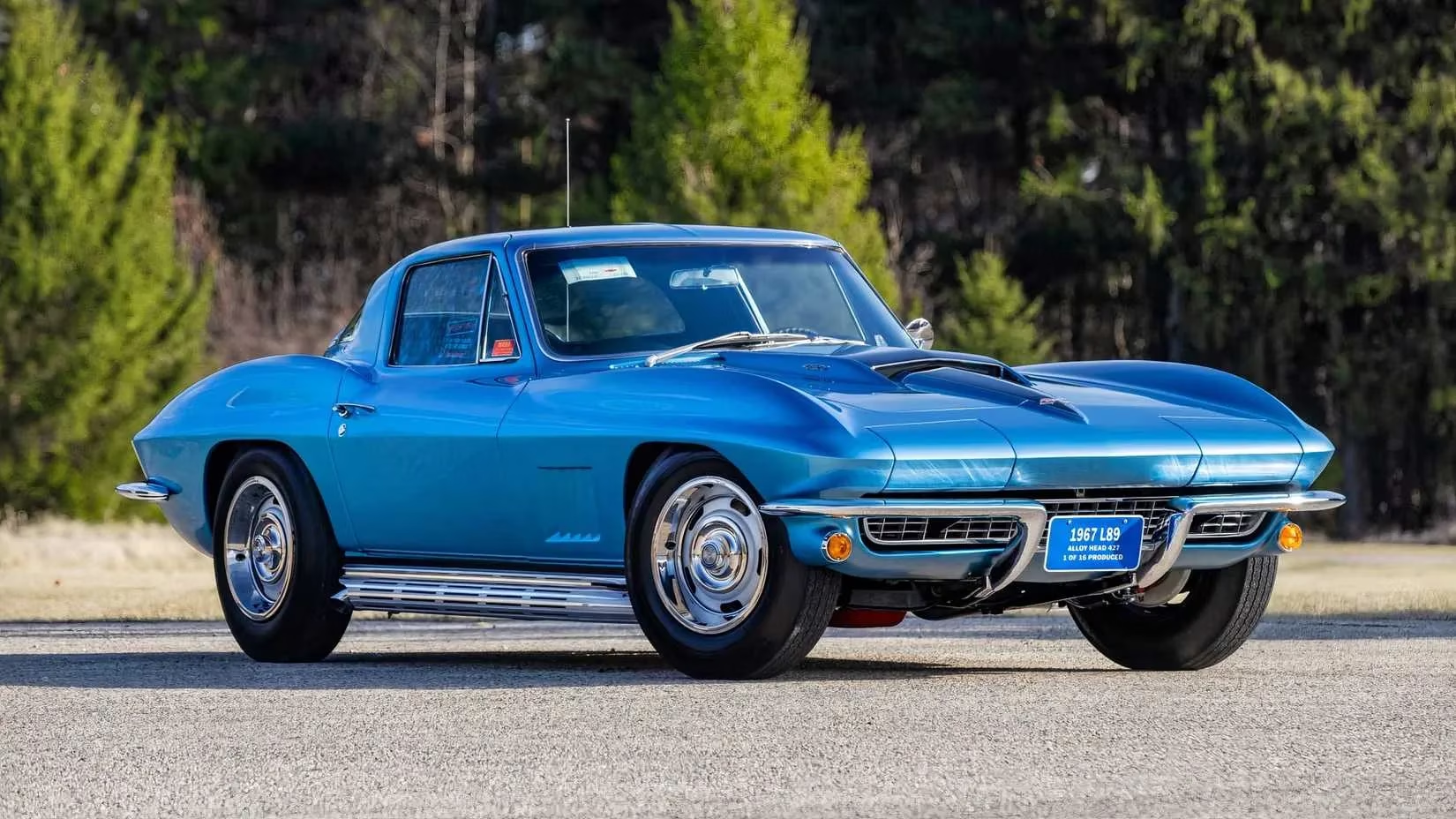
To fully appreciate the bargain status of the 1974 LS4, one must glance at its big-block siblings from earlier years. The 1967 Corvette L88, a barely disguised race car, has shattered auction records, with an example selling for $3.2 million at Mecum Kissimmee in 2024. Even the more numerous 1971 LS6, rated at 425 horsepower and capable of 13.4-second quarter-miles, commands stratospheric sums; a pristine convertible changed hands for $785,000 at Monterey in 2023, and Hagerty pegs excellent-condition coupes at over $269,000. The very first big-block Corvette, the 1965 396 with its 425 horsepower, now sits at an excellent-condition value of $127,000. By comparison, the $37,950 admission price for a well-sorted 1974 seems almost like a typo. Even when stacked against the 1975 Corvette—which lost big-block availability entirely and soldiered on with a 205-horsepower 350—the '74 LS4 provides both greater displacement and a more compelling story.
Can you extract more performance from a 1974 LS4? Absolutely. The beauty of a big-block is that detuning can be reversed. Modern cylinder heads, a mild cam, and a better exhaust can easily wake up those dormant ponies while maintaining the engine’s matching-numbers status. Many owners choose to enjoy it stock, embracing the relaxed muscle persona that allows for comfortable cruising without the constant threat of losing one’s license. In today’s traffic-choked world, a 14-second car that looks like it could outrun an F-16 is perhaps the perfect balance.
Why does the 1974 Corvette LS4 matter so much in 2026? It represents the end of an era and the start of a new chapter. GM’s big-block Corvettes ran from 1965 to 1974—a short but spectacular reign. Owning one means owning a piece of the final page of that history. With C3 styling that remains one of the most seductive shapes ever to roll out of Detroit, the '74 big-block offers a ticket to an exclusive club. In a time when many classics have been pushed beyond reach, the 1974 LS4 remains a surprisingly grounded way to park a giant engine behind your smiles per gallon. For any Corvette enthusiast looking to feel the weight of a big-block under the hood without breaking the bank, the 1974 model isn’t just a smart buy—it’s a must-have.