The legendary 1970 Plymouth Superbird, a winged warrior of cartoonish charm and raw Hemi horsepower, was engineered with one audacious purpose: to dominate NASCAR. Its outrageous aerodynamics and unforgettable legacy forever changed American performance.
Few muscle cars in history can command attention and ignite passion quite like the legendary 1970 Plymouth Superbird. It's the kind of car that looks like it drove straight out of a Saturday morning cartoon and onto the racetrack, a true unicorn in the automotive world. With its outrageous, mile-long nose cone and a rear wing so massive it could double as a picnic table, the Superbird wasn't just built to be fast; it was engineered to be a statement—a middle finger to the competition wrapped in cartoon graphics. Plymouth created this winged warrior for one purpose and one purpose only: to dominate NASCAR. And boy, did it ever. Despite a production run that lasted a mere calendar year, its legacy, forged from wind-tunnel science and raw Hemi horsepower, is forever etched in the hall of fame of American performance.
The Genesis of a Winged Warrior: A Story of Revenge and Aero
After watching rivals Ford and Chevrolet have their way in NASCAR for much of the 1960s, Chrysler had had enough. The company was tired of the disrespect and decided to fight fire with a literal rocket ship. The first salvo came from the Dodge division in 1969 with the radical Charger Daytona. Engineers took a wind tunnel to the standard Charger, pinpointing its aerodynamic limitations, and emerged with a blueprint for insanity: a pointed nosecone, a flush rear window, and that now-iconic towering rear wing. Under the hood, the race-spec Hemi engine was pumping out over 600 horsepower, a figure so insane it allowed the Daytona to become the first car ever to break 200 mph on a closed-course track during testing. Talk about a mic drop moment! The Daytona proceeded to wipe the floor with the competition, winning 7 out of 10 races. It was game on.
Seeing this success, Plymouth, Chrysler's sister brand, knew they had to get in on the action. They hatched a plan to transform their already potent Road Runner into a similar aero-weapon. The goal was simple: build something to beat the guys who were beating everyone else.
Enter the Superbird: Refinement and Cartoon Charm
In 1970, Plymouth unleashed the Superbird. While it shared the same basic aerodynamic philosophy as the Daytona—nosecone and wing—it was far from a simple copy-paste job. Plymouth's engineers made subtle but crucial refinements. The body was smoothed out even further, the nose cone was reshaped, and that gargantuan rear wing was mounted a bit higher on the decklid. It also got some unique personality with "Road Runner Superbird" decals on the spoiler and, in a brilliant marketing move, a horn that beeped just like the cartoon character! While these tweaks arguably made the Superbird more aesthetically pleasing, they came with a tiny trade-off: it was about 3 mph slower in the wind tunnel than the Daytona. But let's be real, when you're dealing with these levels of performance, that's just splitting hairs.
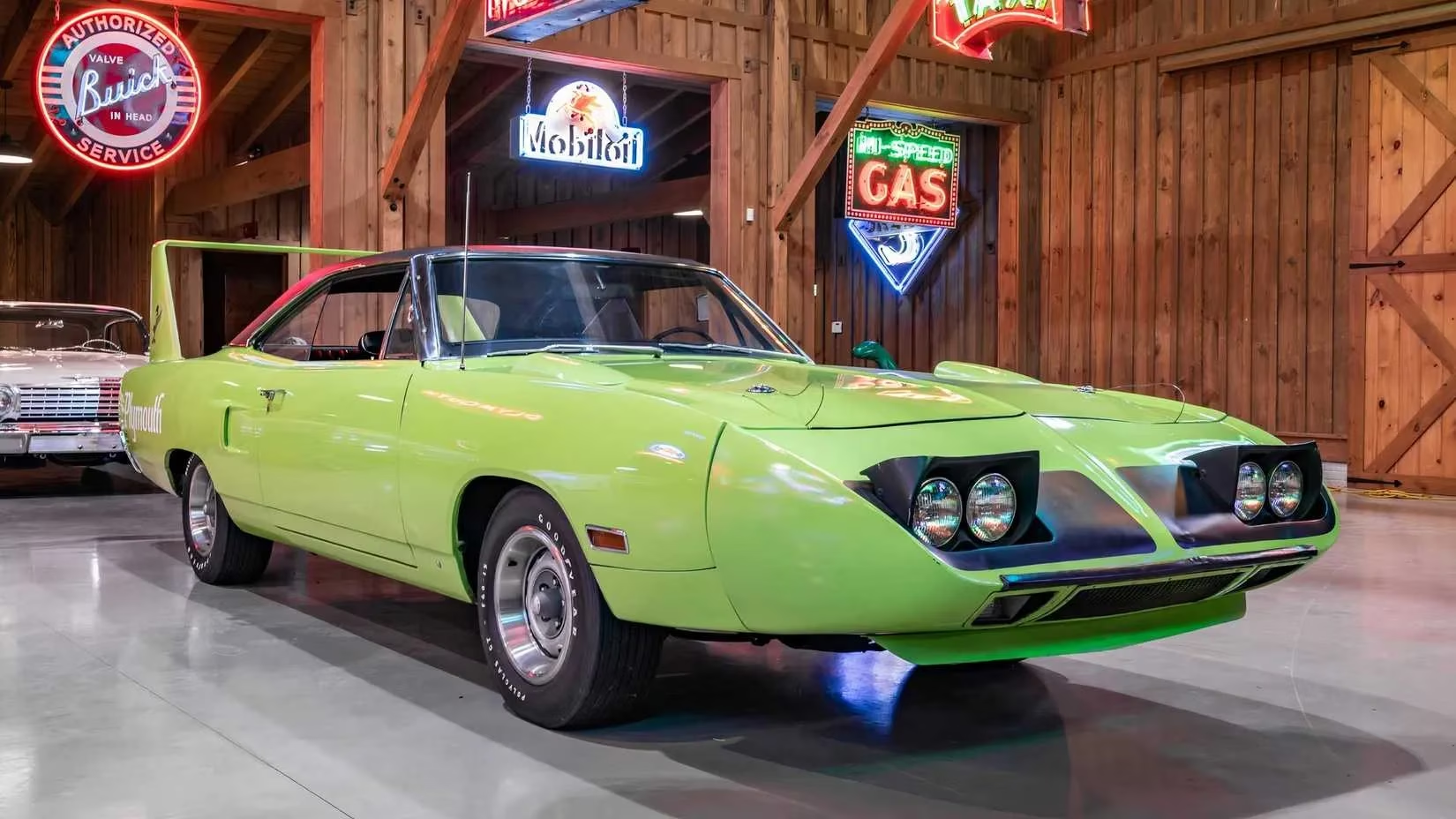
The Superbird wasn't just for show. To meet NASCAR's homologation rules, which required a certain number of street-legal versions to be sold, Plymouth built 1,920 examples for the public. Buyers could choose from three engine options, each more potent than the last:
-
The 440 Super Commando V8: The base engine, if you can call it that, was a 440 cubic-inch V8 with a four-barrel carburetor, dishing out a very healthy 375 horsepower.
-
The 440 Six-Barrel V8: Stepping things up was another 440, but this one featured three two-barrel carburetors (a "Six-Pack") and cranked out 390 horsepower.
-
The 426 Hemi V8: The crown jewel. This legendary 426 cubic-inch Hemi V8 was rated at 425 horsepower from the factory, but dyno tests have consistently shown it was severely underrated, making closer to 450 ponies. This was the heart of Plymouth's NASCAR campaign, and only 135 lucky street-legal Superbirds were blessed with it.
Dominance on the Track and a Swift End
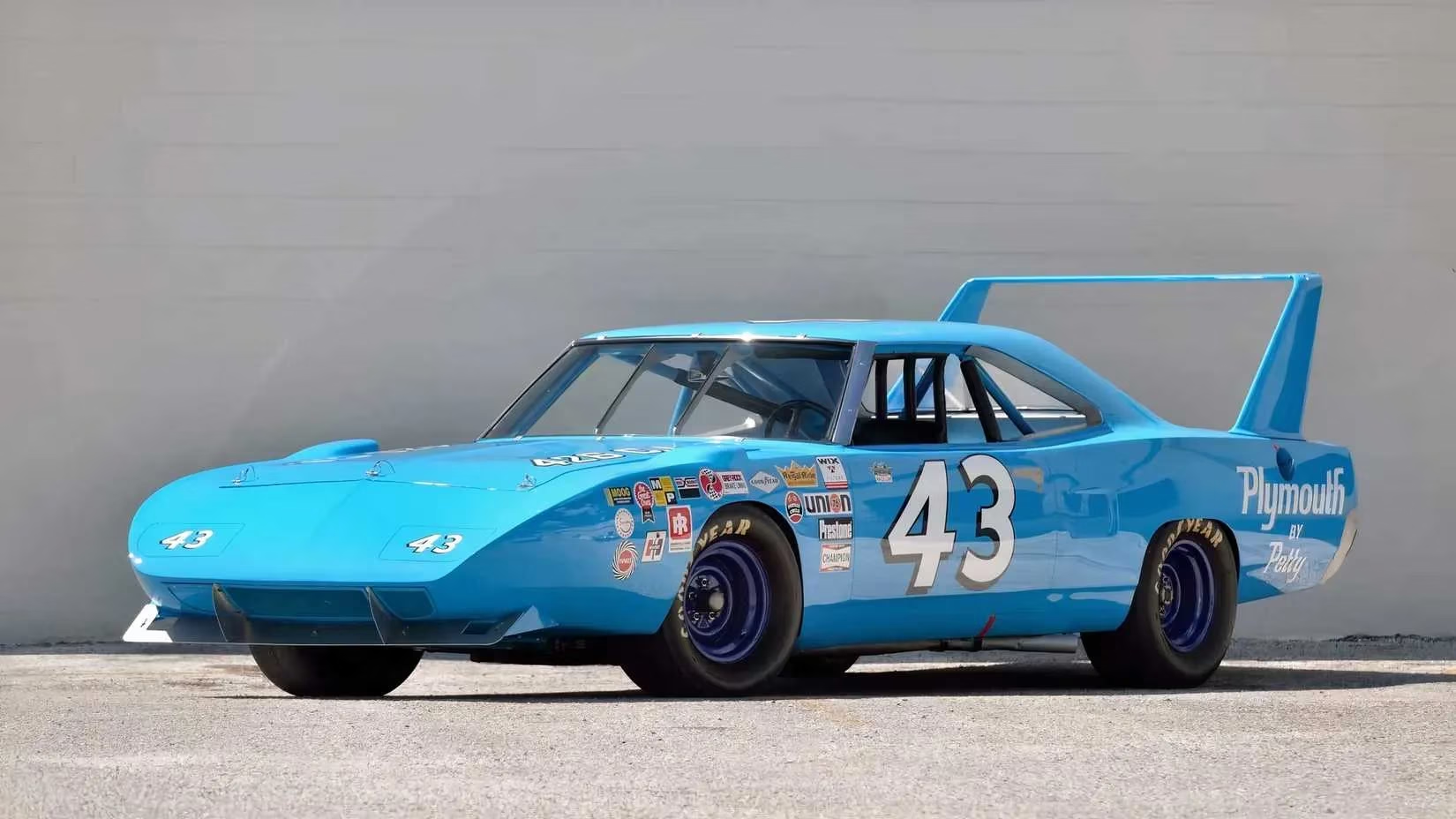
On the track, with the legendary Richard Petty back behind the wheel of a Plymouth, the Superbird was an absolute force of nature. It racked up an incredible 18 wins out of 40 races in the 1970 NASCAR season. It was, without a doubt, the car to beat. However, its reign was shockingly short. The other manufacturers, namely Ford and Chevrolet, were utterly humiliated. They couldn't compete with the aero advantage of the "winged warriors," so they lobbied for a rule change. NASCAR complied, and for the 1971 season, introduced regulations that effectively banned cars with these extreme aerodynamic features unless they used engines smaller than 305 cubic inches—a laughable proposition for a car built around massive V8 power. Just like that, the Superbird's competitive life was over. It started and ended in 1970, making it a true one-year wonder.
Street Car vs. Race Car: A Tale of Two Superbirds
It's crucial to understand that the street-legal Superbird and the NASCAR version were worlds apart. The homologation cars you could buy were toned-down versions of the racers.
-
The Street Car: Came with the three engine options, full interiors, and all the comforts of a regular Road Runner, albeit with that wild bodywork. It was a brutal, loud, and unforgettable grand tourer.
-
The Race Car: These were pure, unadulterated weapons. They ran exclusively with the full-race Hemi engines, which typically produced around 650 horsepower—far beyond the detuned street version. They were stripped of all unnecessary weight, fitted with roll cages, widened fenders, and racing suspension. They were built for one thing: speed.
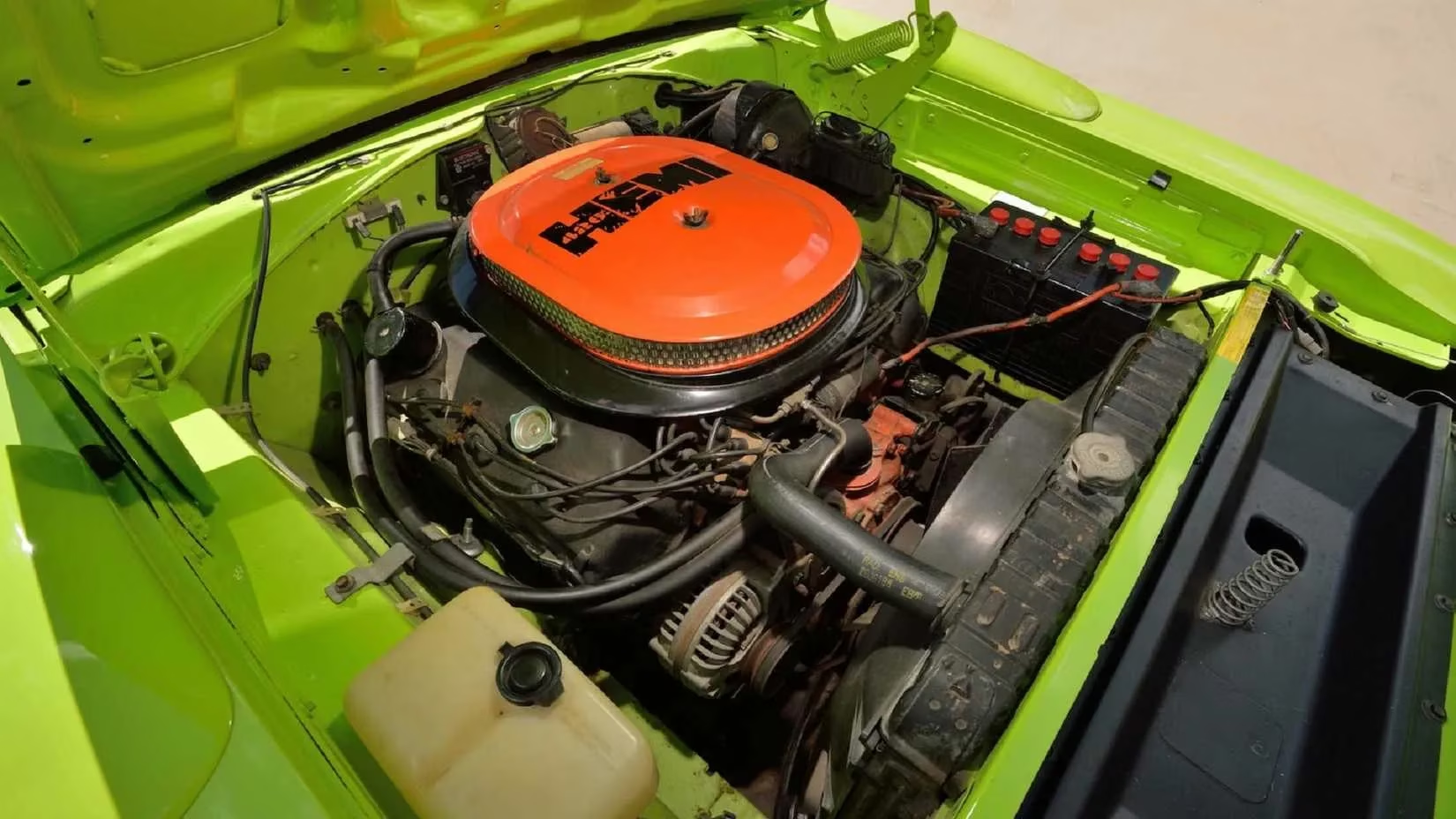
Legacy and Value: The Crown Jewel of Mopar
Today, the Plymouth Superbird is easily one of the most coveted muscle cars ever made. As the Plymouth brand itself is now defunct, the Superbird stands as its ultimate achievement, the crown jewel for serious collectors. Owning one is a serious financial commitment, a true blue-chip investment in automotive history.
According to market data from 2026, the Superbird commands an average price of around $356,000. However, that's just the starting point. The magic letters "Hemi" send values into the stratosphere:
-
Average price for a Hemi Superbird: $516,000
-
Top-tier, pristine Hemi examples: Can easily soar past the $1 million mark.
In the end, the Plymouth Superbird's story is one of audacious engineering, competitive fire, and a rulebook rewritten in its wake. It existed for a single, glorious year, but the shockwaves from its dominance are still felt. It proved, beyond a shadow of a doubt, that when it came to building the meanest, most purpose-built race cars on the planet, Mopar was in a league of its own. The Superbird wasn't just a car; it was an event. And for that, it will always be remembered as one of the baddest machines to ever roar down a superspeedway. It's the ultimate "what if"—a glimpse into a wild, unrestricted era of motorsport that was too hot to handle and too fast to last.