The 1970 Plymouth Duster 340 muscle car boasts underrated power and bold styling, outshining rivals in American performance history.
Listen up, fellow gearheads, because I am about to preach the gospel of the single most outrageously underrated muscle car in the entire pantheon of American performance history. I have spent decades inhaling tire smoke and worshipping at the altar of the Hemi 'Cuda, the Charger R/T, and the Boss 429. But folks, the truth hit me like a brick through a windshield: we have all been sleeping on the 1970 Plymouth Duster 340, and it is a national disgrace. In the year of our horsepower lord 2026, this compact psychopath is finally, finally getting its revenge on every bloated Chevelle and overweight Mustang that ever stole its spotlight.
Let’s set the stage. It’s 1970. The muscle car wars are in full, glorious overdrive. While Dodge is busy cranking out Chargers that will chase Steve McQueen through San Francisco, Plymouth drops a compact bomb named the Duster. This wasn’t just another Valiant with a stripe kit. Oh no. The Duster was a slick, fastback rebel with curves that could make a bottle of Coke jealous. It didn't have the boxy seriousness of a Road Runner; it looked like it was doing 100 mph parked at a drive-in. I tell you, the styling alone was a masterclass in aerodynamic mischief. And because Plymouth knew they had a certified heartthrob on their hands, they tried to slap the Tasmanian Devil on the side. Can you imagine? A screaming Taz decal? The studio wanted too much cash—a tragedy! Instead, we got the iconic tornado swirl, designed by some genius at Chrysler, and honestly? The twister logo still gives me chills. It’s the perfect symbol for a car that spins the earth beneath its rear tires.
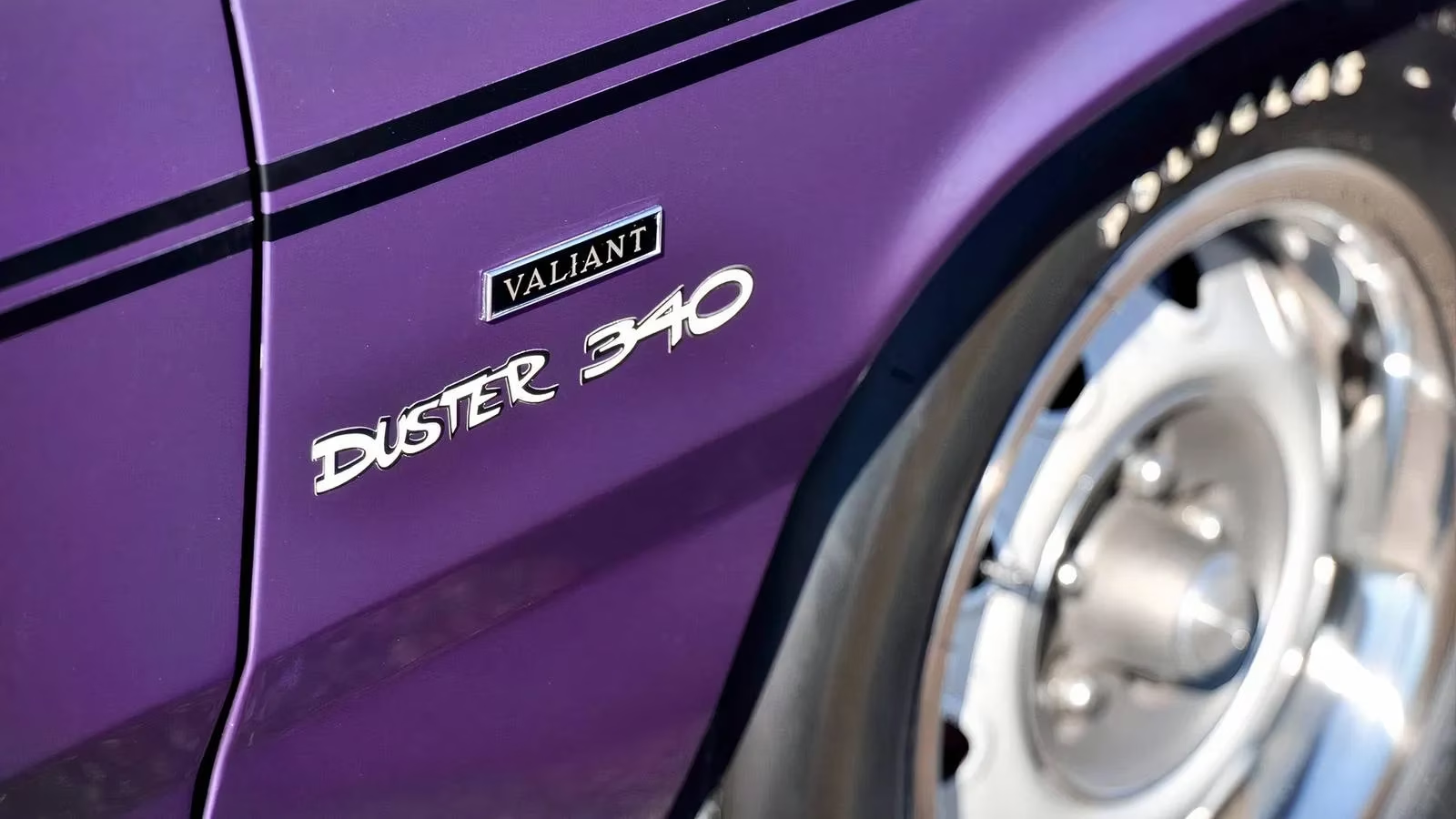
Now, I can hear the skeptics already. "No Hemi? No 440? Pfft." Shut your beautiful mouth. The Duster was a bantamweight brawler. Sure, they never stuffed a 426 Elephant under that peppy hood—that would have required a shoehorn and a prayer to the god of torque steer—but what they did give us was the 340 cubic-inch small-block V8, a motor that punches so far above its weight class it’s practically a featherweight champion of the universe. Rated at a conservative 275 horsepower and 340 lb-ft of twist, that engine in a lightweight Duster was the definition of a power-to-weight cheat code. I’ve read the old magazine tests, and my heart still races: 0 to 60 in 5.8 seconds, the quarter-mile in 14.1 seconds. Do you understand the implications? In 1970, a 429 Cobra Jet Mustang Mach 1 was wheezing through the same distance in 14.2 seconds. The Duster, with its humble small-block and unassuming Valiant badge on the fender, was slapping around Ford’s flagship stallion. It was an absolute street terrorist.
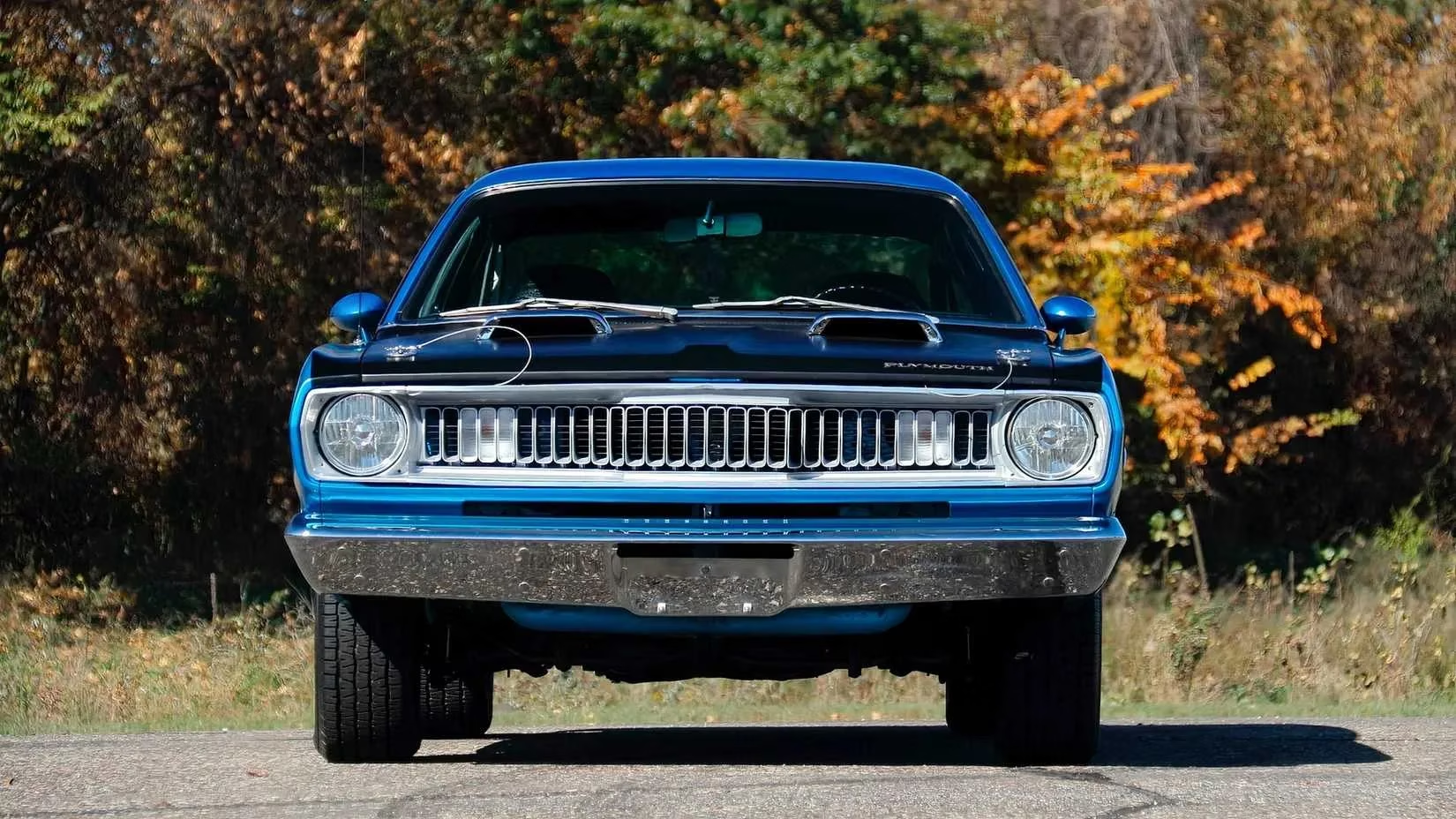
Let’s talk about the presence. The Duster 340 wasn’t just about going fast; it was about looking like a demonic dart while doing it. The blackout hood, the twin scoops that sucked in air like a hungry piranha, the massive “340” callout on the side stripes, and that optional rear spoiler—lord, it was a symphony of aggression. When I see a triple-black 1970 Duster 340, my knees go weak. It’s a minimalist masterpiece of menace. No unnecessary chrome, no gaudy wings, just a perfectly proportioned coffin on wheels coming to bury the competition. And speaking of demons, when Dodge saw how many Dusters Plymouth was moving—over 24,000 of these 340-powered screamers in the first year alone—they literally begged for their own version. That’s how the Dodge Demon was born. Yes, the name that would later be resurrected for a 840-horsepower monster started right here, ripping off the Duster. Dodge wanted to call it the “Beaver,” (I cannot even) until someone told them what it meant. The Demon was fierce, but make no mistake, the Duster is the original, pure, uncut article.
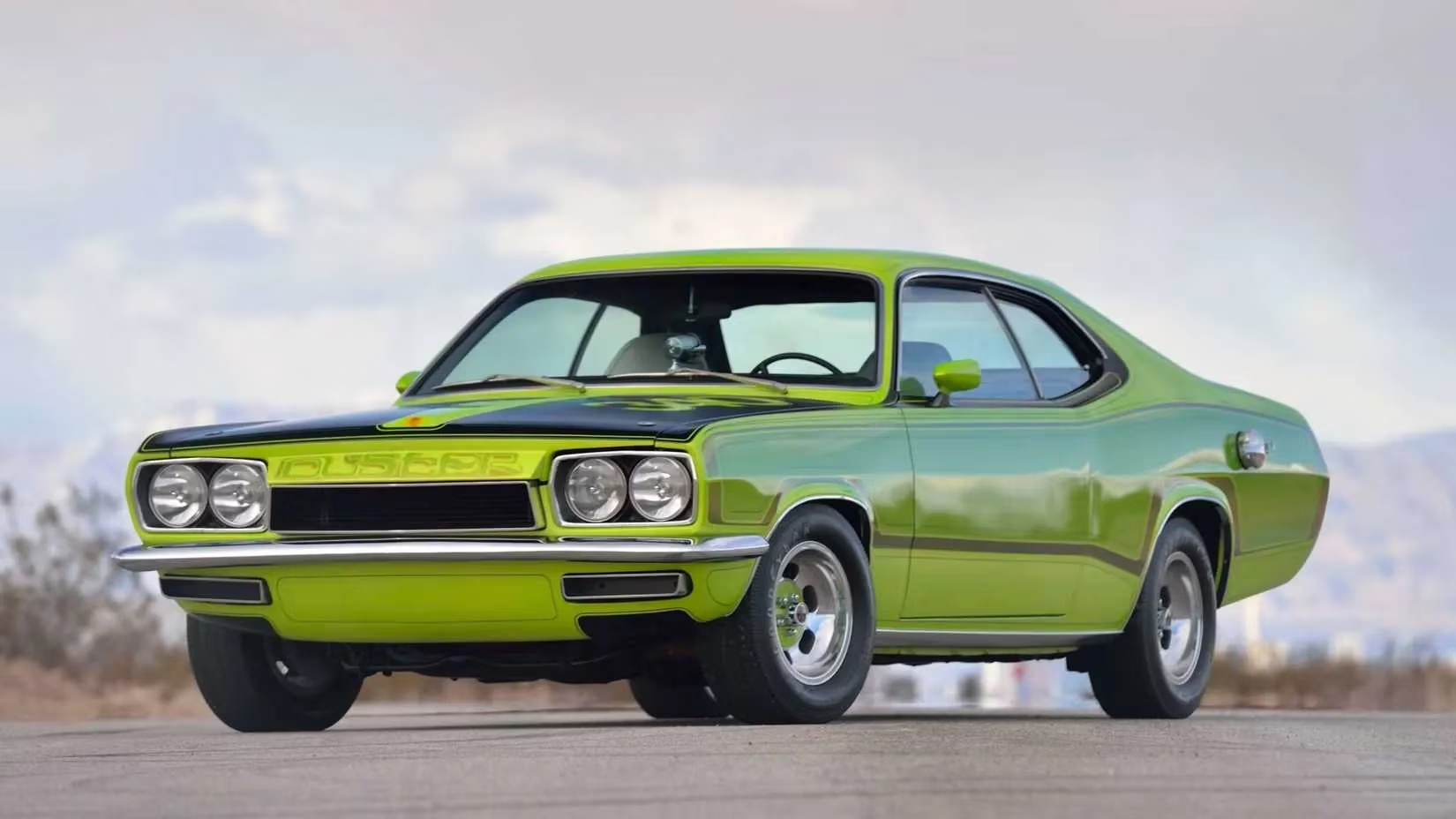
If you want to see the Duster in its most hallucinatory form, you have to look at the Rapid Transit System show car. In 1970, Plymouth commissioned a fleet of psychedelic nightmares to tour the country, and while some were hideous, the Duster RTS was a work of stupefying art. A custom grille, quad headlamps, and “Duster” spelled out in groovy, mind-bending letters. It looked like it had driven straight out of Woodstock and into my fever dreams. To this day, it remains one of the coolest factory-inspired customs ever to roll on four wheels.
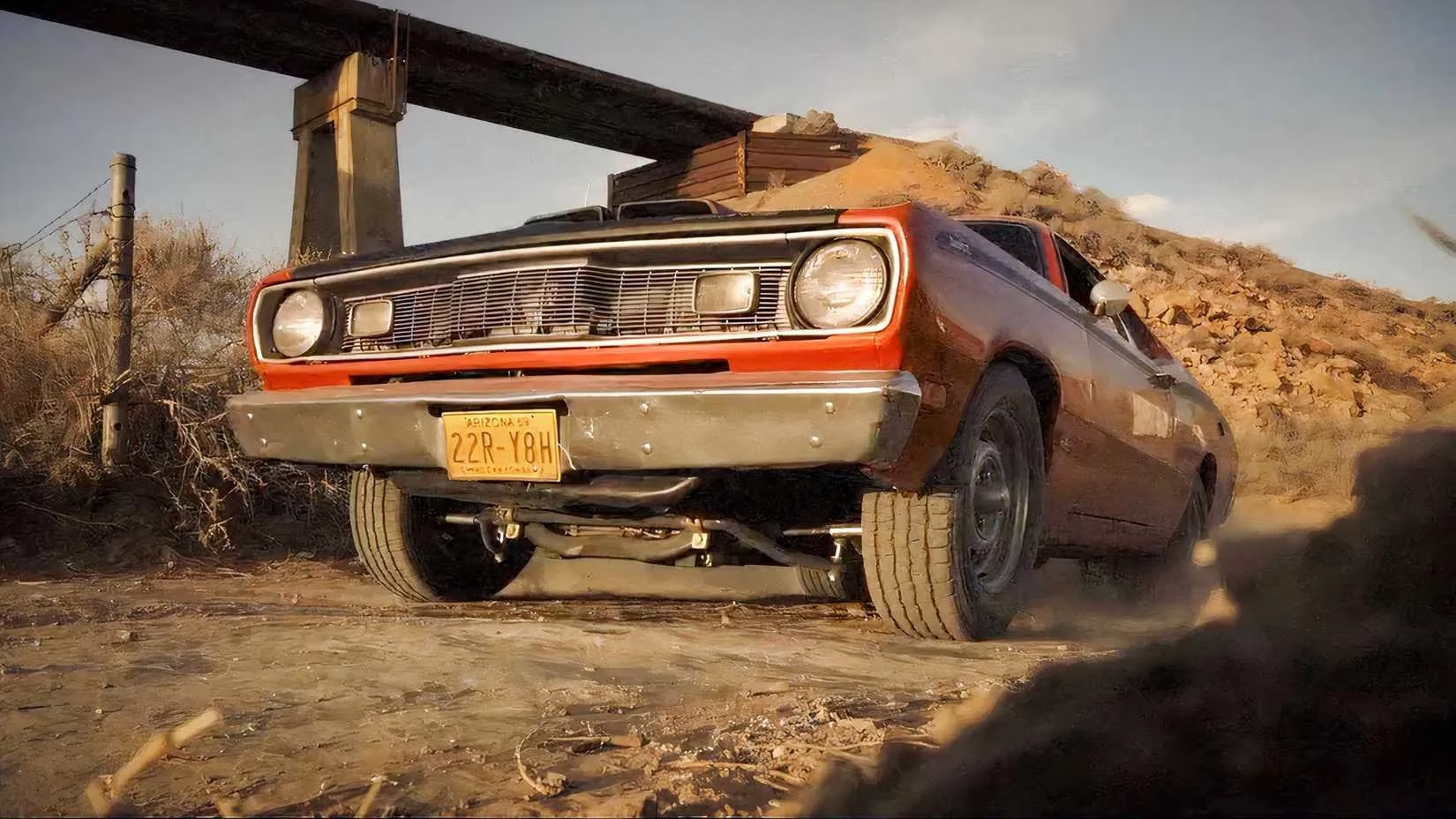
And now, my friends, we arrive at the vindication. For decades, the Duster was the forgotten stepchild of Mopar, overshadowed by its Hemi-swollen siblings at auction. But the winds have shifted! In 2025, the Max streaming series Duster landed, starring a beat-to-hell 1970 Plymouth Duster 340 as the ultimate getaway car for a crime syndicate wheelman played by Josh Holloway. The show set in the gritty Southwest of 1972, gave the Duster the cinematic justice it always deserved—ragged-edge chases, dusty slides, and a growl that sounds like a provoked mountain lion. Even though Max, in their infinite lack of wisdom, cancelled the show, the damage was done. The sleeping giant awoke. By 2026, the market is on fire. I’ve watched auction prices double in the last five years; average sales have ballooned from a measly $24,000 towards $50,000, with concours-quality examples knocking on the door of $90,000. A triple-black Duster sold at Mecum and practically melted the auction block. The six-figure club is no longer a pipe dream—it’s a garage reality.
I’ve seen the light, and it’s a single-round taillight blazing ahead of a 340 badge. The 1970 Plymouth Duster 340 is the ultimate giant killer, the compact chaos agent that proves you don’t need 7 liters of displacement to be an immortal legend. It’s stylish, it’s rare in spirit, it’s shockingly affordable compared to its muscle-bound cousins, and it’s finally, irrevocably cool. If you don’t have one in your collection by now, you’re not just missing the boat—you’re drowning in a sea of automotive ignorance. Wake up, world. The Duster is here, and it’s done being overlooked. 🌀💨