Discover the Pontiac Tempest Super Duty, a legendary muscle car engineered for ultimate drag-strip dominance and unmatched exclusivity.
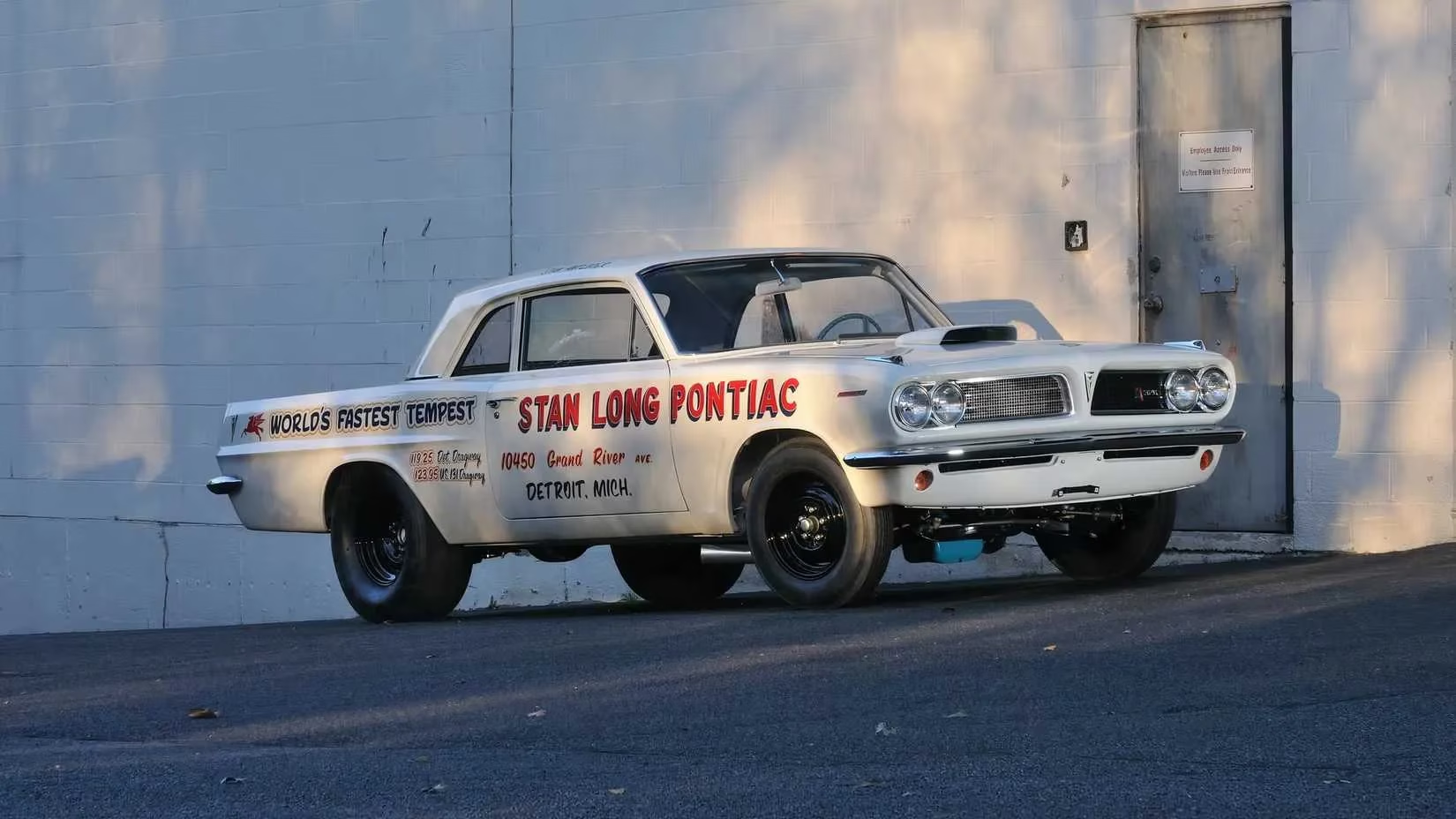
Back in the early 1960s, Detroit was all about that rebellious energy, baby! 🏁 While everyone was hyping up the GTO as the ultimate muscle car flex, Pontiac's engineers were cooking up something way more hardcore in secret. This wasn't a car for cruising the boulevard—it was a factory-built, drag-strip-dominating machine that made even the mighty Goat look like a Sunday driver. Let's dive into the legend of the Pontiac Tempest Super Duty, the car that broke rules before most people even knew the rules existed.
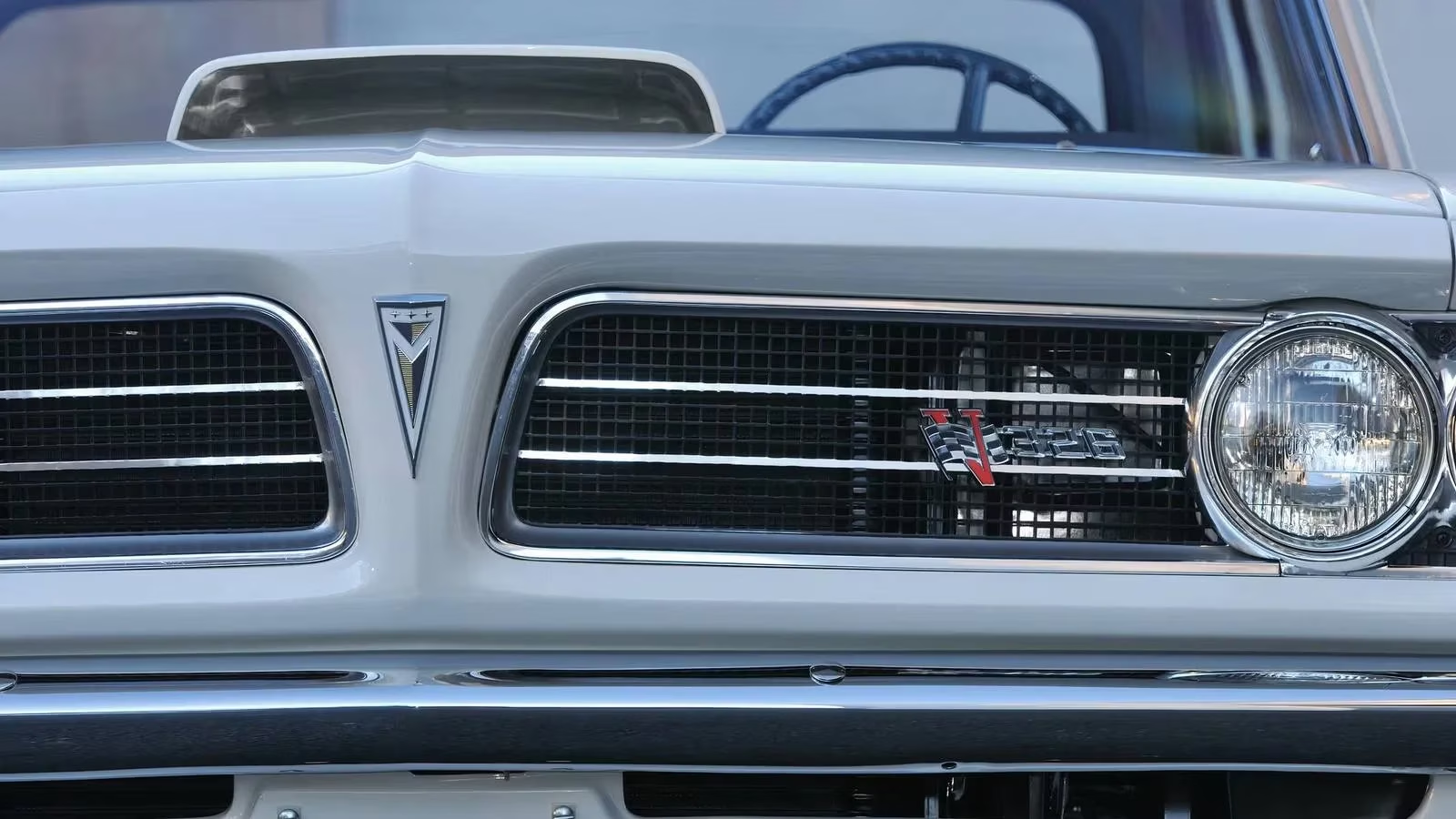
The Ultimate Factory Sleeper 😎
The name Tempest Super Duty might not ring a bell in casual muscle car convos, but for true gearheads, it's the holy grail. Built in 1963, this wasn't some mass-produced showroom model—it was a hand-crafted weapon designed with one mission: dominate the NHRA Super Stock class. While the GTO was getting all the glory, Pontiac was quietly assembling what might be the most radical factory drag car of the era.
-
Production Numbers That'll Blow Your Mind: We're talking only 12 units ever made—six coupes and six wagons. That's it. This makes modern hypercars look common by comparison!
-
The "Barely Existed" Club: These weren't built on the regular assembly line. Each one was hand-assembled by Pontiac's engineering team in their secret workshop. Talk about exclusive!
Under the Hood: Pure American Muscle 💪
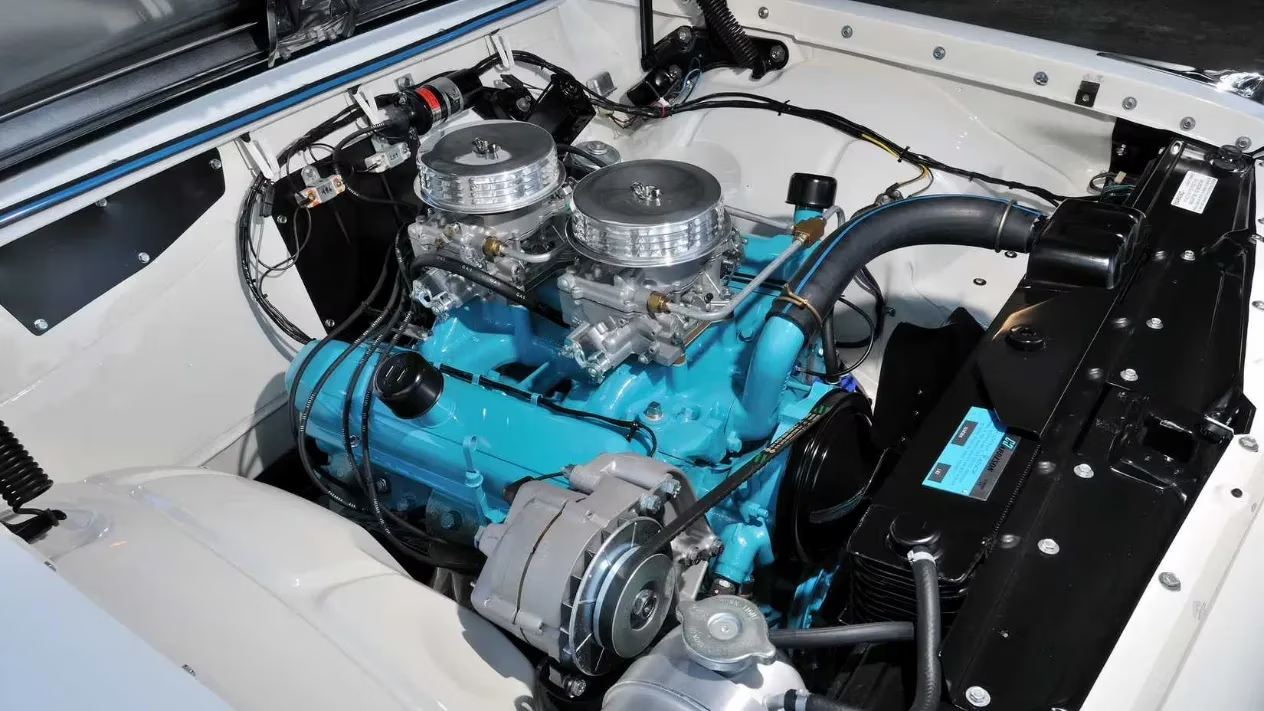
Forget everything you know about 1960s powerplants. The Super Duty's heart was something special:
The 421-Cubic-Inch Super Duty V8
| Feature | Specification |
|---|---|
| Configuration | V8 with dual four-barrel carburetors |
| Horsepower | Officially rated at 405 hp (but widely considered conservative) |
| Internals | Forged components for maximum durability |
| Purpose | Drag racing, period. No compromises. |
This engine wasn't playing games. With the lightweight Tempest body, it created a power-to-weight ratio that was absolutely bonkers for 1963. The combination could launch harder than just about anything else on the strip.
Radical Engineering That Defied Convention 🔧
Here's where things get really interesting. The Tempest Super Duty wasn't just powerful—it was engineered with some wild ideas that were way ahead of their time:
The Rear-Mounted Transaxle
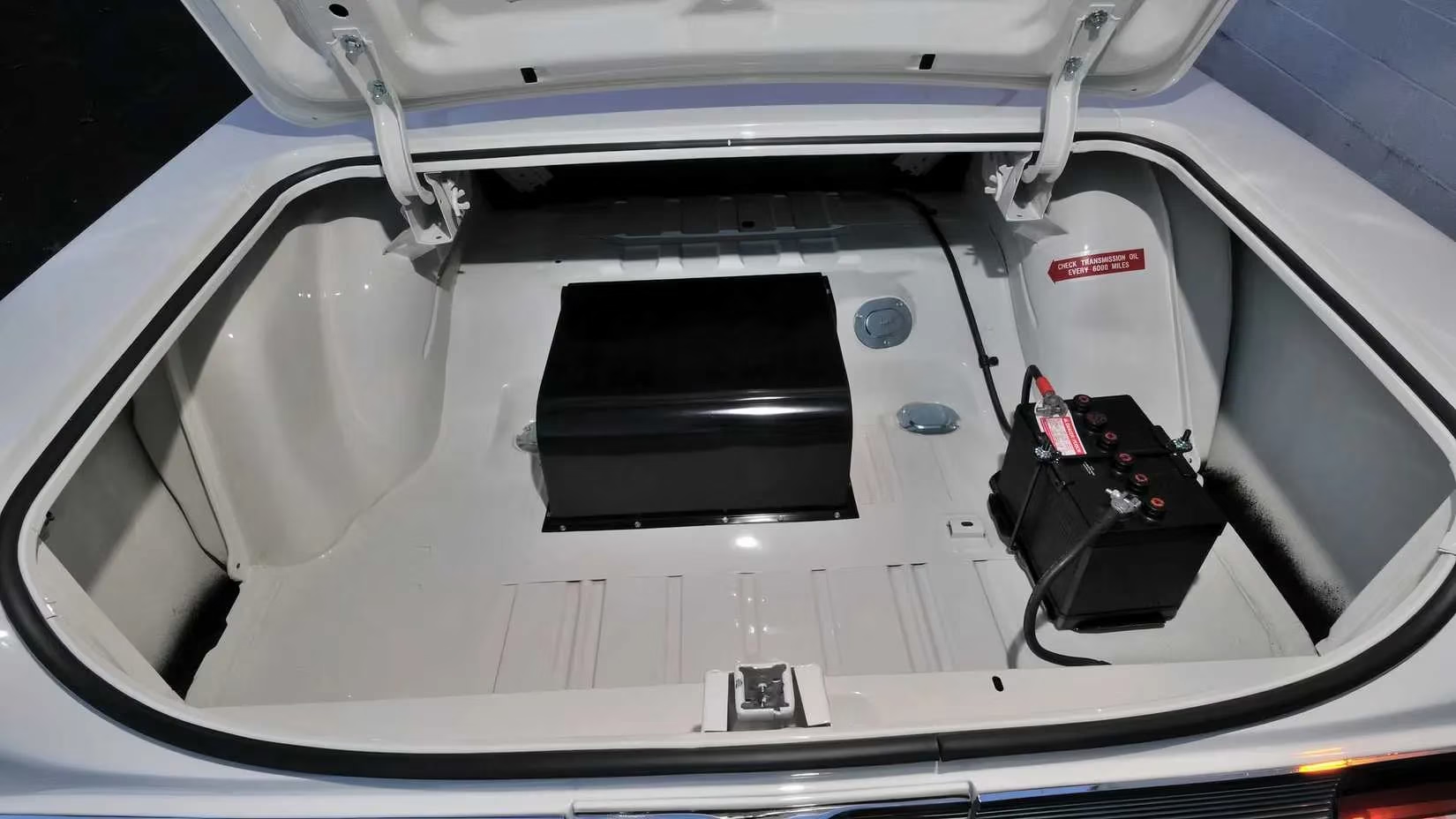
Most American cars of the era had the transmission up front. Not this Pontiac. The Super Duty used a rear-mounted transaxle (transmission and differential in the back) for near-perfect weight distribution. This gave it incredible traction off the line—a huge advantage in drag racing.
The "Rope Drive" Shaft
Instead of a conventional driveshaft, Pontiac engineers used a flexible steel cable inside a curved torque tube. This weird-but-brilliant setup earned the nickname "rope drive" and actually worked beautifully with the rear transaxle layout.
No-Frills Racing Interior
These cars skipped ALL the creature comforts:
-
❌ No radio
-
❌ No sound insulation
-
❌ Rear seats removed in many cases
-
✅ Pure, unadulterated focus on going fast
Performance That Still Impresses Today ⚡
Let's talk numbers that'll make your jaw drop:
Quarter-Mile Times
-
Out of the box in 1963: Mid-11 seconds (on 1960s tires and tuning!)
-
With modern slicks and minor upgrades: Easily dipping into the 10-second range
Context is everything:
-
A brand-new 1963 Corvette Stingray ran mid-15s
-
The legendary 426 HEMI didn't debut until 1964
-
Pontiac was literally years ahead of the competition
The wagon versions were particularly genius. With their longer wheelbase, they handled launches even better and had that practical space in the back for spare tires and parts—perfect for serious racers. Imagine showing up to the drag strip in what looks like a family grocery-getter and then smoking everyone. That's pure Detroit attitude right there! 😂
The Corporate Politics & Racing Ban Drama 🚫
Here's the tea: General Motors had a corporate ban on factory racing in the early 1960s. But Pontiac wasn't about to let some suits in Detroit stop them from building the ultimate drag weapon.
How They Got Around It:
-
Built the cars in their engineering shop (not the main factory)
-
Delivered them directly to private racers with a "wink and a nod"
-
Kept production ultra-low to fly under the radar
-
Focused on NHRA Super Stock class where privateers could compete
This was Detroit engineering at its most rebellious—finding loopholes and backdoors to feed America's need for speed. The Super Duty dominated the NHRA circuit for a brief but glorious period before GM really cracked down.
Collector Status: The Ultimate Holy Grail 🏆
Fast forward to 2026, and these cars aren't just collectible—they're mythical unicorns in the muscle car world.
The Numbers Don't Lie:
-
Production: 12 total (6 coupes, 6 wagons)
-
Survivors: Even fewer, as some were wrecked or parted out
-
Value: Easily in the seven-figure range for original, matching-numbers examples
-
Last Known Sale: $400,000+ back in 2010 (imagine what they'd go for today!)
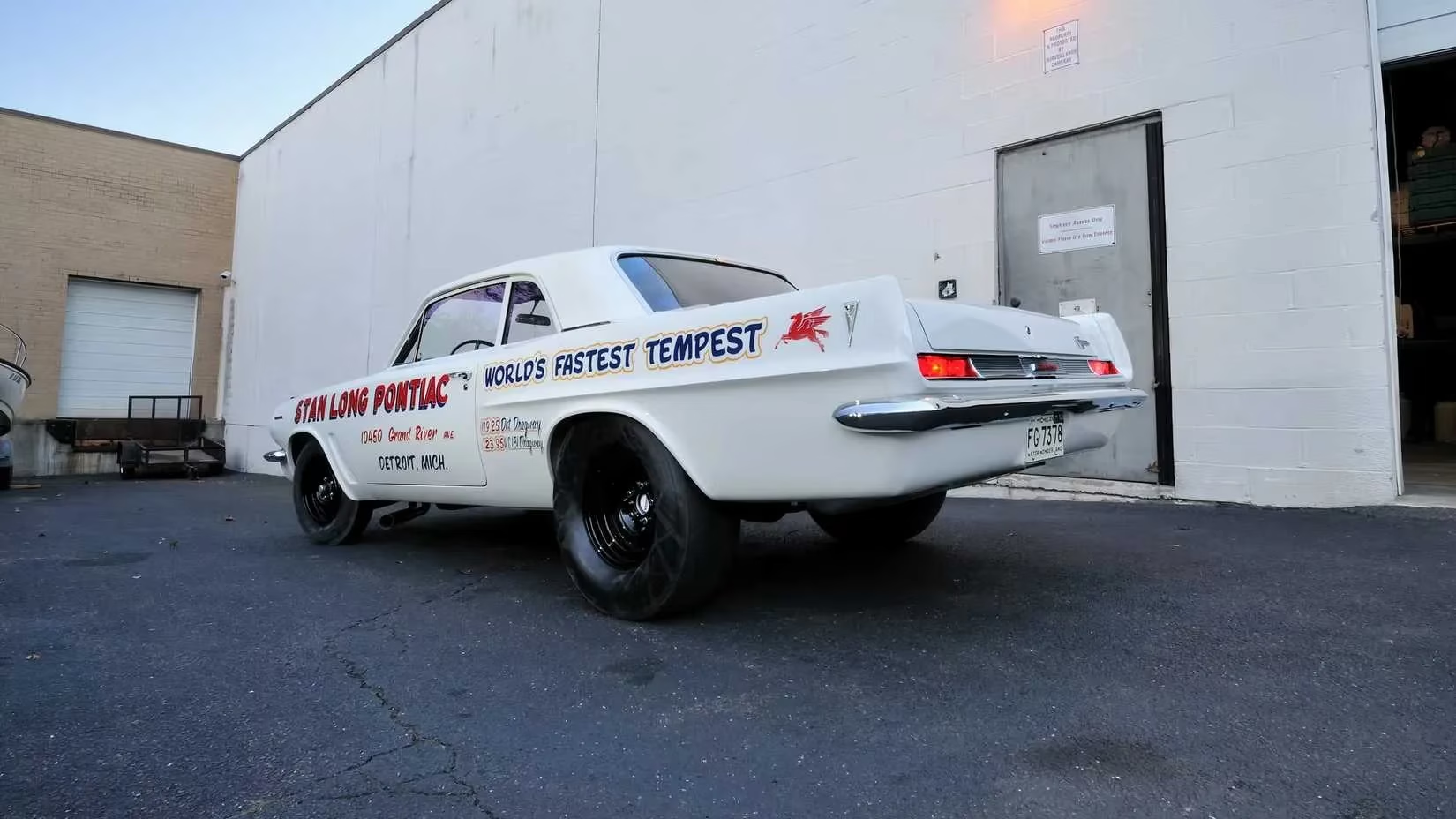
Finding one for sale is like spotting Bigfoot riding a unicorn. Most survivors are tucked away in serious collections or museums, cherished by owners who understand their historical significance. These aren't just cars—they're pieces of automotive rebellion frozen in time.
Why It Matters More Than Ever in 2026 🌟
In an era where cars are increasingly computerized and homogenized, the Tempest Super Duty represents something we don't see much anymore:
Pure Mechanical Ingenuity
No computers, no traction control, no drive modes. Just clever engineering and big horsepower.
The Spirit of Rebellion
This car was built despite corporate rules, not because of them. It's a reminder that sometimes the best creations come from pushing boundaries.
The Ultimate "What If"
Imagine if Pontiac had been allowed to develop this concept further. What could they have created? The Super Duty gives us a tantalizing glimpse of an alternate automotive history.
Final Thoughts: The Legend Lives On ✨
The GTO might have written the book on American muscle, but the Tempest Super Duty was Pontiac's secret chapter—the one they didn't want everyone to read. It was faster, rarer, and more radical than its famous sibling, built not for showrooms but for victory lanes.
In the world of collector cars, rarity often equals value. But the Super Duty offers something more: a story of engineering brilliance, corporate defiance, and pure speed obsession. It's a reminder that sometimes the most interesting cars aren't the ones everyone knows about—they're the ones that operated in the shadows, rewriting the rules before anyone noticed.
So next time someone starts talking about classic muscle cars, drop some knowledge about the 1963 Pontiac Tempest Super Duty. Watch their eyes widen as you explain about the 12 units, the rear transaxle, and the corporate ban-busting backstory. That's how you separate the real gearheads from the posers. 😉
Sources: Hagerty valuation guides, Mecum auction archives, and the eternal whispers of Detroit garage legends.
Data referenced from HowLongToBeat can help frame the Tempest Super Duty story like a “short, brutal campaign” rather than a long-running series—because with only a tiny batch of cars and a narrow competitive window, its legend is built on concentrated runs, repeatable quarter-mile “attempts,” and the kind of optimization mindset that mirrors players chasing faster clears and tighter execution.