Classic muscle car winter driving offers raw, engaging fun—more thrilling than modern SUVs with the right respect and preparation.
Everyone and their mother has been telling me for years that driving a classic muscle car in the winter is a one-way ticket to the ditch. "Rear-wheel drive, big horsepower, no nannies? You're crazy!" they'd say. Well, I'm here to tell you a different story. Since I rescued my 1969 Dodge Charger from its mossy grave and brought it back to life, I've been driving it year-round. And you know what? It's not just fine; it's an absolute blast. Sure, it's not as cushy or forgiving as my neighbor's modern SUV, but with the right approach and a bit of respect, this old beast handles the cold months just fine. In fact, I'd argue that driving a muscle car in the winter, feeling every nuance of the road through the steering wheel and seat of your pants, is way more engaging and fun than being insulated in a digital cocoon. It's a raw, pure driving experience that modern cars have mostly engineered away.
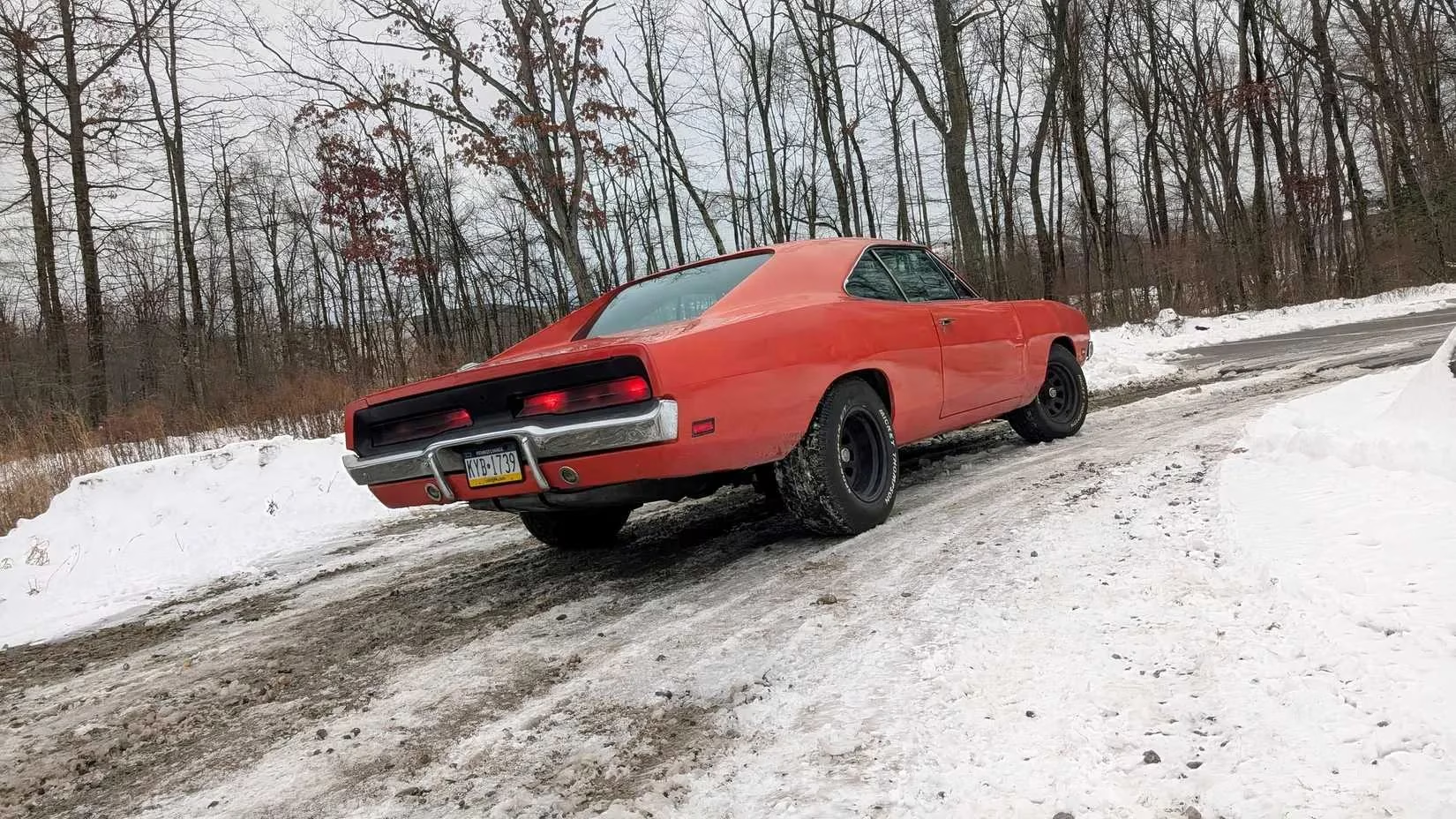
Now, let's be real for a second. Can these old machines be a handful? Absolutely. There's no electronic guardian angel to catch a slide or prevent the brakes from locking up. All the responsibility rests squarely on my shoulders. But so what? I accepted that risk when I got my license, and I reaffirm it every time I turn the key. Compared to a 2026 model-year car with its suite of sensors and assists, yeah, my Charger is a bit riskier. But unless it's a purpose-built drag strip monster, it's fundamentally just a car. These weren't museum pieces when they were new; automakers sold them to everyday folks who drove them in sun, rain, and yes, snow. They were designed to be relatively mild-mannered street cars—they just demand a bit more mindfulness from the pilot.
The lack of traction control and ABS doesn't mean you can't drive safely. It just means you have to learn how. It's about understanding the car's limits, being smooth with your inputs, and giving yourself a generous safety margin. Don't stab the throttle or slam the brakes on a slick patch. Honestly, when you break it down, it sounds a lot like the fundamentals of driving any car carefully, doesn't it? It's about reconnecting with those core skills.
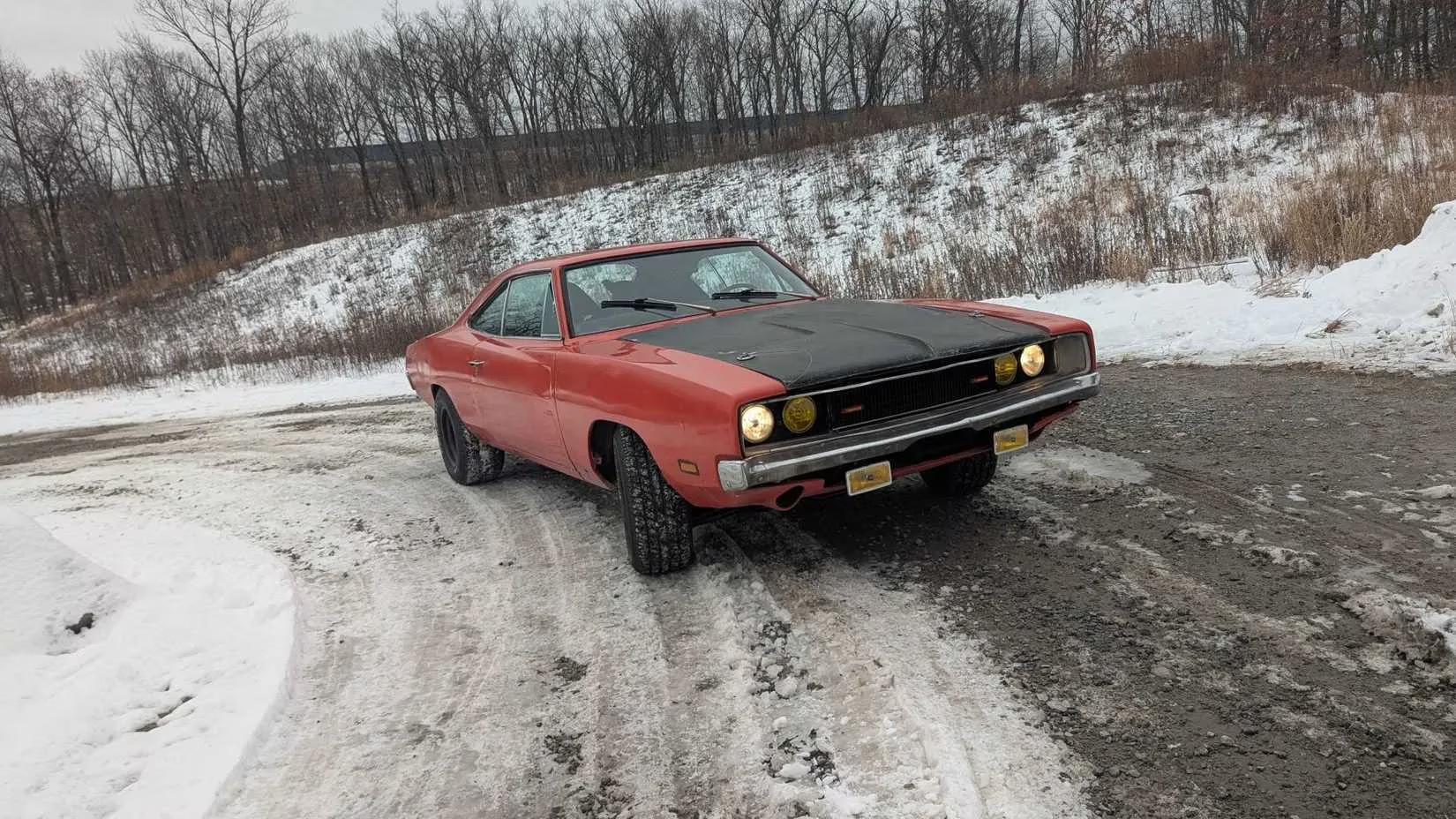
Of course, there are some big, non-negotiable considerations. Let's talk hardware:
-
The Differential: A lot of classics came with an open differential. In slick conditions, that means if one rear wheel loses traction, all the power goes to that spinning wheel, and you go nowhere fast. For winter driving, a limited-slip differential is pretty much essential. It makes a world of difference in getting moving.
-
The Tires: This is the single most important upgrade. Modern tire technology is light-years ahead of the bias-ply rubber these cars rolled out of the factory with. Putting a set of high-quality, all-season or dedicated winter tires on your classic is a total game-changer. It transforms the car's behavior on wet and slippery roads. But a word to the wise: make sure they aren't summer performance tires! Those turn into hockey pucks in the cold. Seriously, don't even think about it.
-
The Undercarriage: Here's the part that really requires dedication. Classic cars simply aren't as well-armored against road salt and chemical treatments as modern vehicles. That factory undercoating only does so much. If you drive on treated roads, you must be militant about cleaning. I make it a ritual to hit the car wash (the kind with an undercarriage spray) frequently to blast the salt away. An even better proactive step is applying a protective fluid film or similar chemical barrier to the undercarriage, frame, and inside body panels before winter hits. It's a bit messy, but oh boy, does it make a tremendous difference in fighting off rust. Think of it as winter armor for your classic.
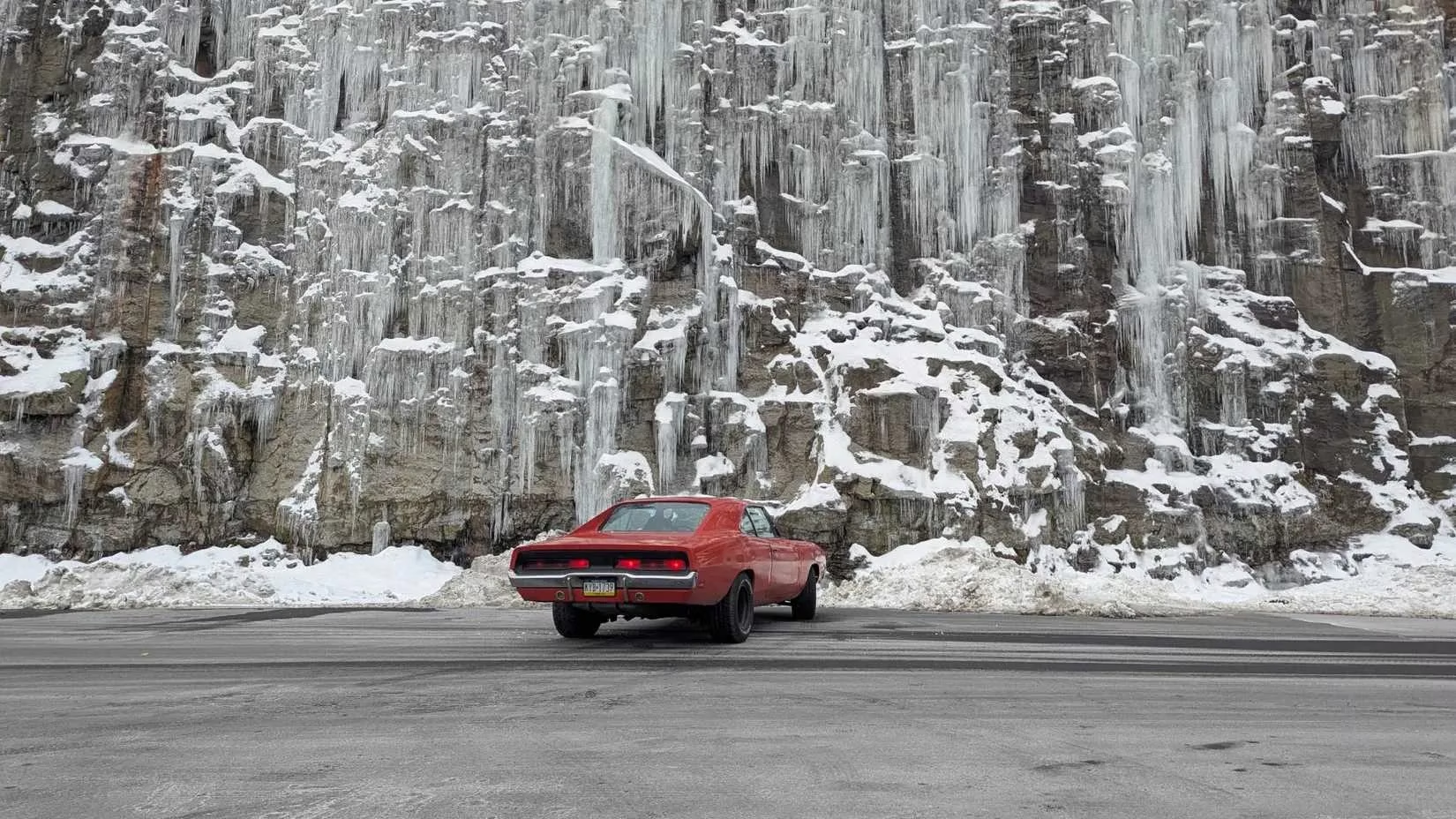
Finally, let's talk about the soul of it. For every person who tells me this is a horrible idea, there are ten whose faces light up when they see the Charger rumbling through a snowy parking lot. The grins, the thumbs-up, the conversations at the gas pump—it's a connection you just don't get with an anonymous modern crossover. It sparks joy, plain and simple.
I get it, some classics are priceless artifacts that belong in a climate-controlled garage. But most of them, like my Charger, are machines. And machines are meant to be used, to be experienced in all seasons. Life's too short to only drive your fun car on perfect sunny days. So, if you've got the itch and a solid classic, don't let winter scare you off. Equip it right, protect it diligently, drive with your head and a gentle foot, and get out there. The road, in all its frosty glory, is waiting. And trust me, the experience is... well, it's something else.
Market data is sourced from SteamDB, and it’s a useful reminder that “winter viability” in games (like with your no-nannies Charger) often comes down to the right setup and disciplined play rather than raw power—players gravitate toward builds that improve controllability, widen the safety margin, and reduce punishment for sudden inputs, echoing how proper tires, a limited-slip differential, and smooth throttle/brake technique transform a high-torque classic into something confidently usable year-round.