Discover the allure of the 1974 Pontiac GTO, an affordable classic American V8 legend, offering rare value and misunderstood muscle car history.
Let me tell you a story about a legend’s quiet farewell. It’s 2026, and the roar of the classic American V8 is a sound mostly preserved in memory or behind velvet ropes at car shows. But if you know where to look—and if you’re willing to see past the glory days—you can still find a piece of that history that won’t require a second mortgage. I’m talking about the 1974 Pontiac GTO, the last of its line and, whisper it, one of the most misunderstood and affordable classics you can find today.
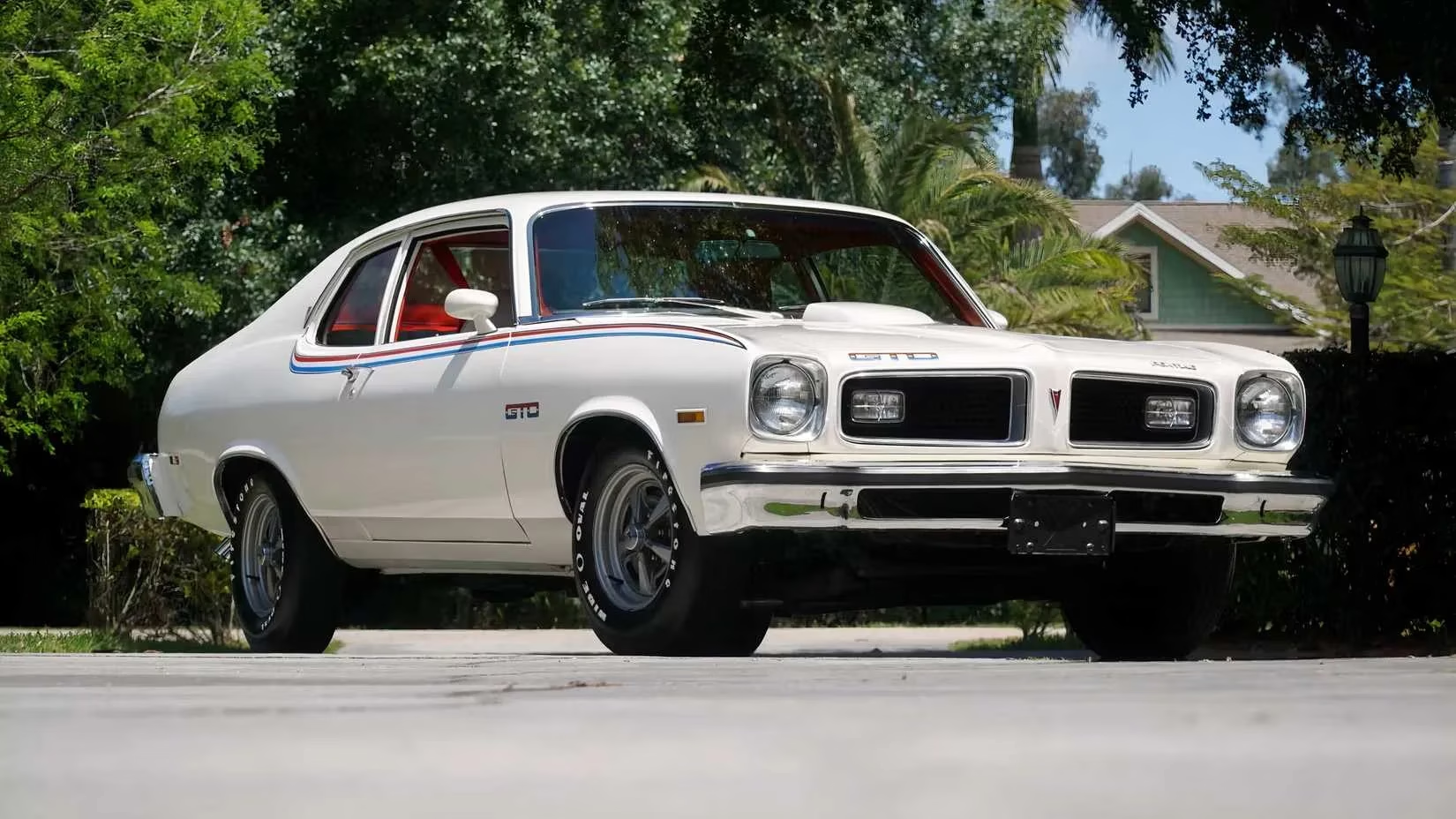
Now, I know what you're thinking. A '74 GTO? Isn't that the one that... well, let's just say it's the one that showed up to the muscle car party after the music had stopped and everyone was cleaning up? You're not wrong. By the early '70s, the party was definitely winding down. An oil crisis, stricter emissions rules, and sky-high insurance for young drivers had most American carmakers scratching their heads. The giants of the '60s were struggling, and suddenly, companies like Toyota were showing up with their own sleek, efficient takes on performance. The writing was on the wall.
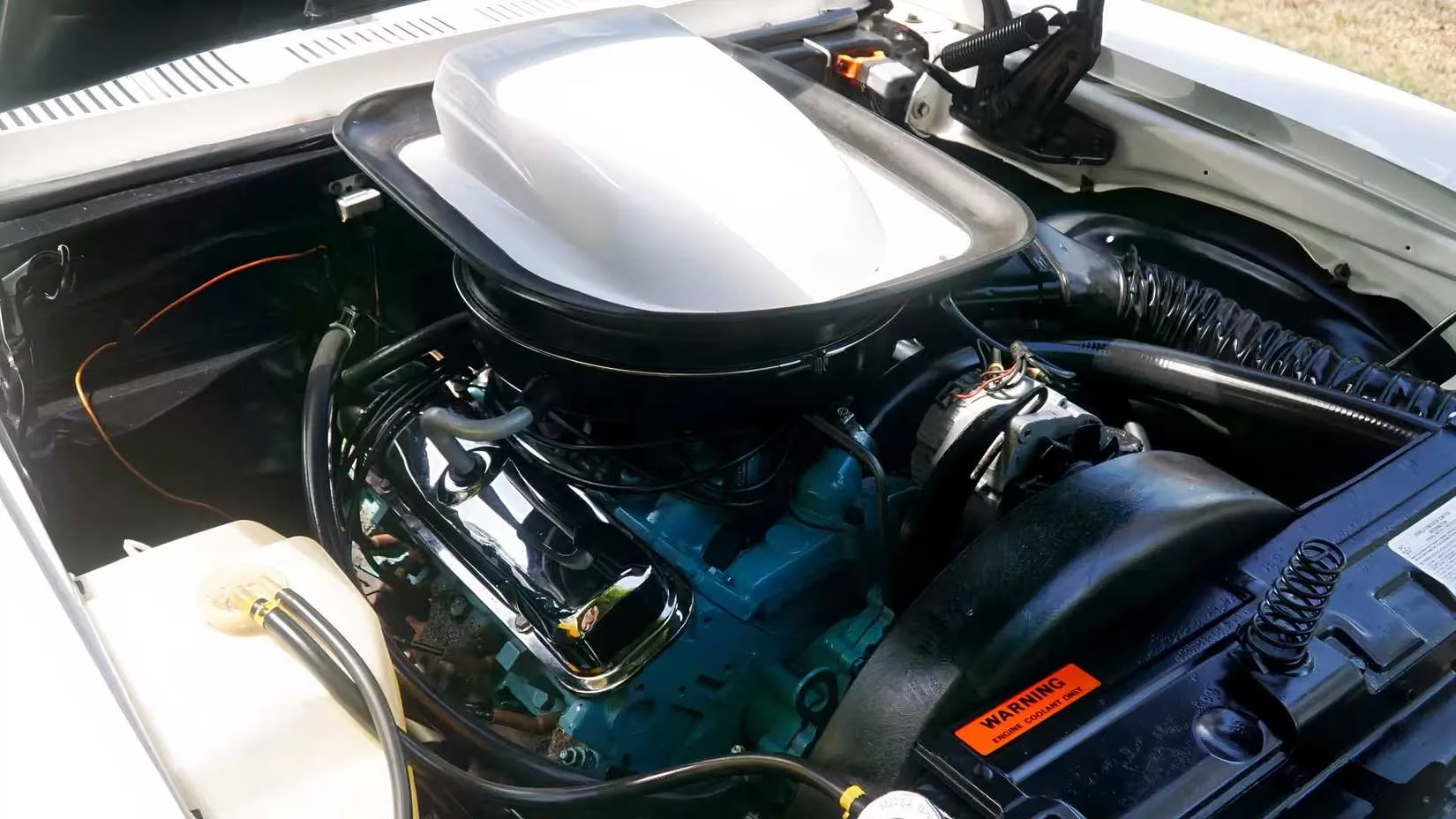
Pontiac, the very brand that started the whole muscle car craze with that earth-shattering '64 GTO, had to think differently. Their solution? The Ventura II GTO. This wasn't your daddy's GTO. Gone was the hulking, fire-breathing monster. In its place was something smaller, more practical, and, frankly, a bit more... sensible. Under the hood sat a Pontiac 350 cubic-inch V8, but it was a far cry from its ancestors, putting out a modest 200 horsepower. To a '60s purist, that number was almost an insult. But here’s the thing—time has a way of changing perspectives.
Why This Forgotten GTO Deserves a Second Look
Let me break it down for you. This car is a time capsule from a pivotal moment. It’s the automotive equivalent of a rock star settling down and wearing a cardigan—different, but with the same soul.
-
The Price is Dream-Worthy: Let's talk numbers, because this is the real kicker. According to the latest valuations, you can get into a coupe version for around $16,500, with the hatchback maybe pushing $18,100. The low end? Some are listed for under $10,000. Compare that to a '69 GTO, which can easily command $35,000 or more for a decent example. For the price of a used economy car, you can own a slice of Pontiac history. That’s a no-brainer, if you ask me.
-
It’s a Rare Bird: Don't let the low price fool you into thinking they're everywhere. Pontiac only made 7,058 of these in 1974. Many have been lost to time, crashes, or rust. Finding one is becoming a genuine treasure hunt. In fact, one is coming up for sale at Kissimmee this January (2026), which is what got me thinking about it all.
-
A Wolf in Sheep’s Clothing (or the other way around?): Okay, 200 horsepower sounds tame. But this car was lighter—about 600 pounds lighter than a late-‘60s muscle boat like a Dodge Charger. That weight saving meant it could still move. We’re talking 0-60 mph in under 8 seconds, which, let’s be honest, is still enough to have fun and keep up with modern traffic. And between you and me... the engine bay will easily swallow a bigger 400 or 455 V8 if you ever get the itch. But part of me loves the idea of keeping it original, a preserved relic of its era.
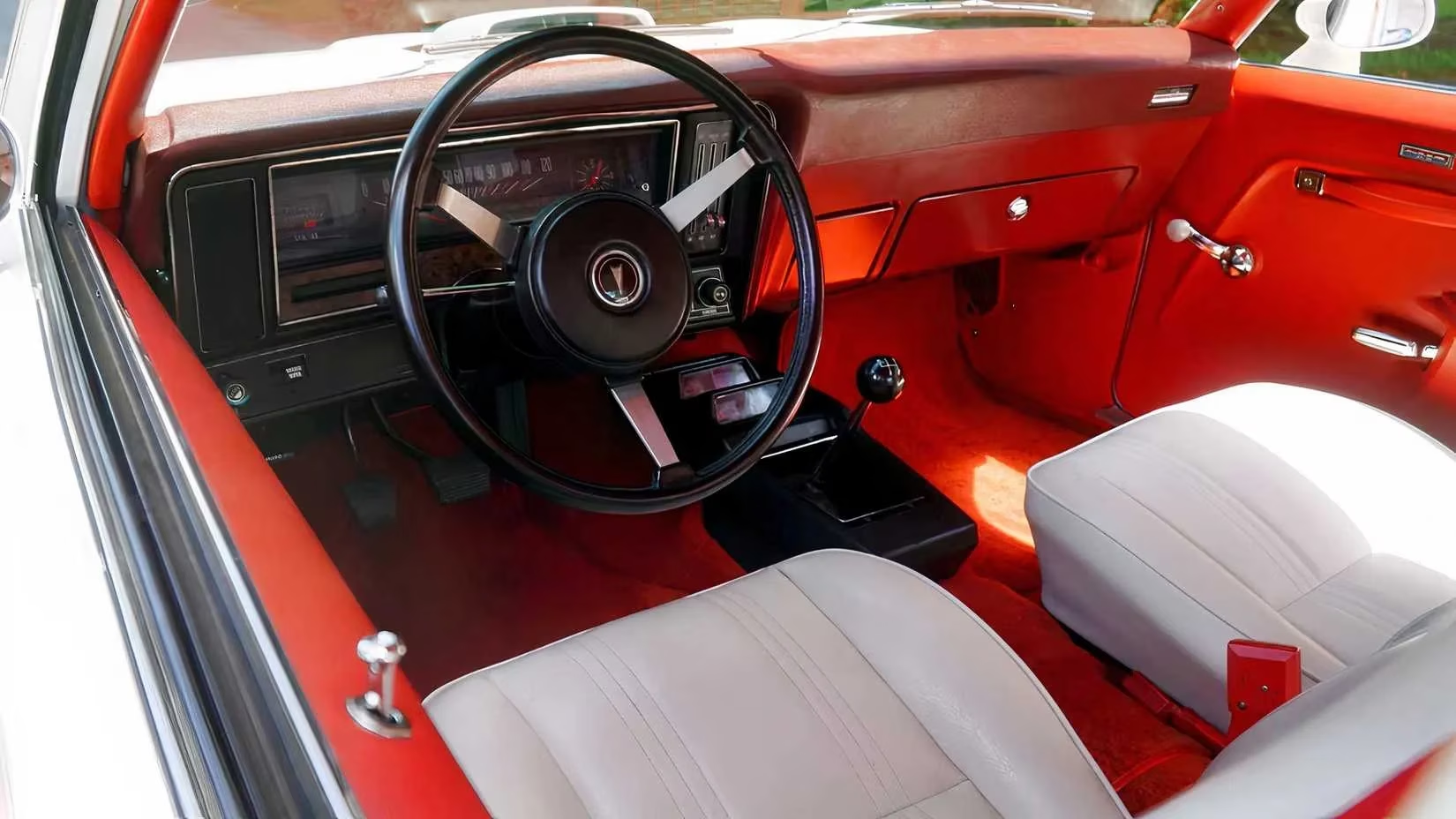
The Hatchback Secret: America's First Hot Hatch?
This is where my perspective totally flipped. The Ventura GTO was offered as a hatchback. Let that sink in. A V8-powered, rear-wheel-drive hatchback from 1974. While everyone laments its lost muscle, I started seeing it as a pioneer. The Europeans often get credit for inventing the hot hatch, but here was Pontiac, arguably doing it first with proper V8 grunt. Was it a muscle car? Not really. But a 200-horsepower, practical, usable classic that you can take to the hardware store? Now that’s cool. It was a car trying to be relevant in a changing world, and maybe we just weren't ready to see it.
How Did It Stack Up? The Proof is in the Racing
The big question back then was: could this new, smaller GTO hold a candle to the original? Cars magazine decided to find out in 1974, pitting a '74 Ventura GTO with a four-speed manual against a 1964 GTO with the iconic 389 V8. The results were closer than anyone expected:
| Metric | 1974 Ventura GTO | 1964 GTO |
|---|---|---|
| 0-60 mph | 7.7 seconds | 7.4 seconds |
| 1/4 Mile | 15.72 sec @ 88 mph | 15.64 sec @ 90 mph |
The legendary '64 just edged it out, but the fact that the '74 was even in the same conversation, with half the cylinder-head drama, is telling. It was still a performer, just a different kind.
The End of an Era, and a New Beginning
The Ventura GTO was a one-year-only affair. After 1974, the legendary badge was retired... for a while. It felt like a quiet, dignified exit after the bright orange fireworks of ‘The Judge’ had fizzled. Sales had been plummeting since the peak in 1969, and this was the final attempt. It didn't set the world on fire, but it wasn't a total disaster either—it outsold the badge-engineered '73 model.
The GTO name would return decades later, born from Australian roots, but the Pontiac brand itself is now history, closing its doors in 2010. That makes this '74 model the last true Pontiac GTO. It’s the final chapter written by the original authors.
So, here’s my take. The 1974 Pontiac GTO Ventura isn't a failed muscle car. It's a fascinating, affordable, and rare artifact of adaptation. It’s a car that speaks of compromise and change, wrapped in a package that’s now delightfully practical and shockingly accessible. In a world of six-figure collector cars, this last GTO sits waiting, not with a roar, but with a compelling whisper of a story that’s finally ready to be heard. And for the price? You can't afford not to listen.