A 1971 Plymouth 'Cuda, dormant for 30 years, reveals its cheese grater grille and quad-headlight menace—a rare Mopar missing its 340 V8.
I wasn't planning on taking a trip back to 1971 this morning. I was just another guy with a lukewarm coffee, scrolling through videos of forgotten relics, when the YouTube algorithm served up something from the Auto Archaeologist. The thumbnail showed a dust-caked shape under dim fluorescent lights, a car that looked like a fossilized predator. The moment the garage door groaned open on my screen in 2026, I felt that same electric jolt I got as a kid seeing a shark's fin cut through calm water. This wasn't just any old Mopar; this was the 1971 Plymouth 'Cuda, a machine so viciously styled that it practically bit the hand of anyone who dared to fuel it.
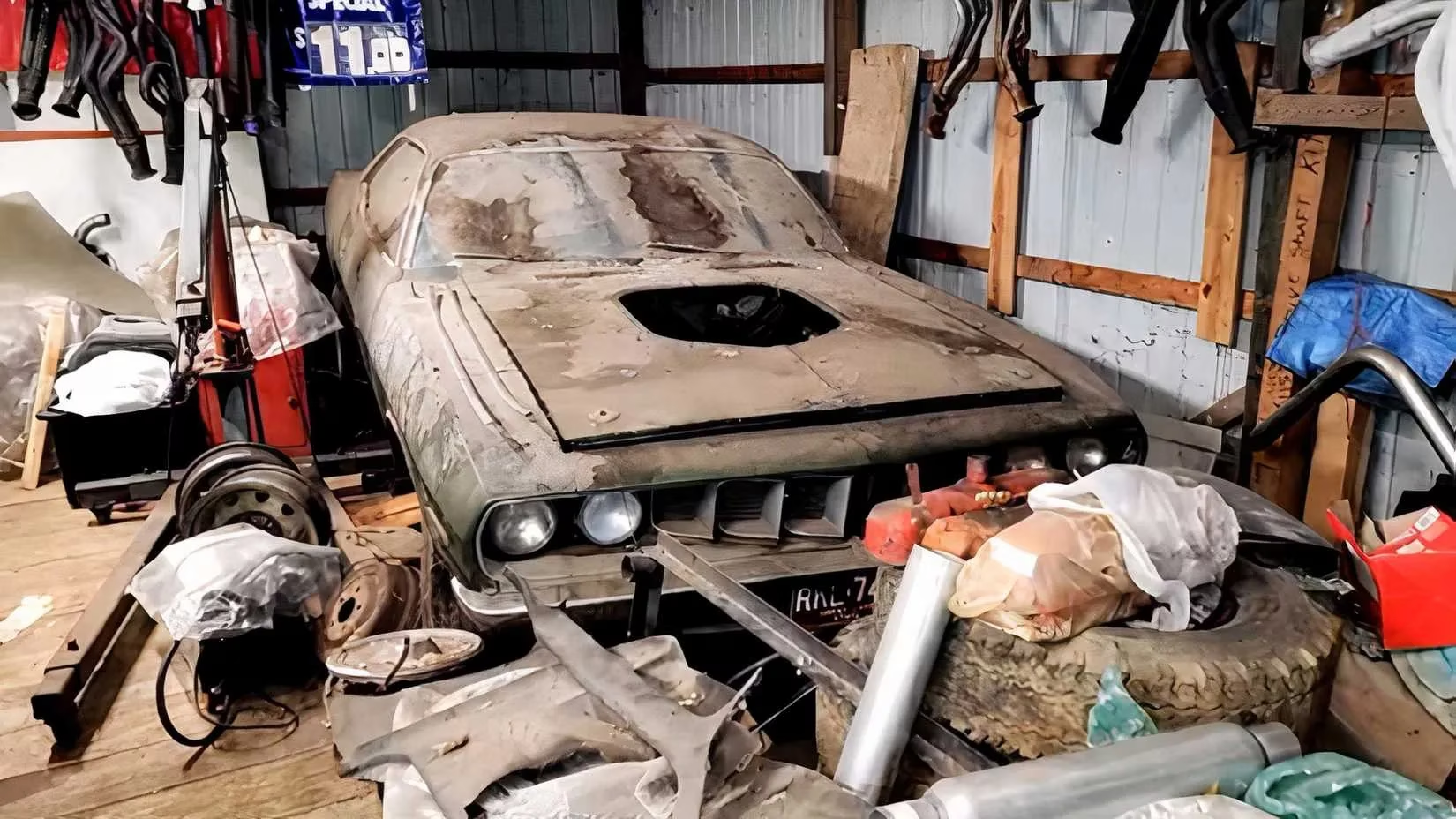
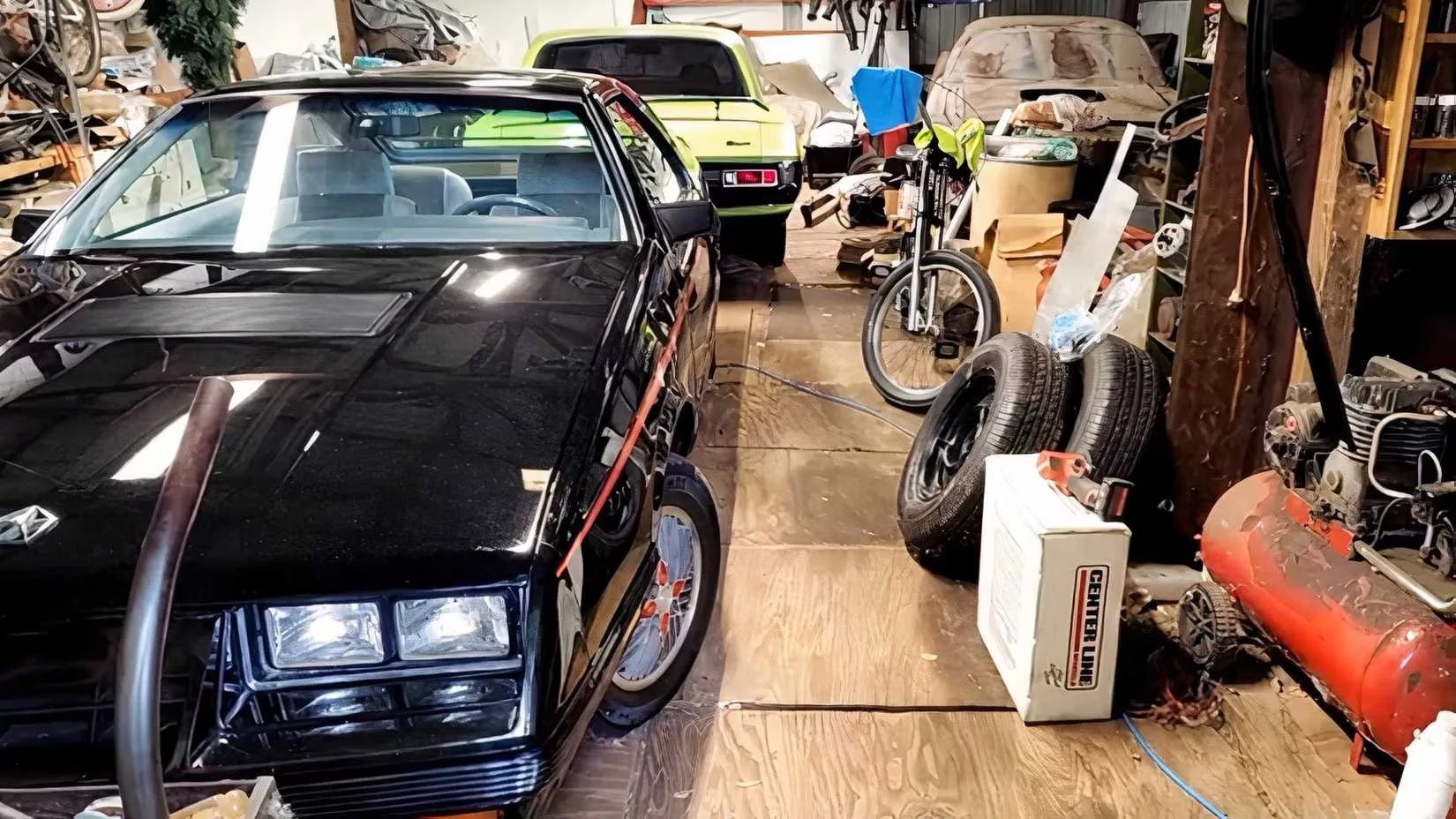
The Auto Archaeologist had walked into a friend's private garage, a concrete cocoon holding three sleeping Mopar gems. Up front sat a turbocharged Chrysler Laser with a five-speed and barely 20,000 miles on the clock—a rare bird in its own right. Beside it crouched a Plymouth Scamp, the Dodge Dart's shyer sibling. But my eyes, like the camera's lens, were pulled toward the far back corner as if by gravity. There, under a woolly blanket of three decades of dust, was the 'Cuda. It had been dormant for thirty years, a hibernating beast whose heartbeat was measured not in revolutions but in the slow decay of time. Seeing it felt like discovering a frozen comet still hurtling through the dark—still, silent, but loaded with explosive potential.
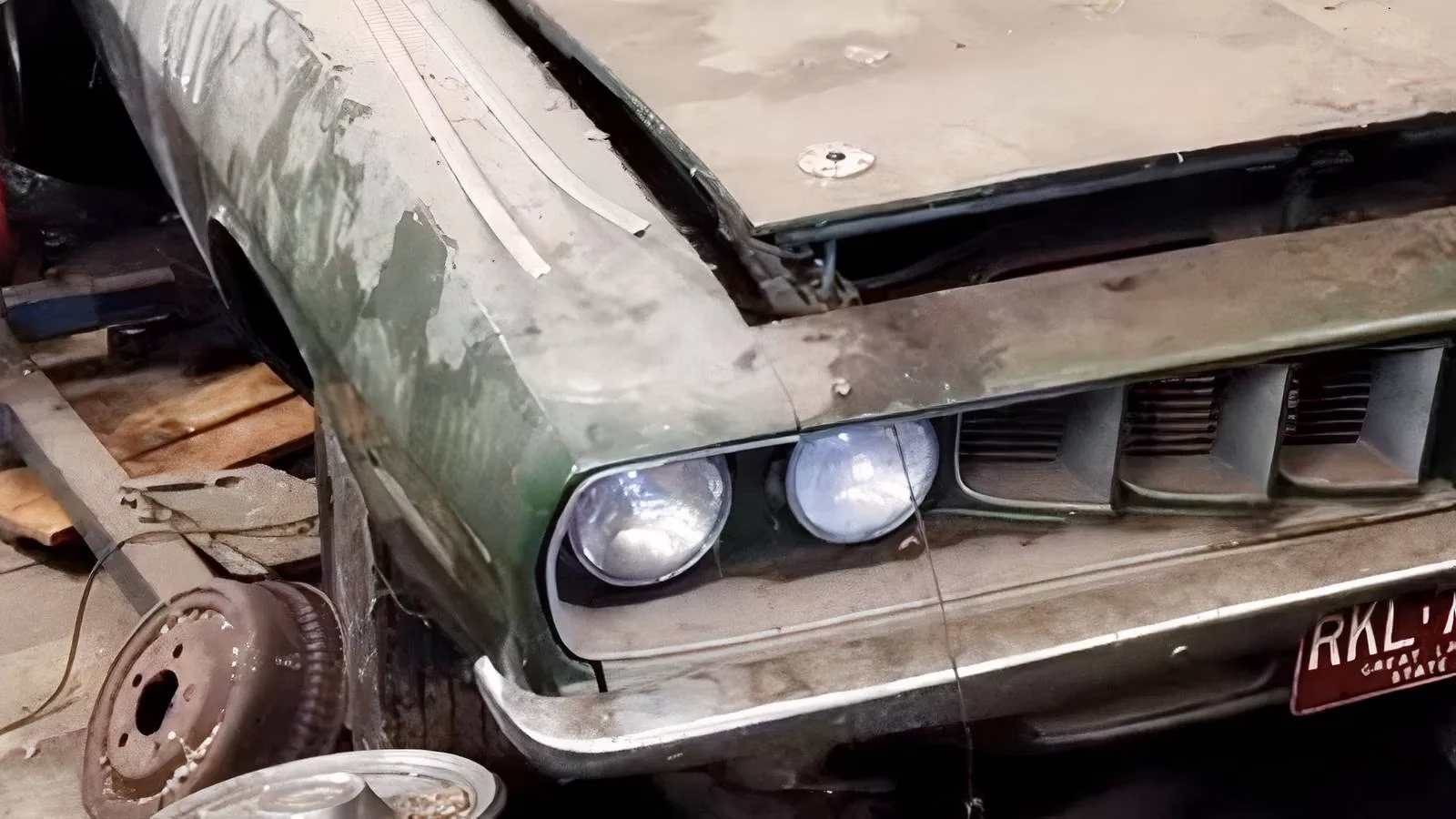
What makes the 1971 model year so special isn't just rarity; Plymouth moved only about 6,000 of these E-body terrors that year, making it one of the scarcest production muscle cars ever. It's the face. The 1971 'Cuda was the only one to wear that quad-headlight front end and the infamous "cheese grater" grille, a maw that looked less like automotive design and more like an industrial accident designed to shred asphalt. In 1971, that toothy grimace was as welcome as a hornet at a picnic. Today, it's revered as the most sinister expression of Chrysler's four-wheeled rage. I liken that grille to a steel set of mandibles, a praying mantis ready to dismember anything in its path. The car wasn't born to make friends; it was born to end the Mustang-Camaro war with unapologetic brutality.
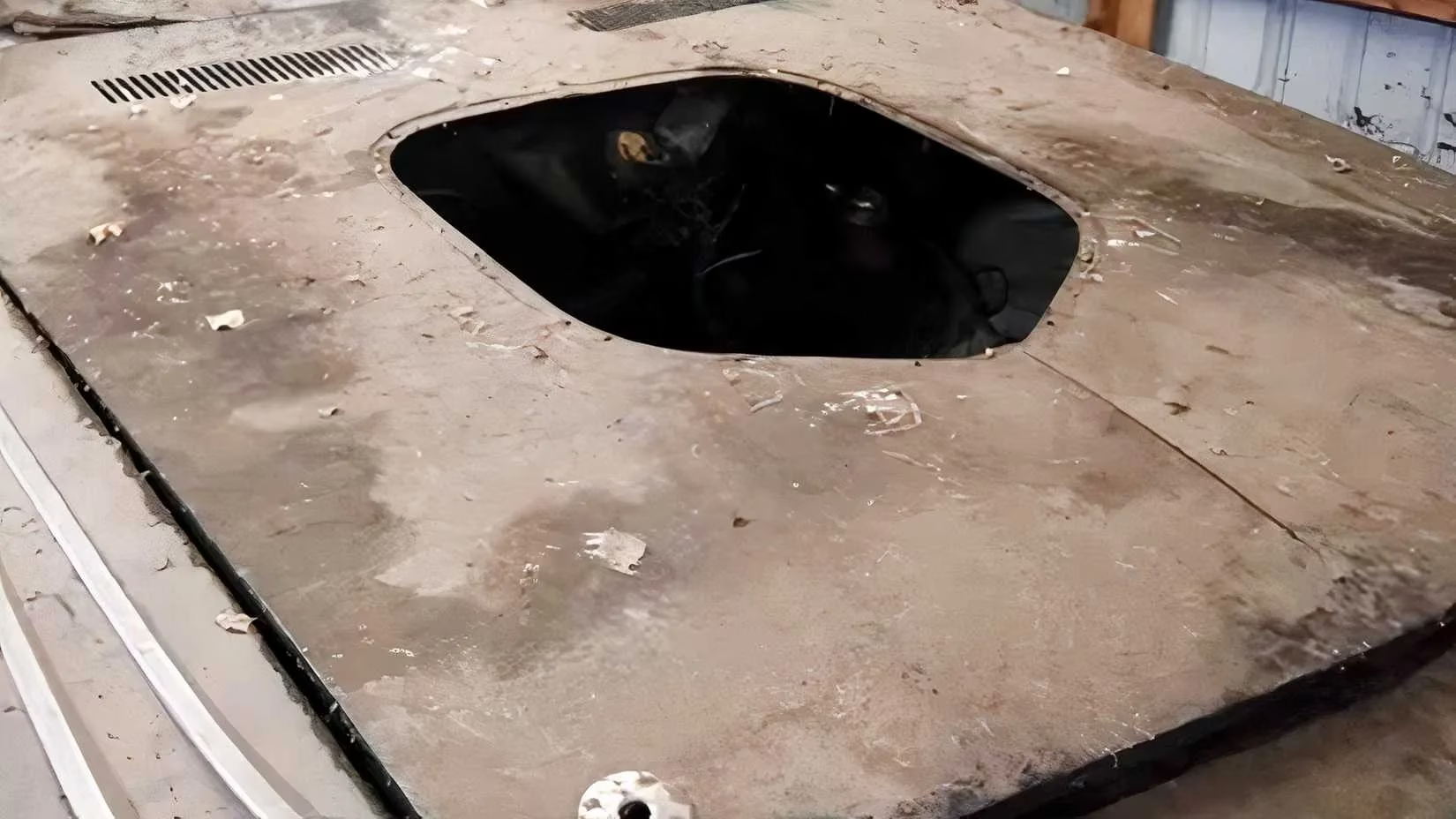
When the video panned over the hood, I spotted the Shaker scoop, that signature metal snorkel that jutted through the hood like a shark's dorsal fin. On this car, however, the Shaker hole yawned open, an empty socket. The original driveline was gone—a missing heart. According to the video, this 'Cuda once packed a 340 LA small-block V8, one of Mopar's legendary "giant killers." For those who don't obsess over cubic inches, the 340 was a tight-winding, high-revving little demon that could humiliate bigger mills with the right tuning. Rated at 275 horsepower and 340 lb-ft of torque, it was a hummingbird with a sledgehammer's attitude. But this car's story took a rowdy detour. A previous owner had yanked the 340 and replaced it with a later-model version that was built for drag racing, complete with a tunnel ram intake. That motor was so feral—so uninterested in anything but quarter-mile rage—that it was deemed too rowdy for the street. So the current owner pulled it and planned to slot in a 440 Six-Pack, conservatively rated at 390 horsepower and 490 lb-ft of torque. To make a 440 Six-Pack seem like a rational upgrade, that 340 race engine must have been as civilized as a rabid wolverine in a phone booth.
Despite the missing guts, the body was remarkably whole. The dust acted like a conservationist's powder, preserving sheet metal that would otherwise have been lunch for rust. I could almost smell the vintage vinyl and aged gasoline residue through the screen. The pistol-grip four-speed shifter was still there, a chrome exclamation point waiting for a palm. This 'Cuda wasn't a basket case; it was an interrupted sentence, a story paused mid-chapter. The owner, the Auto Archaeologist explained, fully intends to get it running again. And for once, I believed it. He's already neck-deep in restoring a 1970 'Cuda Six-Barrel car, a project that temporarily stole priority. But this '71 isn't forgotten; it's just taking its turn in the backstage queue.
Watching that video in 2026, I was struck by how these machines still hold our imaginations hostage. The 'Cuda was born at the worst possible moment, right as the oil crisis tightened its grip and insurance companies started sharpening their guillotines. It was a final, furious middle finger from an era that refused to go quietly. Finding one like this—unrestored, unmangled, honest—feels like pulling a sword from a stone. I'm not the one turning the wrench, but I'm already daydreaming about the day it fires up again, that 440 Six-Pack chuffing through the Shaker, the grille catching light like a row of chrome fangs. Until then, I'll keep refreshing my feed, waiting for the sequel. This 'Cuda isn't dead. It's just been holding its breath for thirty years, and I get the feeling its first exhale is going to sound like thunder.