The Ford Mustang GTD wins the 2026 Best Performance Car crown with an 815-hp V8, a 6:52 Nürburgring lap, and raw driver engagement.
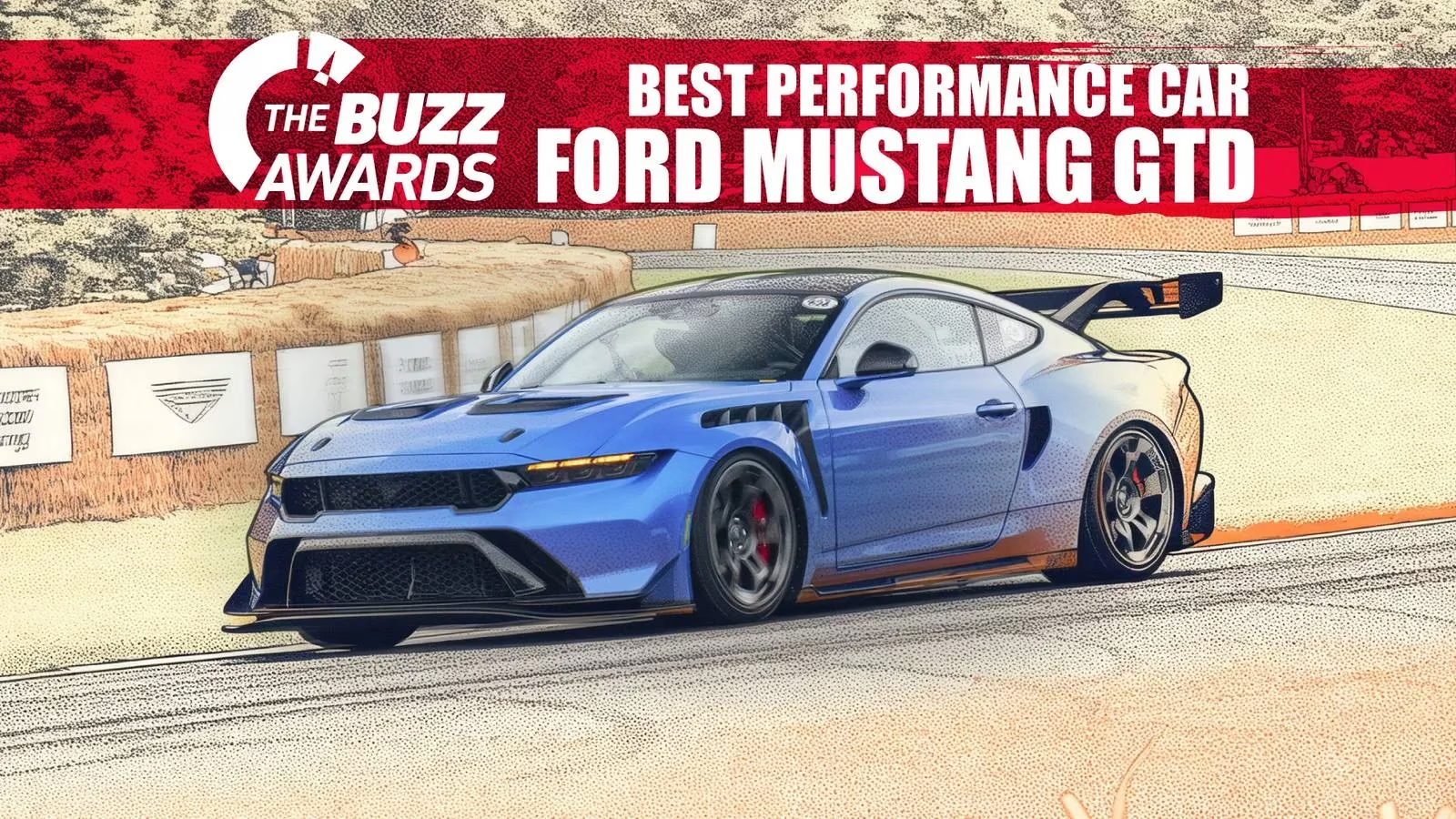
The performance car landscape in 2025 felt like a confusing crossroads. On one side, EV brands were serving up computerized appliances with instant torque; on the other, legacy automakers kept clinging to old-school combustion engines and manual transmissions, while a parade of hybrids played it safe somewhere in the middle. Amid all that chaos, the one thing true enthusiasts still craved was a genuine connection between driver and machine. That hunger was precisely why the Ford Mustang GTD rose head and shoulders above every other new performance car.
Responsiveness, handling, and road feel had never mattered more, because those qualities separated truly great performance cars from merely fast ones. Yet the GTD was never built to improve Ford's bottom line. Its entire reason for existence was to prove that a production Ford could cover the Nordschleife in under seven minutes and, as Ford's team put it, "go into Porsche's backyard and pick a fight."
A Mission Accomplished in the Green Hell
The Mustang GTD achieved that goal and then some, lapping the infamous Green Hell in a ridiculous 6 minutes and 52 seconds, with more left in the tank. Best of all, it did this while completely shunning any form of hybridization or electrification. That stubborn refusal to compromise became a cornerstone of why the GTD was selected as the winner of the Buzz Awards Best Performance Car for 2026.
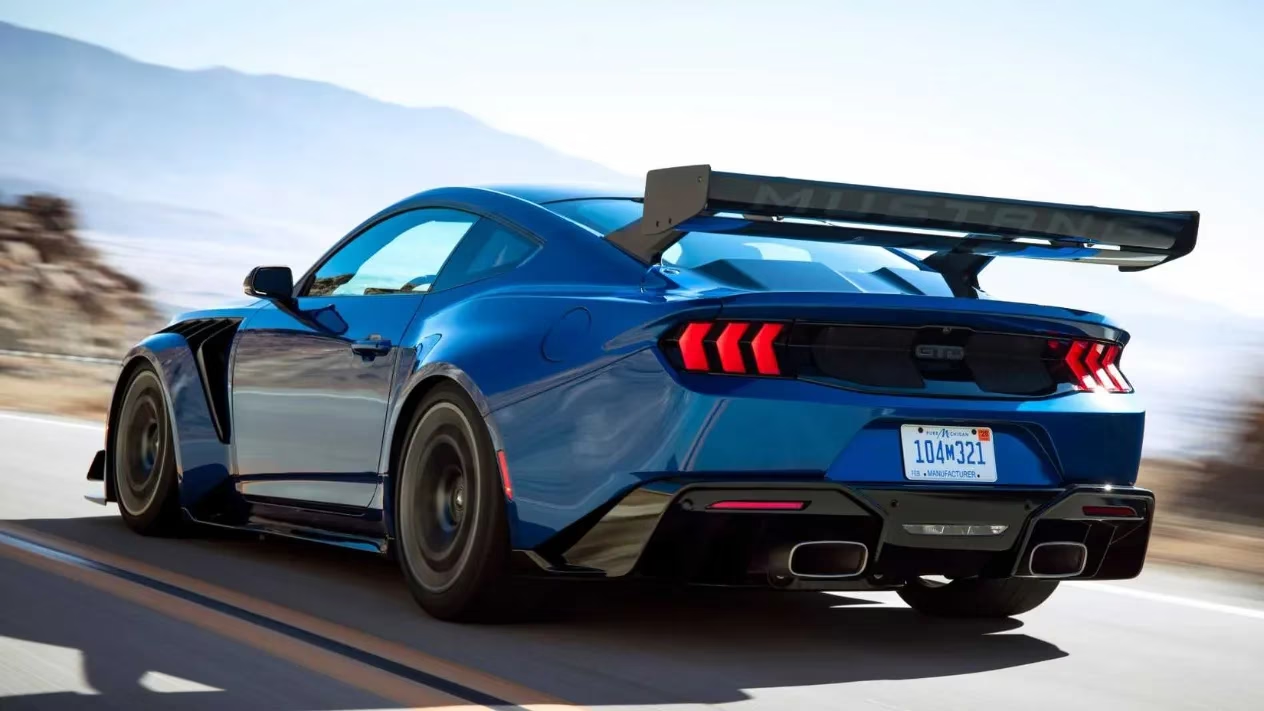
By now it was clear that the GTD was far more than just a juiced-up Mustang Dark Horse. It ditched the standard suspension entirely, favoring an in-house rear setup with semi-adaptive Multimatic’s Active Spool Valve dampers. Wider fenders accommodated gigantic 325/345-section Michelin Pilot Sport Cup 2R tires, while hood, fender, and side vents kept temperatures in check. And then there was that wing—one you could practically serve dinner on. In track mode, the car dropped a whole 1.6 inches, while the rear wing generated an insane 1,951 lbs of downforce at 180 mph. That kind of grip demanded serious muscle.
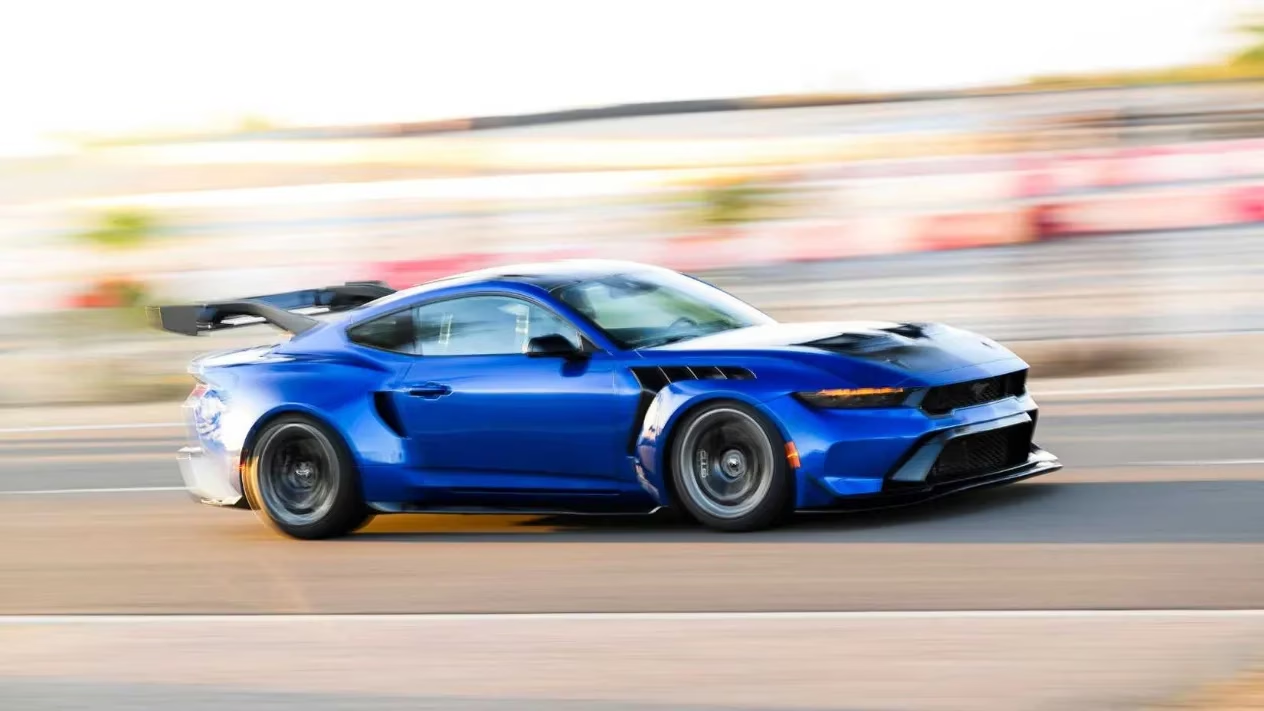
The engine in charge was a specially tuned version of the proven 5.2-liter supercharged Predator V8, but nothing like the one found in the GT500. This one unleashed a stampede of 815 horsepower alongside 664 pound-feet of twist, sending power to the rear wheels through a rear-mounted, eight-speed, dual-clutch transaxle that perfectly matched the engine's character on track.
Easy to Drive, Hard to Forget
Needless to say, the GTD swallowed corners whole and spat out record lap times, even for drivers without a professional racing pedigree. During his first test drive, HotCars' own Seyth Miersma noted that the Mustang GTD was "easy to drive from any skill level." He added that it "pulls like hell out of a corner on the racetrack, even if you’ve gone in a gear too high." That kind of forgiveness in a car this ferocious was, frankly, a bit spooky.
The tradeoff? A stiff ride, no rear seats, and a fairly standard Mustang cabin—though with a solid stereo and amazing Recaro seats. Oh, and a juicy $325,000 starting price tag. Not that it mattered much, since the GTD sold out for the '25 model year pretty much as soon as it hit showrooms. Money may not buy happiness, but apparently it buys a supercharged American missile.
Standing Apart in a Sea of Hypercars
In a sea of hypercars chasing headlines and EVs chasing numbers, the GTD stood apart for a simple reason: it was real. Its supercharged 5.2-liter V8 remained one of the last true muscle car engines on the market, operating under the hood of a genuine supercar killer. Instead of simply having a good-looking spec sheet, the Mustang GTD actually delivered in the real world. It lived and breathed on the track, with its rear-mounted dual-clutch transaxle, ultra-sticky Michelin Cup 2Rs, and ASV dampers transforming it into a corner-carving missile.
Few cars today managed to blend this level of horsepower, razor-sharp handling, and visceral feedback into one cohesive package. Unlike other high-end supercars, the limited-production Mustang GTD was a collectible, a conversation starter, and a rare reminder that raw American muscle could still reign supreme in an increasingly electrified world.
The Competition That Earned Respect
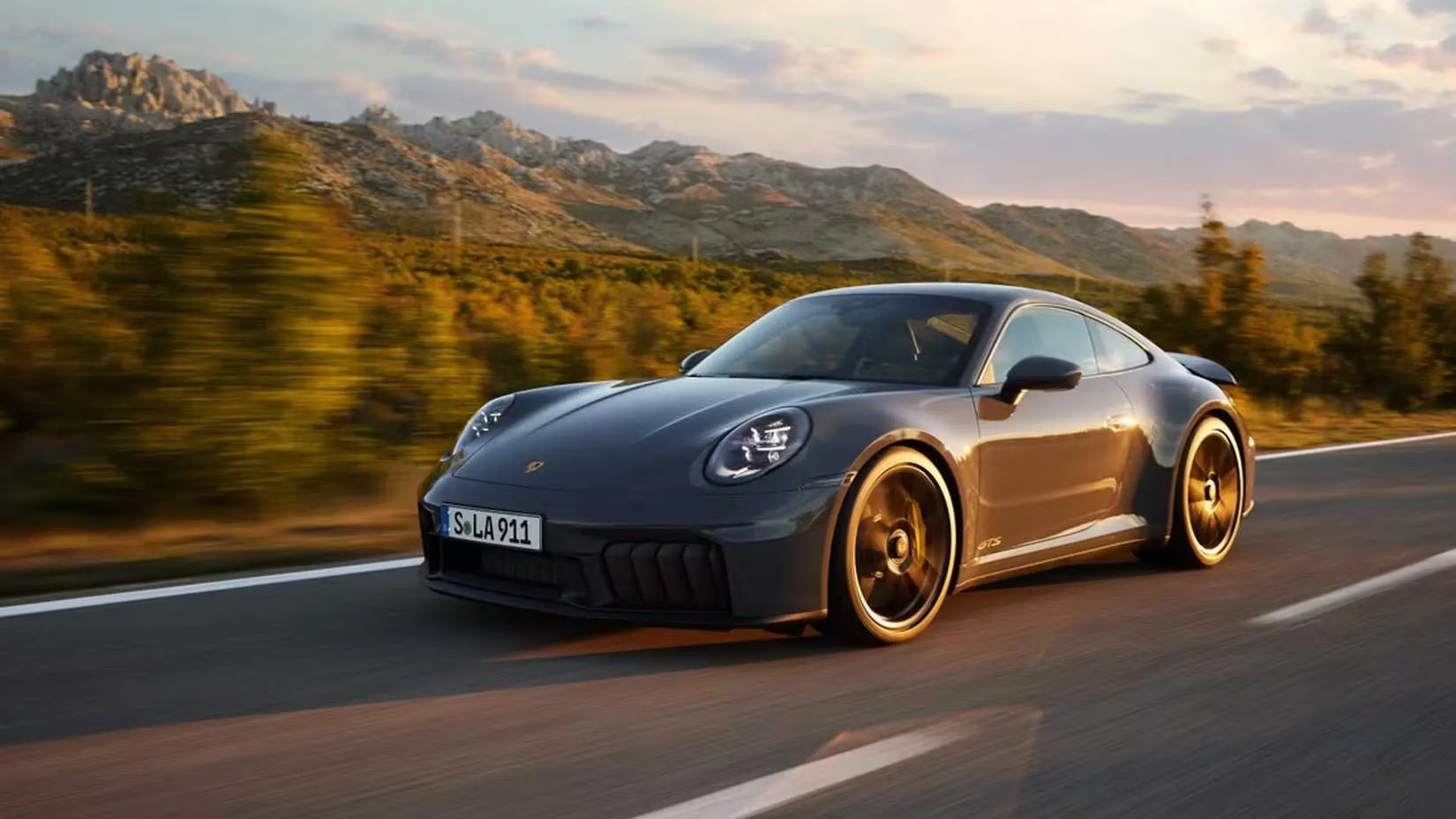
The GTD's victory did not come without worthy adversaries. Porsche continued pushing the needle with traditional combustion engines while keeping the manual transmission alive, including between the seats of the new Carrera T. This lightweight 911 was about as close to perfection as a sports car could get, packing exactly the right amount of power to be enjoyed in the twisties—388 hp—with a near-perfect clutch-and-stick combination. It was, in many ways, the purest expression of the modern sports car.
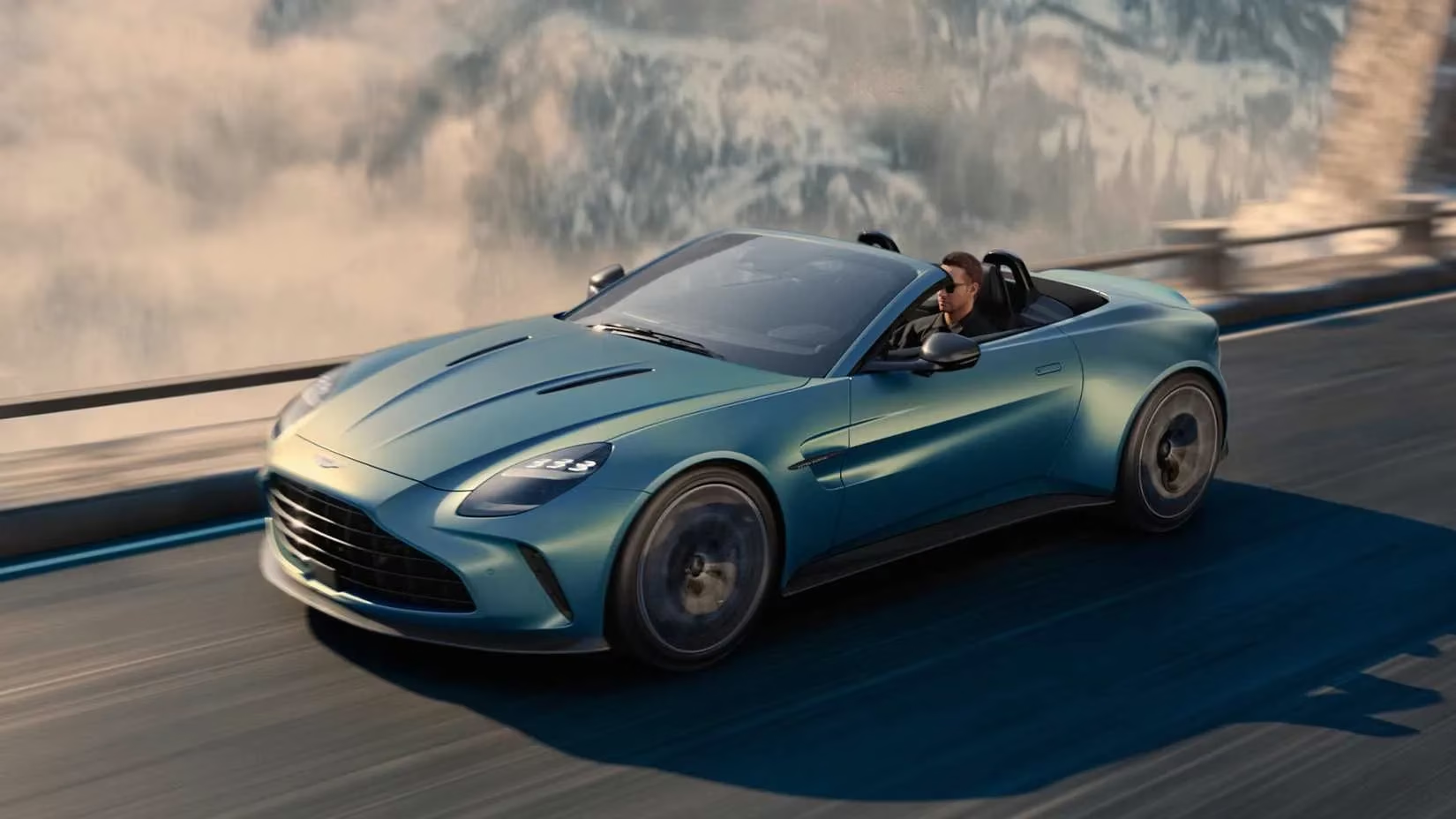
Aston Martin also knocked it out of the park with the new Vantage, but the Roadster version stole hearts. It took the standard model's blend of performance and luxury and introduced a whole new dimension of fun. This remained very much a luxury muscle car, with a 680-hp all-aluminum twin-turbo V8 under the hood—the last of a dying breed of luxury grand tourers, and arguably the best version so far. Yet even that soulful British bruiser could not match the GTD's single-minded ferocity.
A Hall of Fame Induction
While the battle for the best performance car during the inaugural Buzz Awards genuinely came down to the wire, the GTD ultimately secured the win. Call it what you want—a supercar killer, a track monster, or Ford's wildest fever dream—the GTD was one of the most unique and most capable cars tested in 2025. It became an immediate inductee into the American supercar hall of fame, one true to its heritage and undeniably Ford.
In an era where many performance machines felt increasingly like software wrapped in sheet metal, the Mustang GTD reminded everyone that mechanical soul still mattered. And that, perhaps more than any lap time, was the real victory.