Discover the hidden legends of muscle car history with secret factory freaks like the Dodge Polara 500 Max Wedge and Ford Thunderbolt. These quiet assassins, born from unassuming sedans, delivered explosive performance that embarrassed dedicated rivals. Explore their stories and uncover the forgotten builds that defined an era.
Looking back from 2026, the golden age of muscle cars feels like a fever dream. Everyone knows the legends—the GTOs, the Hemi 'Cudas, the LS6 Chevelles. But I've always been drawn to the quiet assassins, the cars that started life as unassuming family sedans or practical coupes before being transformed into absolute monsters by a simple checkmark on an order sheet. Detroit in the '60s and '70s treated options lists like cheat codes, hiding race-bred hardware under chrome and vinyl roofs, creating factory freaks that only those truly "in the know" understood. These weren't the headline acts; they were the secret weapons, the forgotten builds that could embarrass dedicated performance cars right off the showroom floor. Let me tell you their stories.
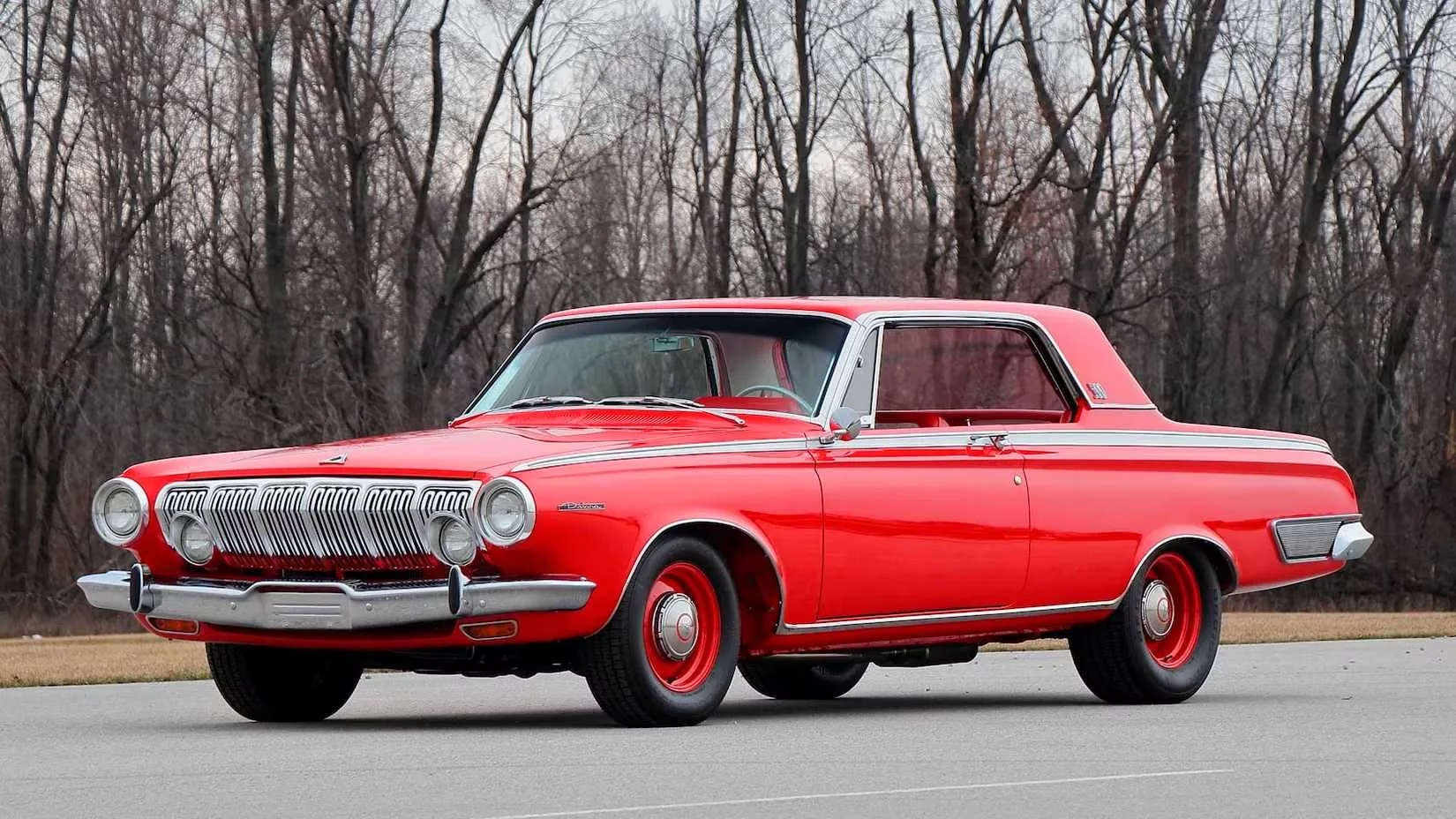
Before the Hemi became a household name, Mopar enthusiasts spoke in hushed tones about the "Max Wedge." Imagine walking into a Dodge dealership in 1963, pointing at a full-size Polara 500—a car meant for families—and ordering it with the Ramcharger 426 option. You'd drive out with a machine that idled like a race car, hated pump gas, and came with radio and heater delete plates. This wasn't just an engine swap; it was an infiltration. The 426 Max Wedge, with its cross-ram intake and dual four-barrel carbs, was factory-rated at 425 horsepower, a number everyone knew was a hilarious understatement. They paired this beast with lightweight body parts and serious gearing. The result? A bare-knuckle Super Stock weapon disguised as a big, comfortable coupe. Only a tiny handful, like the 15 convertibles noted by Hemmings, were ever built. The regular Polara was mild-mannered; the Max Wedge version was a wolf in sheep's clothing, a legend born from a whisper.
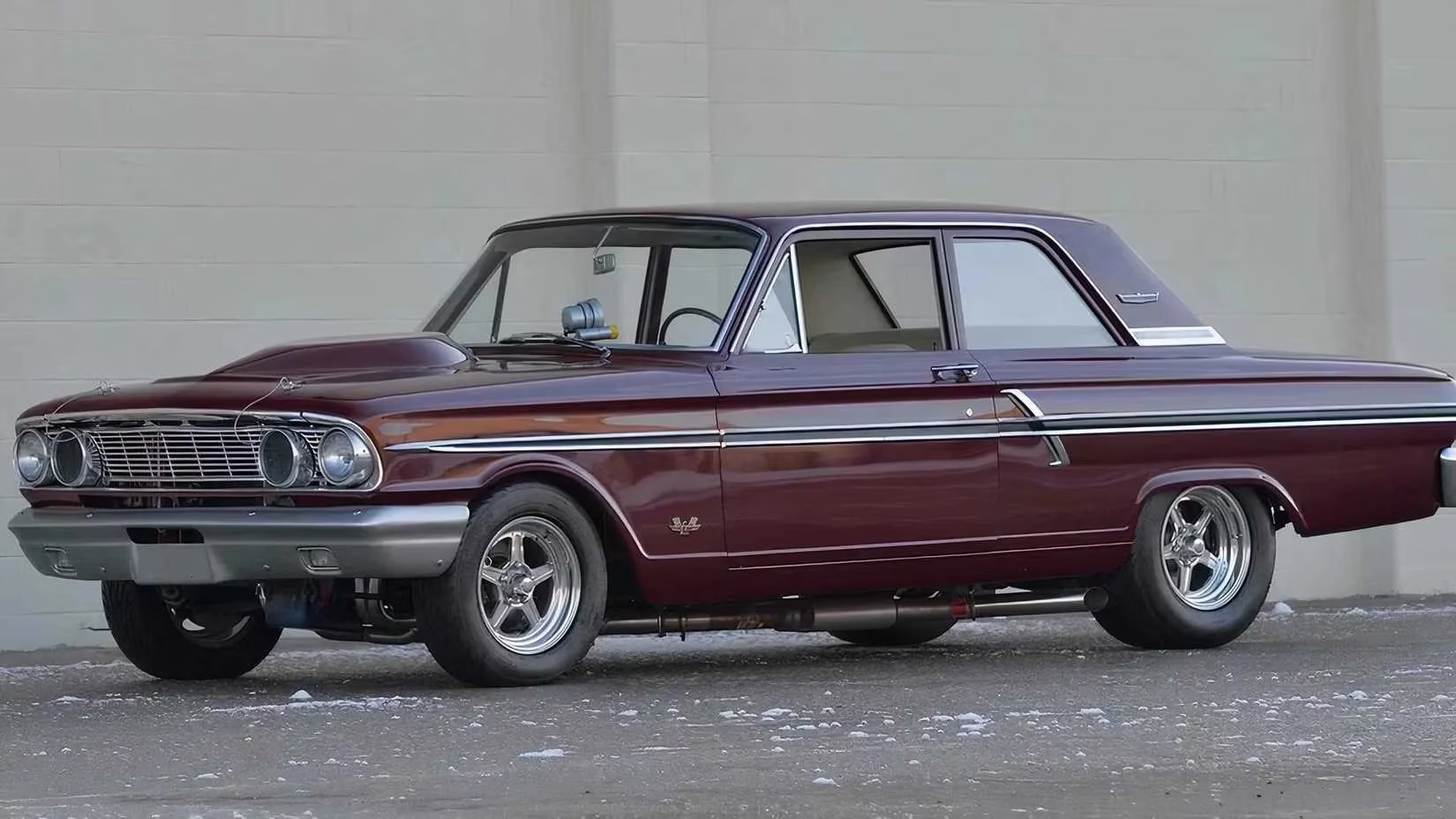
The Ford Thunderbolt feels less like an option package and more like corporate espionage. Ford essentially slipped a full-bore race car onto the order sheet in 1964. It started with the plainest Fairlane two-door sedan they could find. Then, the transformation began:
-
The mighty 427 High-Riser FE big-block was crammed into the engine bay.
-
Dual Holley four-barrel carbs sat atop a special intake.
-
The diet was extreme: fiberglass front bumpers and hoods, aluminum body panels, and interior seats borrowed from an Econoline van.
Only 100 of these phantoms were built. A warning plate on the glovebox basically told owners, "Don't expect this to be a normal car." And it wasn't. It was a tool built for one purpose: winning. On skinny tires, Thunderbolts ripped through the quarter-mile in the low 11-second range, securing Ford the 1964 NHRA Super Stock championship. This wasn't a car you drove to the grocery store; it was a missile with a VIN.
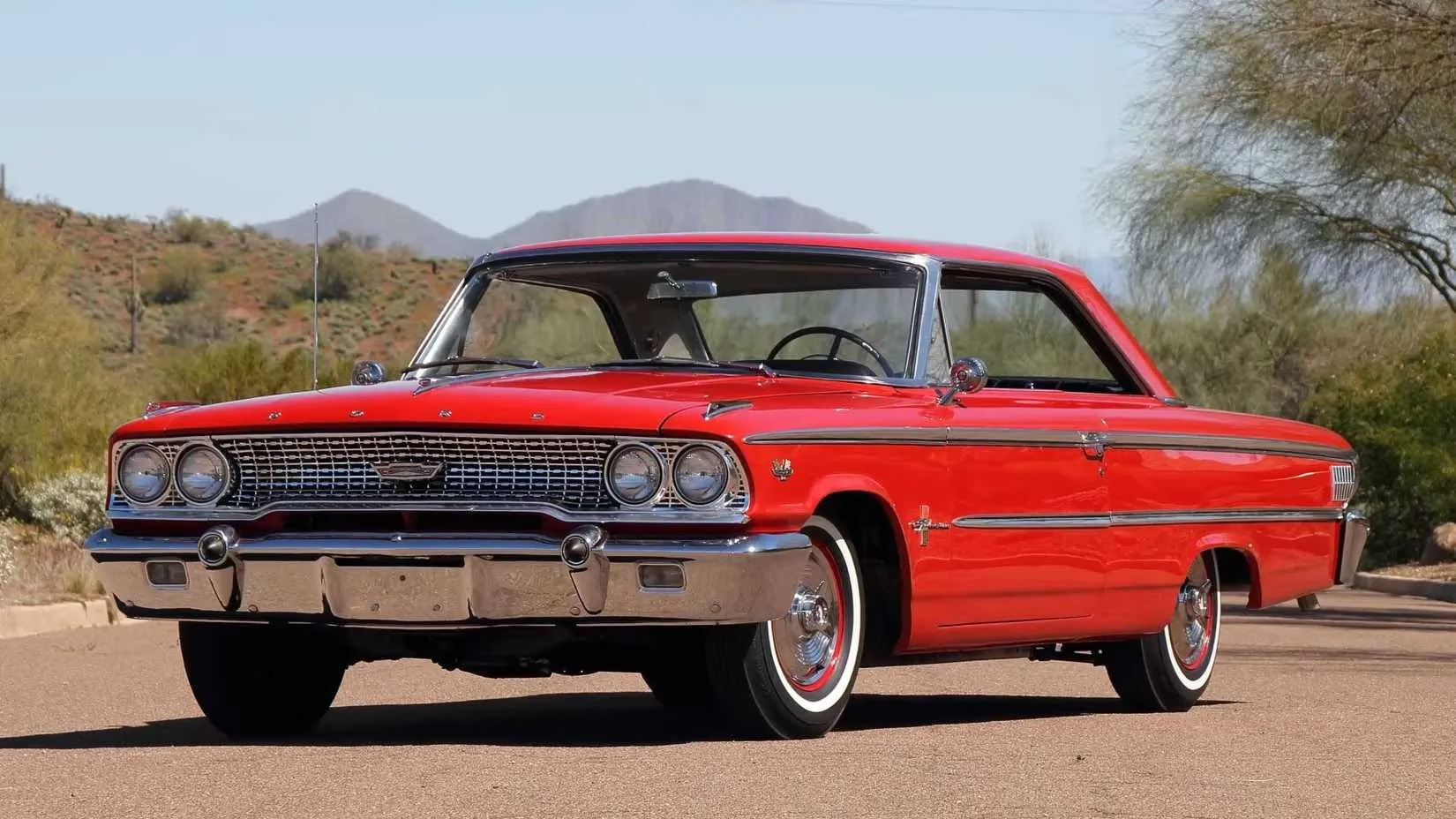
At the opposite end of Ford's spectrum sat the Galaxie 500 XL R-Code. This was a long, heavy, luxuriously trimmed land yacht. Yet, if you knew the secret code—the "R" for the dual-quad 427—you could order one that came with mandatory heavy-duty everything. Ford forced you into upgraded suspension, a stiffer frame (on convertibles), big brakes, and their legendary Top Loader four-speed manual. That transmission earned its nickname from how it loaded gears, but it earned its reputation for being nearly indestructible. Testers joked that with its mountain of torque, you could treat first and second gear as mere suggestions. While base Galaxies puttered around with six-cylinders, the 427 XL was a highway sledgehammer, a full-size testament to the idea that no car was too big to be fast.
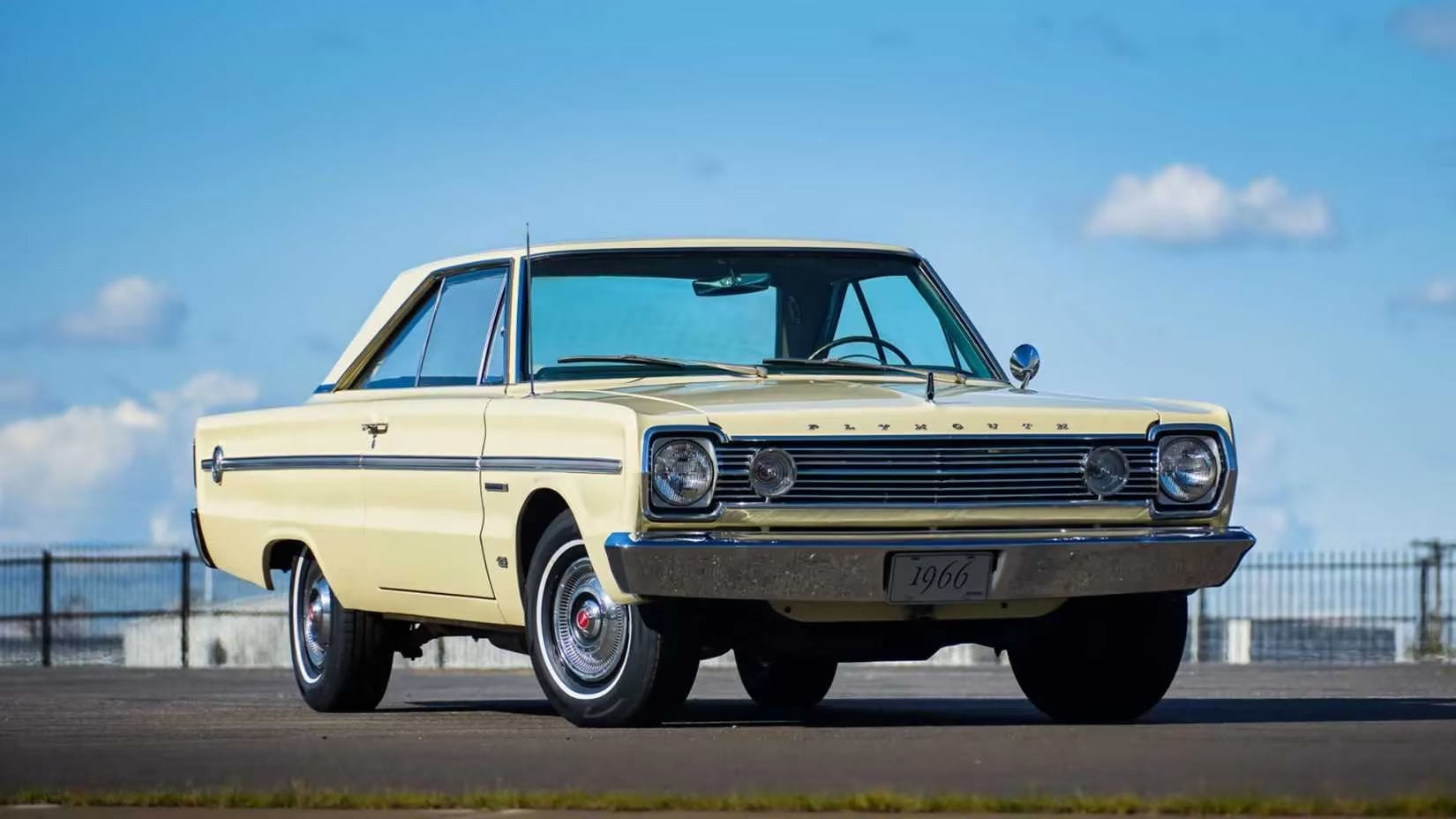
Plymouth played a fascinating double game with the Belvedere. On one side, you had the respectable 426 "Commando" wedge engine, a strong performer for the street. On the other, they created a shadow program: lightweight Belvedere and Savoy bodies, some with aluminum front clips, ready to receive the new, terrifying Race Hemi. With hemispherical heads and 12.5:1 compression, this 426 blurred the line between a dealer option and a factory race program. Mopar engineers fitted transistor ignition, special intakes, and heavy-duty transmissions, then sent these beasts through regular dealerships. The same basic car that could be a humble grocery-getter could also be a stripped-out drag record-setter. Among Mopar fans, debating the merits of a Hemi Belvedere versus a Super Commando GTX is a sacred pastime.
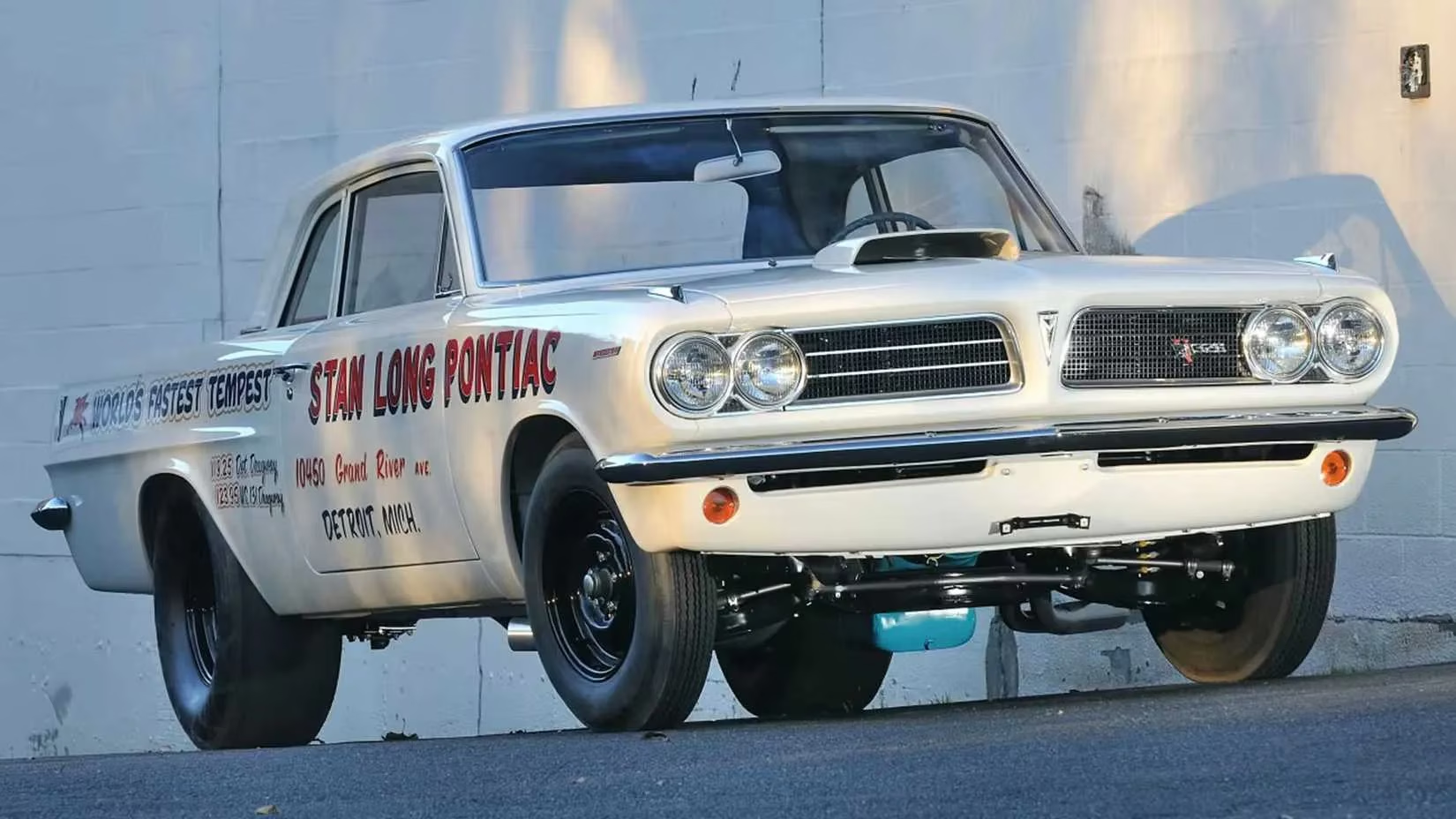
The Pontiac Tempest Super Duty program feels like Pontiac's greatest inside joke, a brilliant act of corporate rebellion. The standard Tempest was a compact with weird engineering: a rear transaxle and a flexible driveshaft. In 1963, Pontiac Engineering took a batch of these lightweight cars, stripped them, added aluminum panels, and dropped in the monstrous 421 Super Duty V8. They built only 12—six coupes and six wagons—all painted white with blue interiors. These weren't for show; they were built to dominate NHRA Super Stock, running low-12-second passes at over 115 mph while looking like a compact family car with hubcaps. This was Pontiac giving a wink and a nod, bypassing GM's racing ban by calling it all "over-the-counter" parts. It was genius, and it was brutally effective.
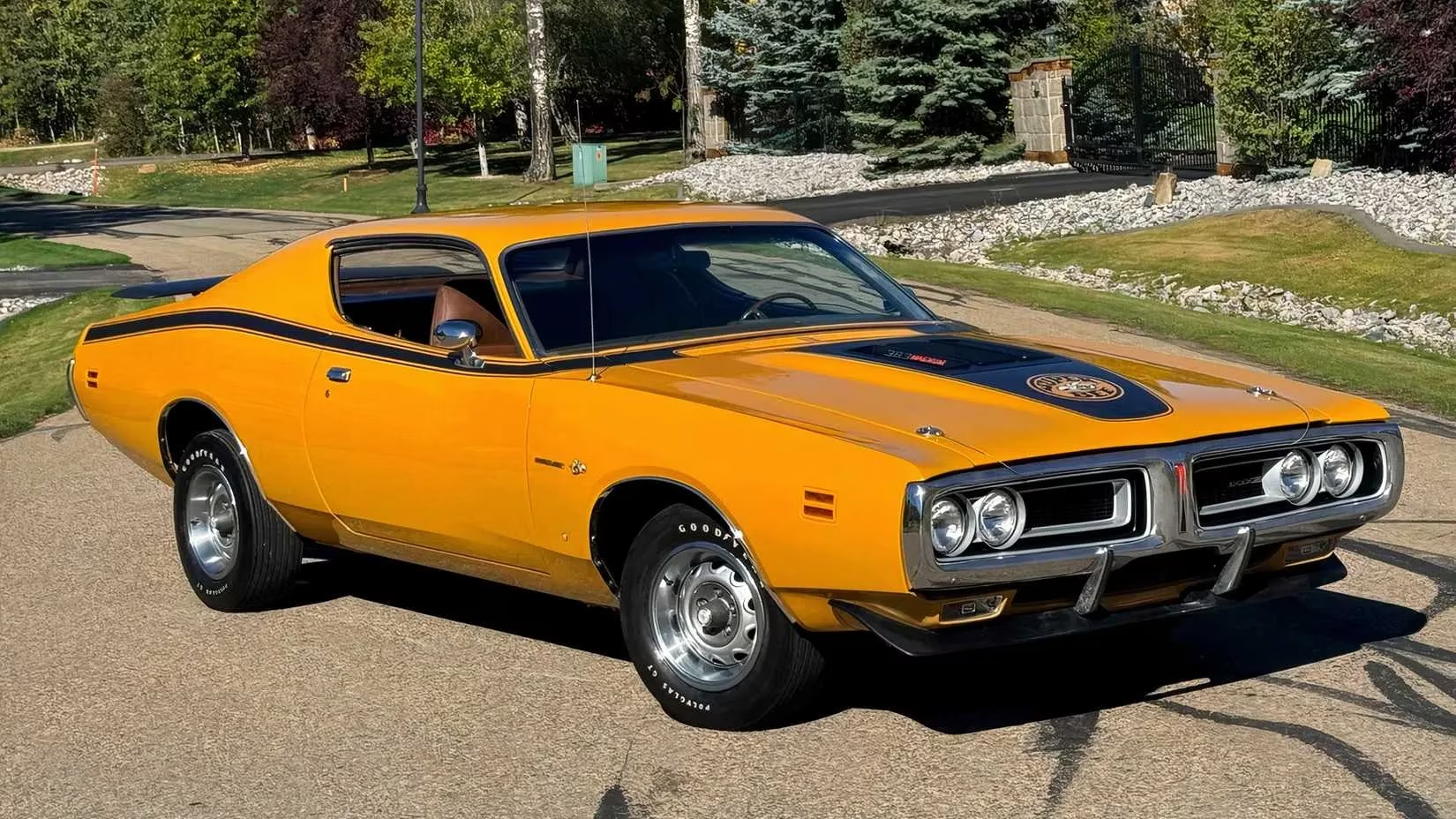
By the end of the '60s, the Dodge Super Bee was already a respected budget muscle car. But check the A12 package box, and you entered a different league. For 1969½, this option swapped in a 440 big-block crowned with three Holley two-barrel carbs—the legendary "Six Pack." It came with a mandatory heavy-duty drivetrain, a Dana 60 rear end with 4.10 gears, and a giant lift-off fiberglass hood. The factory claimed 390 horsepower; everyone knew better. About 1,907 were built, making them instant classics. A regular Super Bee with a 383 was a rowdy daily driver. The A12 car was a purpose-built strip brawler that idled rough and pulled like a freight train from any rpm. When those three carburetors opened up in unison, it was pure mechanical symphony.
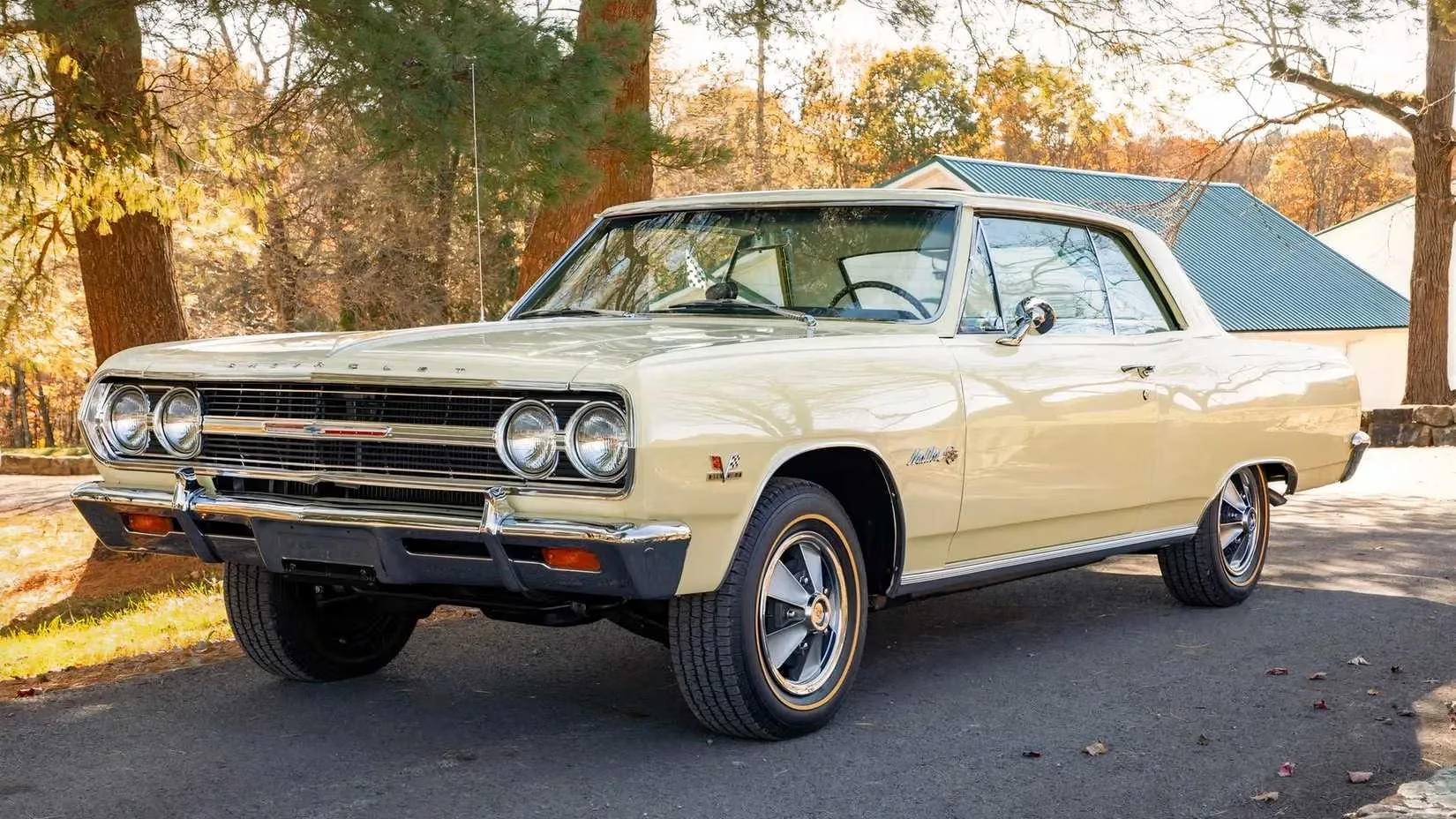
On the surface, a 1965 Chevelle Malibu SS was a handsome small-block cruiser. But if you knew to request RPO Z16, you were ordering Chevrolet's proof-of-concept for the entire big-block Chevelle revolution. This package bundled the all-new Mark IV 396 engine (in 375-hp trim) with a heavily fortified chassis, upgraded suspension, bigger brakes, and a 160-mph speedometer. Roughly 200 were built. To the untrained eye, it looked like a nice Malibu with Rally wheels. Underneath, it was a serious piece of engineering with forged internals and canted-valve heads that previewed the legendary LS6. Contemporary tests had them running mid-14-second quarter-miles, which was astonishing for the time. Z16 buyers got a sneak preview of the muscle car future, years before the SS396 became a household name.
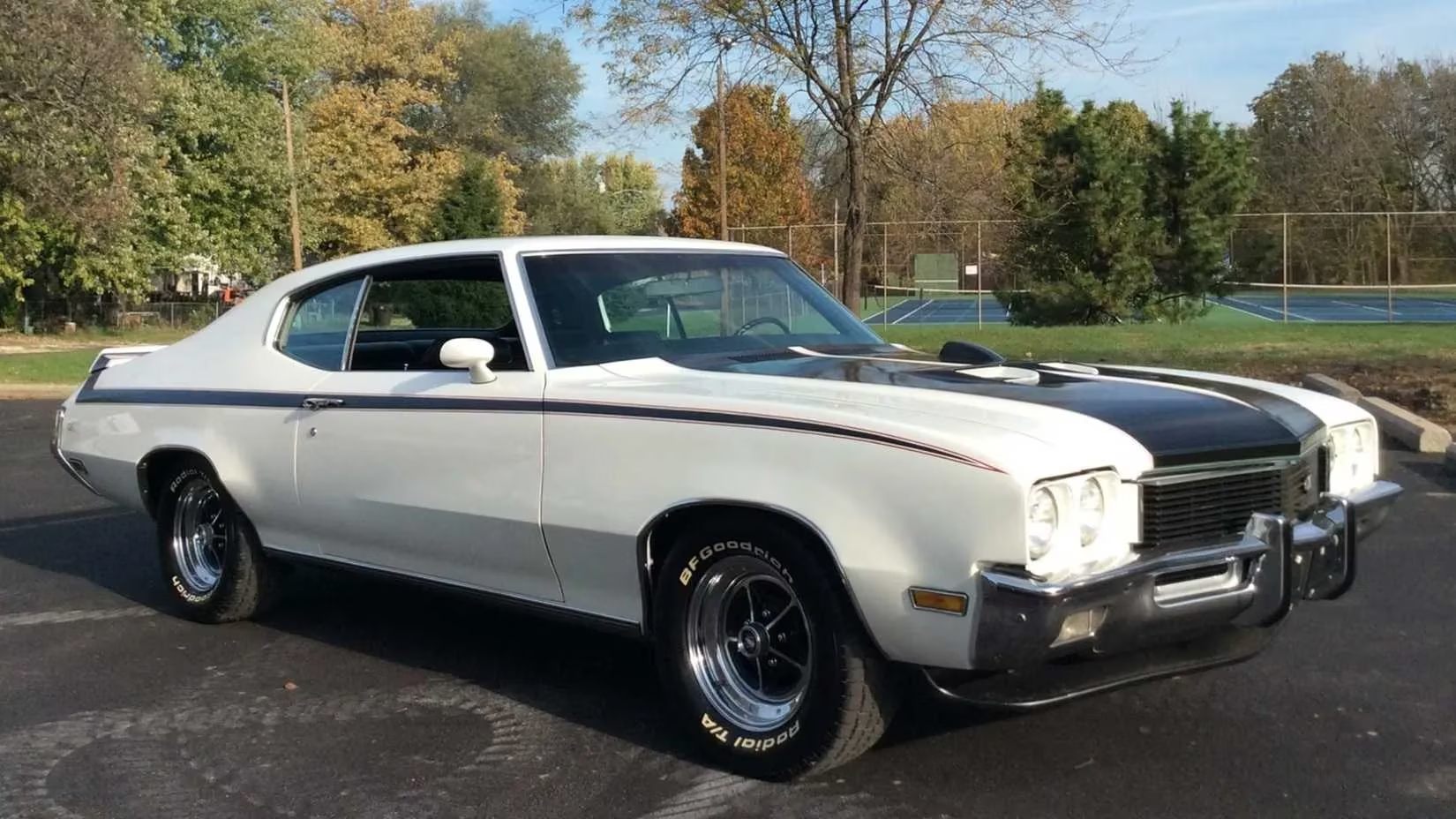
Buick built the GSX to shatter its image of quiet luxury, and the optional Stage 1 package turned it into a torque-slinging legend. The heart was a 455 cubic-inch V8, conservatively rated at 360 horsepower but dynoing much higher, paired with a brutal 510 lb-ft of torque. With quick-ratio steering, bigger sway bars, and iconic stripes, only 678 GSX models were made in 1970, and about 400 had the Stage 1 engine. Motor Trend stunned the world by extracting a 13.3-second quarter-mile time from one, putting this Buick squarely in Hemi territory. It was a velvet hammer—smooth, luxurious, and devastatingly quick.
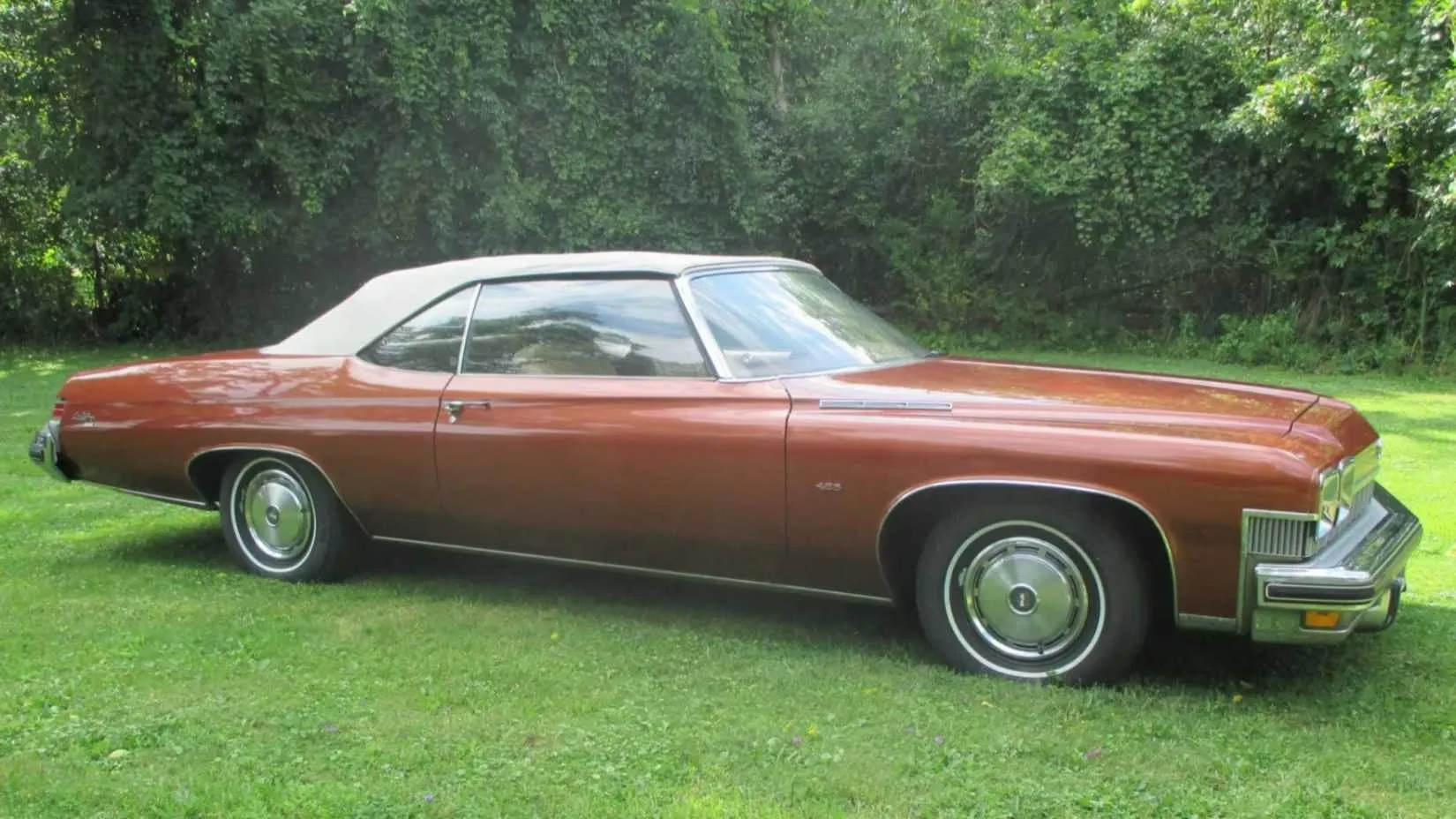
Perhaps the ultimate sleeper was the Buick LeSabre with the Stage 1 option. The words "LeSabre" and "Stage 1" seem like they belong in different universes. Yet, in the early '70s, Buick quietly made it possible. You could order a full-size, plush LeSabre convertible—the kind favored by retirees—with the same hot 455 Stage 1 engine and supporting hardware found in the GSX. Documented examples, like a 1974 Luxus convertible, show fewer than 200 were built. They came with heavy-duty cooling and suspension so the big car could actually hook up. On the street, it was the ultimate disguise: a serene land yacht that could hike its front end and vanish when the light turned green. It’s the perfect sleeper, still obscure enough to tell a story about, but nasty enough to end any jokes.
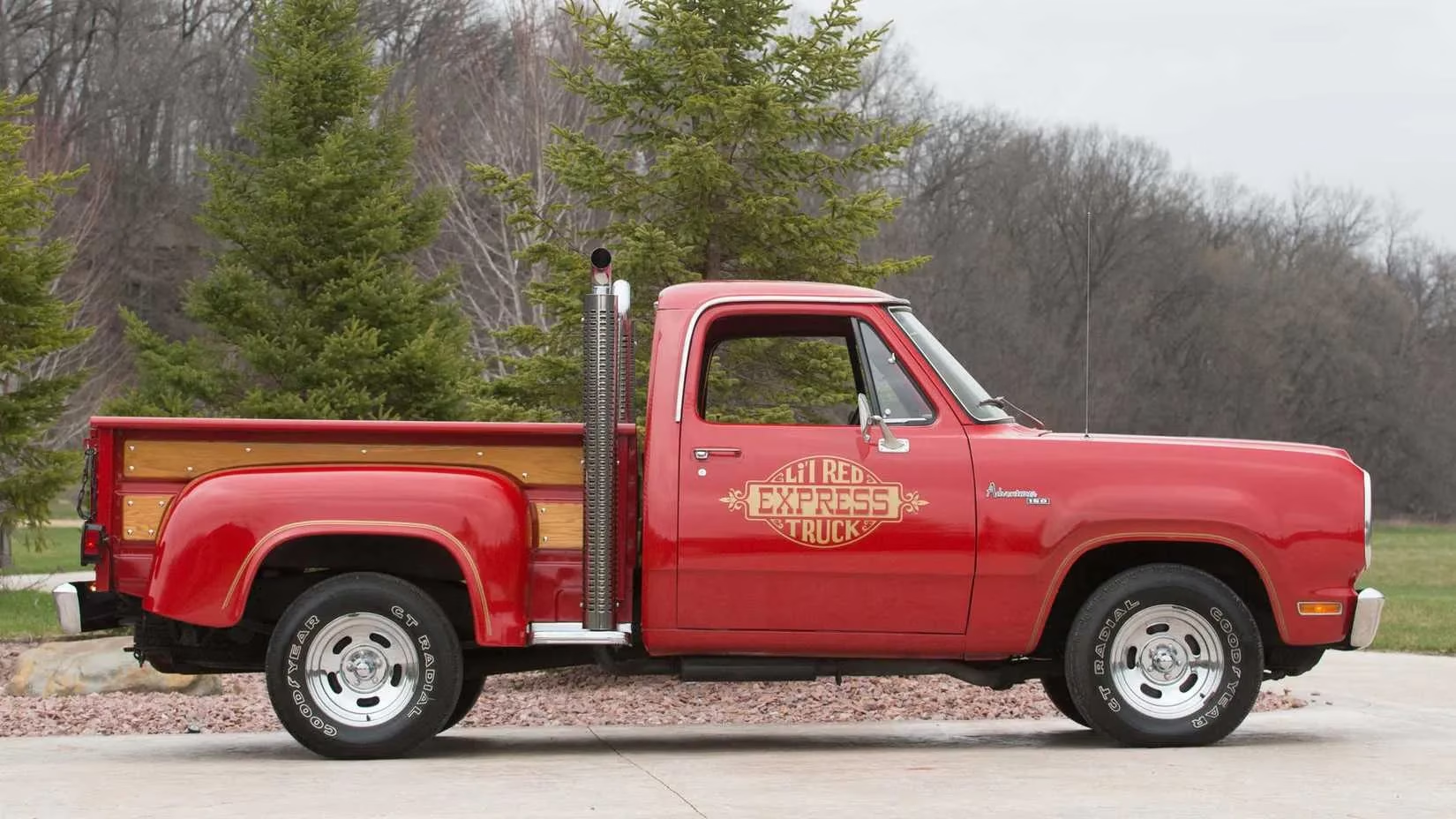
By the late 1970s, the muscle car era was strangled by emissions regulations. But Dodge engineers found a loophole: trucks. The Li'l Red Express was a short-bed D-150 pickup with vertical chrome stacks, bright red paint, and a police-spec 360 small-block under the hood. Because it was classified as a truck, it escaped the catalytic converters choking cars, running true dual exhausts. Car and Driver tested one in 1978 and found it was the quickest American vehicle to 100 mph that year—quicker than the Corvette. Its mid-15-second quarter-mile time sounds modest now, but in the smog-choked '70s, it was a revelation. The Li'l Red Express was a factory hot rod with a bed, a glorious bark from its side pipes, and the attitude to back up its wild looks. It was the last gasp of the factory freak, proving the spirit never really died.
Reflecting on these machines from 2026, their appeal is clearer than ever. They weren't just fast cars; they were secrets made of steel and gasoline, triumphs of ingenuity over expectation. They prove that sometimes, the most exciting chapter in automotive history isn't written in the headlines, but hidden in the option codes, waiting to be discovered by those who know where to look. 🏁