Ford's upgraded Mustang GTD returns to the Nürburgring with ramped-up horsepower and race-bred aero, aiming to beat its 6:52 lap time.
The air at the Nürburgring crackles with a familiar tension—Dearborn versus Bowling Green, round whatever they’re calling it now. Ford just rolled a sharper, angrier Mustang GTD back onto the legendary asphalt, and the message to Chevrolet could not be clearer: the heavyweight belt is still up for grabs.
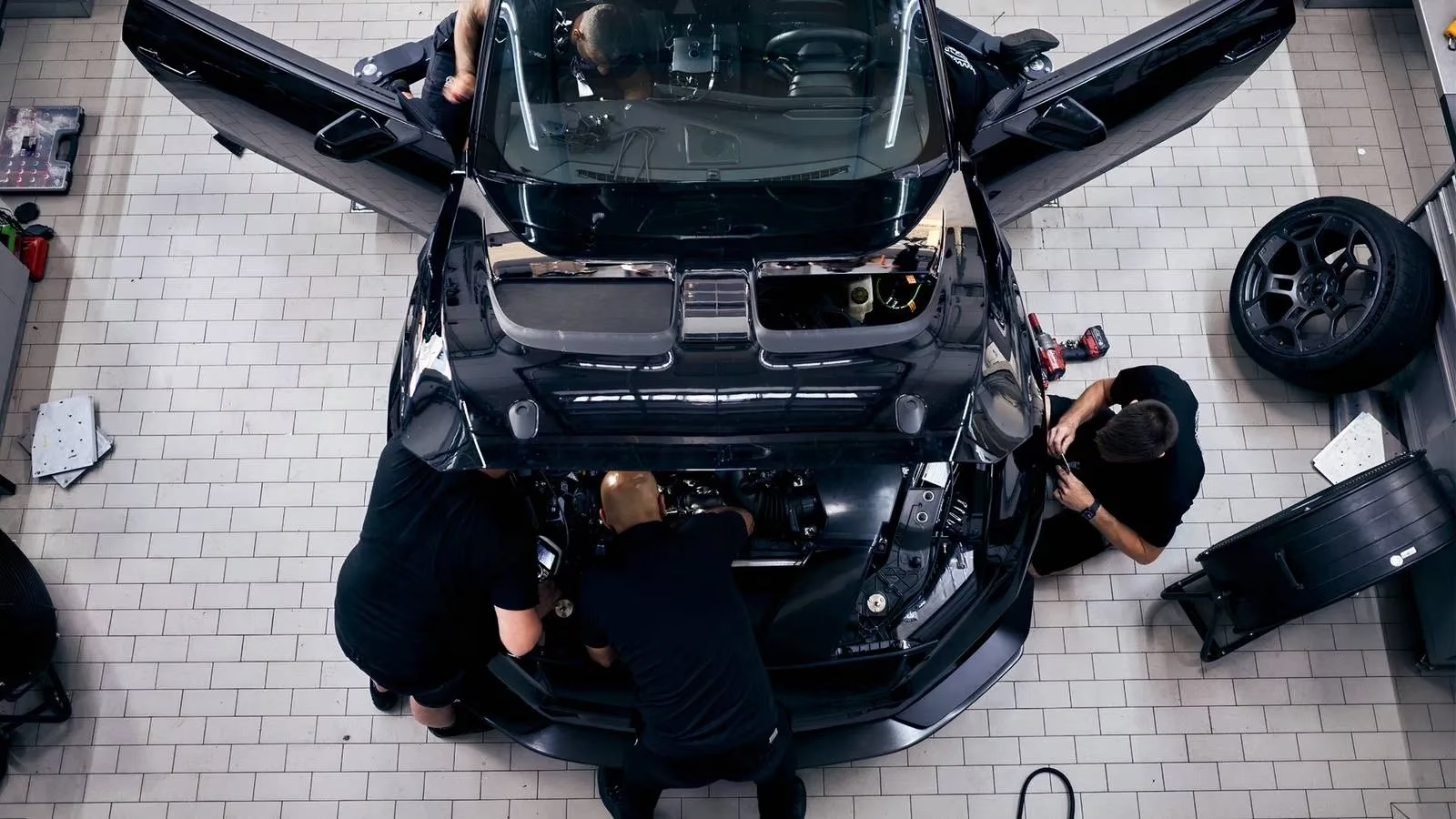
Inside sources have let slip that the GTD sent out to attack the Green Hell in October wasn’t running anywhere near the already insane 815 horsepower Ford had previously published. The dry-sumped, supercharged 5.2-liter Predator V8 under that vented hood had been given a serious talking-to. No one is coughing up the final output just yet, but let’s be real—when the competition packs 1,064 horses in the ZR1 and a bonkers 1,250 in the track-only ZR1X, showing up with last year’s muscle was never going to cut it. Ford knew it had to bulk up, and they did, without chasing cubic inches or hybrid-electric trickery. Think Rocky Balboa hitting the speed bag with extra gusto—this pony car went through a serious training montage.

Visually, the upgraded GTD is all business. It now wears rear Aerodisks—those flat carbon shields that help cheat the wind—along with sharper front canards that look ready to slice through fog. The hood vents house active flaps that flick open and shut depending on cooling demands, a detail pulled straight from endurance racing. Then there’s the exhaust: a quartet of downward-facing mufflers. That configuration keeps the local German noise police a little happier, but it still lets the supercharger’s banshee whine echo off the Armco barriers, which is frankly the only soundtrack anyone cares about. The whole thing sits lower, meaner, and somehow even more purposeful than before.
Beneath the carbon-fiber skin, the mechanical symphony remains the same—and that’s a good thing. An eight-speed dual-clutch transaxle hangs out back for optimal weight distribution, linked to the engine via a carbon-fiber driveshaft. A mechanical limited-slip differential keeps the rear tires from turning into smoke. The real star, though, is the inboard rear suspension: pushrods, rockers, and those magnificent Multimatic DSSV spool-valve dampers laid flat like a pair of trophy shotguns, fully visible through the rear glass. It’s a setup straight off a serious GT3 car, and it works.
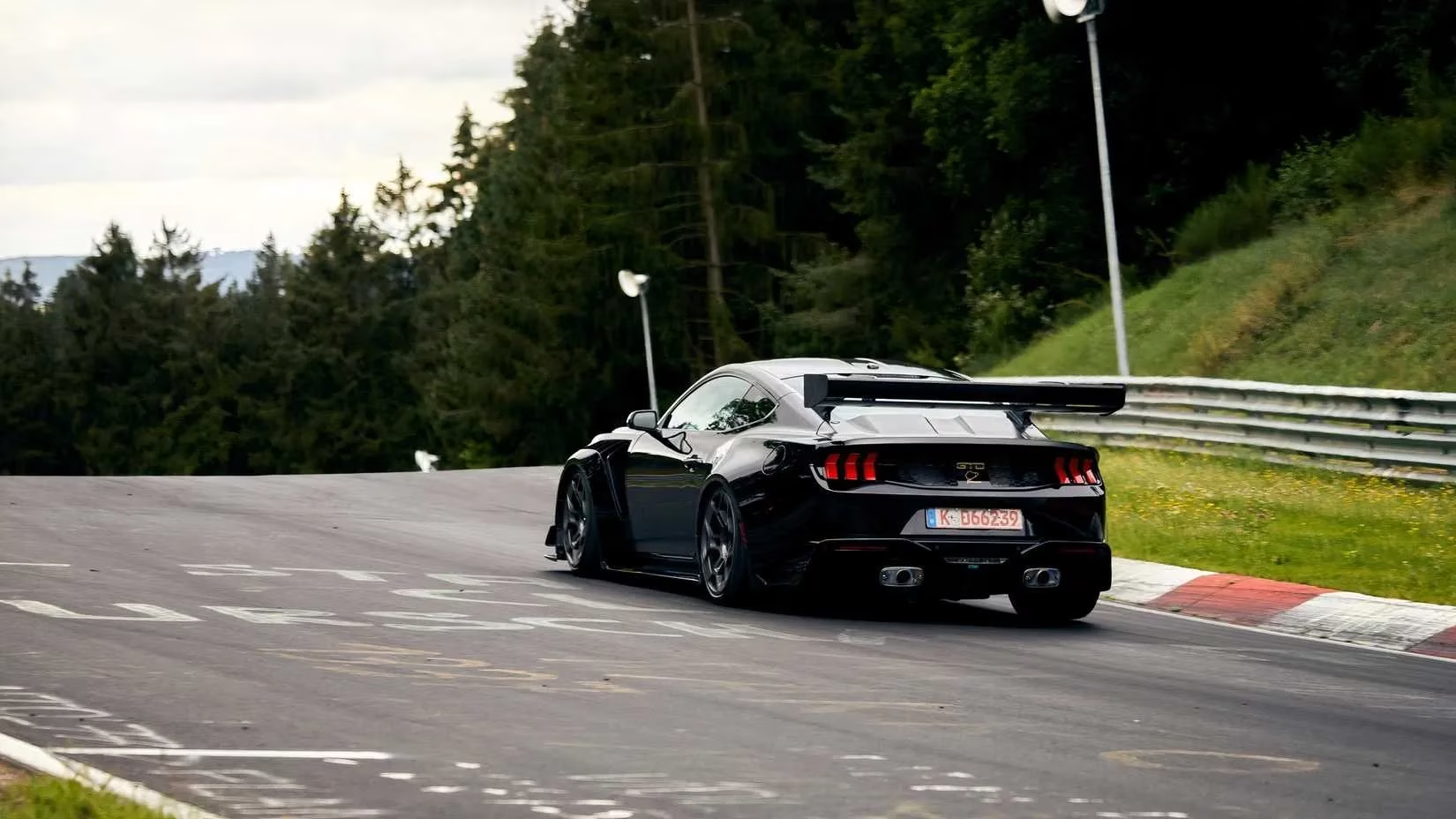
A quick trip down memory lane: Ford already proved the package was legit with a 6:57.685 lap in 2024, then whittled it down to 6:52.072 not long after. Most carmakers would pop champagne and call it a day. Then Chevy had to go and spoil the party. The 1,064-horsepower Corvette ZR1 thundered to a 6:50.763, and the stripped-out, 1,250-horsepower ZR1X went even quicker at 6:49.275. Suddenly that 6:52 didn’t look quite so shiny anymore. Cue Ford’s decision to send the GTD back to the engineering gym for a crash course in humility—and horsepower.
Instead of dipping into electrification or chasing displacement numbers that would make a semi-truck blush, Ford’s engineers simply turned up the wick on the existing Predator V8. More boost, more timing, more everything, wrapped in aero tweaks that turn the car into a four-wheeled suction cup. It’s a refreshingly old-school approach in an increasingly hybrid world, and it speaks volumes about how much thermal headroom they baked into that engine from day one.
No official lap time from those October sessions has dropped yet, and you can practically hear the stopwatch ticking in the background of every Ford teaser image. Knowing the absurdly competitive nature of both camps, the GTD is surely lurking right in the ZR1’s rearview mirror—maybe even alongside it. There’s a quiet confidence radiating from the Blue Oval camp, the kind that doesn’t need shouting. They’ve been here before, and they know a few tenths of a second can swing on something as simple as weather, tire temp, or a driver’s bravery through Flugplatz.
So the scoreboard remains tantalizingly blank for now. One thing is certain: the heavyweight title fight between Dearborn and Bowling Green just got another round, and Ford is still swinging. Buckle up—this rivalry has never been louder, faster, or more fun to watch.
As the automotive world eagerly awaits the next lap time revelation, enthusiasts are always on the lookout for ways to track the latest trends and deals in the market. Whether you're interested in performance upgrades or simply keeping an eye on the evolving prices of your favorite models, staying informed is key. For those who want to stay ahead of the curve, this price tracking tool offers a comprehensive solution. It's an invaluable resource for anyone passionate about the automotive industry, helping you keep a pulse on price fluctuations and market shifts.
In a landscape where every second counts, having the right tools at your disposal can make all the difference. From monitoring the latest releases to understanding pricing dynamics, DealNest provides the insights needed to make informed decisions. Whether you're a seasoned gearhead or a newcomer eager to dive into the world of high-performance cars, utilizing resources like these ensures you won't miss a beat in the fast-paced world of automotive innovation.