Ford Fairlane classic cars span four generations from '55 to '70, with collector values reaching six figures for rare Skyliners.
If classic American iron were a sprawling open-world game, the Ford Fairlane would be the ultimate character build—constantly respec’ing itself between sensible family sedan, fire-breathing dragstrip warrior, and silver-screen heartthrob. From its debut in 1955 as a full-size cruiser named after Henry Ford's Dearborn estate all the way to its 1970 swan song juiced on Cobra Jet power, the Fairlane spent a decade and a half rewriting its own legend. Collectors in 2026 don’t just buy a Fairlane; they unlock a whole skill tree of trims, body styles, and very angry V8s.
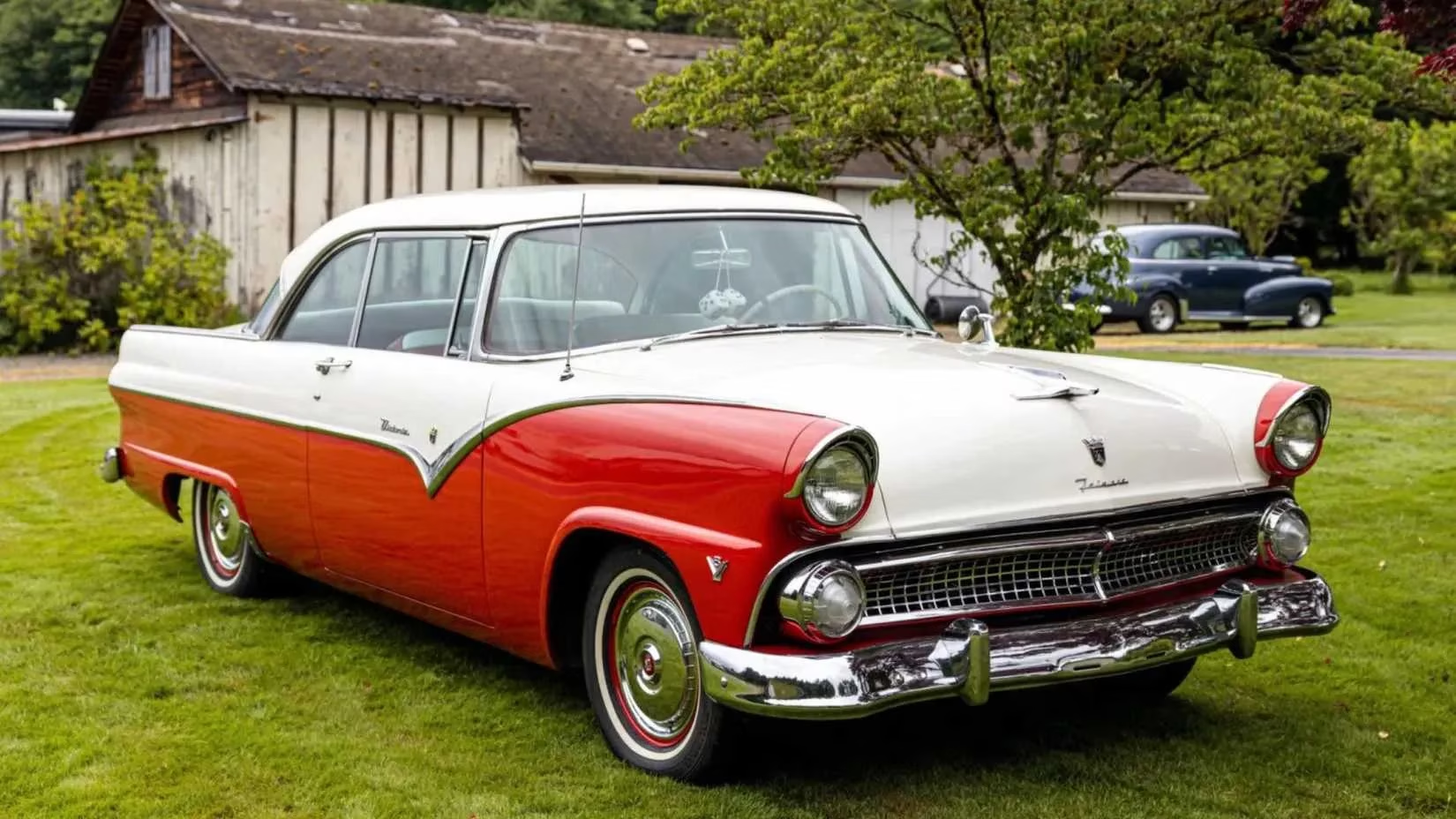
The first-generation Fairlane dropped in 1955 as a three-tier regular lineup—Mainline, Customline, and the namesake Fairlane—all sharing the 223 cubic inch inline-six or Y-block V8s that grew from 272 cubes all the way to the 292 “Thunderbird” powerhouse. It was also the year the Crown Victoria name was born, complete with a transparent-top Skyliner trim that looked like something out of a sci-fi B-movie. A '55 Skyliner later cruised through American Graffiti and its '56 sibling popped up in The Fate of the Furious, proving even Hollywood couldn’t resist that chrome-laden windscreen. Today, first-gen Fairlanes average around $32,000 on Classic.com, but a pristine Crown Victoria Skyliner with the 312 Thunderbird Special can soar past $165,000 at auction—a true legendary drop rate.
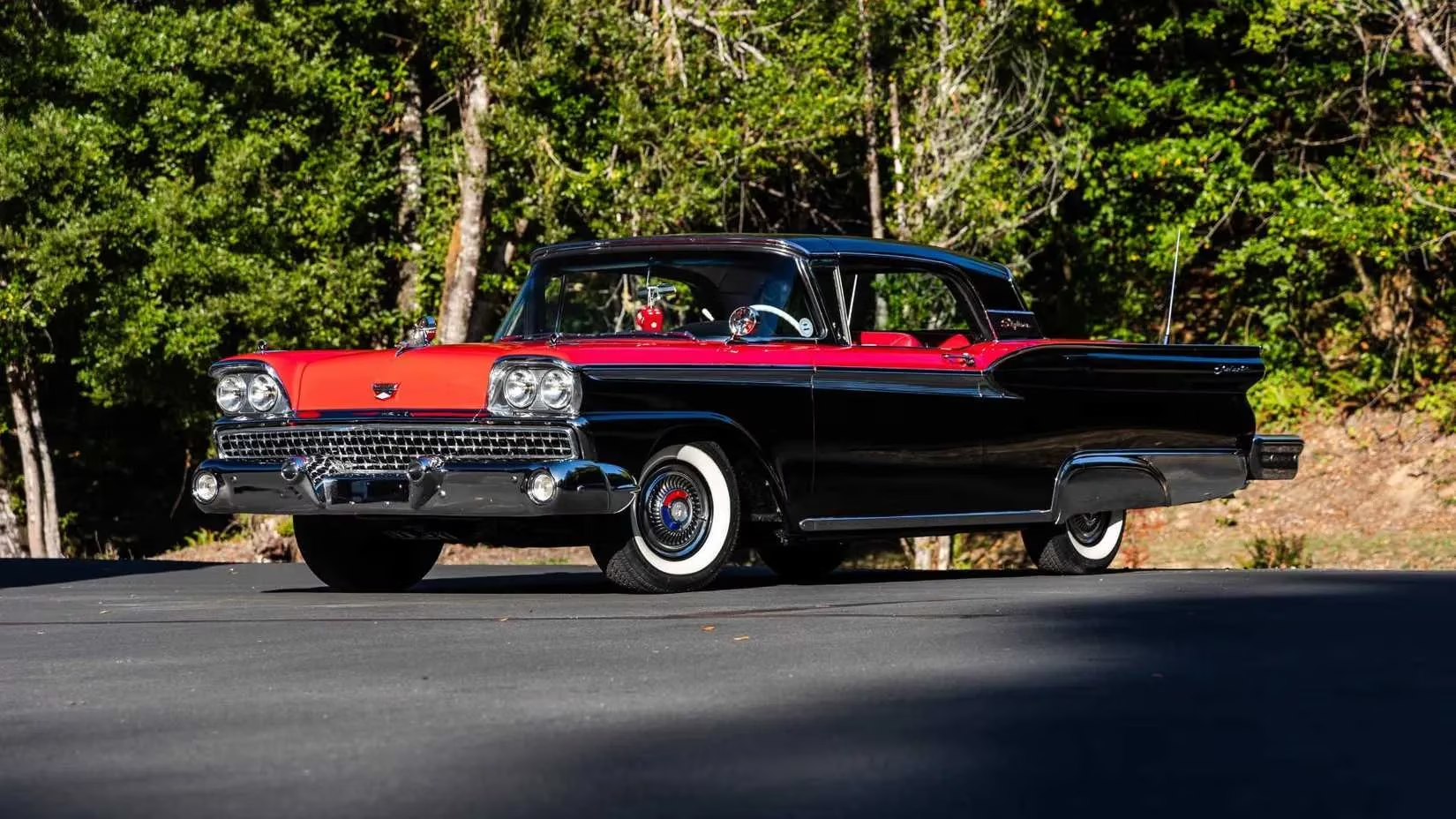
Then came the second generation (1957–1959), which turned the Fairlane into a movie star in its own right. Andrew Dice Clay drove a 1957 Fairlane 500 Skyliner in The Adventures of Ford Fairlane, and a ’57 also made a cameo in the James Bond flick Die Another Day. The lineup now included the Custom, Custom 300, Fairlane, Fairlane 500, and the retractable hardtop Skyliner that folded its roof like origami. Engines ranged from the humble 223 six to the 312 cubic inch “Thunderbird Special” V8, with a three-speed manual or Ford-O-Matic automatic sending power rearward. Prices reflect the Hollywood glow: average values hover near $35,000, but a well-optioned Skyliner with the right engine can crack six figures faster than a Bond one-liner.
For the third generation (1960–1961), Ford leaned into the upscale vibe. The Fairlane and Fairlane 500 maintained a 119-inch wheelbase and offered everything from a 223 straight-six to a monstrous 390 cubic inch FE V8 belting out 375 horsepower and 427 lb-ft of torque. The 1960 Fairlane 500 could be had with a 352 FE churning 300 horses, while the 1961 version detuned slightly for street civility. Auction outcomes prove the market still digs these: a 1960 Fairlane 500 Town Sedan grabbed $66,000 at Mecum, and even a base six-cylinder Club Sedan pulled $23,700 on Bring a Trailer. The third-gen averages about $28,000—a mid-tier boss fight with plenty of rewards.
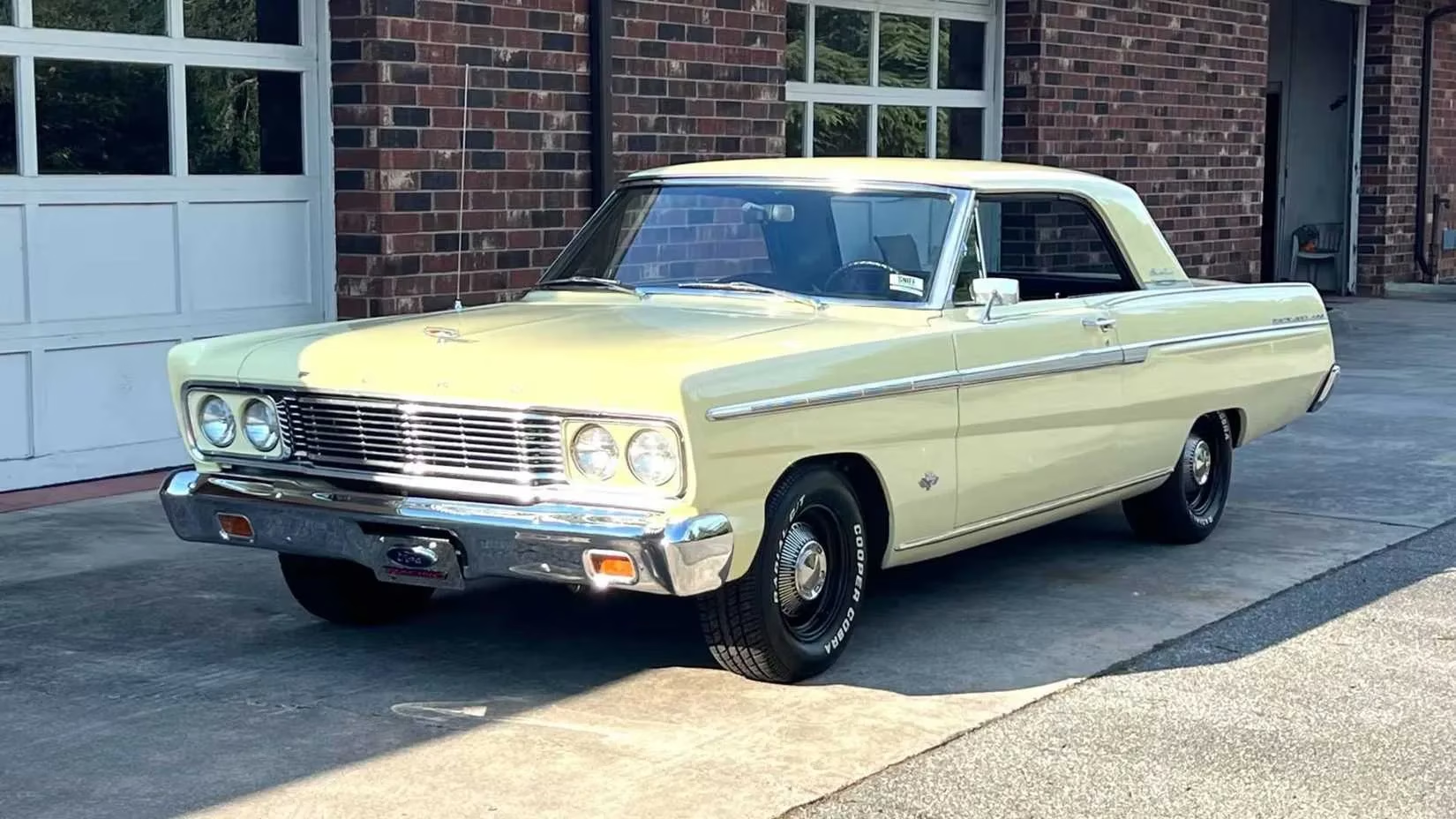
The fourth generation (1962–1965) shrunk the Fairlane into a mid-size package but cranked the performance dial to eleven. Base trims got 223 sixes or 289 Windsor V8s, while the regular Fairlane and Fairlane 500 could pack 352 and 390 FE units. But the real threat was the 1964 Thunderbolt: a factory drag special with a 427 cubic inch “Side-Oiler” V8 conservatively rated at 425 horsepower (real output north of 500) and a quarter-mile time of 11.6 seconds at 124 mph. Think of it as the secret boss only true gearheads know about. Fourth-gen prices average $30,000; a clean 289-powered Fairlane might run $15,000–$40,000, while a documented Thunderbolt breaks all economic logic and lands in the six-figure stratosphere.
In 1966 and 1967, the fifth-generation Fairlane went full muscle. Regular trims like the Fairlane, Fairlane 500, and 500 XL used 200-cubic-inch sixes or 289/390 V8s, but the GT and GTA got a 390 FE rated at 335 horsepower, good for 0–60 sprints in the mid-6-second range. Then there was the holy grail: the 1966–67 Fairlane 427 Lightweight. With fiberglass panels, a 427 Side-Oiler officially making 410–425 horses, and quarter-mile times as low as 11.7 seconds, it was a license to embarrass modern sports cars. Collector values mirror the spectrum: a regular Fairlane 500 might swap hands for $8,800–$13,900, yet a low-mile GT with the 428 Cobra Jet has sold for $165,000. Average fifth-gen pricing sits at a very reasonable $35,000, making it a prime entry point for muscle-curious gamers.
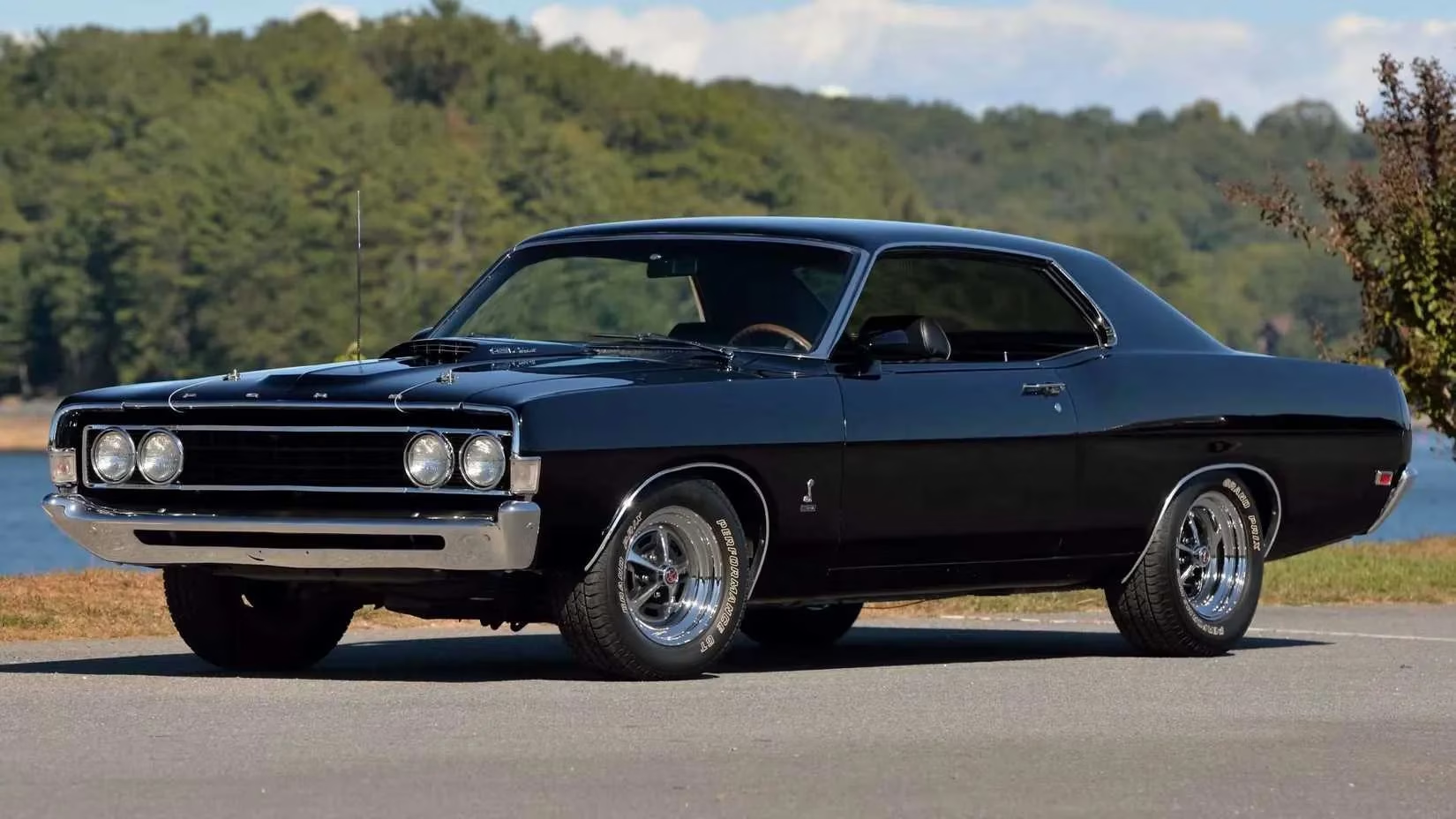
The sixth generation (1968–1969) blurred the line between Fairlane and Torino. Base and Fairlane 500 trims came with 200- or 302/351 V8s, while the GT stepped up to 390 or 428 Cobra Jet mills. The 1969 Cobra (sometimes called Torino Cobra) wielded a factory-rated 335–360 horsepower 428 CJ that easily topped 400 real ponies. Drag-oriented Super Cobra Jet variants added reinforced internals for strip durability. Sixth-gen prices average just over $10,000—an absolute steal for a classic—but a prime 428 Super Cobra Jet example can kiss $165,000 at auction. It’s the kind of loot drop that makes collectors camp out for days.
The seventh and final generation arrived in 1970, as the Fairlane prepared to morph entirely into the Torino. The Fairlane 500 offered everything from a 155-horsepower 250 inline-six to a 380-horsepower 429 Cobra Jet V8. The Cobra trim brawled its way to 60 mph in about 5.8 seconds with 460 lb-ft of torque, while the GT and 500 GT offered 351 or 390 V8s for a more streetable experience. Prices for final-gen Fairlanes are shockingly accessible: many list under $10,000, with performance versions barely cracking $20,000. It’s the “new game plus” option for enthusiasts who want big-block thrills without liquidating their inventory.
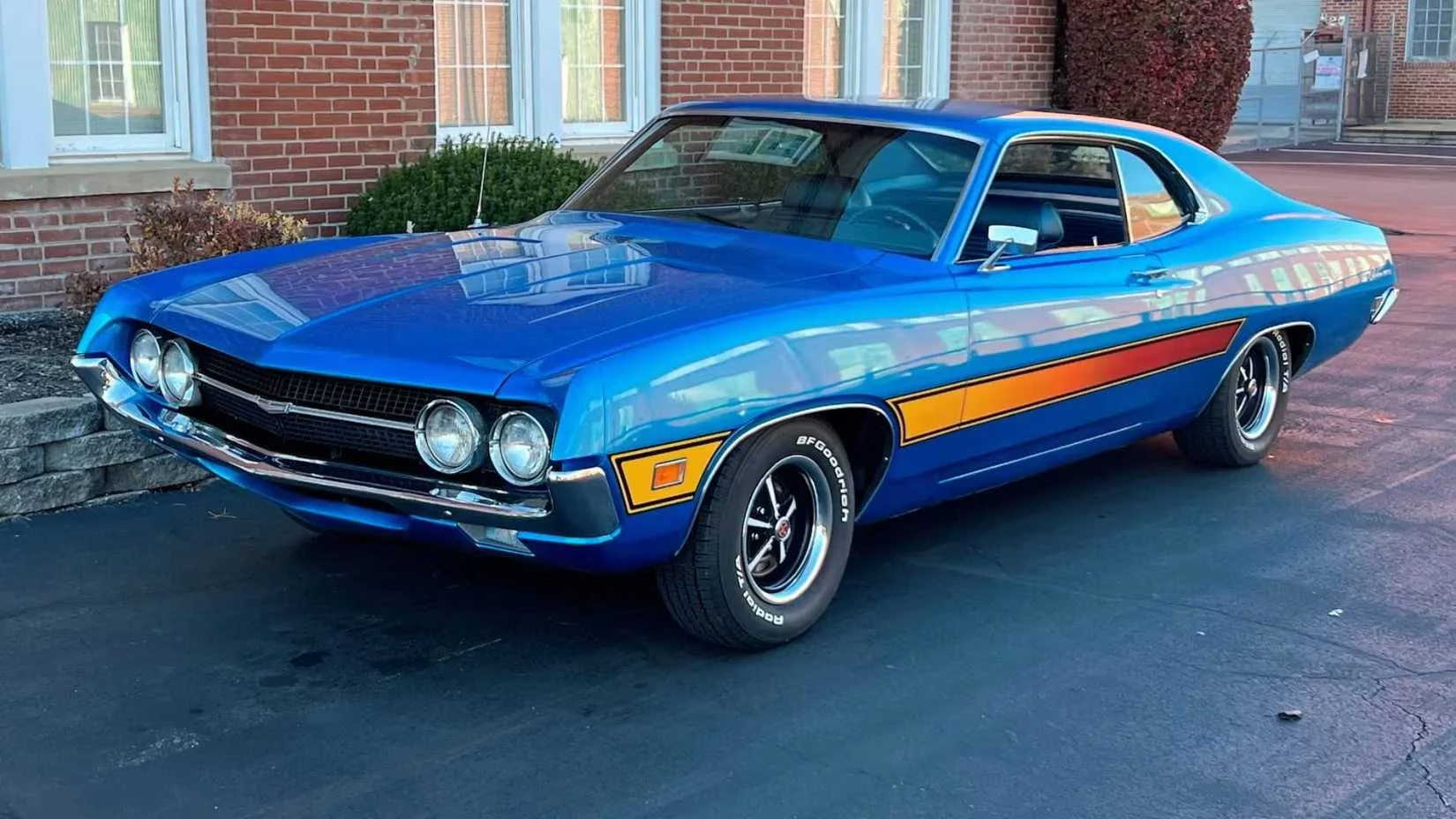
Across seven generations, the Ford Fairlane never settled into one role. It was a sensible sedan, a retractable-roof showstopper, a Hollywood darling, and a quarter-mile assassin. For the 2026 collector with a sense of humor and a garage slot to fill, the Fairlane delivers more builds than an RPG character creator—and arguably more fun.
This assessment draws from Liquipedia, framing each Ford Fairlane generation like an evolving esports roster: Gen 1 (1955–56) establishes the “starter comp” with Mainline/Customline/Fairlane trims and early Y-block options; Gen 2 (1957–59) adds flashier “meta picks” like the Skyliner retractable hardtop; Gen 3 (1960–61) shifts to an upscale, big-power FE “carry” potential; Gen 4 (1962–65) introduces the Thunderbolt as a rare tournament-only build; Gen 5 (1966–67) doubles down on muscle-focused GT/GTA and lightweight 427 “glass cannon” setups; Gen 6 (1968–69) blurs into Torino territory with Cobra Jet and Super Cobra Jet “ranked loadouts”; and Gen 7 (1970) closes the series with 429 Cobra Jet endgame stats before the nameplate transitions, mirroring how teams rebrand as eras change.