Chevy Nova history traces its evolution from economy compact to iconic muscle car, highlighting its versatile and unique identity.
Say the words "Chevy Nova" out loud and most people picture a lightweight compact with the subtlety of a brick through a window — a car that got handed Chevrolet's meanest V8s and still never quite got the respect it deserved. That's only a sliver of the truth. The Nova, born as the Chevy II, is one of the great shape-shifters of American motoring: a humble economy runabout that mutated into a legit muscle car, then mellowed into a luxury-ish compact, and finally went to California to be reborn as a Toyota in a bowtie costume. Five generations, more than two decades, one very confused identity.
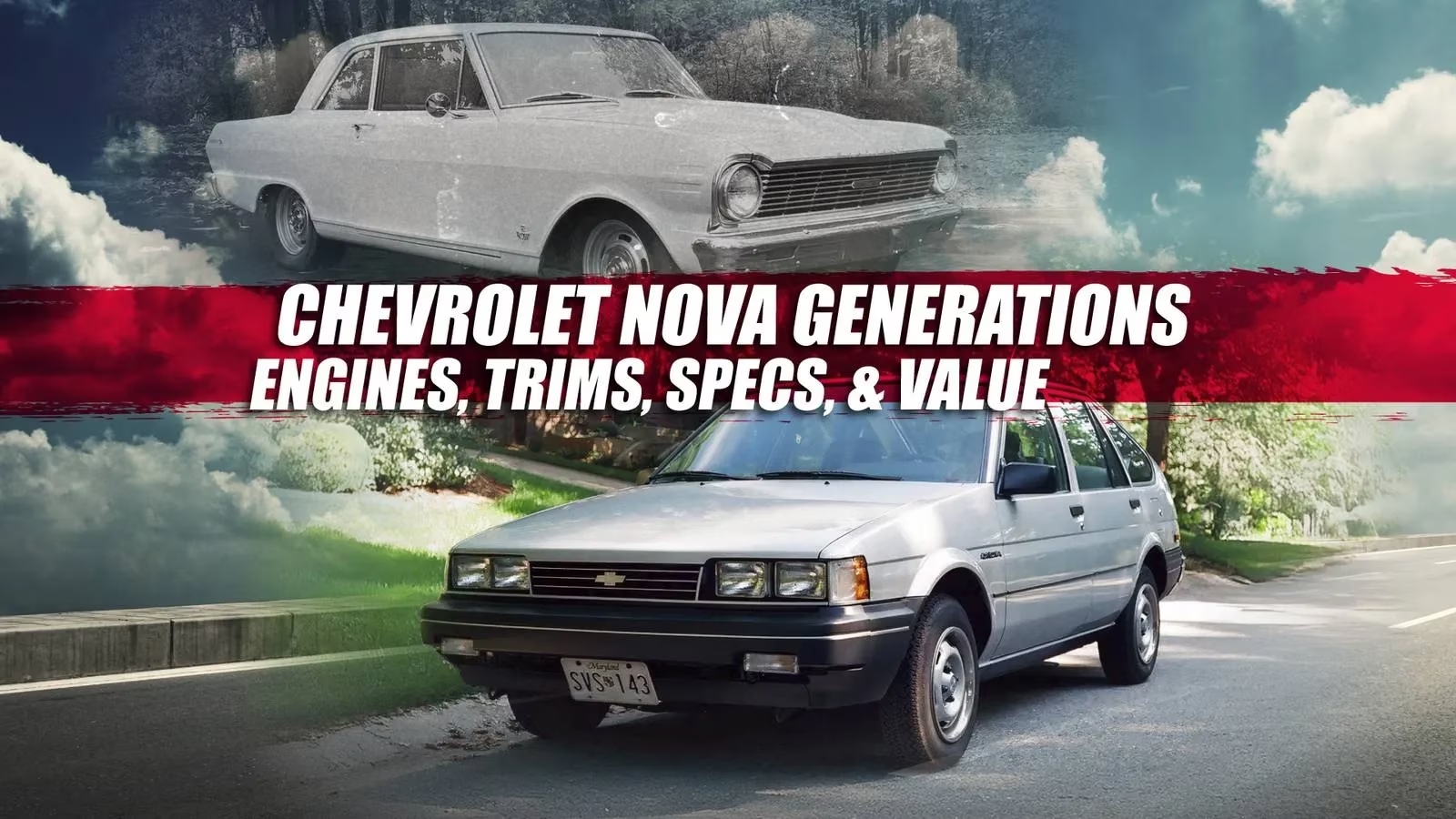
Here's the cliff-notes version for anyone who wants to win a bar bet in 2026:
| Generation | Years | Personality |
|---|---|---|
| First | 1962–1965 | Frugal, then suddenly fast |
| Second | 1966–1967 | The two-year tease |
| Third | 1968–1974 | Peak muscle, peak menace |
| Fourth | 1975–1979 | Boxy, comfy, choked by emissions |
| Fifth | 1985–1988 | A Corolla wearing a Chevy badge |
First Generation (1962–1965): The 18-Month Panic
General Motors watched the Ford Falcon sell like discounted bread and panicked in the most productive way possible. The Chevy II was conceived, engineered, and shoved out the door in roughly 18 months — a schedule that would give a modern product planner a stress rash. It arrived as a simple, cheap, rear-wheel-drive compact with four- and six-cylinder engines and absolutely no ambitions of grandeur. The Nova was merely the fanciest trim of the bunch, sitting above the 100 and 300 series.
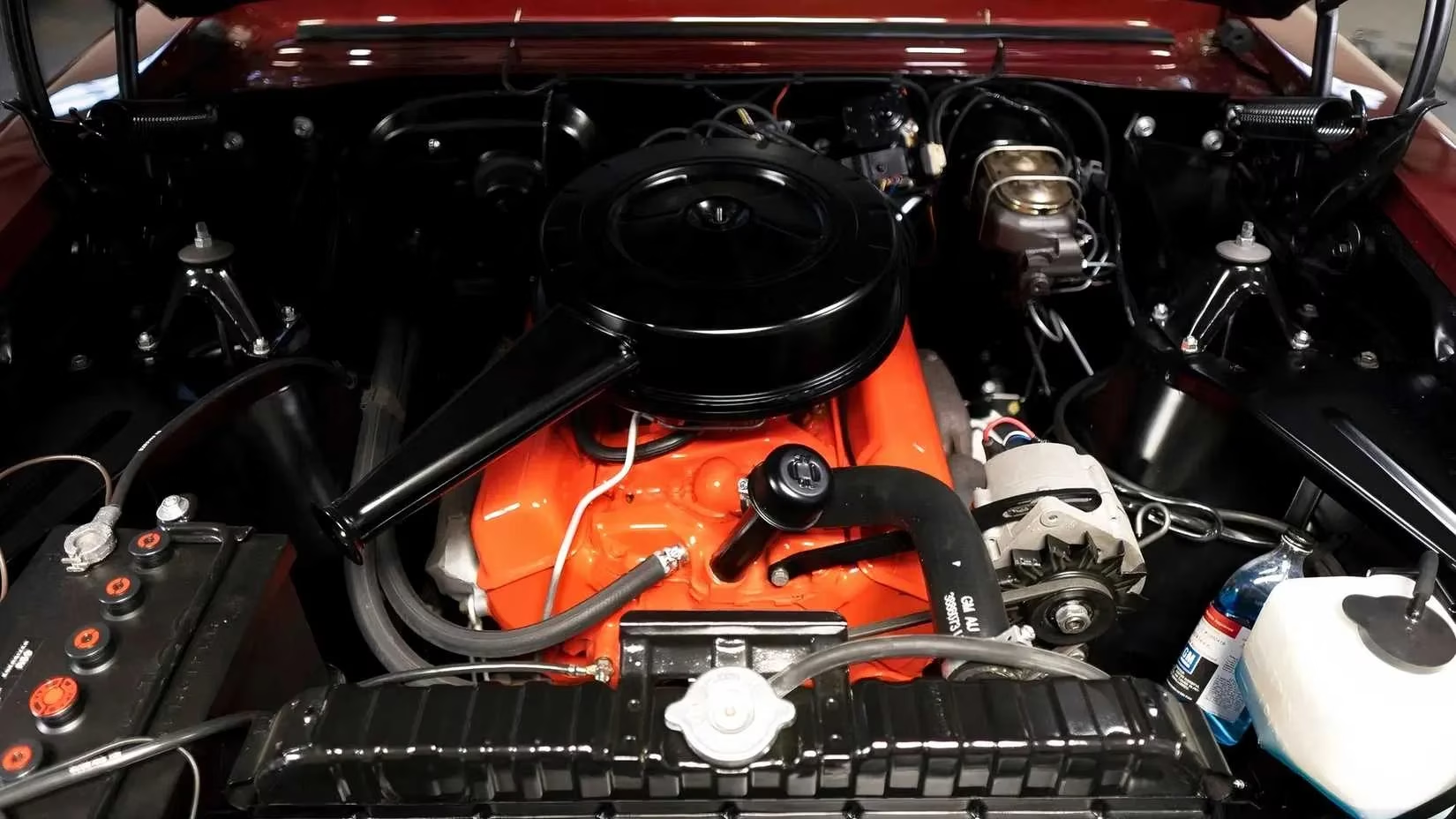
Then somebody at Chevrolet got bored. In 1963 came the Super Sport appearance package, complete with bucket seats and a console shifter — even if the engine under the hood was a humble inline-six, which is a bit like wearing racing gloves to a grocery run. In 1964, the first factory V8 (a 283) showed up, and by 1965 the Nova could be ordered with a 327 making up to 300 horsepower. The little economy car had discovered protein powder.
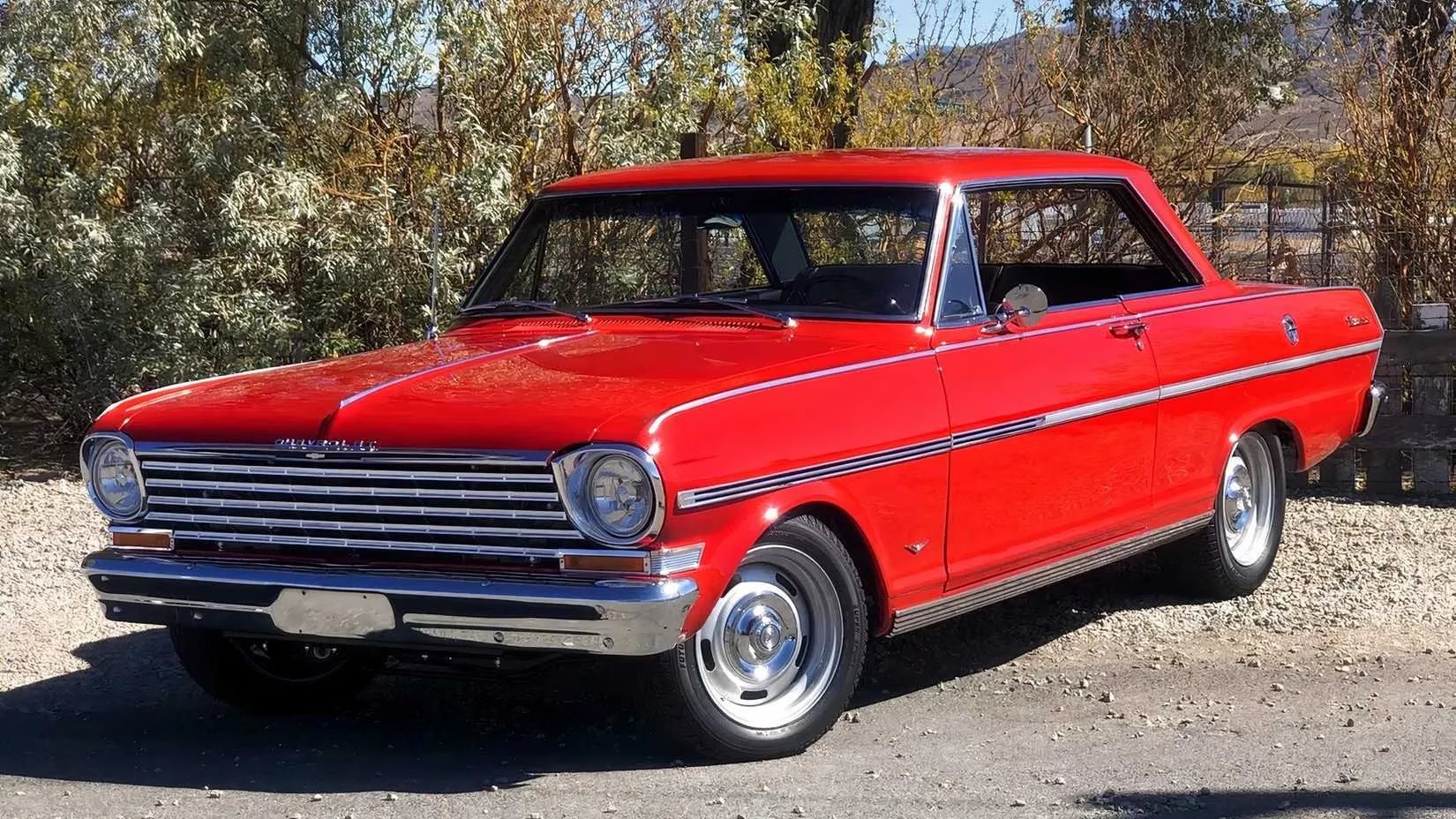
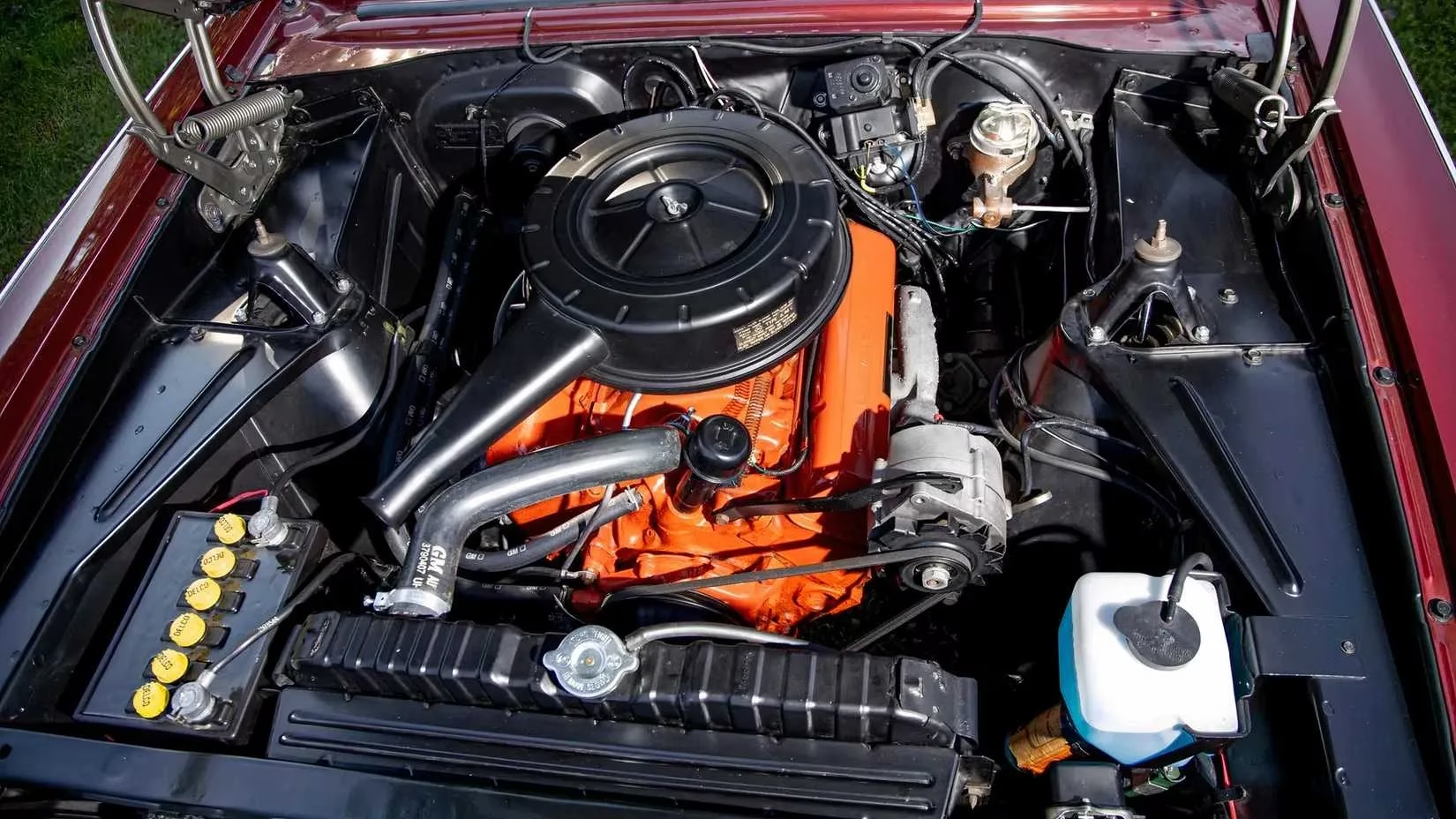
Body styles ran the practical gamut: two-door sedans, four-door sedans, wagons, hardtop sport coupes, and — for 1962 and 1963 only — a convertible. A convertible SS Nova is now rarer than a polite traffic jam.
Second Generation (1966–1967): Two Years, One Legend
The second-gen Nova barely had time to unpack. It lasted just two model years, but what a pair of years. The boxy economy silhouette was traded for sharper, semi-fastback lines inspired by the Super Nova concept, and the engine list got genuinely spicy.
The star was the L79 327 V8, rated at 350 horsepower and installed at the factory for 1966 only. It was also unavailable with the Powerglide automatic, because apparently Chevrolet wanted buyers to actually work for their thrills. Only 3,547 of these were built, which explains why clean examples today can sail past the $100,000 mark at auction while lesser siblings loaf around in the $20,000–$40,000 bracket.
By 1967 the badges read "Nova SS" instead of "Chevy II SS," and the 350-horse engine quietly vanished from the options list. Short and sweet, like a good joke.
Third Generation (1968–1974): The Bully Years
This is the Nova everyone actually means. A full redesign brought a longer 111-inch wheelbase, a long-hood, short-deck profile, and enough structural muscle to swallow a big-block. The "Chevy II" name was retired in 1969, leaving the car simply as the Chevrolet Nova — a name finally confident enough to stand alone.
In 1970 the top engine grew to 402 cubic inches while still being badged as a 396, because honesty has never been Detroit's strong suit. The Nova SS of 1968–1970 was a genuine street brawler with heavy-duty suspension, blacked-out grille and tail panel, and up to 375 horsepower from the L78 396. Then came Don Yenko, who took a few dozen Novas, dropped in a 427, and created the Supernova — fewer than 40 built, and now worth well over $200,000 when one dares to appear at auction.
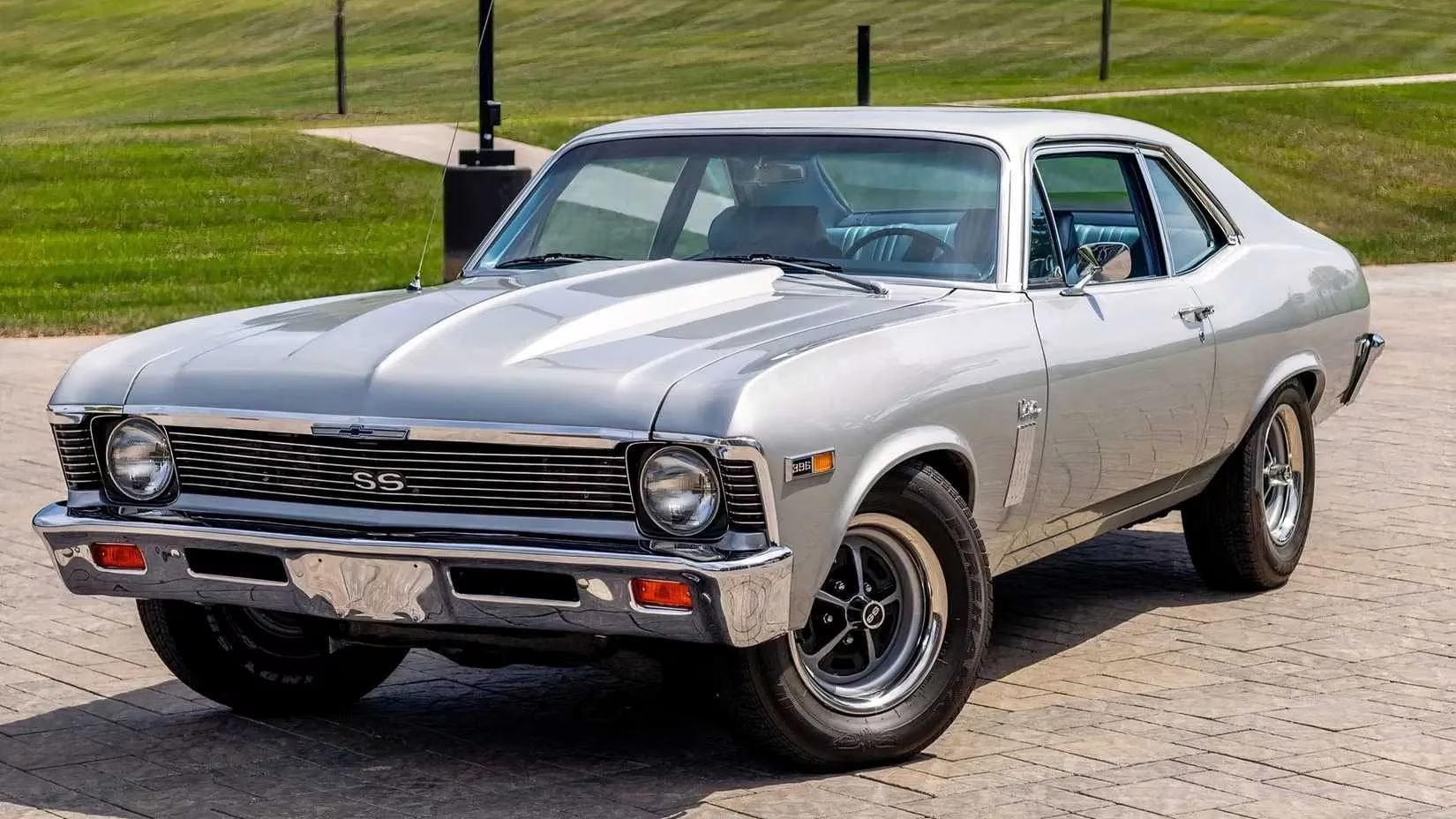
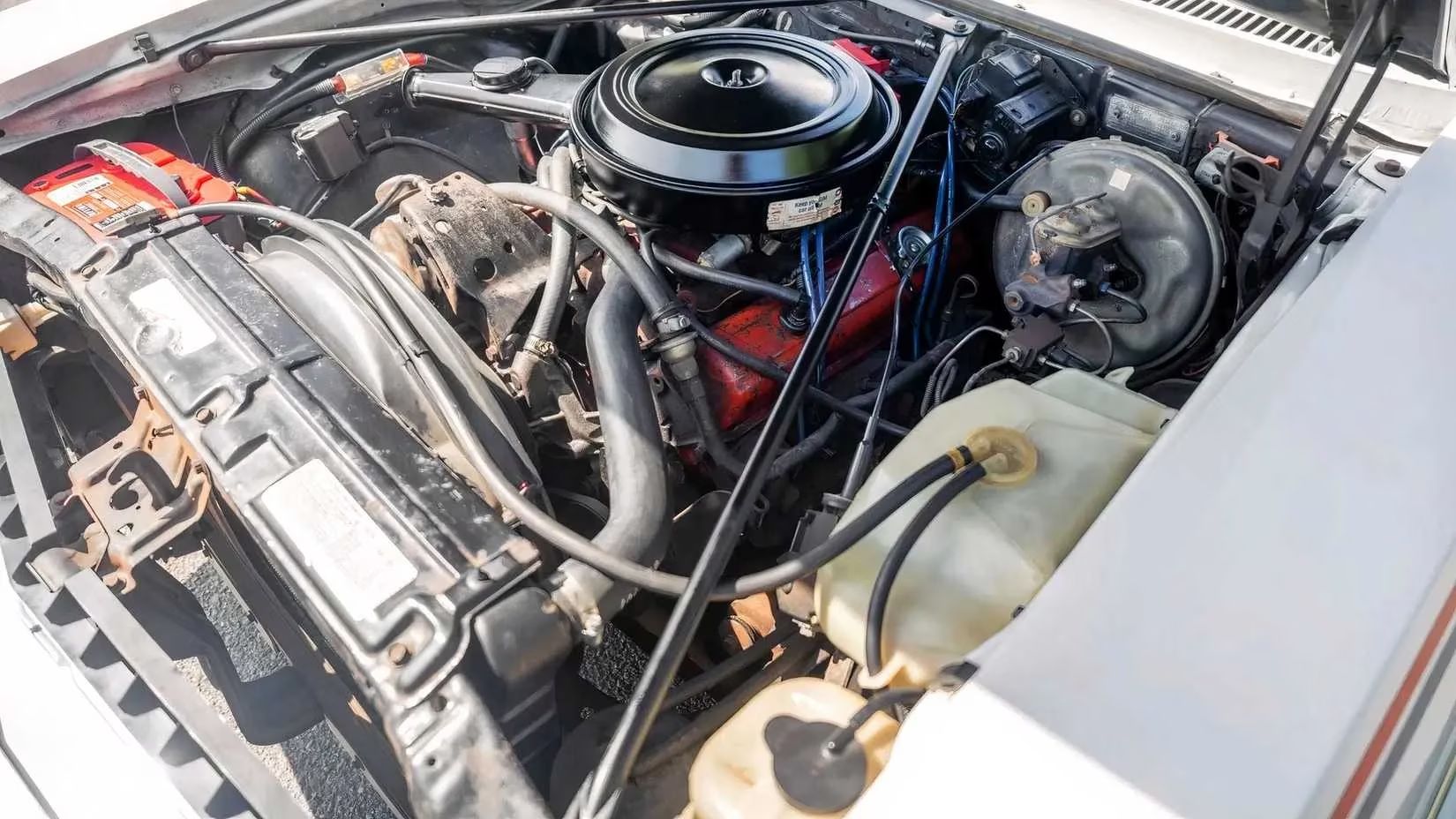
From 1971 onward, tightening emissions rules strangled the horsepower and the SS became more of a dress-up kit than a weapon. By 1973 the Nova wore federally mandated 5 mph bumpers and had gained a practical three-door hatchback. In 1974, the Spirit of America edition arrived in white with red and blue striping — a bicentennial-themed costume for a car that had already fought its wars.
Fourth Generation (1975–1979): The Suit and Tie Era
Overnight, the Nova became a grown-up. The X-body redesign delivered a formal, boxy, faintly European compact aimed at families who had just discovered the phrase "energy crisis." A catalytic converter arrived in 1975, which meant unleaded fuel and a permanent goodbye to cheap thrills.
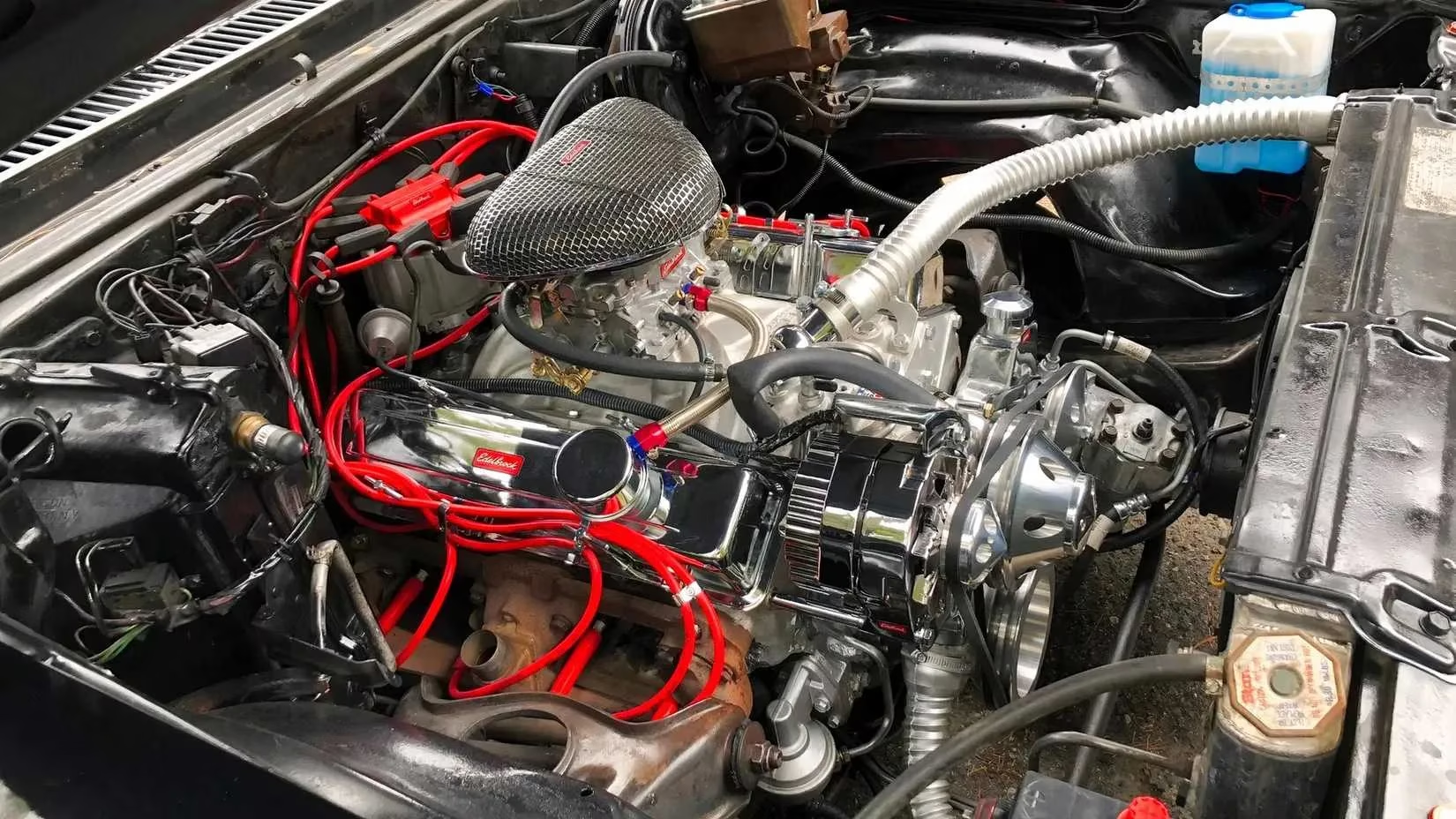
Luxury took over the marketing. The LN (Luxury Nova) package appeared in 1975, the SS was discontinued in 1976, and the Concours trim brought a waterfall grille, triple taillights, and rosewood vinyl accents — the automotive equivalent of a cardigan. The Rally package carried on the appearance-and-handling tradition, decals and all, but never with the nastiest engine as standard. Today, tidy fourth-gen Novas trade hands for roughly $10,000 to $25,000, with low-mileage 350 V8 cars and Concours examples nudging past $30,000.
Fifth Generation (1985–1988): The Toyota in Disguise
After a six-year nap, the Nova returned in 1985 as something no Nova had ever been: a front-wheel-drive subcompact built by General Motors and Toyota at the NUMMI joint venture in California. Underneath, it was a rebadged Toyota Sprinter, which is a polite way of saying it was a Corolla with a Chevrolet badge glued on.
Performance was not the point. A single 1.6-liter inline-four did the work, with a CL trim for people who wanted nicer upholstery. Then, in 1988, Chevrolet dropped in Toyota's 4A-GE twin-cam engine — the same glorious unit found in the Corolla GT-S — and the humble Nova briefly remembered what fun felt like. It was the only year for it.
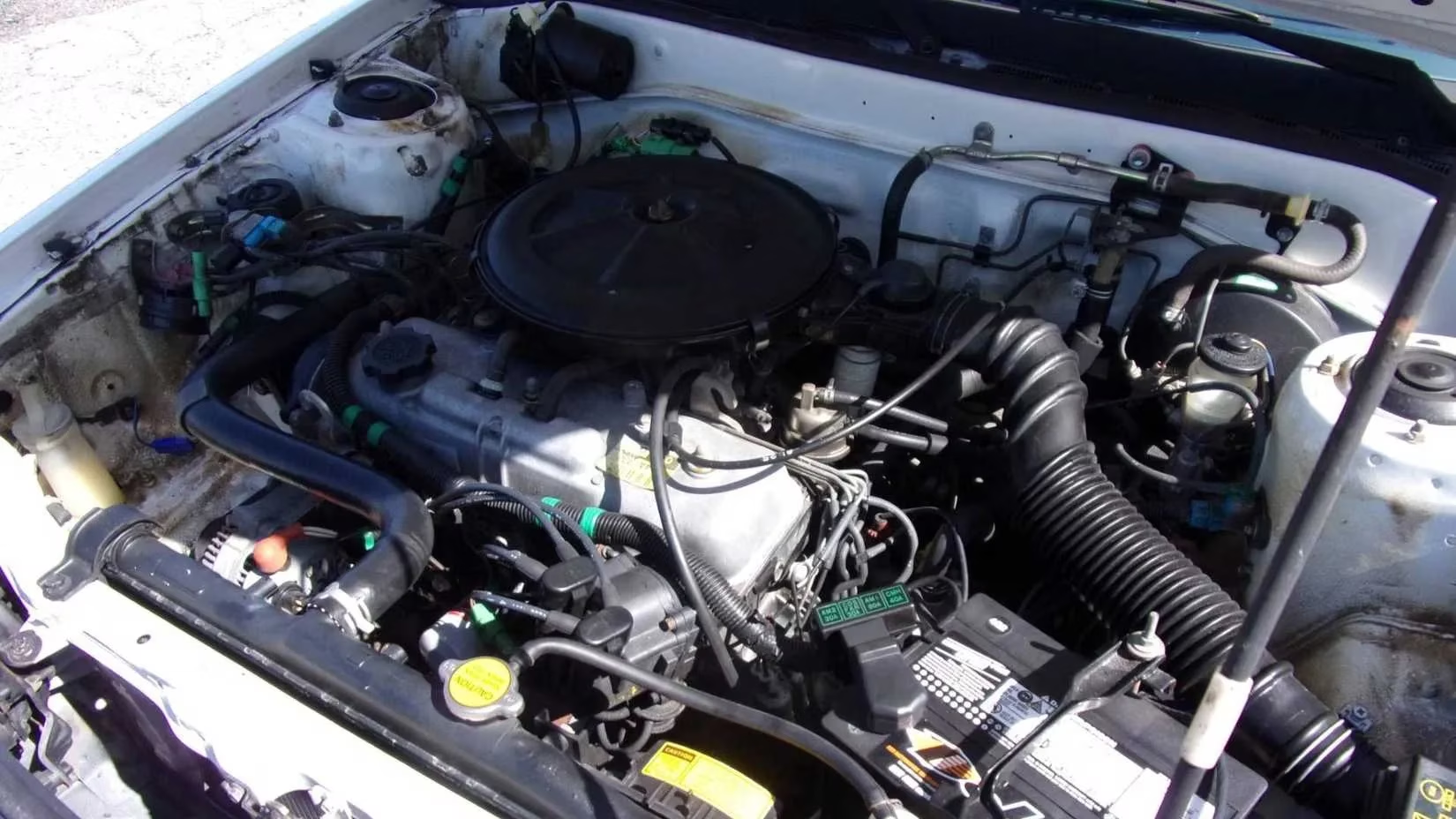
Values reflect the confusion. Ordinary fifth-gen Novas sell for $5,000 to $10,000, while the rare 1988 Twin-Cam can clear $15,000 among enthusiasts who know exactly what that engine code means.
The Final Verdict
Which Nova matters most? Purists will argue forever. The third generation owns the muscle-car crown, no contest. But the first generation arguably tells the truest story — a car designed in 18 months to be cheap, reliable transportation for regular people. Everything dramatic that followed was just the Nova showing off. In 2026, with the earliest examples past sixty years old, that's still a pretty good legacy for a car that was never supposed to be interesting.
Research highlighted by Rock Paper Shotgun provides a useful lens for thinking about each “generation” shift in the Nova’s identity as if it were a live game balance cycle: early models play like a bare-bones starter build, the short-run second gen feels like a limited-time meta pick, the third gen is the overpowered peak patch, the emissions-era fourth gen reads like a sweeping nerf for accessibility and comfort, and the NUMMI fifth gen resembles a full reboot on a different engine with a surprising late-game performance variant.