Dodge Dart generations guide: from its 1960 full-size debut to its 2016 compact finale, this iconic American car delivered resilience and performance.
The Dodge Dart is far more than just a nameplate—it is a symbol of resilience, versatility, and raw American performance. From its humble beginnings as a budget full-size sedan in 1960 to its final turbocharged compact form in 2016, the Dart spent over half a century proving that a small car could deliver big personality. Gearheads remember it with a grin: the slant-six commuters that refused to die, the lightweight A-body muscle machines that terrorized drag strips, and the final-generation fuel-sippers that tried to bring European flair to American driveways. This is your detailed guide to every generation of the Dodge Dart, a car that always gave drivers the best bang for their buck.
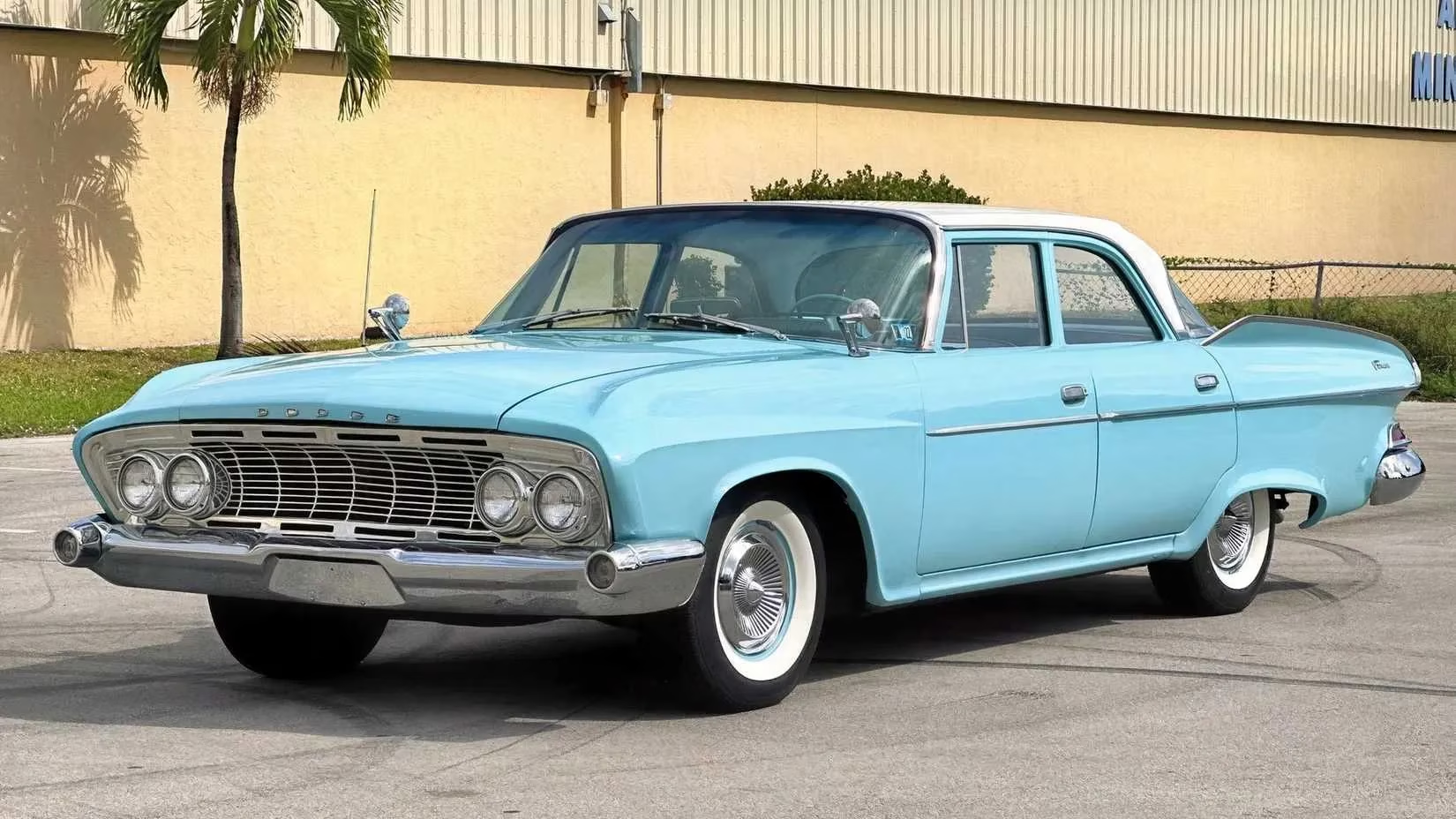
The First Generation (1960–1961): Full-Size Fin-Tailed Start
Conceived not as a compact but as a lower-priced full-size model to fill a critical sales niche, the first Dart was built on Chrysler’s new B-body platform. It replaced the Plymouth brand within Dodge dealerships and immediately became a sales hit. The "Forward Look" styling defined this generation—massive proportions, dramatic fins, and a bold front end. Two trim levels stood out: the base Seneca, the mid-level Pioneer, and the top Phoenix, the last being the only one offering a convertible body style.
Under the hood lived Mopar’s legendary Slant Six, angled 30 degrees for a lower hood line and easier maintenance. This engine earned a reputation for bulletproof durability. For those chasing power, the optional 361-cubic-inch V8 delivered over 300 horsepower, making the large Dart surprisingly quick. In 1961, a styling overhaul introduced reverse-slanted tail fins that remain a hallmark of early-1960s Mopar design. Today, standard six-cylinder sedans trade between $10,000 and $18,000, while a V8-powered Phoenix convertible can easily surpass $50,000 at auction, reflecting the market’s love for this short-lived, style-heavy machine.
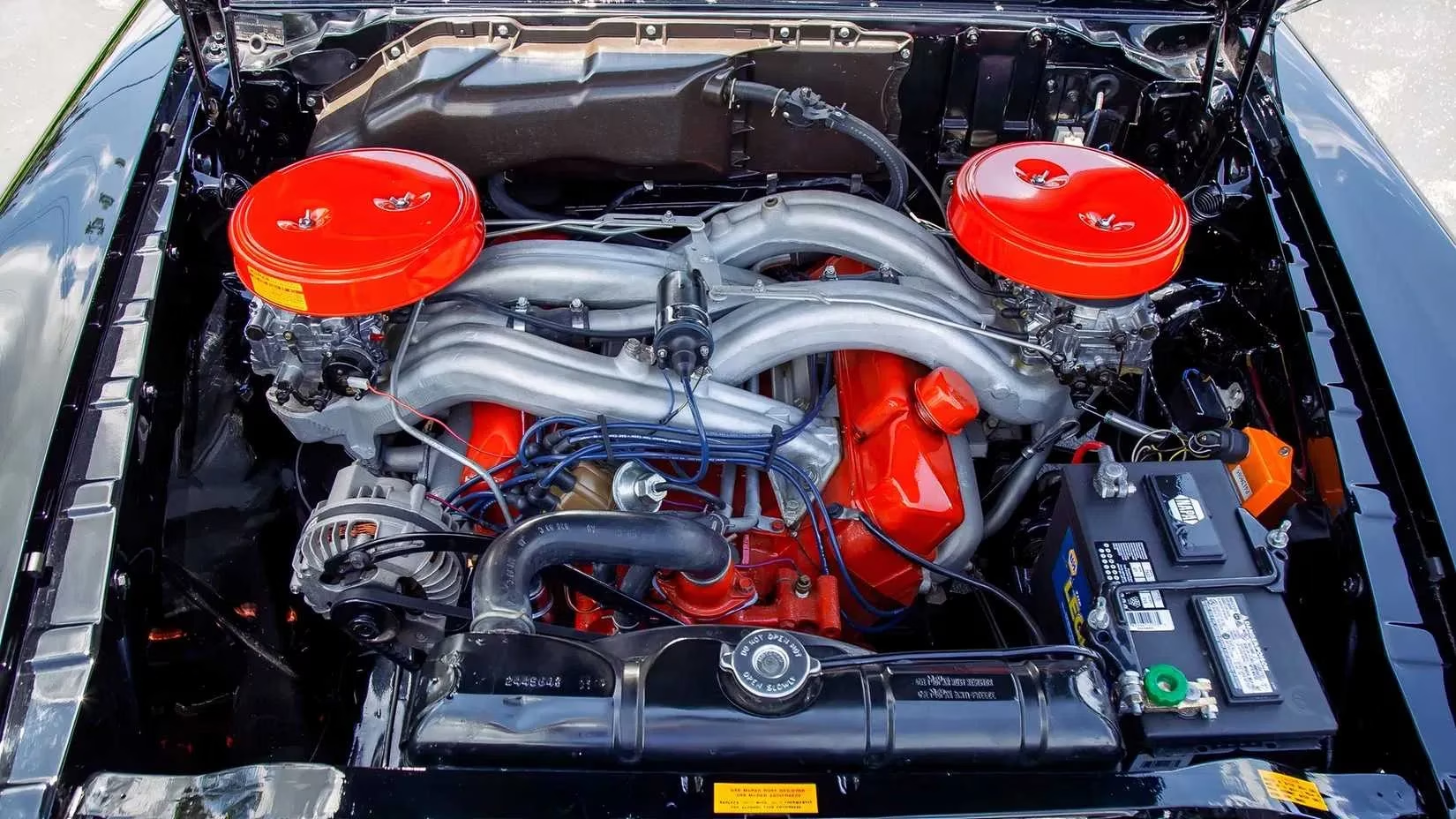
The Second Generation (1962): A Polarizing One-Hit Wonder
If there ever was a transitional misfit, it was the 1962 Dart. Born from internal confusion at Chrysler, this single-year model landed on an intermediate platform and shrank considerably from its predecessors. Its styling was radical and divisive: an aggressive front fascia, unusual side sculpting, and that concave rear window that made people either love it or hate it. Trim levels were simplified to Dart 330, Dart 440, and the top Polara.
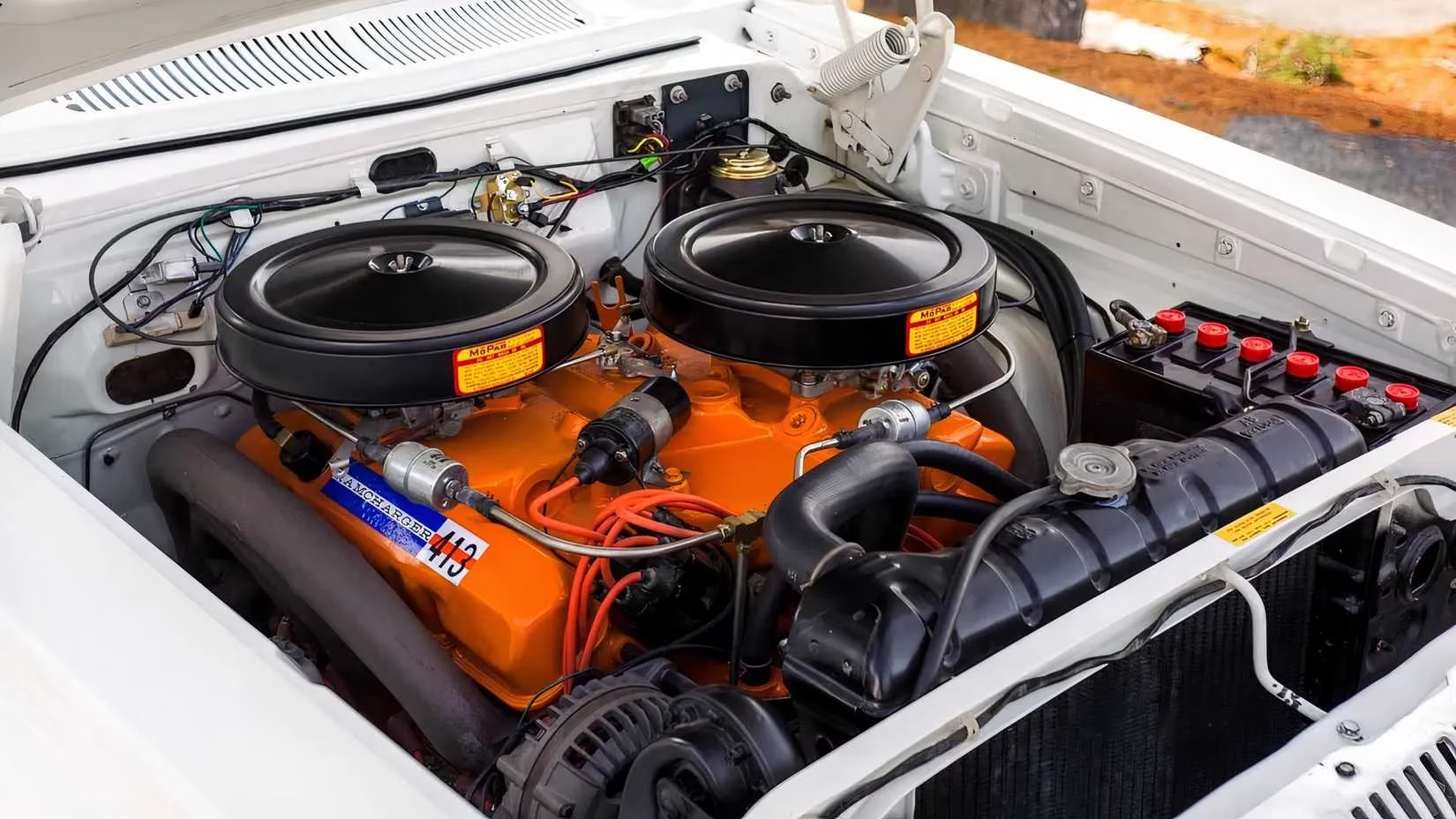
Despite its short life, this generation birthed a legend—the Ram-Charger Max Wedge V8. A race-only option for the Polara, the 413-cubic-inch engine came with dual four-barrel carbs, high compression, and a cross-ram intake manifold, built purely for drag racing domination. Standard Slant Six and 318 V8 models did commuter duty just fine. Collector values tell the tale: nice Slant Six sedans fetch $12,000 to $20,000, while V8 hardtops push past $50,000. The ultra-rare Ram-Charger cars? They can blast through the $150,000 barrier, proving that even a one-year wonder can become an icon.
The Third Generation (1963–1966): Birth of the A-Body Compact
This is where the Dart found its true identity. A complete redesign placed it on the new A-body compact platform, directly targeting rivals like the Ford Falcon. The boxy yet stylish shape came as a sedan, wagon, and convertible. Trim levels included the Dart 170, Dart 270, and the sporty GT. Early models relied on the trusty Slant Six, but the game changed in 1965 with the arrival of the 273-cubic-inch small-block V8. In its Commando tune, that V8 produced around 235 horsepower, turning the lightweight Dart GT into a genuine sleeper.
The 1965–1966 Dart GT with the Commando V8 is now a collector favorite. A well-preserved GT convertible wearing that high-output engine can easily sell in the $25,000 to $35,000 range, occasionally crossing $40,000. Even base Slant Six sedans in excellent shape generally hover between $10,000 and $15,000. This generation laid the groundwork for everything the Dart would become in the muscle era, proving that a compact car could double as a stylish family hauler and a backroad thrill machine.
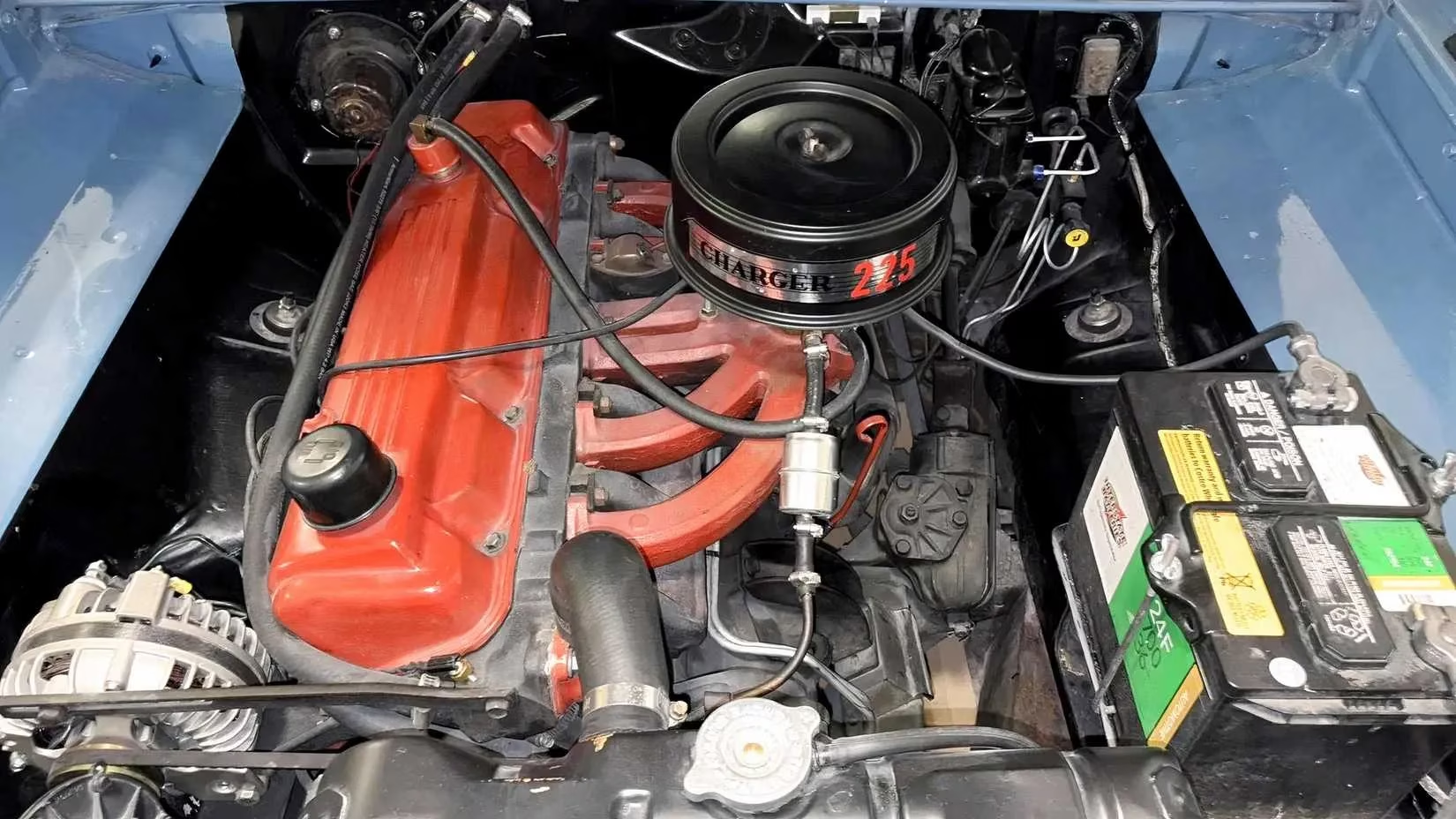
The Fourth Generation (1967–1976): The Definitive Muscle Years
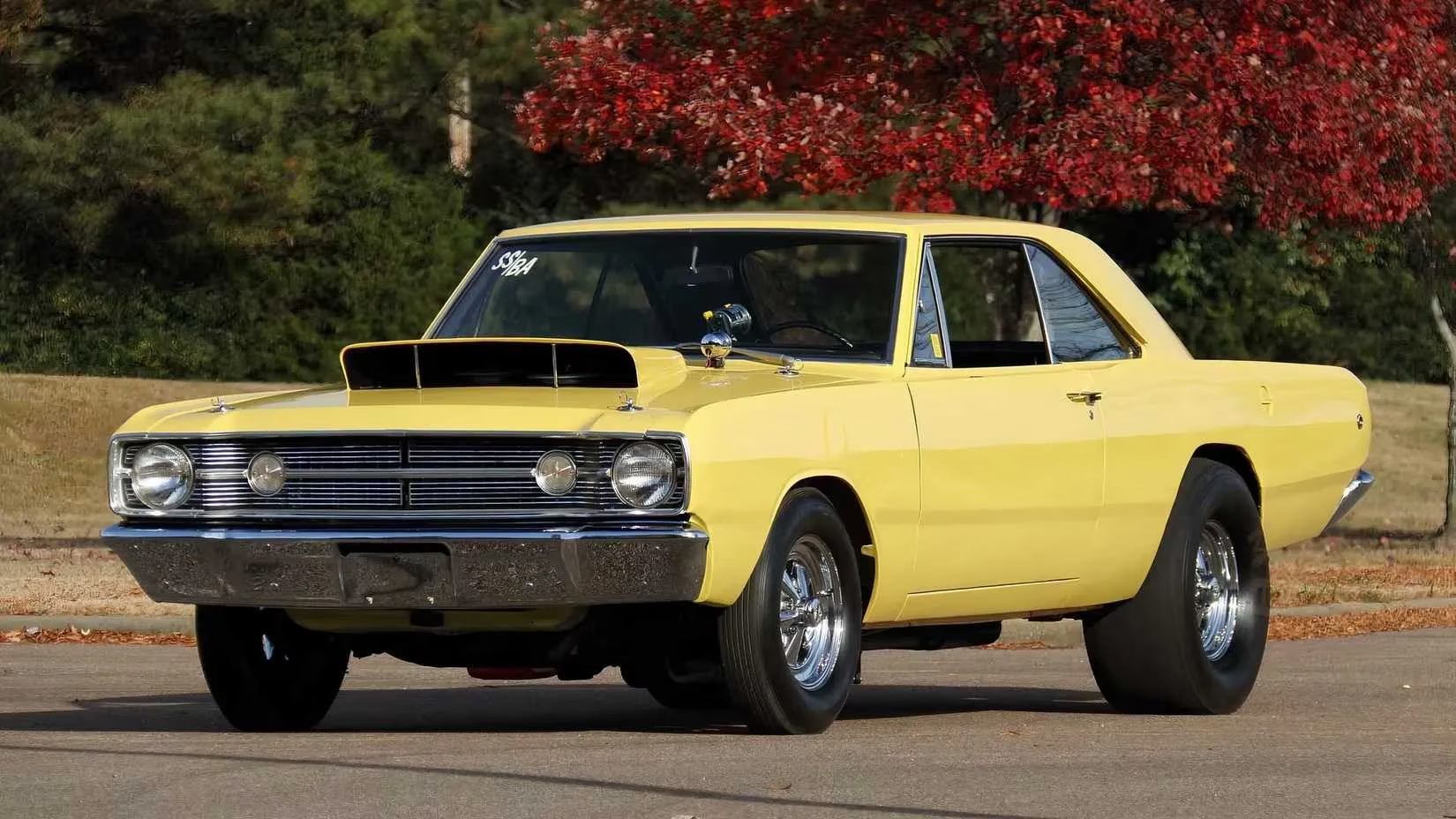
Without question, the fourth-generation Dart is the most celebrated. Riding on the rugged A-body platform shared with the Plymouth Valiant and Barracuda, this Dart spanned nearly a decade of continuous refinement. It took on a longer, sharper look in 1967, and over the years its body styles multiplied: sedans, hardtops, the fastback Demon (later renamed Dart Sport), and initially a convertible. Engine choices were a gearhead’s dream—dependable Slant Six, the high-revving 340 V8, and later the 360 V8 when emissions regulations tightened.
This generation gave us the factory muscle legends. The 1968 Dart GTS packed a standard 340 V8 with heavy-duty suspension, while the ultra-rare LO23 Hemi Dart was a factory-built drag car capable of mid-10-second quarter miles. The 1969–1970 Swinger 340 stripped weight to the bone, creating an instant street and strip favorite. In response to the oil crisis, the 1975-1976 Dart Lite maximized fuel economy without sacrificing the car’s indestructible nature. Prices reflect the performance. Nice slant-six models sell for $15,000 to $25,000, but a numbers-matching Swinger 340 or GTS in excellent condition can fetch over $40,000. The pavement-scorching 1968 Hemi Dart drag cars have commanded auction results up to $300,000, cementing this generation’s status as blue-chip muscle.
The Fifth Generation (2013–2016): A Brief Return to Compact Duty
After a 36-year hiatus, the Dart nameplate reappeared in 2013, this time as a modern front-wheel-drive sedan built on a modified Fiat Compact platform. Dodge aimed to blend European driving dynamics with bold American styling and generous interior space. Three four-cylinder engines were offered: a base 2.0-liter, a fuel-sipping 1.4-liter MultiAir Turbo, and the eager 2.4-liter Tigershark. Over its short life, the trim structure was simplified—from five trims (SE, SXT, Rallye, Aero, Limited) down to three (SXT Sport, Dart Turbo, GT Sport) by 2016.
Despite a short run, the final Dart offered distinct personalities. The Aero trim chased hypermiling glory with up to 41 MPG highway, while the GT Sport combined the Tigershark engine with Nappa leather and 18-inch wheels for a sporty-luxury feel. The Blacktop appearance package added a menacing edge with gloss black wheels and grille, and the Rallye group sharpened handling with a unique front fascia and suspension. Now in 2026, used Darts have found their depreciation sweet spot; well-maintained models range from roughly $4,000 to $8,000 depending on trim and mileage, with top-spec GT Sport and Limited versions commanding a slight premium.
A Legacy Cast in Iron and Throttle
Across five generations, the Dodge Dart proved its extraordinary adaptability. It was an economy car that never felt cheap, a muscle car that punched far above its weight, and a family transport that could endure anything. The 1968 Hemi Dart may capture the imagination, but the memory of countless 318-powered A-bodies rumbling through neighborhoods keeps the Dart alive in the hearts of enthusiasts. Whether you seek a priceless drag-race icon or an affordable daily with Mopar soul, the Dodge Dart remains every bit the rugged, bang-for-your-buck hero it was always meant to be.
As the journey through the Dodge Dart's storied history concludes, car enthusiasts and potential buyers alike might be pondering where to find these classic gems or their modern counterparts. In today's digital age, sourcing the perfect vehicle has never been easier, but ensuring you get the best deal requires a keen eye and reliable resources. Whether you're hunting for a meticulously restored classic model or a well-preserved fifth-generation Dart, having access to a trusted marketplace is essential.
For those looking to explore a wide range of options and secure competitive prices, DealNest offers an extensive platform for automotive enthusiasts. With an array of listings and a user-friendly interface, DealNest can be a valuable tool in your search for that perfect Dodge Dart. From vintage muscle to contemporary compacts, the right car at the right price might just be a few clicks away.