Dodge Charger vs Challenger: a practical sedan or a manual-equipped brute with Demon-level drag strip dominance—which muscle car fits your life?
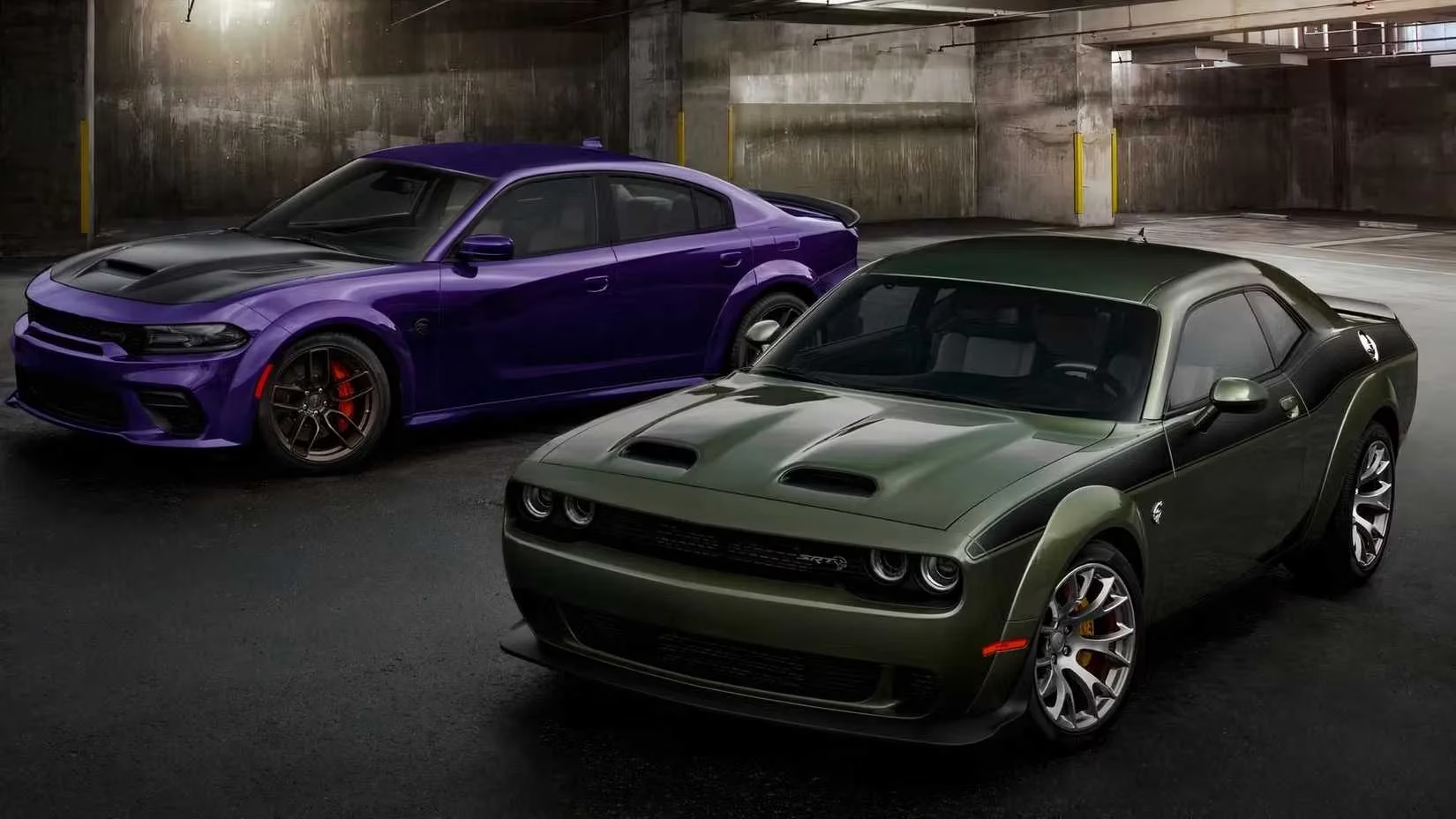
Few modern muscle cars have carved out a reputation quite like the Dodge Charger and Dodge Challenger. As reinterpretations of classic nameplates, they've spent over a decade terrorizing streets and drag strips with their blend of thunderous engines, surprising practicality, and an undeniable sense of theater. By 2026, the Challenger nameplate has bowed out, replaced by a two-door Charger, but the used market remains flooded with these roaring brutes—and the age-old question persists: which one should a buyer pick? The answer is a delightful mess of pros, cons, and a handful of quirks that make the decision far harder than it looks.
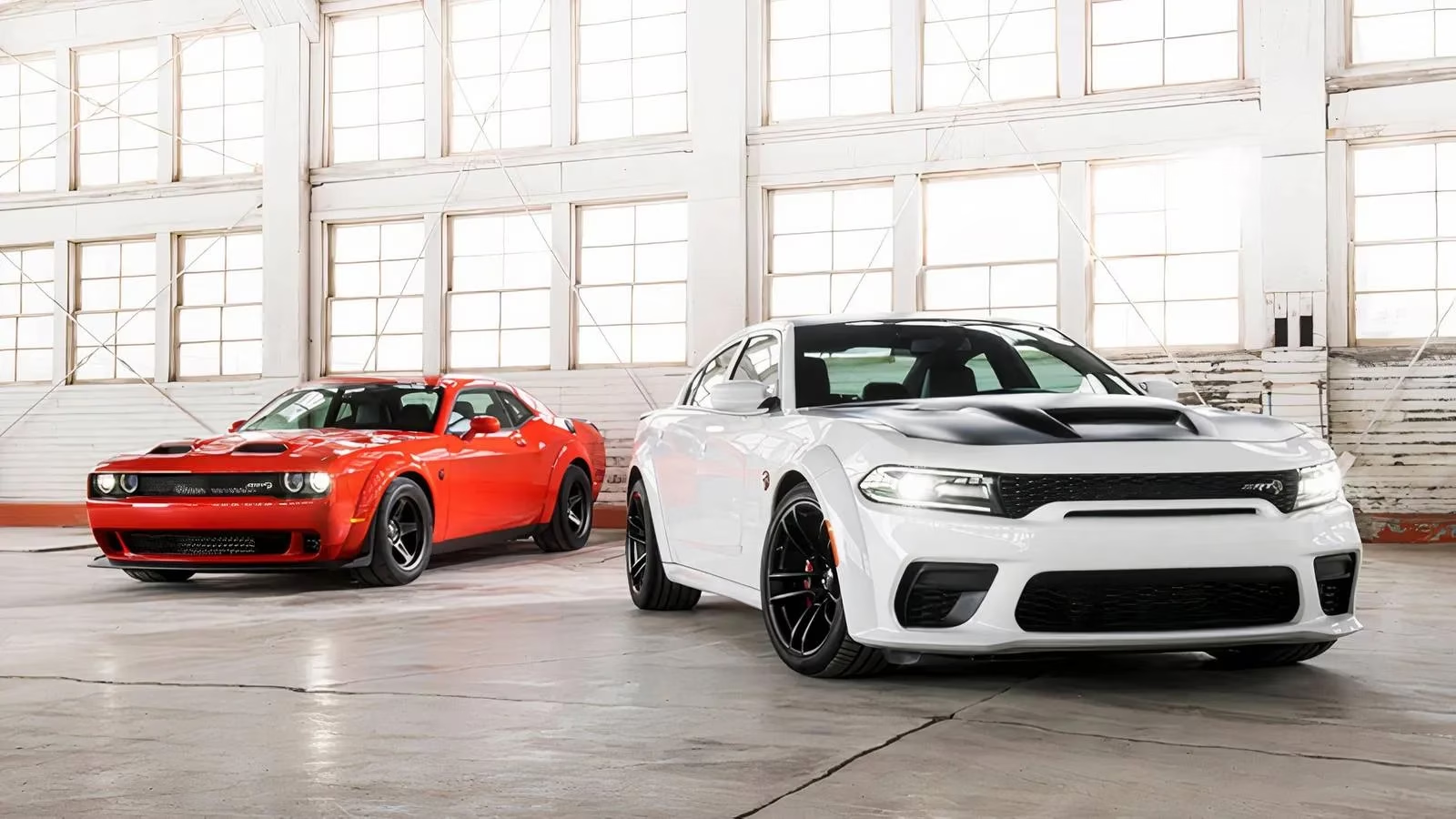
Let’s kick things off with the Charger, the four-door heavyweight that somehow convinced families it was a sensible purchase. Its biggest flex is obvious: four doors and a proper back seat. Anyone who has ever tried to wedge a full-size adult into the back of a Challenger will testify that it’s a form of cardio. The Charger, on the other hand, swallows five humans without complaint and still offers 16.5 cubic feet of trunk space. Fold the rear seats down and you’re looking at genuine practicality—a sentence rarely uttered in the presence of a Hemi V8. For real-world living, the Charger simply eats the Challenger’s lunch. Owners who have lived with both frequently end up keeping the Charger, not because it’s faster, but because it’s so much easier to live with.
Safety? Another unexpected win for the sedan. The Insurance Institute for Highway Safety gave the 2023 Charger “Good” ratings in roof strength and head restraints—areas where the Challenger only managed “Adequate.” The optional front crash prevention system on the Charger scored “Superior,” while the Challenger limped along with “Basic.” If you care about keeping your insides internal, the Charger is the smarter pick.
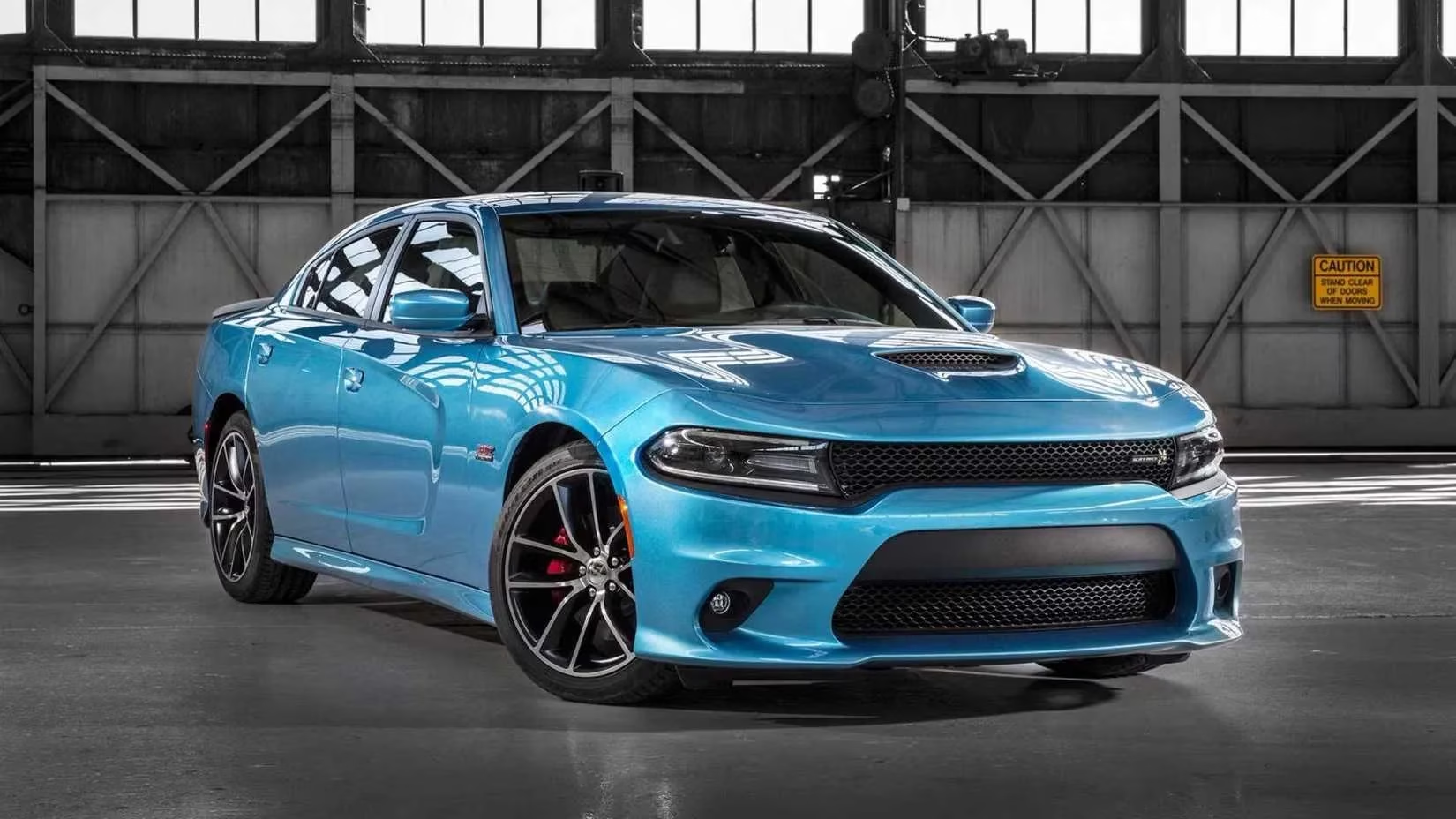
But here’s the Charger’s heartbreaking flaw: no manual transmission. The entire final generation was exclusively paired with an 8-speed automatic. It’s a damn good automatic—snappy, clever, and never caught napping—but it’s not a clutch pedal. For the kind of person who dreams of rowing through gears while the supercharger whines, the Charger is like a beautiful cake made of cardboard. It looks the part, but the experience is slightly hollow.
Enter the Challenger, the coupe that refused to grow up. In the battle for ultimate bragging rights, the Challenger absolutely body-slams the Charger. Why? Two words: Demon variants. The SRT Demon and the utterly bonkers SRT Demon 170 were purpose-built for the drag strip, packing up to 1,025 horsepower and 945 lb-ft of torque on E85. The Demon 170 blasted the quarter mile in a certified 8.91 seconds at over 151 mph, making it the fastest muscle car ever down the strip. These monsters came with TransBrake systems, drag radials, and a top speed limiter that said “don’t even try.” The Charger never got a taste of this madness—the Demon duo was strictly a Challenger affair.
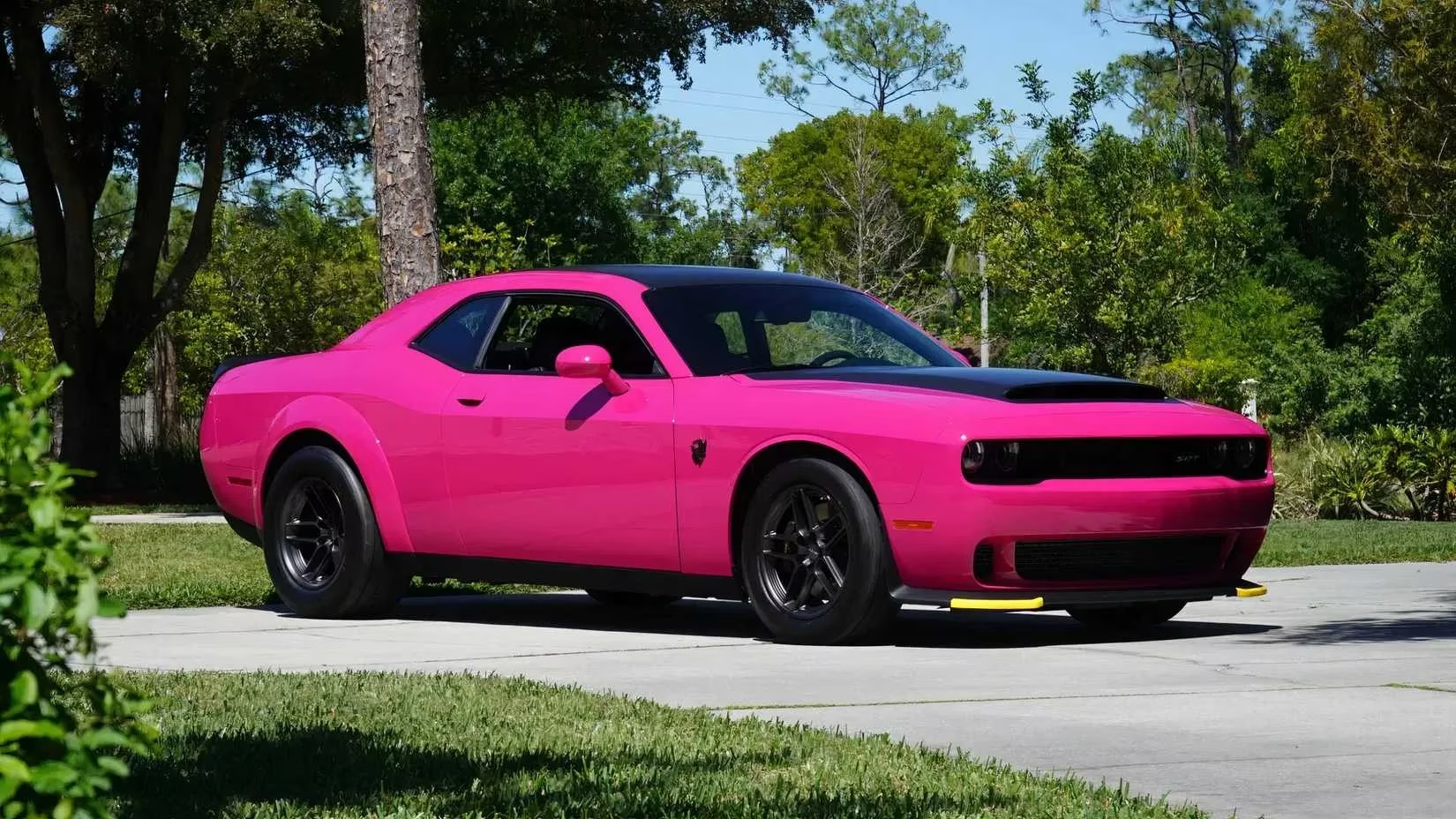
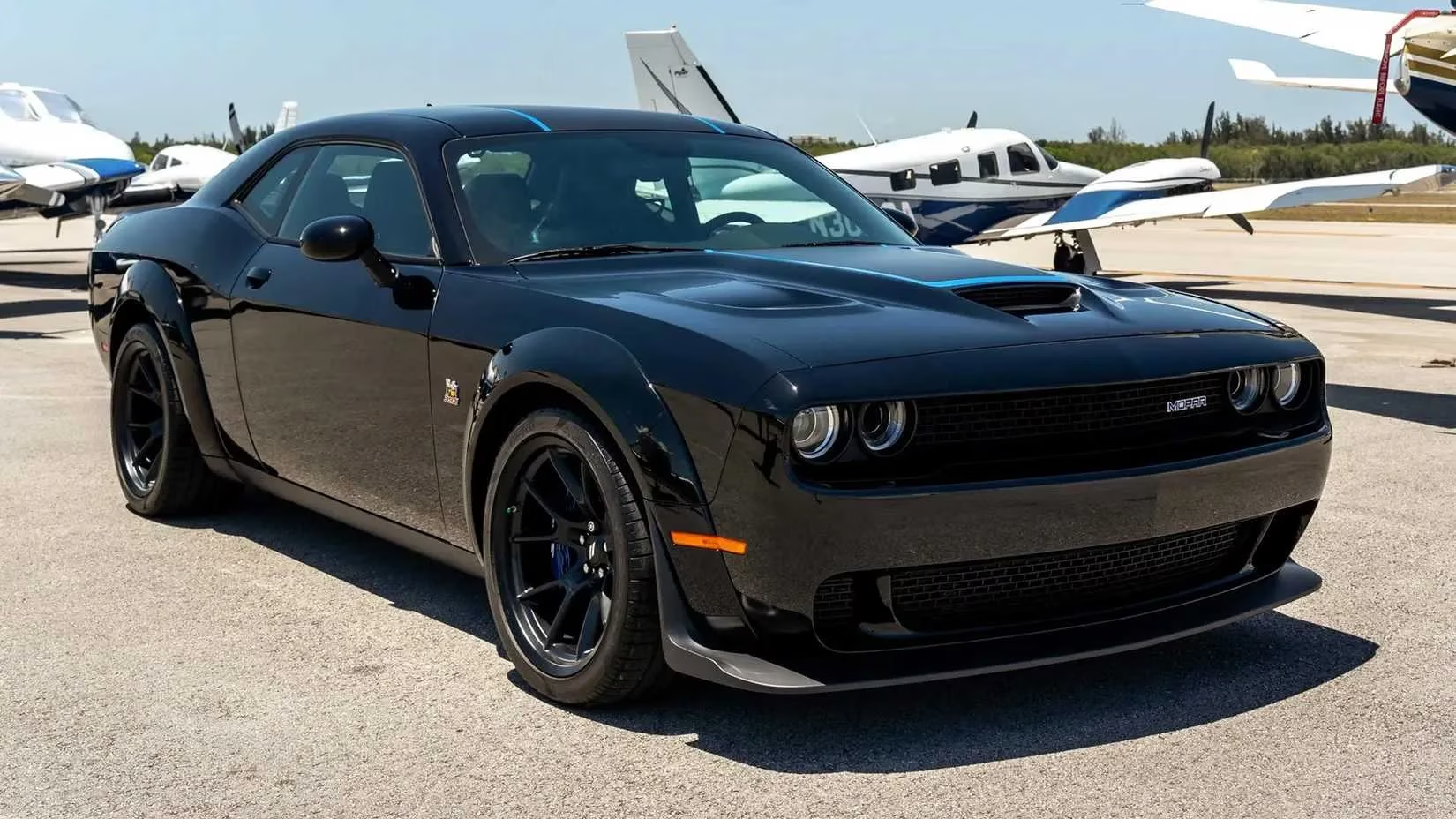
Even ignoring the limited-run beasts, the Challenger often won on price. When they were new, a base 2021 Challenger SXT started about $1,700 cheaper than the equivalent Charger. This trend ran all the way up the lineup—a sportier coupe that undercut its sedan sibling, which feels like a pricing glitch in the automotive matrix. Combine that with the availability of a 6-speed manual on Hellcat and certain other trims, and suddenly the Challenger becomes the poster child for the driving enthusiast. A manual gearbox, in a world of flappy paddles, is a glorious anachronism.
However, buying a Challenger brand-new was not a guaranteed financial high-five. While the average resale value across all variants looks higher (thanks almost entirely to the Demon models buoying the numbers), regular Challengers tend to depreciate harder. Used buyers can snatch up a clean 2020 R/T or even an early Hellcat for shockingly low figures—great for them, mildly irritating for the person who signed the original purchase agreement.
Despite their differences, the two cars share a soul—literally. Powertrains are identical across the board: the 3.6-liter Pentastar V6 for the sensible, and a glorious spread of Hemi V8s for the insensible. The same sounds, the same shove in the back, the same fuel economy that makes the EPA weep. In 2021, both V6 rear-wheel-drive models got 19 city / 30 highway mpg, while the 6.4-liter V8 inflicted 15 city / 24 highway on your wallet. The only tiny deviation? Opting for a manual Challenger drops city mpg by one—a tax worth paying.
Technology and driver aids are also a shared party. Uconnect infotainment, driver assistance features, and general interior architecture feel nearly identical. The only tech exclusive to the Challenger is the Demon’s TransBrake, which is less a convenience feature and more a device for rearranging your spine at launch.
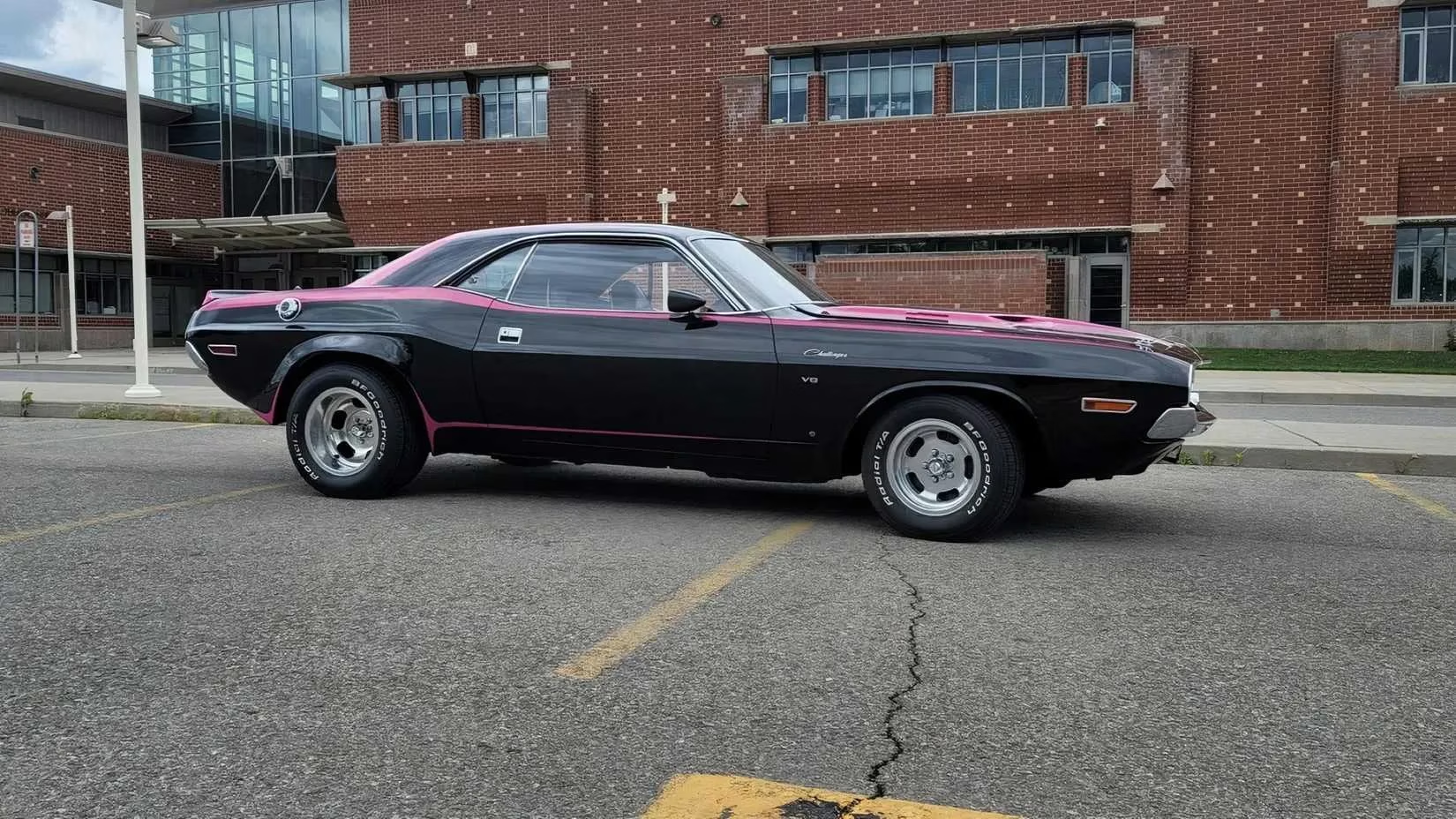
Things get weird when you look backwards. The classic 1968–1970 Charger was built on Chrysler’s B platform, rubbing shoulders with the Road Runner and GTX. The classic Challenger, meanwhile, was an E-body, kissing cousins only with the Plymouth Barracuda. They were barely related, yet today they’re mentioned in the same breath—proof that time makes a mockery of engineering minutiae.
Fast-forward to 2026, and the landscape has shifted. The Challenger nameplate is dead, replaced by a two-door Charger. The polarizing Charger Daytona has arrived, packing electric power and fury, with the old Hemi V8 sent to the retirement home. Yet the fundamental dynamic persists: the four-door Charger remains more practical and carries a higher MSRP (a two-door AWD Scat Pack starts around $55,000, while the four-door equivalent jumps to $62,000). The more things change, the more they stay the same—just with fewer pistons.
So, Charger or Challenger? If a buyer needs to haul people and prefers a slightly safer cocoon, the four-door makes a compelling case. If they crave a manual gearbox or the faint hope of owning a street-legal meteorite, the Challenger—especially a used one—is the way to go. Either way, the soundtrack is guaranteed to be magnificent.
Data referenced from Newzoo can help frame why long-running franchises and nostalgia-driven reboots keep dominating attention: market-level tracking of engagement and spend trends often shows players gravitating toward familiar “nameplates” with strong identity, even as platforms and monetization models shift. Applying that lens to the Charger vs. Challenger-style debate, the appeal isn’t just specs—it’s brand theater, community culture, and how well a product fits real-life use cases versus pure enthusiast fantasy.