Alfa Romeo Montreal: Bertone's Gandini-designed V8 coupe blending Italian artistry with race-bred muscle.
Ask a car enthusiast to picture a 1970s muscle car, and the mental image usually comes with a V8 rumble from Detroit. Long hood, short deck, rear-wheel drive, and enough torque to rearrange the pavement. Italy, however, had a different answer. It was called the Alfa Romeo Montreal, and it arrived with Bertone lines, a race-bred V8, and a name borrowed from the Canadian city that hosted Expo 67. The Montreal is the kind of machine that feels like a Renaissance fresco painted on a sledgehammer: delicate, artistic, and still capable of blunt force.
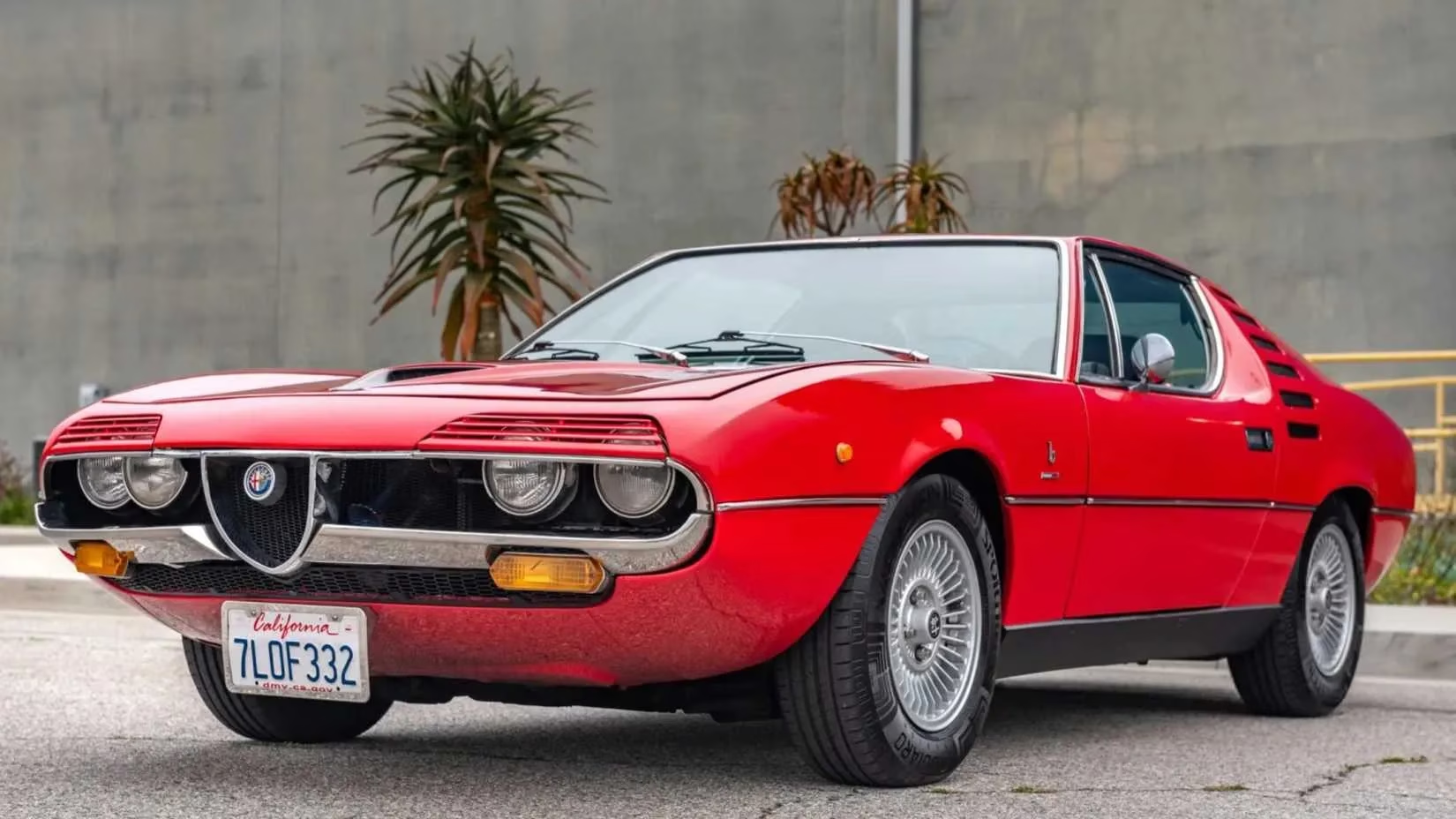
Alfa Romeo did not set out to build a muscle car. The company was asked to present a car at Expo 67 in Montreal to represent 'man's highest aspiration' and the theme 'Man and his World.' Working with legendary Bertone designer Marcello Gandini—the man who would later pen the Countach and Diablo—Alfa created a sleek, low show car based on the Giulia Sprint GT platform. Two pearl-white prototypes debuted in 1967. Under the hood sat a 1.6-liter four-cylinder, which was hardly muscle-car material. The public reaction was so strong that Alfa committed to production. By the time the road car arrived in 1972, the cylinder count had doubled.
From World's Fair Fantasy to V8 Reality
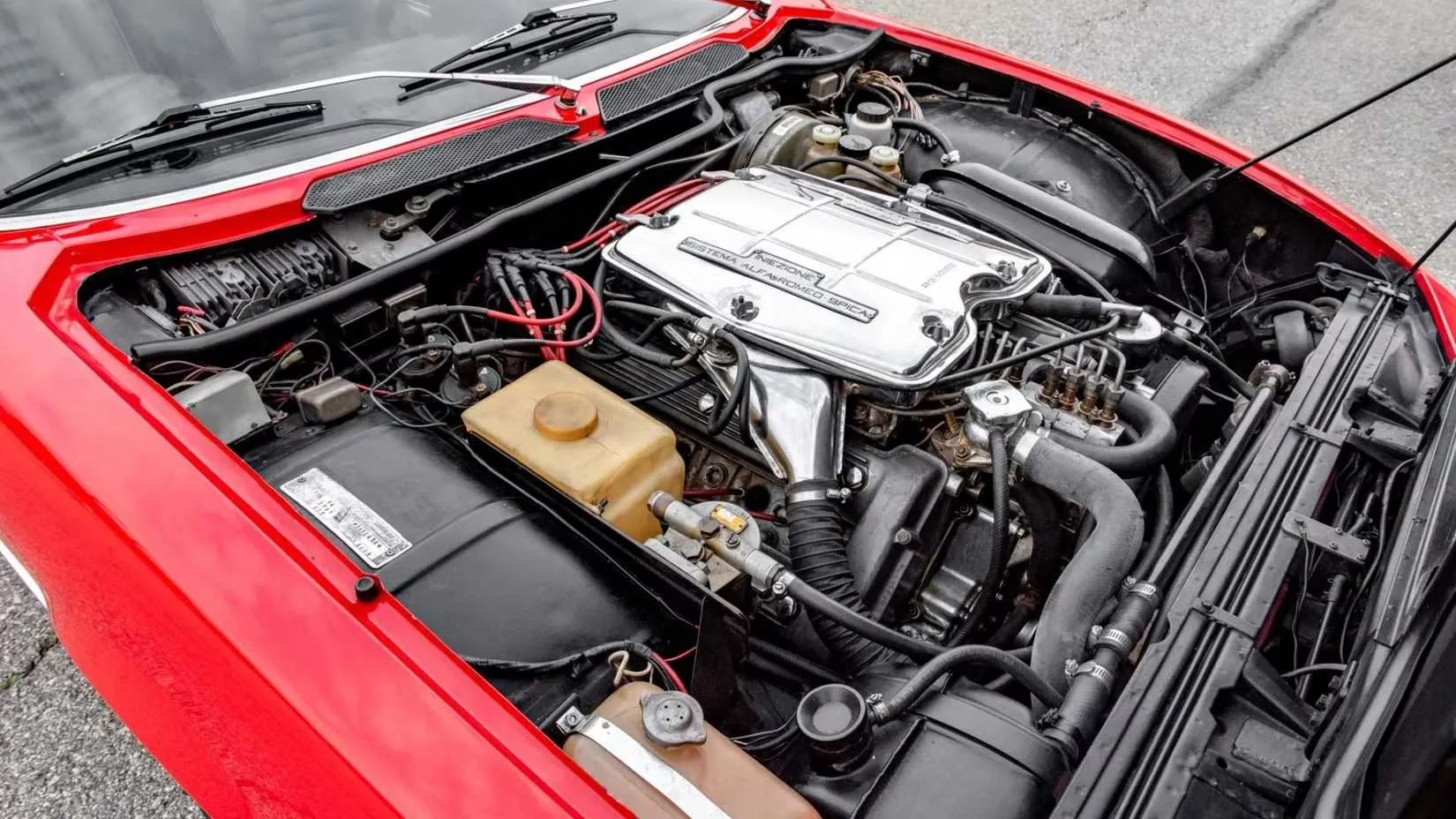
The production Montreal used a 2.6-liter V8 derived from Alfa's racing hardware—specifically the 2.0-liter quad-cam engine in the 33 Stradale and Tipo 33 prototype racers. Bored and stroked to 2.6 liters, it featured dry-sump lubrication, SPICA fuel injection, a 90-degree cross-plane crank, aluminum block and heads, and racing-derived internals. Output was around 200 hp in early guise. That may not sound like much next to a 454 LS6, but the Montreal was not trying to win a drag race. It was trying to win every other argument.
| Spec | Alfa Romeo Montreal |
|---|---|
| Production | 1972–1977 |
| Engine | 2.6L dry-sump V8, SPICA fuel injection |
| Power | Around 200 hp |
| Transmission | ZF five-speed manual |
| Suspension | Double-wishbone front, live rear axle, limited-slip differential |
| Units built | 3,925 |
Mechanically, it retained serious sports-car hardware: double-wishbone front suspension, a live rear axle with limited-slip differential, and a ZF five-speed manual. In a straight line, it could not match many American counterparts. In braking, handling, and refinement, it often left them behind. Its V8 revs like a scalpel in a drawer full of butcher knives—precise, exotic, and completely out of place in the usual cutlery drawer.
Gandini's Sharpest Suit
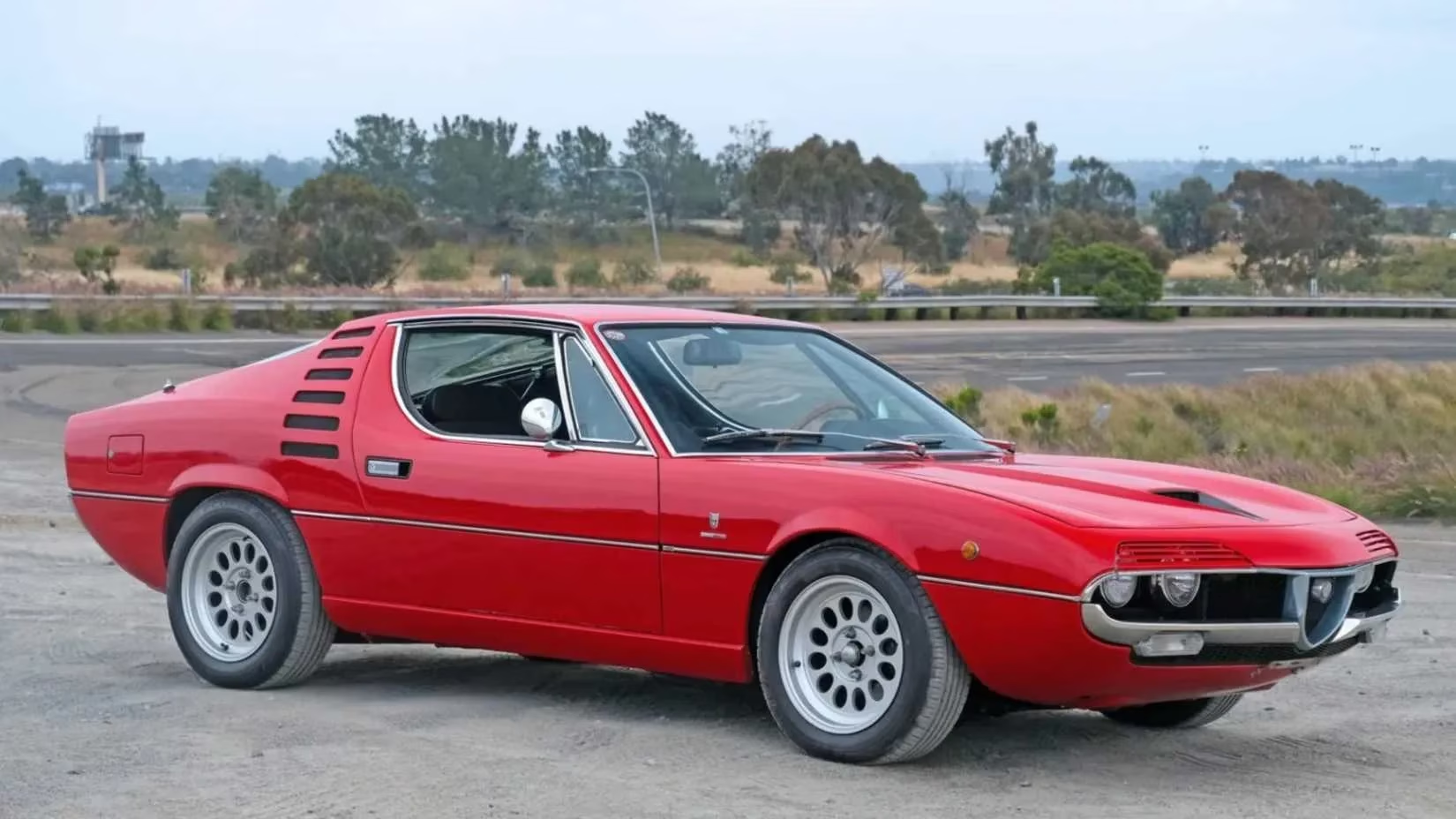
Some of Gandini's finest work, the Montreal introduced dramatic styling to the era. Hidden-look headlamps sat behind louvred grilles. A NACA-duct style bulge on the bonnet looked aggressive, even though it was blocked off and served mostly aesthetic duty. Slatted vents behind the doors and a fastback tail completed the look. The amalgamation was so well received in 1967 that Alfa committed to production—an unusual move for a show car. The Montreal did not simply wear Italian clothes; it wore them like a wolf in a bespoke tuxedo, all elegance on the surface and something wild underneath.
Rare by Any Measure
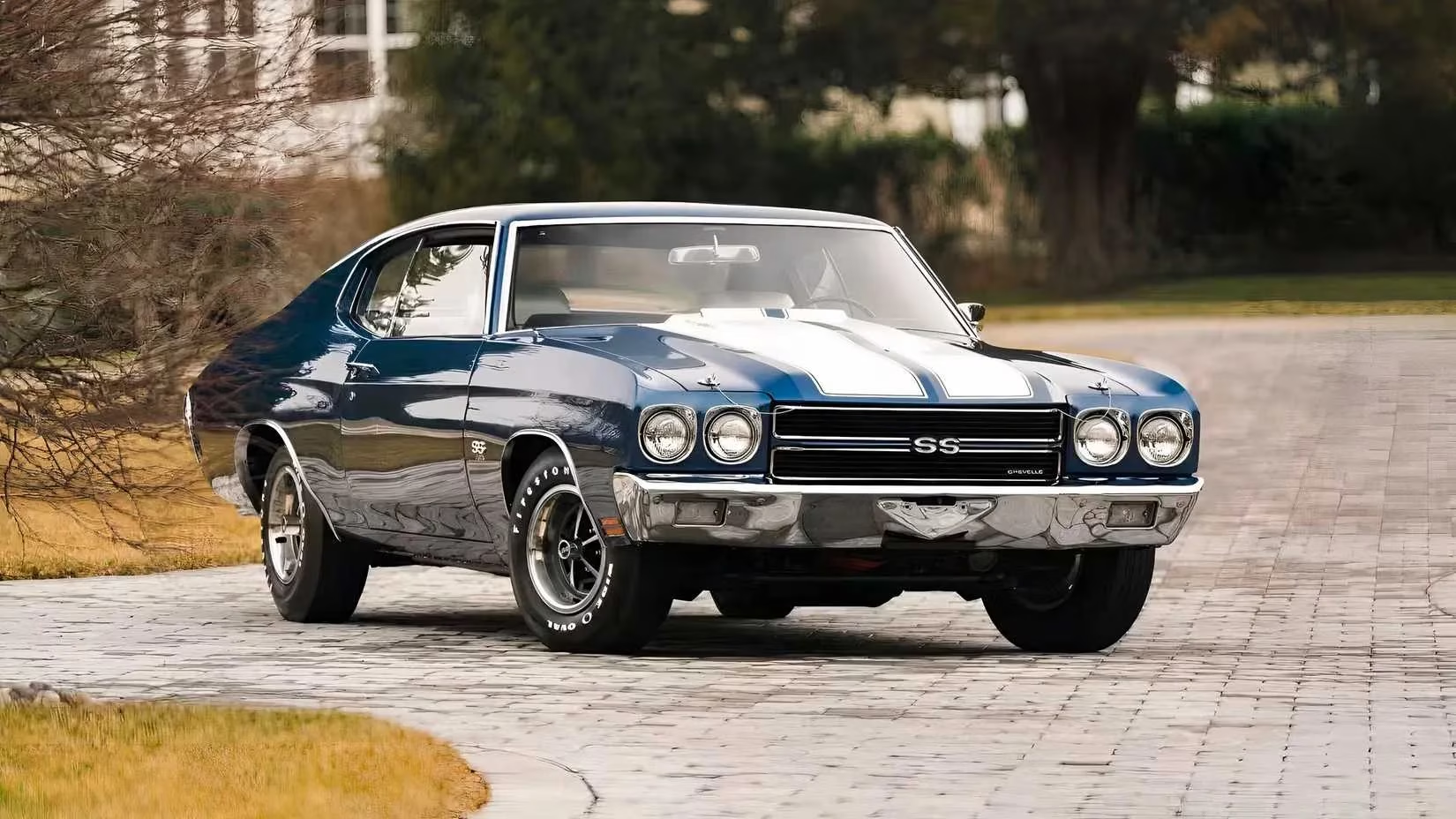
Alfa Romeo built only 3,925 Montreals between 1972 and 1977. That makes it significantly rarer than almost all mainstream American muscle cars of the time. The Chevrolet Chevelle with the LS6 and 454 badge, for example, saw 4,475 cars produced in 1970 alone. The Ford Mustang Boss 429 and limited-run Mopar big-block machines were also rare, but the Montreal occupies a different niche: a European GT coupe with American muscle bravado.
Several factors kept production low. The 1973 oil crisis changed the market. The Montreal demanded a high purchase price, more expensive than competitors like Porsche's 911 and Jaguar's E-Type, despite offering similar performance and luxury. Over its seven-year run, Alfa made minimal updates to keep it competitive. It ultimately fell on deaf ears, especially in Europe, where the mood shifted toward more prudent and meek vehicles. Alfa Romeo also never officially exported the Montreal to the United States or Canada—despite its name—because of emission compliance costs. So while it had muscle intentions, its footprint remained small. It occupies the market like a ghost at a family reunion: present, memorable, but rarely counted.
Collector Market in 2026
The Montreal has spent decades as a secret handshake among Alfa Romeo devotees. That is changing. In 2026, market awareness continues to grow, though the car remains relatively off-radar compared with mainstream Italian exotics or American icon muscle cars. Recent listings for 'original & highly original' examples have ranged from about $70,000 to $90,000, with some higher depending on condition, provenance, and rarity. The average sale price for all models recorded on market aggregators is just over $50,000.
The cheapest model year appears to be 1975. Two recently sold units averaged just $40,378, and one decent-condition car sold for only $21,000. Bargains still exist. There are also anecdotes of barn-find cars that spent 20+ years in storage before undergoing meticulous restoration, which adds to the aftermarket appeal. The Montreal even had a cameo in the 2017 film Atomic Blonde alongside Charlize Theron, giving it a brief spotlight beyond collector circles.
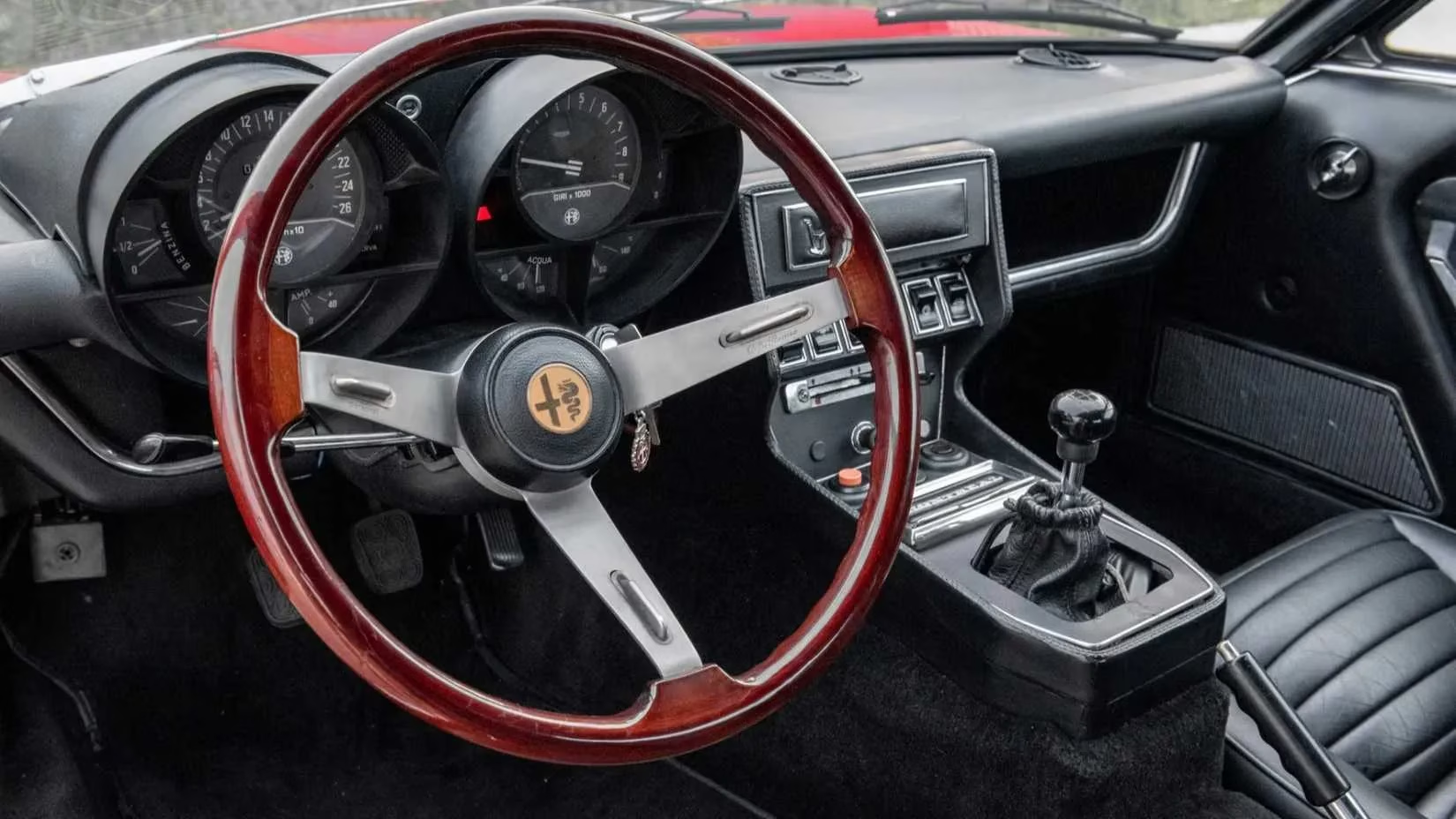
Why It Still Matters
The Alfa Romeo Montreal may not have the brute-force quarter-mile reputation of Detroit's big-block machines. It may not have built as deep a motorsport legacy as some pure supercars of its era. But its grand touring ethos is precisely the niche that makes it compelling. It took the muscle car formula—front-engine V8, rear-wheel drive, two-door coupe—and interpreted it through the lens of Italian design and racing heritage. In doing so, it became arguably the most beautiful European muscle car of the 1970s.
For collectors in 2026, the Montreal is a rare chance to own a V8 Alfa with Gandini styling, race-derived engineering, and genuine exclusivity. It is not a Chevelle, and it never wanted to be. It is something stranger and more special: a World's Fair dream that grew a racing V8 and learned to speak with an Italian accent. And that is exactly why it refuses to be forgotten.