The 1971 Iso Grifo Series II classic car blends Italian design and Detroit V8 power, offering rare prestige, reliability, and thrilling performance.
In the hushed gallery of a prestigious 2026 classic car auction, a low-slung shape drew gasps from collectors who had seen everything. The car was a 1971 Iso Grifo Series II, its silver body catching the light like a wave frozen in metal. To the untrained eye, it might have been yet another Italian exotic, but the rumbling idle from its tailpipes told a different story—one of a machine that had audaciously stitched together two worlds.
Long before cross-border engineering became trendy, Renzo Rivolta envisioned a grand tourer that married the soul-stirring beauty of Italian design with the untamed power of a Detroit V8. His company, Iso, had originally built refrigerators and bubble cars, yet Rivolta was determined to challenge the giants of Maranello and Sant’Agata Bolognese. With help from two legends—engineer Giotto Bizzarrini and stylist Giorgetto Giugiaro—the Iso Grifo was born, a car that looked like it had been sculpted by the wind and sounded like a thunderstorm.
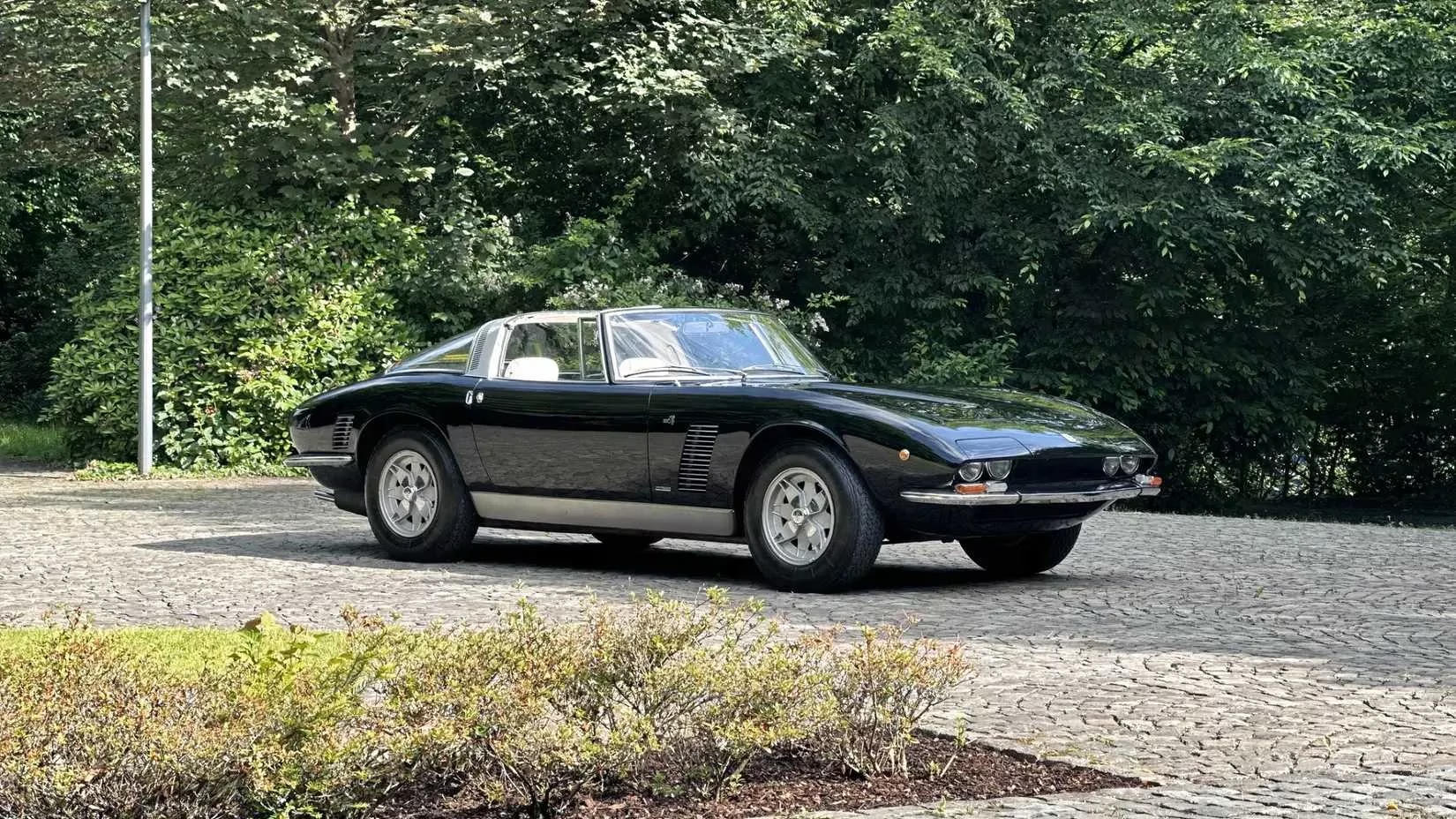
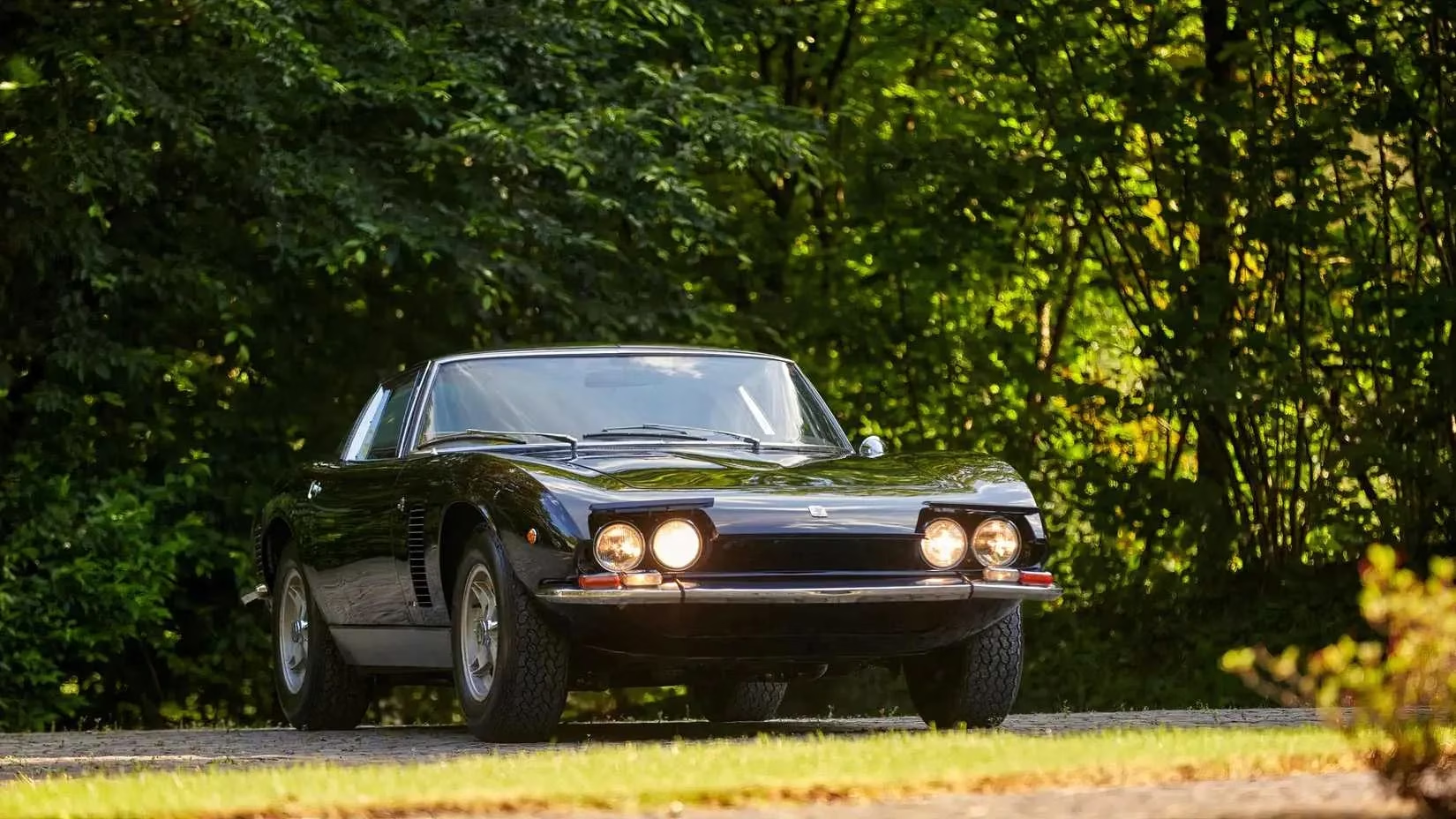
The Series II, which arrived in 1970, sharpened the Grifo’s silhouette with pop-up headlights and a more aggressive stance. But the true magic hid beneath the long bonnet. While Ferraris relied on complex, high-strung V12s that demanded constant care like a coddled racehorse, the Grifo housed a Chevrolet 454-cubic-inch big-block V8. This was the same engine that powered the era’s most ferocious Corvettes, a cast-iron leviathan that churned out 395 horsepower and nearly 500 lb-ft of torque. It was an inspired act of mechanical heresy: taking the heart of an American muscle car and surgically implanting it into a body that seemed to flow from a Renaissance painting.
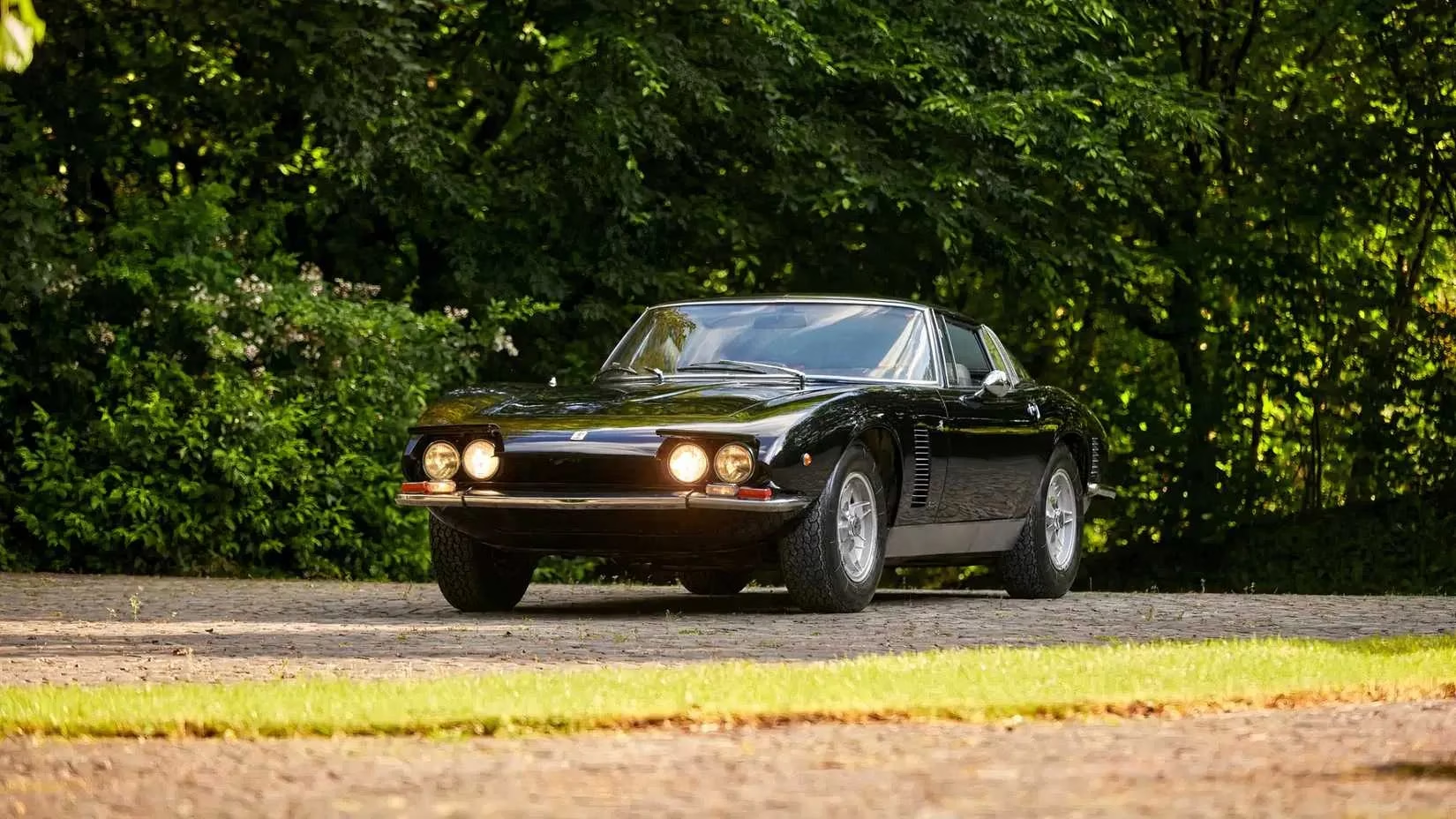
Driving the Grifo was a contradiction that felt like silk being dragged across asphalt. The suspension, tuned by Bizzarrini himself, delivered the poise of a proper Italian sports car, while the torque hit with the subtlety of a freight train shifting into passing gear. Zero to sixty arrived in roughly 5.5 seconds, and the car could cruise at 150 mph without breaking a sweat. It was, as one motoring journalist of the time noted, a grand tourer that could dispatch continents in the manner of a peregrine falcon riding a thermal—until you floored the throttle, and then the horizon rushed at you like a predator springing from cover.
This Italian-American hybrid was not merely fast; it was reliable. Iso’s decision to use a mass-produced American V8 meant that owners spent more time driving and less time recalibrating temperamental carburetors. The Grifo offered the prestige of a Ferrari with the practicality of a Chevrolet—a combination that resonated deeply with a small but passionate clientele.
However, that exclusivity came at a price. Iso built only 78 Series II Grifos, and among them, the open-top Targa version was so rare that only four are known to exist today. In the 2026 collector market, these numbers translate into breathtaking valuations. A well-preserved 1971 Iso Grifo Series II now commands an average of nearly $500,000, with the finest examples selling for well over $600,000. It is a machine that dwells in a rarefied atmosphere, where rarity and storytelling blend into an asset as much as an automobile.
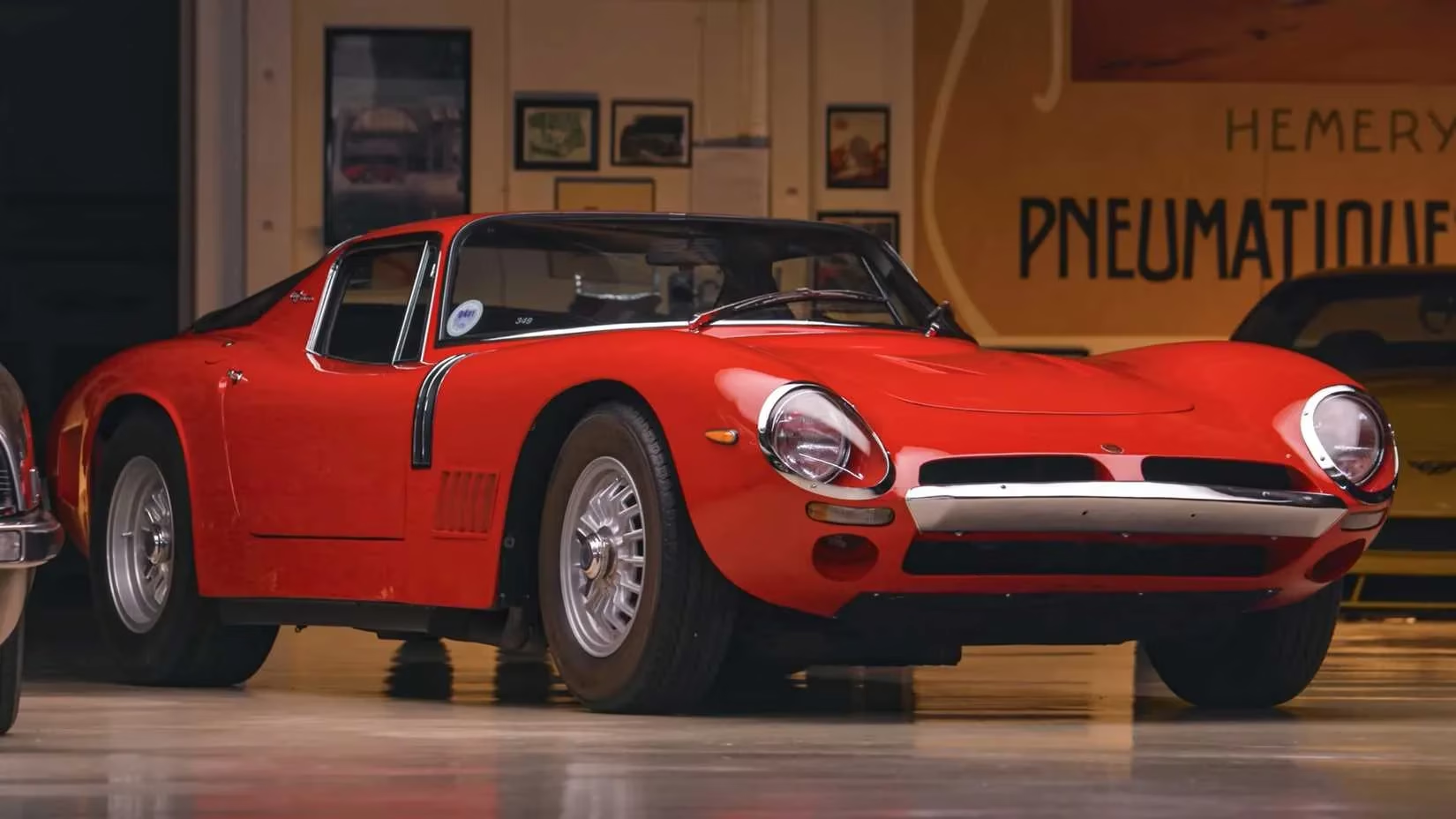
The Iso Grifo was not alone in its transatlantic ambitions. Its spiritual sibling, the Bizzarrini 5300 GT Strada, sharpened the formula further. Named for the same engineering genius who shaped the Grifo’s chassis, the 5300 GT bundled a 327 Chevrolet V8 into an even more aggressive, race-derived package. It could sprint to 171 mph and embodied the ultimate expression of the Italian-American GT philosophy. Meanwhile, the Iso Rivolta IR 300, a more civilized four-seater, had paved the way for the Grifo by proving that Detroit muscle could coexist with everyday usability.
Decades after the last Iso Grifo rolled out of the Bresso factory, these cars continue to captivate. They are not merely collector’s items but symbols of a time when a small outfit could challenge the establishment with nothing more than vision, courage, and a willingness to look beyond national borders. The Grifo remains a rolling paradox—a grizzly bear wearing an Armani suit, a Neapolitan love song with a V8 backbeat. It proved that elegance and brutality could share the same chassis, and that the most memorable legends are often scribbled in the margins of history by those who dare to mix oil and water until it becomes wine.
Thus, the 1971 Iso Grifo Series II endures not just as a car, but as a reminder that true greatness often arrives when continents collide.