The 1967 Plymouth GTX Hemi Convertible is a rare muscle car: a gentleman's hot rod with a beastly 426 Hemi.
Hey there, gearheads and muscle car aficionados! Let me take you back to a time when American roads were ruled by thunderous V8s and the smell of burning rubber. I'm talking about the mid-1960s, the golden age of muscle cars. But today, I want to shine a spotlight on a true unicorn: the 1967 Plymouth GTX Hemi Convertible. This isn't just any muscle car; it's a gentleman's hot rod with a beastly heart, and I'm here to tell you why it's one of the most fascinating and elusive machines ever to roll out of Detroit.
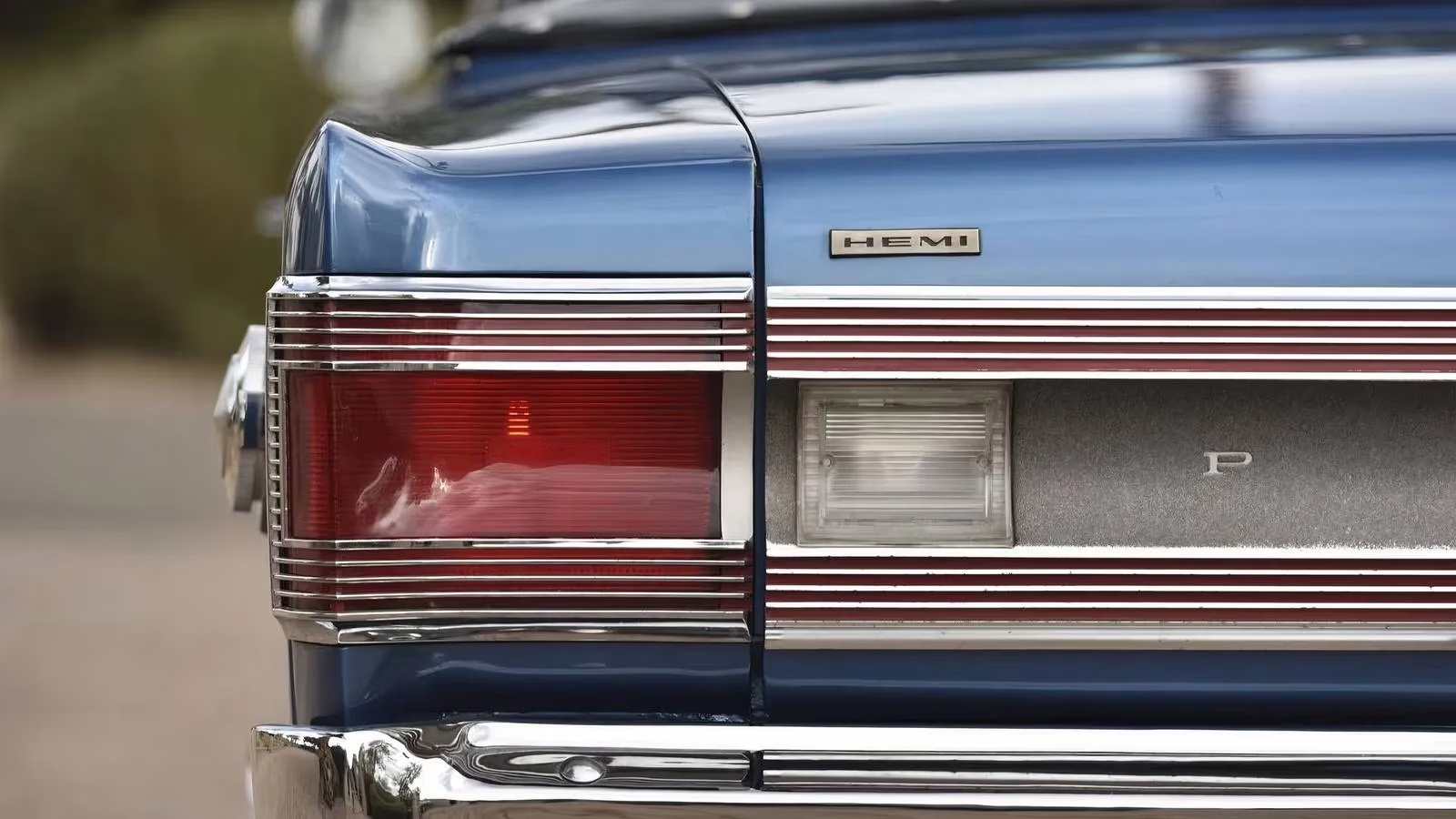
Back in the mid-60s, the muscle car phenomenon was at its zenith. Pontiac GTO, Ford Mustang, Chevrolet Chevelle SS 396 – these were the cars that captured the imagination of a generation. They were bold, aggressive, and affordable enough for young professionals and working-class enthusiasts. But Plymouth saw an opportunity. Their Belvedere had a reputation as a sensible family car, even used by police departments. Yet Plymouth decided to transform this unassuming platform into something extraordinary: an upscale performance variant that would become the most formidable and elusive Plymouth of the decade.
The Belvedere Connection
The Belvedere GTX was no small-block V8 boulevard rumbler. It was only offered with a choice of two big-block engines: the 440ci and the legendary 426 Hemi. Inside, it was more luxury car than out-and-out street racer, with upmarket trim and plenty of standard equipment. I'm talking about a tachometer on the center console, bucket front seats, and embossed vinyl upholstery. The Plymouth GTX was very much an upmarket muscle car convertible with a Hemi heart.
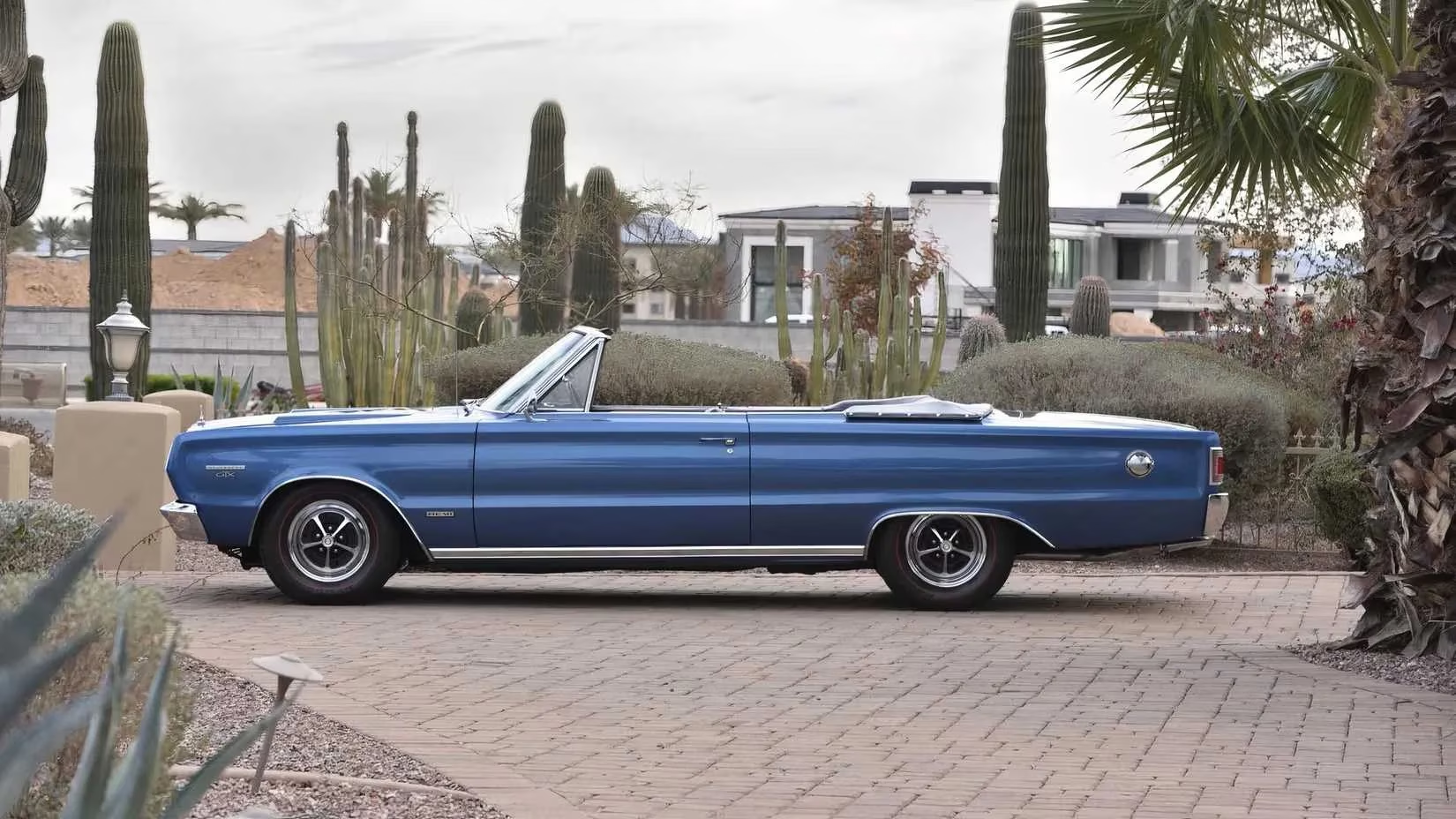
Externally, Plymouth gave the GTX a unique grille, scoops, and optional stripes. It was introduced in 1967 as a fairly niche model at the top of the Plymouth range. This muscle car legend was called a 'gentleman's hot rod' by Plymouth, but the newly-titled GTX wasn't quite as elegant as the nickname suggested – it was a fire-breathing monster.
The Hemi Heart
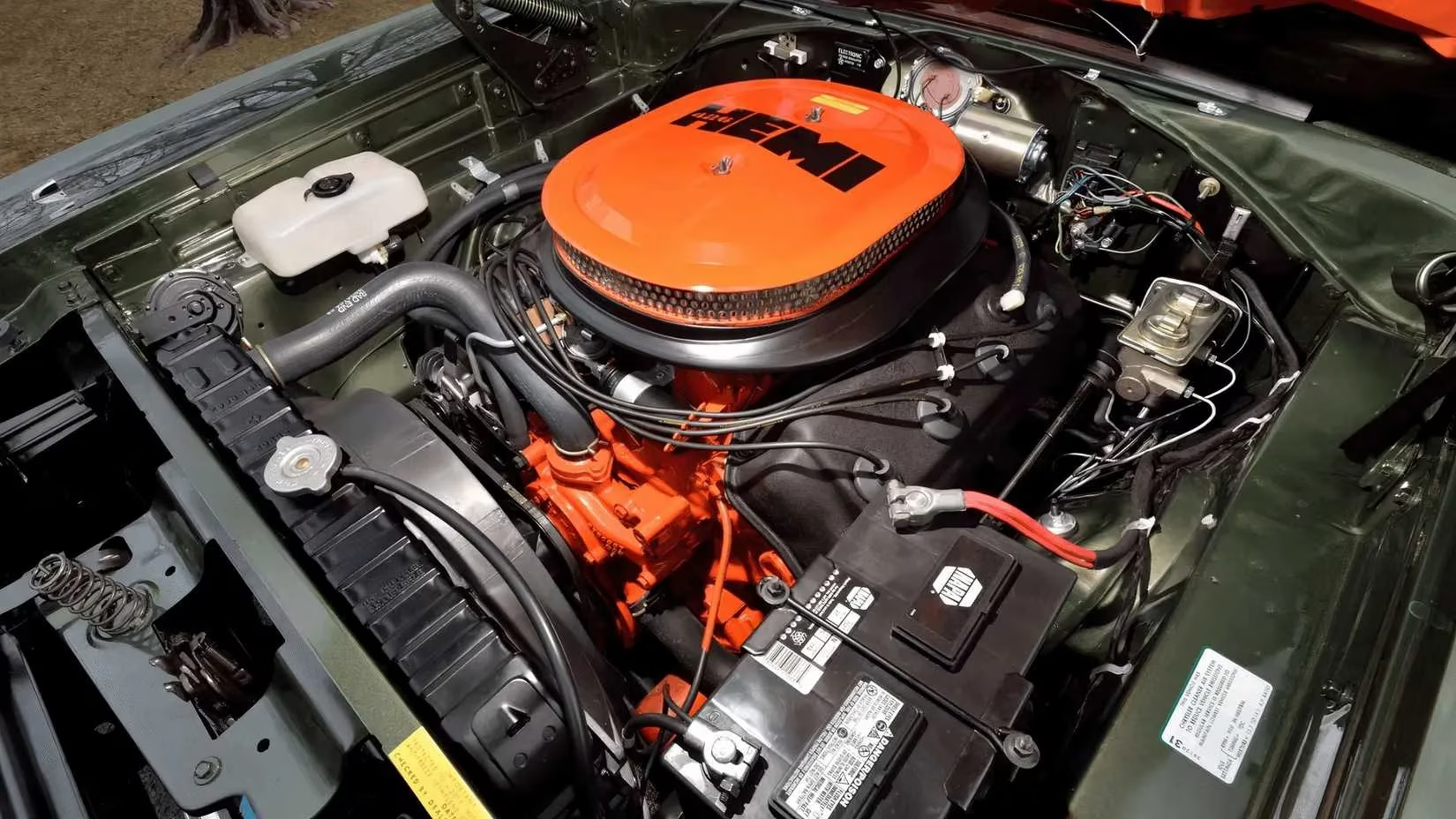
The Hemi, known as the Elephant in some circles, was already gaining mythical status. Its domination in NASCAR led to a ban. It was seemingly too ferocious for the streets, with its 425 hp at 5,000 rpm and 490 lb-ft at 4,000 RPM. But let's be real – those ratings were likely conservative for insurance purposes. Realistically, we're talking about 500 hp. The decision to install this monster powerplant into the mundane Plymouth Belvedere certainly raised a few eyebrows.
If the power outputs were controversial, the pricing was off-putting. The 426 Hemi was a pricey option, adding an extra $564. To put that into perspective, here's the breakdown:
| Item | Price |
|---|---|
| Standard GTX Two-Door Hardtop | $3,178 |
| Convertible Body Option | $240 |
| Hemi Engine Option | $564 |
So the Hemi alone was a near-20% premium. The convertible was a further $240, bumping the price up by 13% over the regular solid-roof body. For anyone taking performance driving seriously, a 500-hp convertible would never be a first choice due to compromised rigidity. That's why the drop-top didn't find many buyers.
Rarity and Pricing
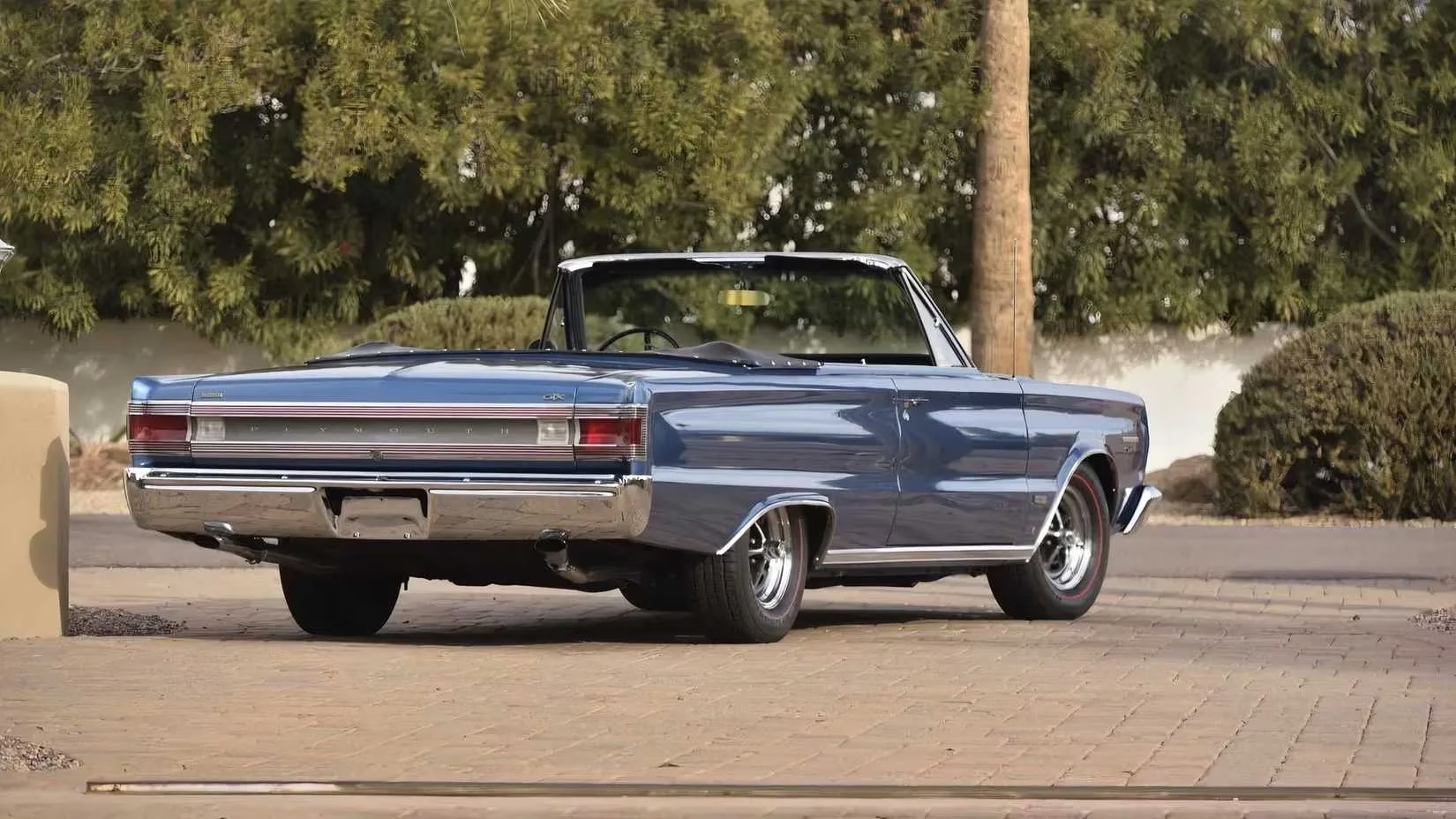
Of the 680 Plymouth GTX convertibles sold in 1967, just 17 were equipped with a Hemi V8 engine. Some estimations suggest the figure may even have been as low as 14. That makes this a very rare car indeed. I mean, we're talking about a needle in a haystack. The transmission options were either a four-speed manual or Torqueflite automatic – ten convertibles were ordered with the auto 'box.
The Hemi Legacy
It's hard to think about muscle cars without thinking about the 426 Hemi. The Mopar-engineered big-block Hemi V8 is a legendary powerplant that still goes strong today. In recent years, it's been fitted to everything from the Jeep Wrangler Unlimited Rubicon 392 to the Chrysler 300 SRT-8, and it even pumps out 1000 hp in the 6.2-liter Mopar 426 HEMI 'Hellephant' guise.
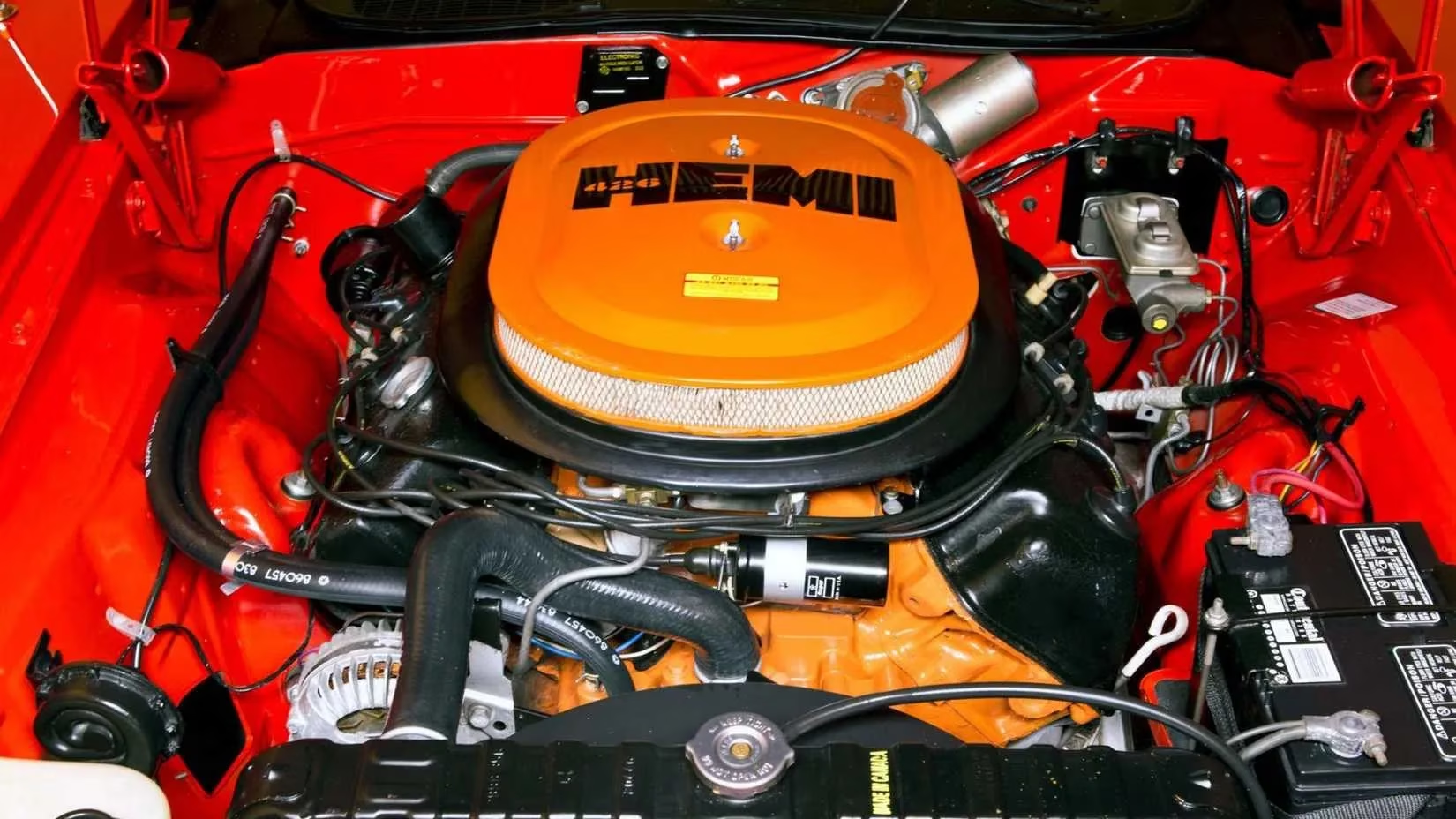
In the 1960s, the Hemi V8 was feared both on the streets and racetracks. Its deep purr was the last thing many people wanted to hear sitting at a red traffic light. The 426 Hemi engine goes back to 1951 when Chrysler introduced its first Hemi engine, known as the "FirePower" V8. The name came from overhead valve hemispherical combustion chambers that improved airflow and efficiency.
The 426 Hemi was introduced in 1964 specifically for racing, winning the Daytona 500 that year. Its success was also its downfall on the track. After Richard "The King" Lee Petty proved invincible in a Hemi-powered Superbird, NASCAR imposed stricter rules, banning competitors from using an engine without a street version. But NASCAR's loss was muscle car fans' gain. In 1966, Chrysler made the 426 Hemi available in street-legal vehicles, debuting in the Plymouth Belvedere and Dodge Coronet. The street-version Hemi had a lower compression ratio at 10.25:1 and a gentler timing chain, but it was still one of the most potent powerplants ever fitted in a muscle car.
What's It Worth Today?
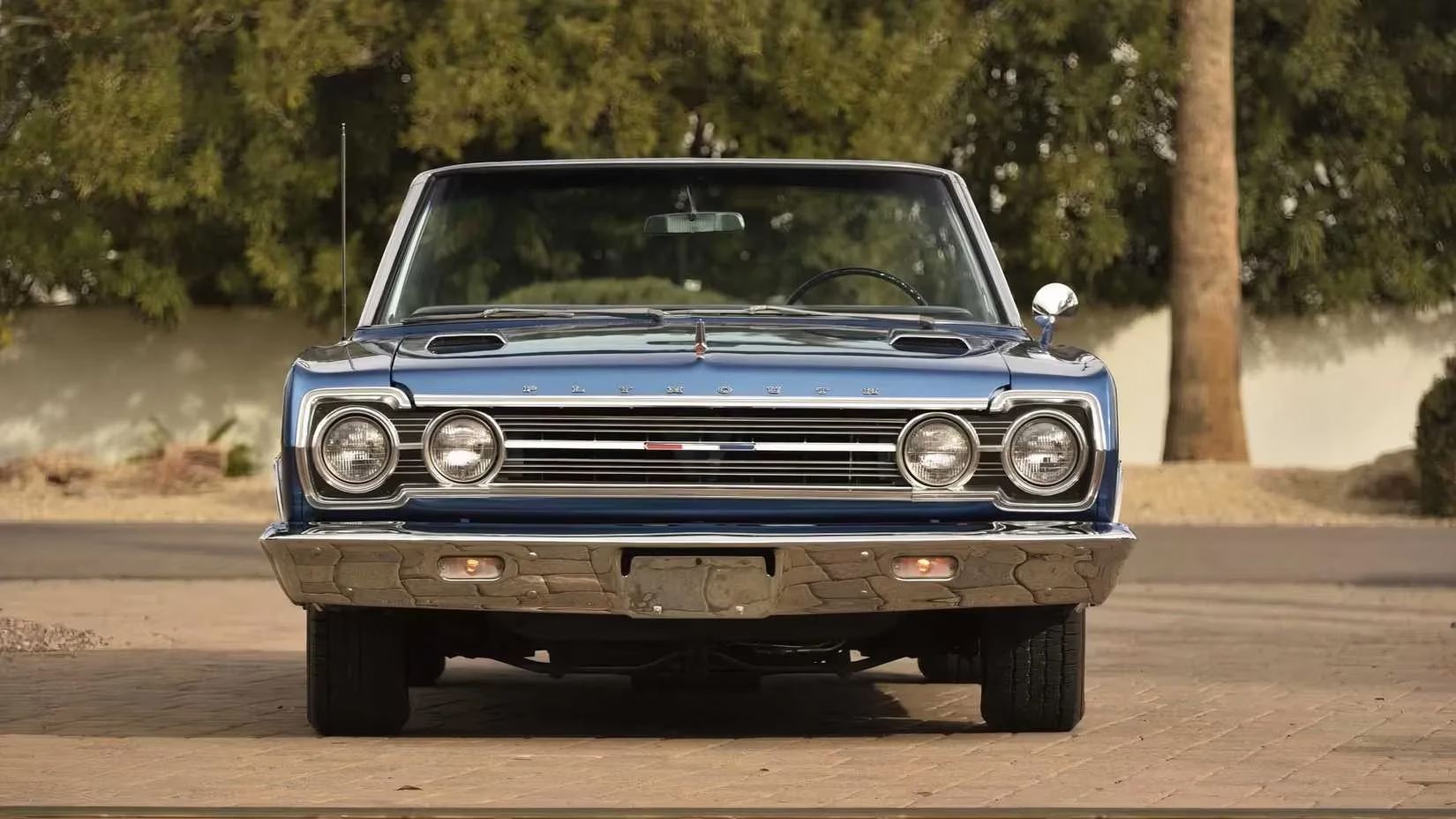
Naturally, the 17 examples of 1967 Plymouth GTX Hemi Convertibles don't come up for sale very often. Even if one of these rare-as-rocking-horse-manure 426-powered rag-tops does come to market, the prices aren't as eye-wateringly expensive as people might imagine – but deep pockets are still required. According to Hagerty Valuation Tools, a Plymouth GTX in good condition costs on average $123,000. But that's for the more common models. A Hemi convertible? That's a different ballgame. I've seen estimates that a well-documented example could easily fetch north of $500,000 in today's market. As we move into 2026, these values have only continued to climb, making it a blue-chip investment for collectors.
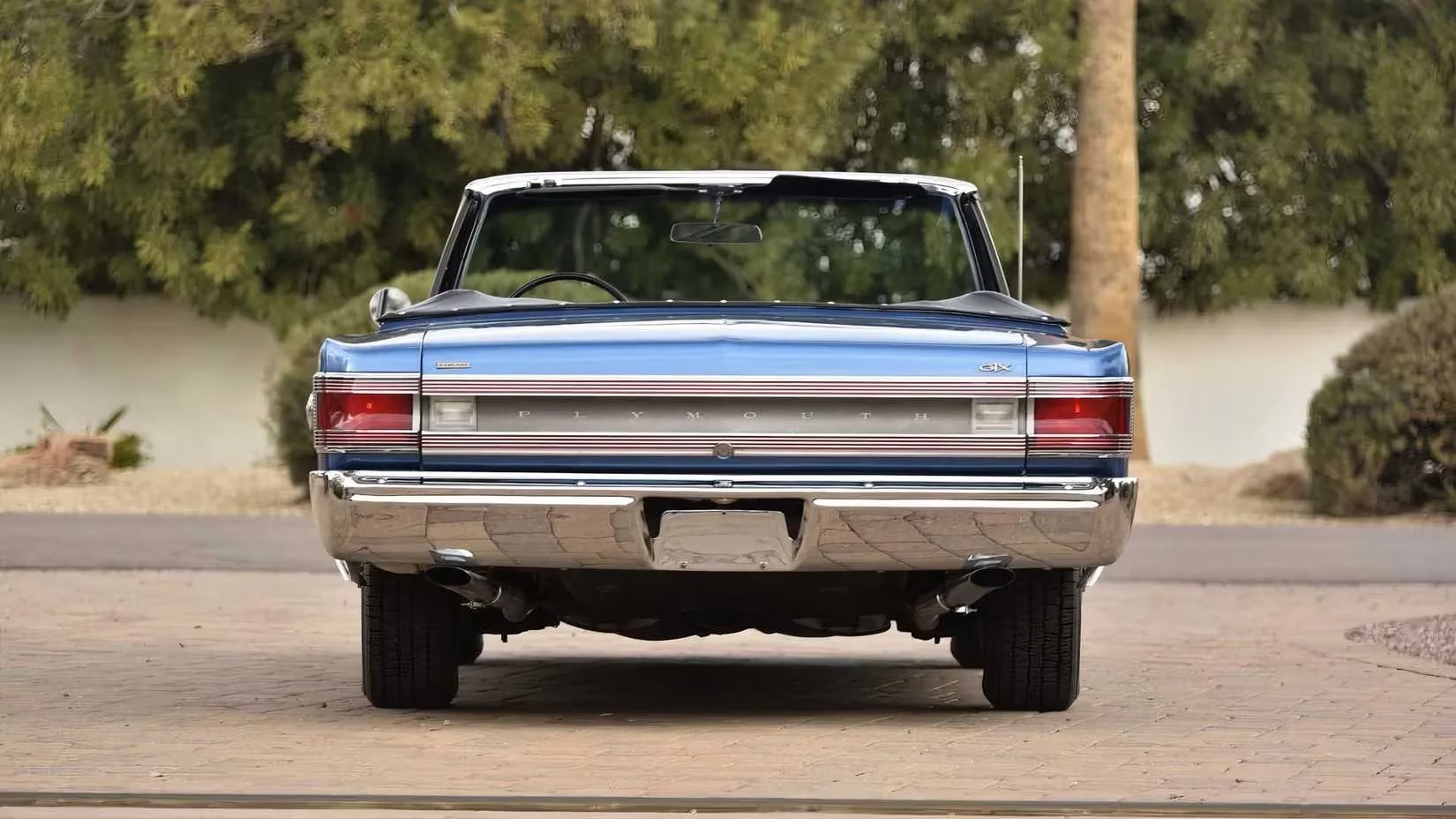
Four years ago, the earliest known Hemi GTX Convertible came up for sale at Mecum Auctions. It was built on September 21, 1966, and delivered on October 11, 1966. It is thought to be the first GTX fitted with a Hemi. The story goes that it was ordered new through Manhattan Chrysler Plymouth, Inc., by Chrysler employee Rene Sergei Tennenbaum as a tow car for his "Mad Russian" Max Wedge Super Stocker. The car was completely restored, and the 426 Hemi engine was rebuilt to correct late-1966 specifications, including dual 4-barrel carburetors and factory engine components.
So there you have it. The 1967 Plymouth GTX Hemi Convertible is a true legend. It's a car that combines luxury, brute force, and extreme rarity. If you ever get the chance to see one in person, consider yourself lucky. And if you have the means to own one, well, you're not just buying a car – you're buying a piece of American automotive history. 🚗💨