Blazin Rodz's 1969 Chevrolet Camaro Hybrid Hypercar Project packs 1,600 hp and hits 210 mph—a $1.6M SEMA hypercar classic.
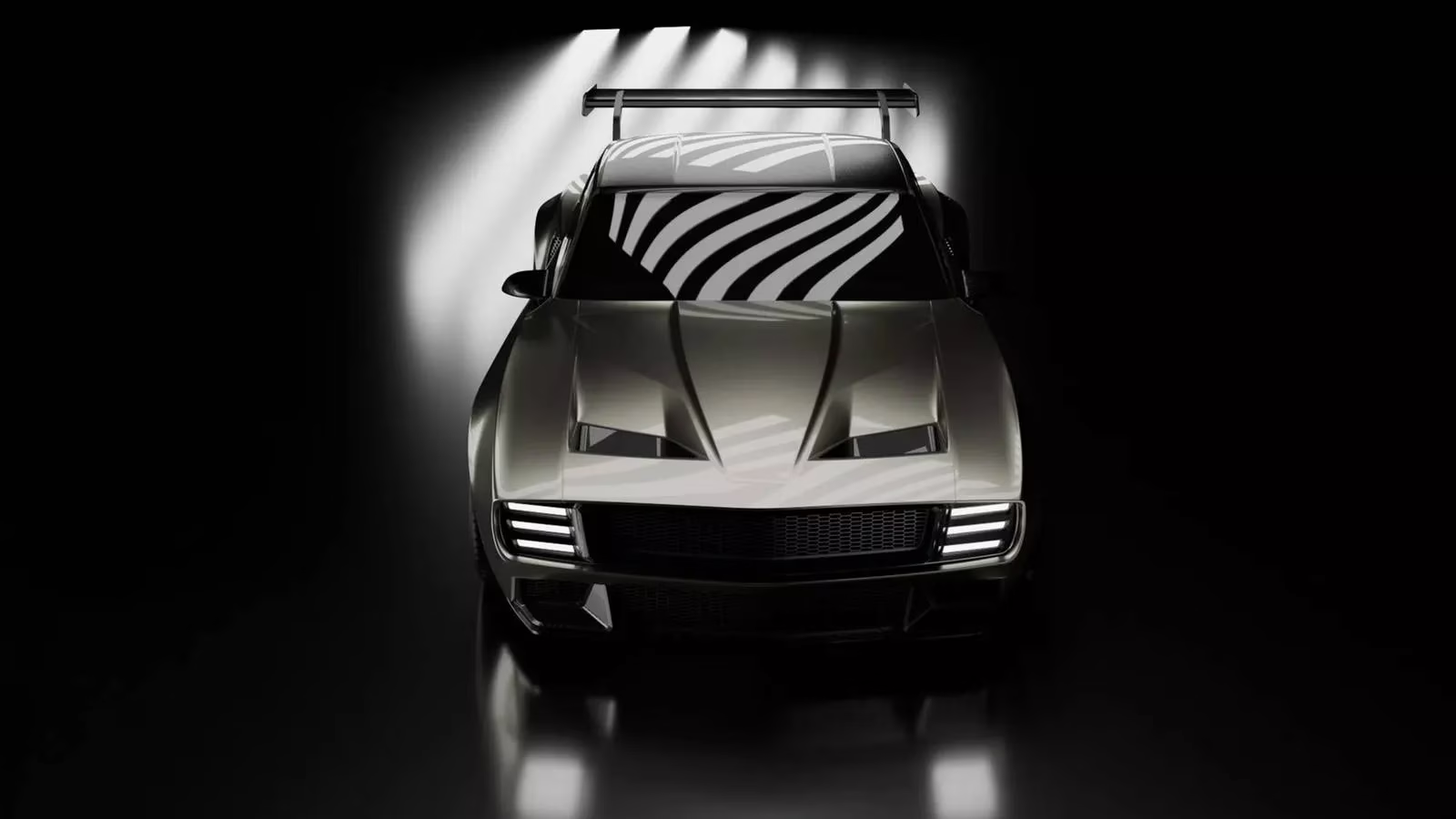
As a lifelong gearhead who spends too many nights watching SEMA coverage, I can honestly say the 1969 Chevrolet Camaro Hybrid Hypercar Project from Blazin Rodz is the kind of build that makes me question what a classic muscle car can become. When it debuted at the 2025 SEMA Show, it arrived with a one-third scale model, a wild hybrid powertrain promise, and a price tag that starts around $1.6 million. Now that we are in 2026, Blazin Rodz has confirmed that a limited number of full-sized production examples will be built, and I am still trying to wrap my head around it.
The Powertrain Is Absolute Insanity
At the heart of this project is a front/mid-mounted 5.8-liter Chevrolet R07 V8 from a NASCAR Cup car. On its own, that engine sends 1,300 horsepower to the rear wheels. That is already Koenigsegg Jesko Absolut territory. But Blazin Rodz does not stop there. An axial flux electric motor, paired with a custom-built 800-volt battery, adds another 300 horsepower to the front axle. The combined output is a claimed 1,600 horsepower. Torque figures are still unknown, but the planned top speed is 210 mph.
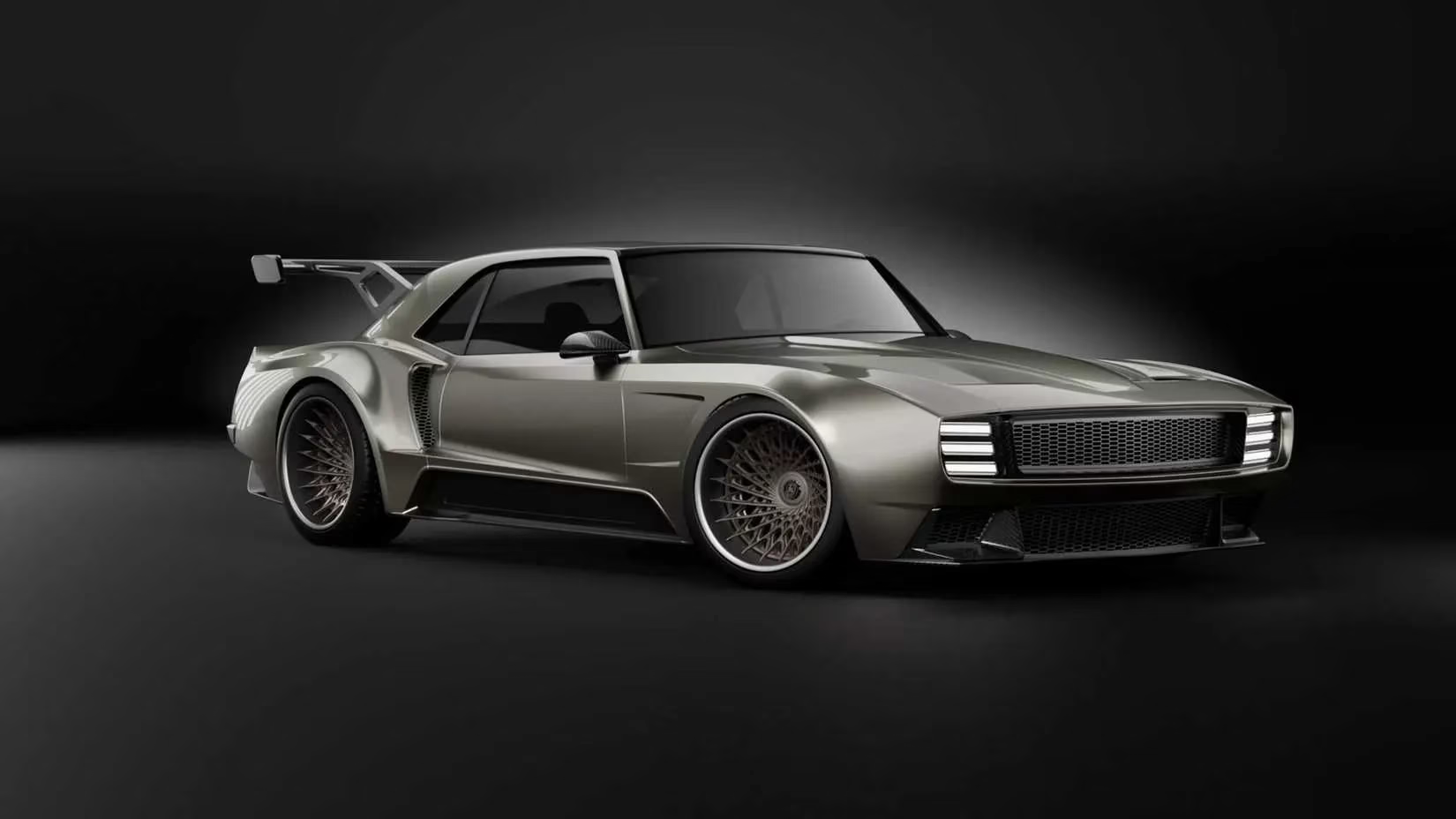
Can you imagine a 1969 Camaro doing 210 mph? I can, but only because this is not really a 1969 Camaro anymore. It is a hypercar wearing a vintage costume.
Chassis, Suspension, and Real Hypercar Tech
What impresses me most is that Blazin Rodz is not just chasing big power numbers. The company is keen to promote the technical side of the project, and that makes sense when you are asking $1.6 million or more. Thanks to a partnership with HP Additive Manufacturing 3D Printing, the state-of-the-art chassis adheres to hypercar standards. The bespoke precision-machined components are designed to withstand phenomenal G-forces.
The suspension is equally exotic. It combines torsion bars with pneumatic air springs and hydraulic pushrods. According to Blazin Rodz, the system can adapt ride stiffness for the road and/or the track in real time. The suspension technology is currently awaiting its patent. An advanced torque management system, traction control, and launch control are also set to be incorporated into the full-sized build.
Here is a quick breakdown of what we know so far:
| Feature | Details |
|---|---|
| Base car | 1969 Chevrolet Camaro |
| Combustion engine | 5.8-liter Chevrolet R07 V8 from NASCAR Cup |
| Rear-wheel power | 1,300 hp |
| Electric motor | Axial flux, front axle, 300 hp |
| Battery | Custom 800-volt |
| Combined output | 1,600 hp |
| Planned top speed | 210 mph |
| Starting price | Expected from $1.6 million USD |
| Debut | 2025 SEMA Show, one-third scale model |
| Production | Limited number, orders open |
Design That Turns Heads and Captures Headlines
The all-carbon fiber bodykit is pure theater. The concave wire wheels and the enormous rear spoiler sprouting from the C-pillars are nice touches that make the car look like a Hot Wheels fantasy come to life. Blazin Rodz says the concept aims to provide customers with an extraordinary driving experience, which will turn heads and capture headlines. I would say mission accomplished, at least on the headline front.
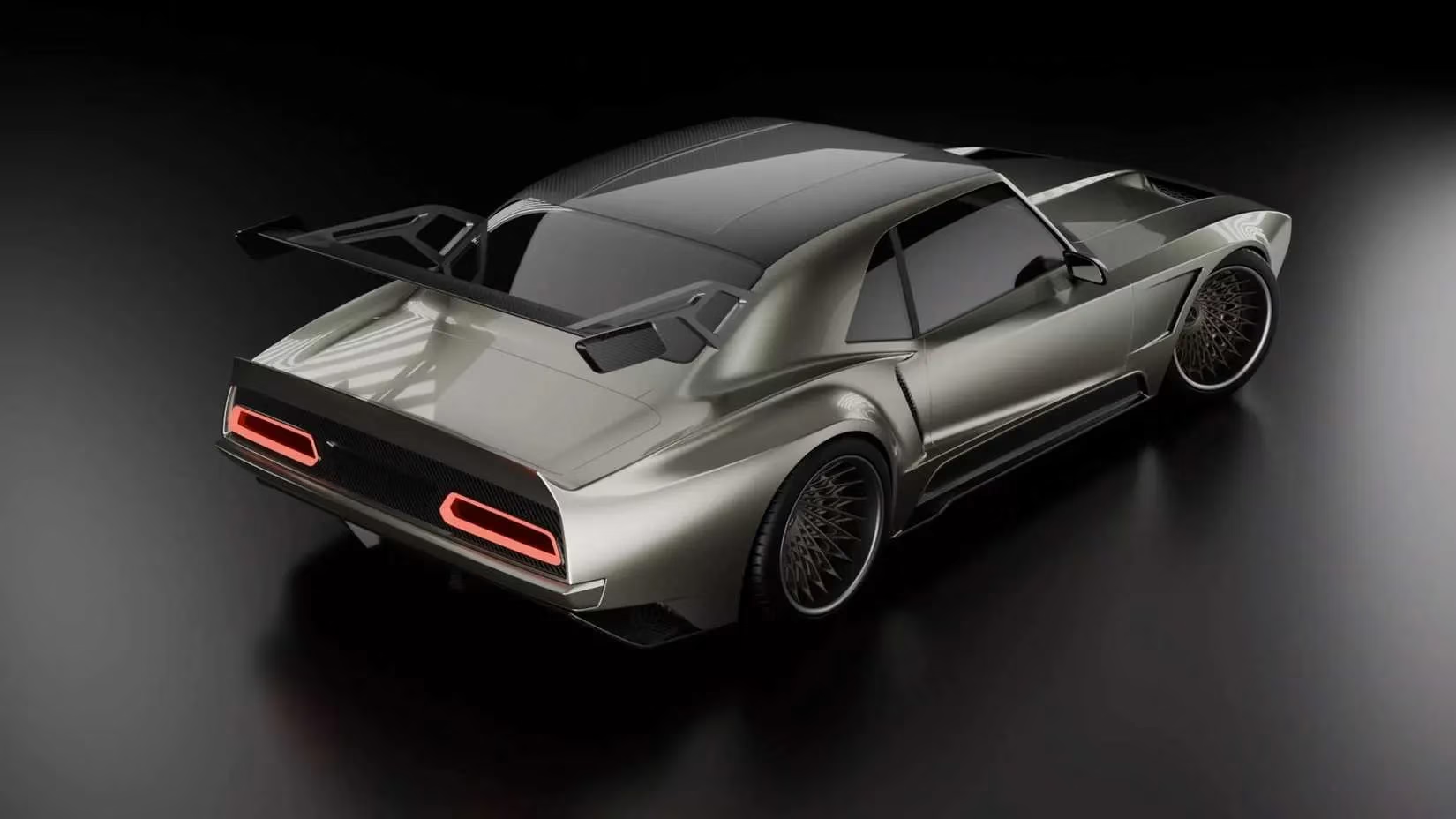
But is this really a restomod? Or is it a hypercar with a classic silhouette? The line is blurring, and I love it. Blazin Rodz previously caused a stir at SEMA with Doughboy, a 2,800-horsepower 1970 Chevrolet Chevelle restomod. That car will be on display again, but the Camaro Hybrid Hypercar Project is on another level entirely.
The Price and the Reality Check
Let us talk about the money. Prices for the full-sized production examples are expected to start from a staggering $1.6 million USD. The number of production units is still undetermined, but customers can already start placing orders. Only a one-third scale model was shown at SEMA, so the final car remains something of a promise. That is a lot of faith to ask from buyers.
Would I buy one if I had the means? Absolutely. Would I be nervous about the hybrid system, the 3D-printed chassis, and the patent-pending suspension? Maybe a little. But as a player in the automotive enthusiast world, I appreciate that Blazin Rodz is pushing boundaries. Classic muscle cars are no longer just restored. They are being reborn as 1,600-horsepower hybrid hypercars.
Final Thoughts from a Gearhead
In 2026, the restomod scene is more extreme than ever. The 1969 Chevrolet Camaro Hybrid Hypercar Project is proof that nostalgia and cutting-edge technology can coexist, even if the result costs more than a house. Blazin Rodz has confirmed limited production, and the company is clearly aiming for customers who want something nobody else has. Will it deliver on its 210 mph promise? Will the hybrid system feel as violent as the specs suggest? I cannot wait to find out.
For now, I will keep watching from the sidelines, dreaming of a 1,600-hp Camaro that sounds like a NASCAR race and pulls like an electric hypercar. That is a combination I never knew I needed.
Source: Blazin Rodz.